How Much Fluid Does a Child Need?
A child's fluid needs depend on age, diet, activity level, environmental temperature, and health status. The recommended values are approximate and refer to total water intake, not just water consumed from a cup or bottle.
Total water intake includes:
- water and other drinks, including milk,
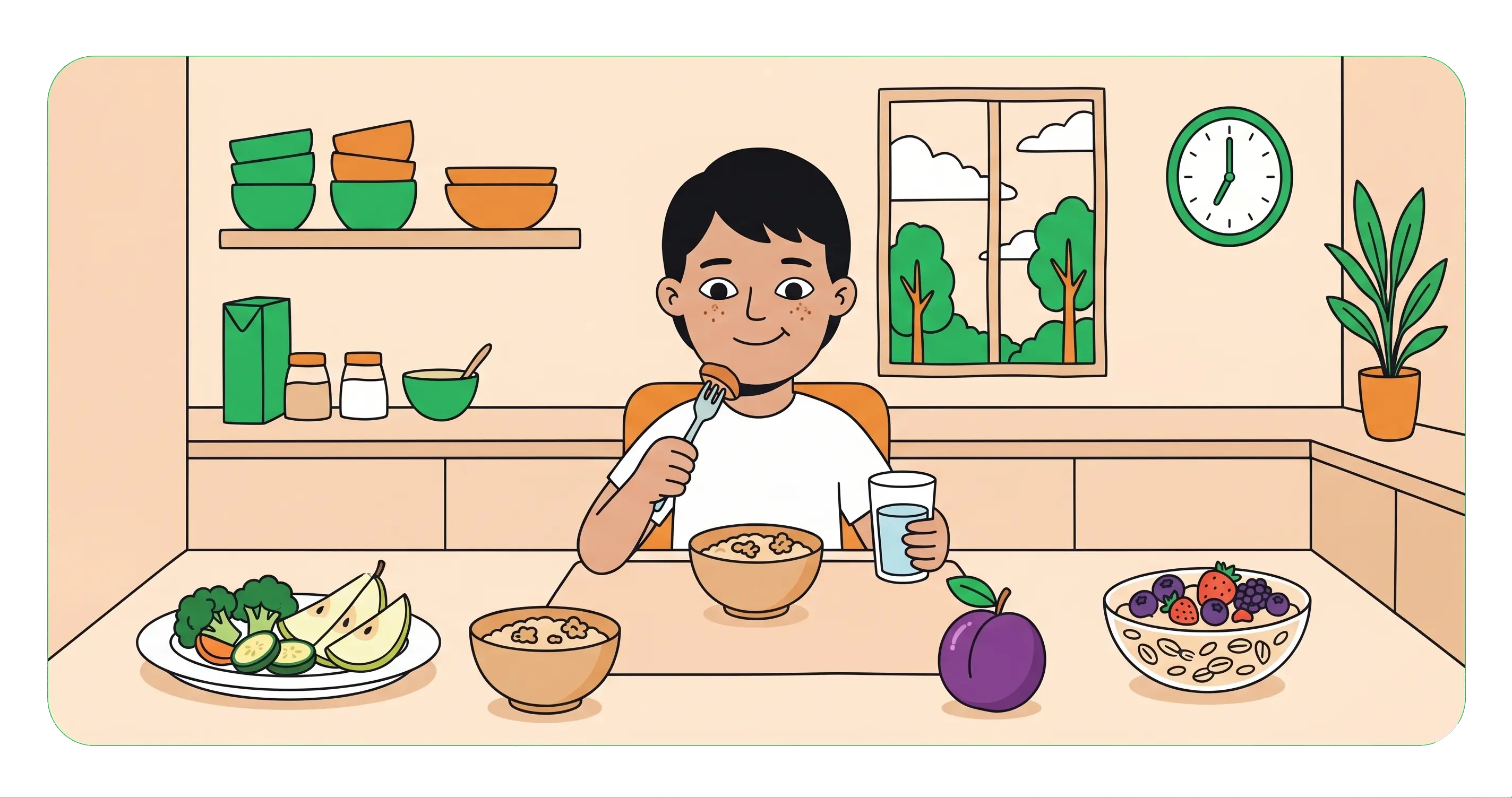
- water contained in soups, cereals, yogurts, fruits, and vegetables,
- for infants, also breast milk or properly prepared formula.
Therefore, you cannot directly convert the total fluid intake standard into the amount of water to drink. European EFSA standards consider water from all these sources [1].
Total Water Intake by Age
The following values help assess a child's needs but are not a target to be met to the milliliter. The amount of water to drink will depend on how much milk and water-rich foods the child consumes.
| Child's Age | Approximate Total Daily Water Intake | How to Understand This Value? |
|---|---|---|
| 0–6 months | about 680 ml | Water comes from milk; a healthy infant usually does not need additional water. |
| 6–12 months | about 800–1000 ml | Includes milk, drinking water, and water contained in meals. |
| 1–2 years | about 1100–1200 ml | Includes all drinks and water from food. |
| 2–3 years | about 1300 ml | Water should be the primary drink, but not the only source of fluids. |
| 4–8 years | about 1600 ml | Needs may increase during heat and exertion. |
| 9–13 years — girls | about 1900 ml | Total amount from drinks and food. |
| 9–13 years — boys | about 2100 ml | Total amount from drinks and food. |
These values correspond to European standards for children and refer to average environmental conditions and moderate activity [2]. They do not specify the minimum amount of plain water each child must drink.
Water for Infants Under 6 Months
A healthy breastfed infant usually does not need additional water, even on warm days. In hot weather, offer the breast more frequently and observe the effectiveness of feeding and the number of wet diapers.
An infant receiving formula usually does not need additional water if the formula is prepared exactly according to the manufacturer's instructions. Do not add more water or dilute it “for the heat,” as this changes the proportions of nutrients and electrolytes.
Giving water before 6 months can reduce milk intake, thus lowering energy and nutrient supply. Exceptions, such as those related to the child's health, should be individually determined with a doctor. This approach aligns with the principles of healthy infant nutrition [5].
When to Start Giving Water to an Infant?
You can start offering water when introducing solid foods, usually around 6 months of age. Initially, a few sips during meals are sufficient. Breast milk or formula remains an important source of fluids and nutrients during this period.
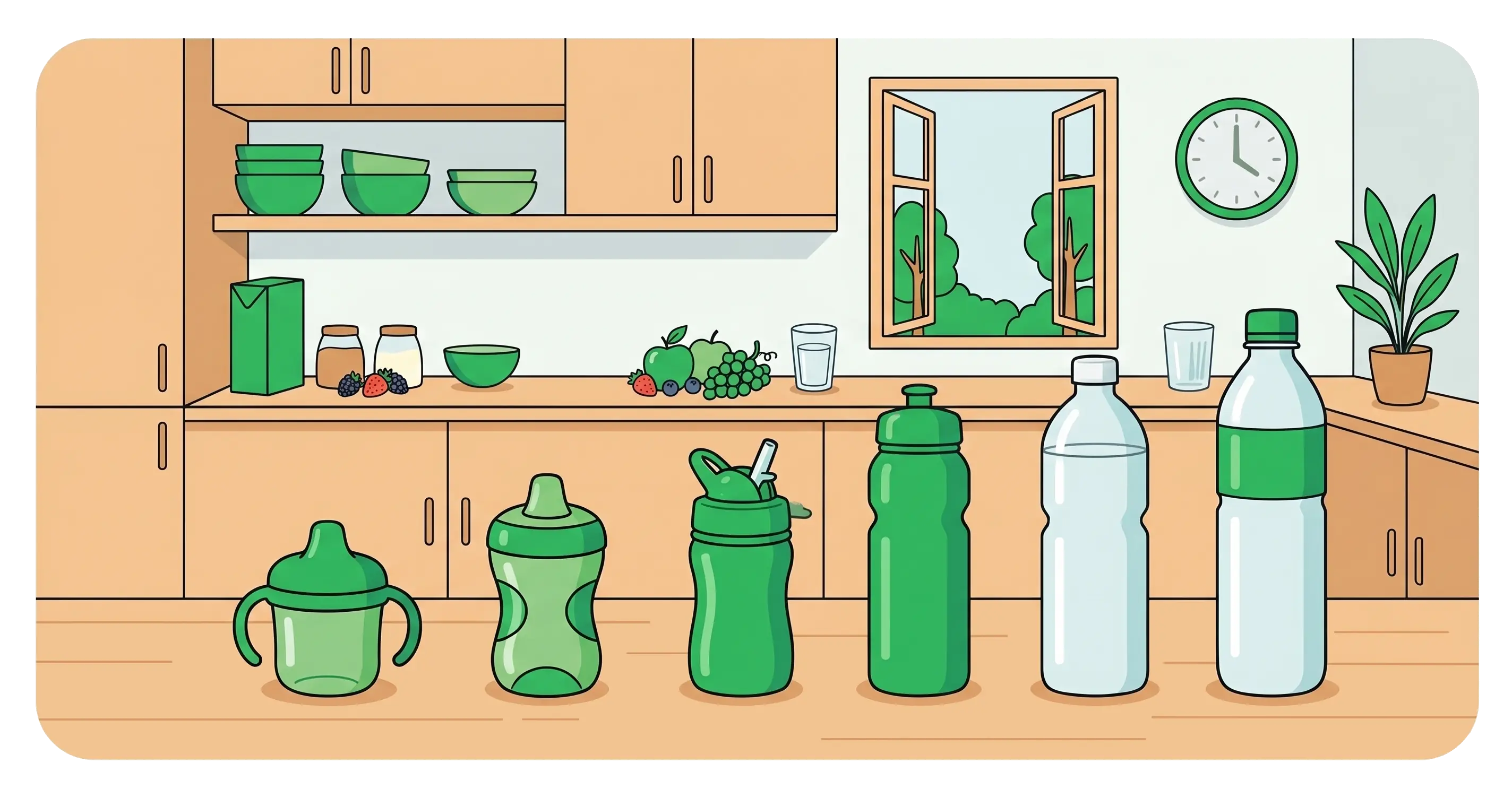
It is advisable to offer water from an open cup or training cup suited to the child's abilities. The goal at the beginning is not to drink a specific volume but to gradually get to know the taste of water and learn to drink. Recommendations for feeding young children indicate water as the preferred drink during dietary expansion [3].
How Much Plain Water Should an Older Child Drink?
There is no mandatory amount of plain water suitable for every child. Two children of the same age may need different amounts of drinks because one eats more soups, vegetables, and fruits, while the other is more active or in a warmer environment.
The best rule is to regularly offer water:
- with meals and between them,
- before leaving the house,
- after returning from a walk, kindergarten, or school,
- before, during, and after activity,
- more frequently during hot weather.
A child should not be forced to drink an entire cup. Smaller portions available regularly throughout the day are better.
What is Best to Offer for Drinking?
For a child who has started expanding their diet, plain water should be the primary drink. This can be microbiologically safe tap water or suitable bottled water. When choosing bottled water for a young child, check if it is suitable for infants and young children.
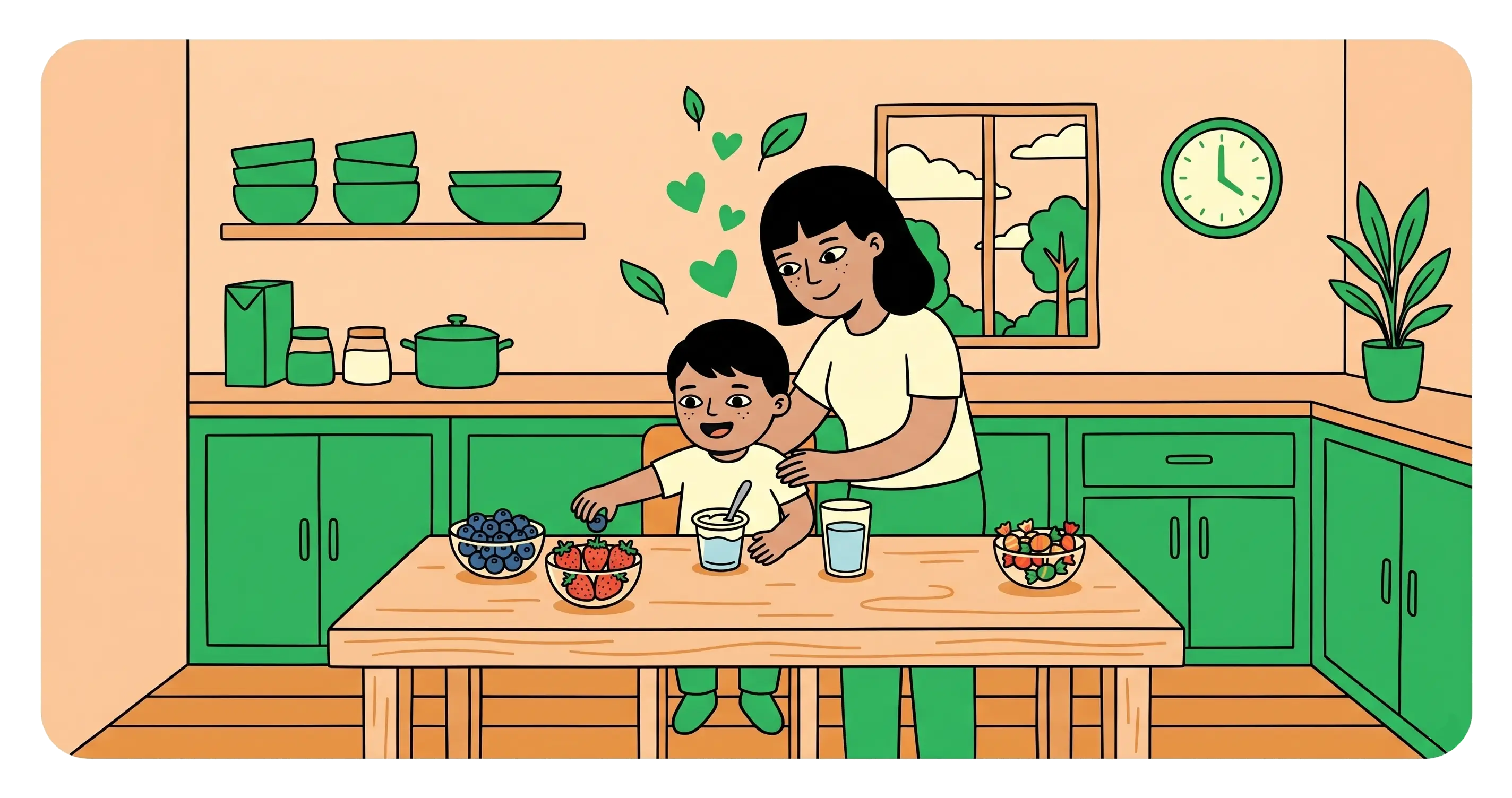
Juices, fruit drinks, sweetened teas, and flavored waters should not be used for daily thirst quenching. Frequent sipping of sweet drinks promotes cavities and reinforces a preference for sweet tastes. Energy drinks are not suitable for children. Isotonic drinks are usually unnecessary for regular play or recreational activity. Water remains the recommended drink for daily use [4].
Heat and Physical Activity
In warm weather and during intense activity, fluid needs increase. Children may not notice thirst when absorbed in play, so it's good to offer water regularly before strong thirst appears.
- For an infant under 6 months, offer the breast or properly prepared formula more frequently.
- For older infants and children, offer small portions of water at short intervals.
- Bring an easily accessible bottle on walks, playgrounds, or training.
- Do not leave a child in a hot car or expose them to prolonged activity in full sun.
Fever, Diarrhea, and Vomiting
During infections, a child may lose more water and electrolytes and be less willing to drink. With diarrhea or vomiting, plain water may not be enough. Usually, an oral rehydration solution containing the right proportions of glucose and electrolytes, prepared according to instructions, is used. A breastfed infant should still be frequently breastfed.
It's best to offer the solution in small portions, such as a few sips or a teaspoon every few minutes. If the child vomits every portion, refuses to drink, or their condition worsens, contact a doctor.
How to Recognize Dehydration in a Child?
Concern should arise primarily from a noticeable deviation from the child's usual behavior. Possible signs of fluid deficiency include:
- less frequent urination or significantly fewer wet diapers,
- dark, strongly smelling urine,
- dry mouth and tongue,
- no tears when crying,
- strong thirst, irritability, or weakness,
- sunken eyes, and in infants, also a sunken fontanelle,
- drowsiness and less response to the environment than usual.
Urine color can be a helpful clue in older children but should not be the only way to assess hydration. Morning urine is naturally more concentrated.
When to Consult a Doctor or Specialist?
A child requiring urgent medical evaluation:
- is apathetic, very sleepy, limp, or hard to wake up,
- does not take fluids or vomits every given portion,
- urinates significantly less frequently or has not urinated for many hours,
- has very dry mouth, no tears, sunken eyes, or fontanelle,
- has rapid breathing, cold limbs, pale or mottled skin,
- has severe or prolonged vomiting or diarrhea,
- is an infant, especially under 6 months, with fever, diarrhea, vomiting, or significantly fewer wet diapers.
If the child's condition seems severe or rapidly deteriorates, seek urgent medical help. Persistent excessive thirst combined with frequent urination of large amounts may require consultation as it could have a cause other than heat or activity.
How to Encourage Regular Drinking?
- Place water in a visible and easily accessible spot.
- Offer it with every meal and after activity.
- Pack a bottle for kindergarten, school, and walks.
- Gently remind without pressuring to drink a specific volume.
- Set an example by choosing water as a daily drink.
- Regularly clean bottles, spouts, and straws according to the manufacturer's instructions.
The most important thing is to create a predictable routine. There is no need to count every sip in a healthy child if they regularly drink, urinate, have energy, and develop properly.
Frequently Asked Questions
Does total water intake mean the amount of plain water to drink?
No. It includes water, milk, other drinks, and water contained in food. Therefore, the value of 1600 ml does not mean a child must drink 1600 ml of plain water.
Should an infant under 6 months be given extra water in the heat?
A healthy breastfed infant usually does not need additional water. Offer the breast more frequently. Do not dilute formula further; offer properly prepared formula more often. Consult a doctor in case of illness or doubt.
How much water to offer after starting solid foods?
Initially, offering a few sips with meals is enough. There is no need to meet a specific volume. As the intake of solid foods increases, the amount of water consumed usually gradually rises.
Can juice replace water?
No. Water should be the primary drink. Juice contains sugars and should not be used for regular thirst quenching or sipped throughout the day.
Can a child drink too much water?
Yes. Excessive water intake, especially in infants, can limit milk consumption and disrupt electrolyte balance. Do not force a child to drink or replace milk with water.
Summary
Hydration standards describe total water intake from all drinks and foods. A healthy infant under 6 months usually does not need additional water, but after starting solid foods, it can be offered in small portions. For older children, water should be the primary drink, and its amount should be adjusted to diet, activity, weather, and the child's well-being.
Sources
- European Food Safety Authority (EFSA), Scientific Opinion on Dietary Reference Values for Water.
- European Food Safety Authority (EFSA), Dietary Reference Values for nutrients — summary report, reference values for children.
- National Health Fund (NFZ), materials on water and drinks in the diet of young children.
- National Center for Nutritional Education (NCEZ), educational materials on children's hydration.
- Polish Society of Gastroenterology, Hepatology and Nutrition of Children (PTGHiŻD), position on the principles of feeding healthy infants.