Teaching Your Child to Fall Asleep Independently: Effective Step-by-Step Methods
Parents often ask us a familiar question: “Can you teach a child to fall asleep on their own without the evening drama?” Honestly, in many homes, it can be done more calmly than you might think. From our experience, what works best is not rushing, but rather a simple plan, patience, and well-matched expectations. 🌙
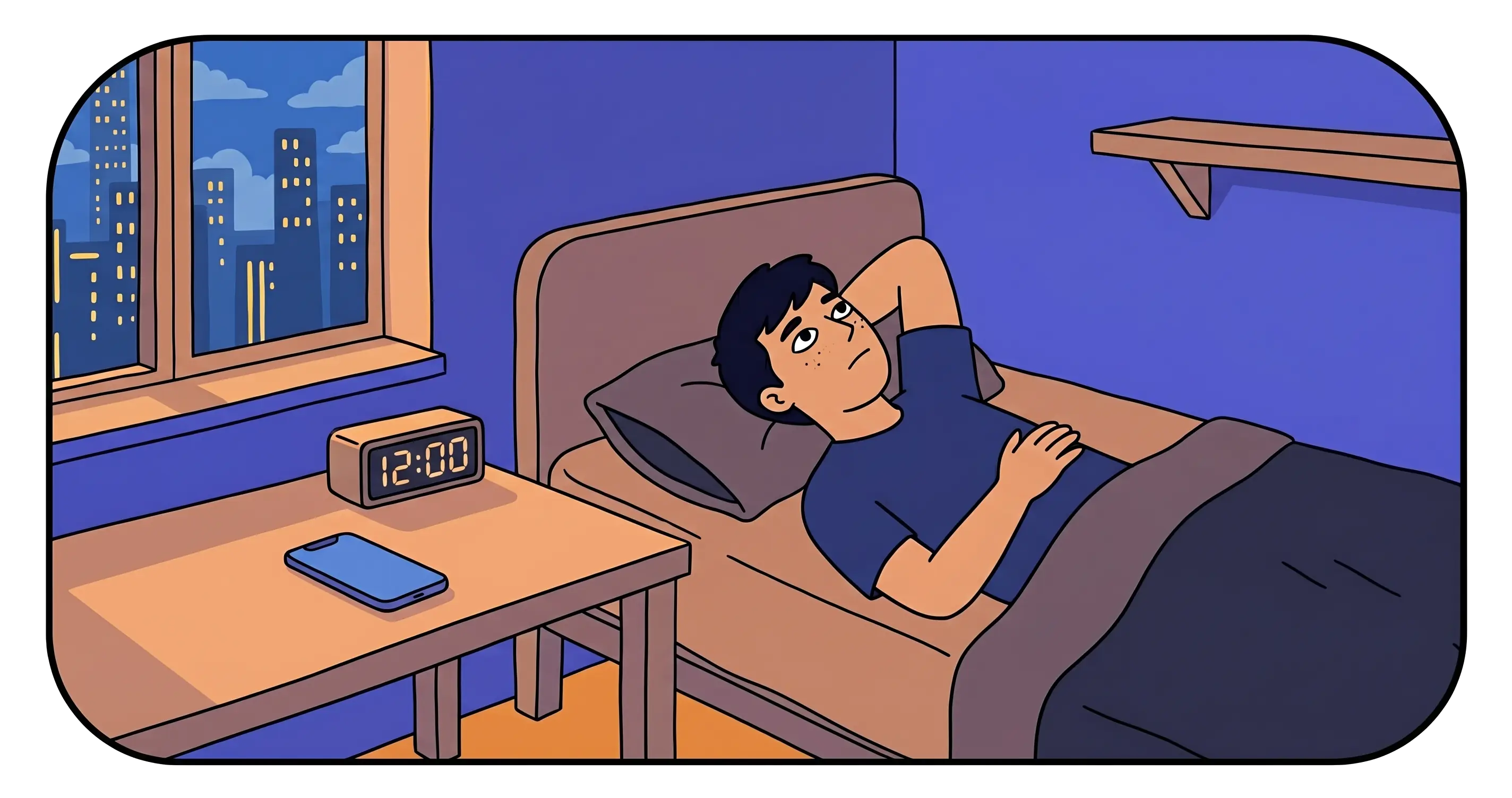
In practice, we see that the biggest issue usually isn't that the child “can't sleep.” More often, it's that they know only one way to fall asleep and cling to it. When that method stops working for the whole family, it leads to exhaustion, frustration, and the feeling that every evening is the same.
The good news is that you can teach this step by step. Not by battling with your child, but by making evenings and habits more predictable. In our work with families, this approach usually yields the calmest results.
When to Start Teaching Your Child to Fall Asleep Independently
Parents often want to hear a specific month or age when they “must start.” We see it a bit differently. Age alone isn't enough because two children of similar age can be at completely different stages of readiness.
How to Recognize a Good Moment
From our experience, a good moment is usually visible in daily life, not on the calendar. The child begins to have more predictable sleep times, calms down more easily in the evening, and doesn't react as intensely to every small change in the bedtime routine.
We often look for these signals: - the evening routine is fairly consistent, - the child can be soothed by voice, touch, or ritual, - sometimes they don't need full “service” to fall asleep, - the current bedtime method is simply exhausting for you and your child.
In practice, we also notice something else: parents often sense this moment intuitively. There's a thought: “Maybe we can try something gentler than what we're doing now.” And very often, that's a good lead.
Approximate Age Ranges
To make it easier for you to relate, here are some general guidelines. Treat them as suggestions, not rigid rules:
- 0–3 months – focus more on getting used to the daily rhythm and a calm evening rather than “teaching” to fall asleep,
- 4–6 months – for some children, it's possible to gently reduce the strongest supports,
- 6–12 months – this is often a time when you can work more regularly, and the first changes may be visible after 7–14 days,
- 1–3 years – emotions, stubbornness, and boundary testing come into play, so the plan must be simple and clear,
- 4–6 years – more often we work on delaying sleep, the need for presence, and evening excitement,
- 7–10 years – evening independence, tension, and fear of the night usually become more important. 🧸
We've also seen cases where a younger sibling was ready for change sooner than the older one. This clearly shows that there's no single “right” time for everyone.
When It's Better to Pause for a While
There are times when it's not worth adding another change for the child. If there's an illness, teething, a very challenging developmental stage, or you simply notice that the child is more unsettled than usual, it's better to first return to balance.
Similarly, with major family changes. Starting daycare, preschool, moving, a new caregiver, or a tense time at home can significantly impact sleep. In our work with families, we often say briefly: first ensure a sense of security, then change the habit.
Why a Child Doesn't Want to Fall Asleep Alone
This is one of those topics where parents quickly start blaming themselves or the child. But usually, the issue is much simpler. The child gets used to a specific way of falling asleep and then wants to use it during nighttime awakenings as well.
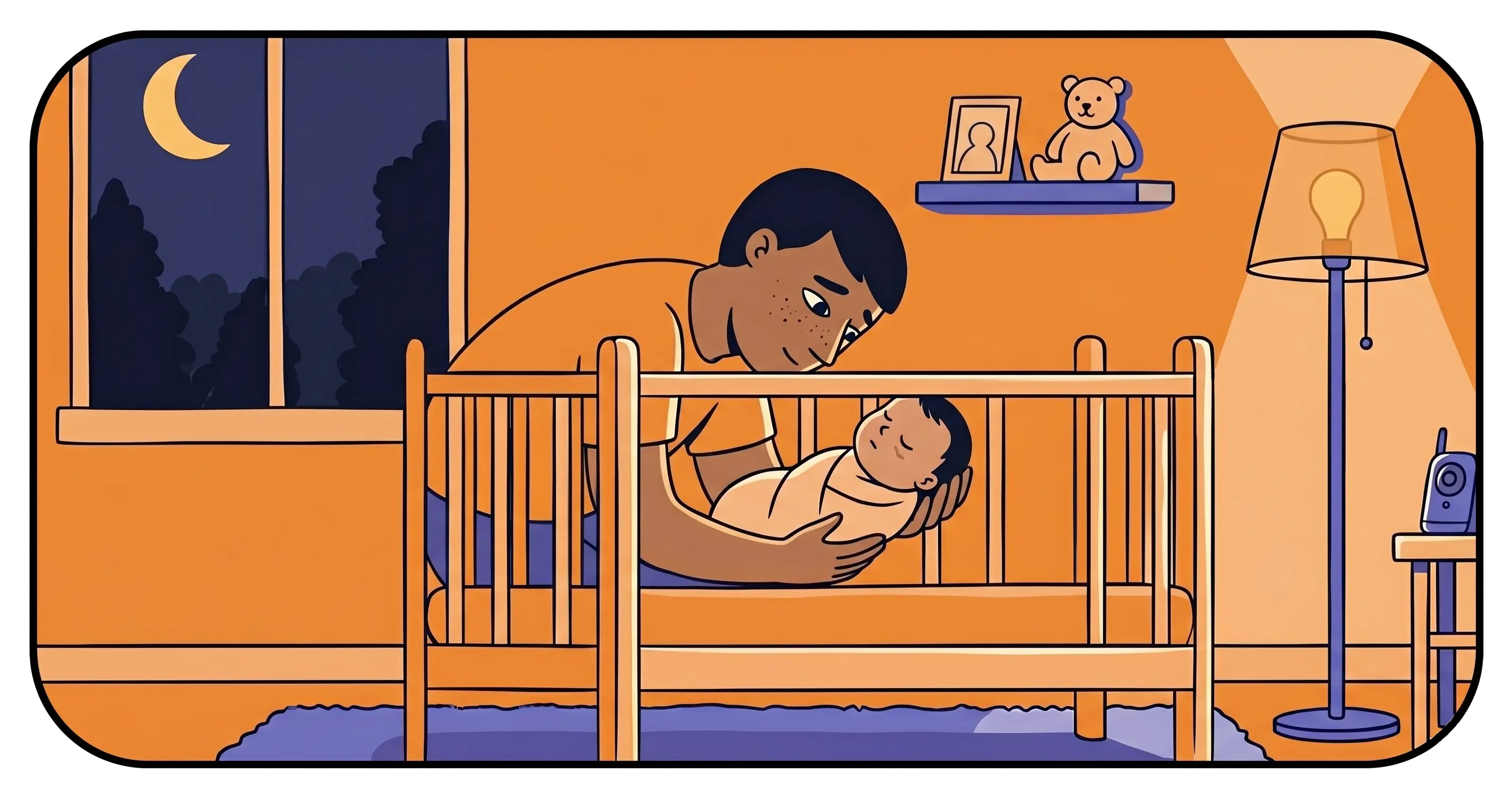
If they fall asleep daily while nursing, with a bottle, rocking, being held, or next to a lying parent, that's what becomes their “normal” way of entering sleep. When they wake up briefly at night, they naturally seek the same. Not because they're doing something “wrong,” but because that's what they know. 🤍
What Most Often Hinders Change
In practice, we often see a few recurring obstacles:
- strong sleep association – feeding, rocking, holding, falling asleep only with a parent nearby,
- inappropriate sleep time – the child is either not sleepy enough or already overtired,
- overstimulated evening – lots of noise, light, play, and emotions,
- lack of consistency during the day,
- strong need for closeness at a given stage,
- tension from adults, which the child quickly picks up on.
From our experience, sometimes parents look for a complicated cause, and the problem turns out to be simply a too-late bedtime for several days in a row. We've had many families where shifting the evening by 20–30 minutes and simplifying the ritual started to calm the situation within a week.
When to Think About Habit and When About Health
If the child functions reasonably well outside of sleep, develops normally, and can be soothed with calm support, you can usually assume that you're mainly working on a habit. In that case, a plan, consistency, and time really make a difference.
However, there are situations where it's worth consulting health first. Check this if the child: - looks in pain or clearly uncomfortable, - doesn't tolerate lying down well, - has concerning breathing at night, - suddenly started sleeping much worse than before, - has significant difficulties with eating or drinking.
We always tell parents: if something physically worries you, don't try to “wait it out with a method”. First, make sure nothing is wrong with the child.
How to Prepare for Calmer Falling Asleep
From our experience, the biggest chaos arises when a parent wants to change just the moment of falling asleep, but the rest of the day is random. Then even the best plan quickly falls apart. The child simply has too few points of reference.
Start with the Daily Rhythm
It's not about living every minute. It's more about the child roughly knowing when it's time for activity, when for calming down, and when night is approaching.
In practice, it works well to have: - a similar wake-up time, - fairly predictable naps, - a consistent start to evening winding down, - a similar bedtime for most days of the week.
Evening falling asleep usually goes better when nighttime sleep starts around the same time. For many families, the range of 7:00–8:30 PM works well, but more important than the specific number is whether the child goes to bed neither too early nor too late.
Simplify the Evening
In our work with families, we regularly see that children don't need “attractions” in the evening, just predictability. The simpler and calmer the evening, the less tension at bedtime.
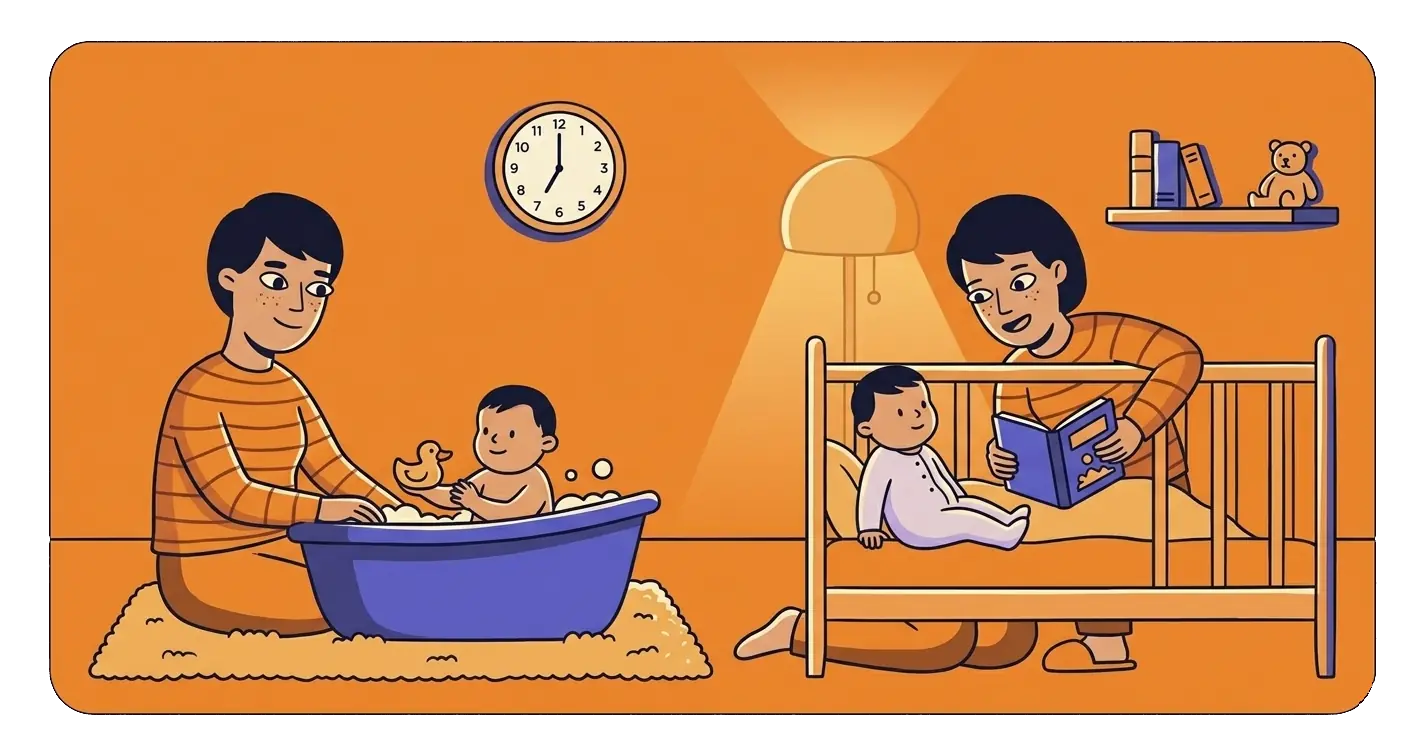
A good ritual doesn't have to be long. It can be as simple as: 1. washing or bathing, 2. pajamas, 3. feeding or dinner, 4. cuddling, 5. a short book, 6. bed.
If the same routine repeats every day, the child starts associating the steps with the night being near. And that's exactly the point. 🌙
Cut Out What's Too Stimulating
30–60 minutes before sleep, it's worth slowing down the pace of the whole house. Dimmed lights, quieter music, no screens, and less intense play really make a difference.
In practice, we observe that particularly challenging are evenings “on the home stretch,” when the child is already tired but still gets a lot of stimuli. It's easy to get excited instead of calming down. If you want to make falling asleep easier, the last hour of the day should be more soft than exciting.
How to Teach Independent Falling Asleep Step by Step
The most peace comes from taking small steps. Parents sometimes try to change everything at once because they're very tired. It's understandable, but it usually ends with a lot of resistance and a quick return to the old pattern.
We most often recommend a simple rule: change one thing at a time. This way, the child has a chance to get used to the new way of falling asleep, and you can see what actually works.
Where to Start
We usually start with the strongest support. That is, the element without which the child practically can't fall asleep.
An example sequence might look like this: 1. separating feeding from falling asleep, 2. reducing rocking or holding, 3. placing in the crib or bed before fully asleep, 4. reducing the amount of touch, 5. gradually withdrawing the parent's presence.
We don't always follow this exact path. In practice, we tailor the plan to the child and what is realistic for the family to maintain.
What It Might Look Like in the First Days
Very often, the first evenings are simply “different,” not immediately “easier.” This is important because many parents conclude after two days that the plan isn't working. But from experience, we know that the child needs a moment to understand the new arrangement.
For example: - for 3–5 days, you put the child down more sleepy but not completely asleep, - for the next 3–7 days, you help less with movement and more with voice and calm presence, - then you reduce help a bit more if the previous stage is already quite stable.
We once had a family convinced that “nothing is changing,” but after recording the evenings in notes, it turned out that the time to fall asleep had shortened from 50 to 25 minutes. That's why it's really worth looking at the trend, not just a single difficult evening.
How to Know You're on the Right Track
Progress rarely looks spectacular. Usually, small signals appear first, which are easy to overlook if you're very tired.
Notice if: - the child protests less, - is easier to put down, - returns to sleep faster after waking, - needs slightly less intense help than a week earlier.
The first sensible signs of improvement often appear after 4–7 days, and more noticeable change after 2–3 weeks of regular action.
Gentle Methods Without Leaving the Child Alone
Parents often fear that teaching to fall asleep means cutting off from the child. In our work with families, it doesn't have to look like that. You can support the child and at the same time not revert to the old way of putting them to sleep each time.
The Chair Method
This solution can be helpful when the child really needs to see the parent. Your presence gives them support, but you don't take over the entire falling asleep process.
How we usually conduct it: - for 2–3 evenings, you sit right next to the crib or bed, - speak little and calmly, - use touch briefly, not continuously, - then every 2–4 days, move a bit further away.
This method is for the patient because it doesn't give an “overnight” effect. But for some children, this predictability works best. 🙂
Gradual Withdrawal of Presence
This option works well for children who need a lot of closeness and react poorly to sudden changes. Instead of making a big step, we make a series of small ones.
It might look like this: 1. first, you're very close but not actively putting to sleep, 2. after a few days, you sit instead of lying next to them, 3. then move further away, 4. finally, there are short returns only when needed.
In practice, parents often tell us that this method is emotionally easiest for them because they don't feel like they're “disappearing” from the child's evening suddenly.
Fading, or Gradual Reduction of Help
This is simply gradually weakening what was previously essential for falling asleep. Without abruptly taking everything away at once.
If today the child falls asleep only in motion, the next step might be less movement. If they fall asleep while feeding, move feeding a bit earlier. If they need constant touch, reduce it bit by bit. Small steps every 3–5 days are usually easier to accept than one big change.
How to Respond to Crying, Protests, and Night Awakenings
This is probably the most emotional moment of the whole process. Parents ask us then: “How do I know whether to give up or persist?” And that's a very important question because it's not about ignoring the child, but about responding wisely.
First, Check the Basics
Before assuming it's a protest against change, do a quick situation check: - is the child not hungry, - is something hurting them, - are they not sick, - are they not too hot or too cold, - was the sleep time inappropriate, - was the evening too intense. 🔎
It often turns out that a difficult evening doesn't stem from the method itself, but from exhaustion or overstimulation.
Crying Doesn't Always Mean the Plan is Bad
From our experience, crying during change is often just a reaction to novelty. The child communicates: “I don't like that it's different.” It doesn't have to mean they're being harmed or that you should immediately return to the old pattern.
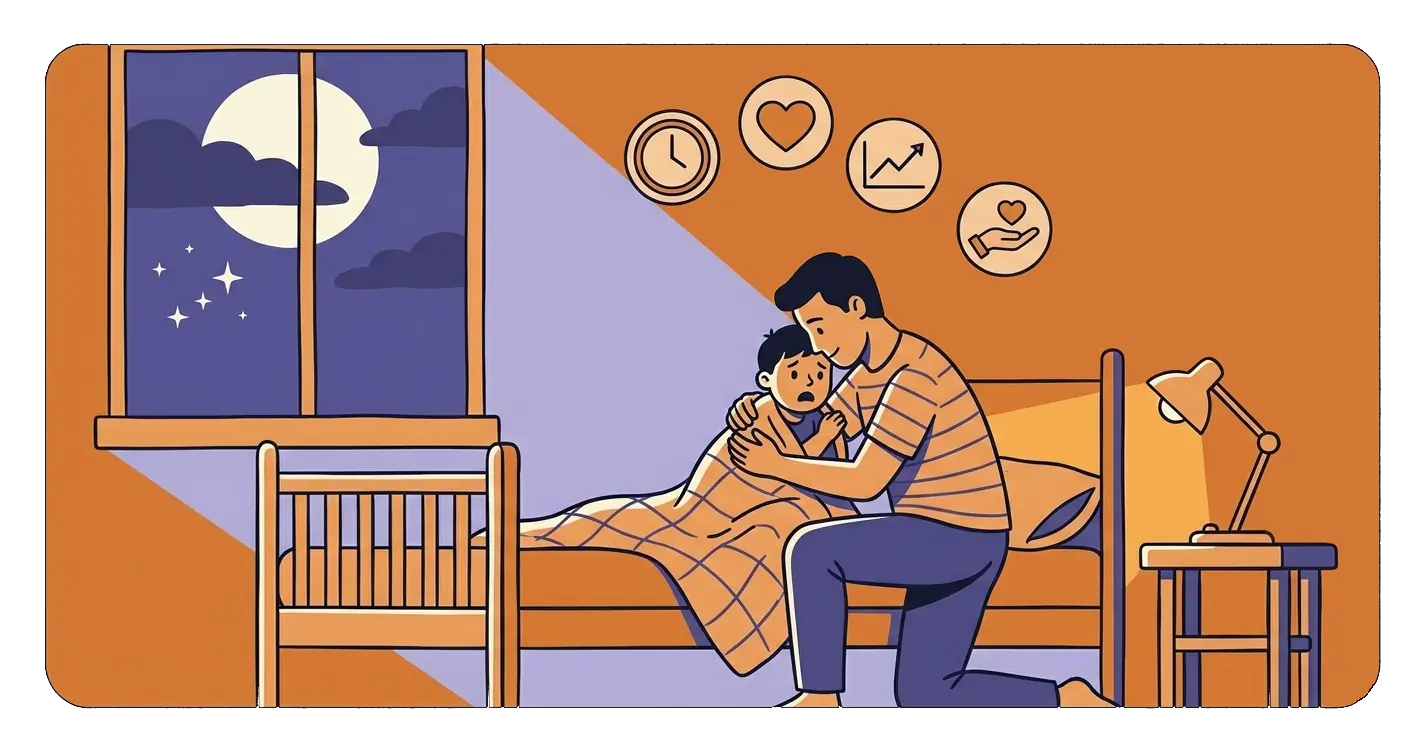
The most important thing is how you respond to that crying. You can be nearby, speak calmly, touch, hug for a moment. The point is not to automatically return to full help, which you're trying to move away from.
How to Respond to Help the Child, Not Confuse
The best response is simple and predictable: - a short phrase, for example: “I'm here, it's time to sleep”, - calm touch, - a moment of presence by the bed, - similar way of responding in the evening and at night.
Children grasp the new pattern faster when the parent's response is calm and consistent. In practice, it's this predictability that usually reduces tension after a few days.
Common Mistakes That Hinder Learning to Fall Asleep
In our work with families, we see a few traps that regularly return. The good news? Most of them can be quickly corrected.
1. Too Big a Change at Once
If in one evening you want to remove feeding to sleep, holding, rocking, and also leave the room, for most children it will simply be too much. Better less, but calmer.
2. Changing Rules Every Night
One day the crib, the next holding, the third feeding to sleep, the fourth a new method from the internet — the child can really get lost in this. It's usually worth giving one strategy at least 4–7 days before assessing whether it makes sense.
3. Lack of a Common Plan Among Adults
This is a very common problem. One person wants to act in stages, the other returns to the old way after a few minutes because they can't stand the tension. And that's human, but unfortunately not very helpful.
That's why it's worth agreeing before starting: - what you do step by step in the evening, - how you react to protests, - when you increase support, - after how many days you assess the effects.
In practice, a simple sleep notebook helps a lot. It doesn't have to be perfect. Just a few short notes a day to see if something is really improving.
When to Expect Results
It depends on the starting point. If the child has very strong sleep associations and has been falling asleep in only one specific way for a long time, the process usually takes longer. If the change involves only one element, improvement is often faster.
Most often, the first signs of improvement appear after 4–7 days, and a more stable effect after 10–21 days. Sometimes faster, sometimes slower. In practice, looking at the overall direction gives the most, not expecting a perfect evening after two attempts. ⏳
What to Consider as Real Progress
Progress is not only when the child falls asleep completely alone and without any sound. Often, smaller but very important changes appear earlier: - shorter time to fall asleep, - less intense protest, - easier calming in the evening, - less help from you, - calmer night awakenings. 🌙
It's these small signals that show that the new way is starting to work for the child.
When to Change the Plan
If after about 2 weeks you don't see any trend for the better, the protest is getting stronger, or you feel that the method doesn't fit your child at all, it's worth taking a step back and reviewing the plan again.
From our experience, most often adjustments are needed for: - sleep time, - too fast pace of changes, - too many changes at once, - method not suited to the child's temperament.
Summary: What Really Helps a Child Fall Asleep Independently
If we had to simplify it to one thought, we'd say this: independent falling asleep is easiest built on calmness and consistency, not pressure. The child doesn't need a perfect parent or a perfect method. They need a clear plan, your calm presence, and time to get used to the new way of falling asleep.
The most important things to remember: - first organize the daily rhythm, - change one thing at a time, - give the plan a few days before assessing it, - treat age as a guideline, not a verdict, - if something worries you health-wise, check it first.
If you feel like you're trying again and it still ends with exhaustion, chaos, or doubts, check out our consultation form. Together we'll create a plan that's realistic to implement in your home, not just sound good in theory.