Night Terrors in Children vs. Nightmares – Key Differences
A sudden scream, cry, or violent movements from your child at night can be very distressing for a parent. Although night terrors, also known as sleep terrors, and nightmares may seem similar, they are two distinct phenomena. The most important clues are interaction with the child during the episode, the ability to calm them, and memory of the event upon waking.
A nightmare is an unpleasant dream from which the child wakes up. In contrast, a night terror is a type of parasomnia, which involves behaviors occurring during sleep. The child may appear awake but is actually partially asleep. As a result, attempts to make contact or provide intense comfort usually do not have the desired effect [1].
Comparison Table
| Feature | Night Terror | Nightmare |
|---|---|---|
| Sleep Stage | Usually deep NREM sleep, especially stage N3 | Usually REM sleep, where vivid dreams occur |
| Interaction with Child | Limited or impossible; the child may have open eyes but not recognize the parent | The child is awake, recognizes the parent, and usually seeks closeness |
| Ability to Calm | Usually difficult to calm; touch may sometimes increase agitation | A calm voice, hugging, and the parent's presence usually help |
| Memory in the Morning | Usually no memory of the episode | The child may remember the dream or associated fear |
| Timing of Episode | Usually in the first part of the night, often within a few hours of falling asleep | More often in the second half of the night or early morning |
| How to React | Secure the environment, stay calm, and do not forcibly wake | Make contact, provide a sense of security, and help them fall back asleep |
The timing of occurrence is just a guideline. The child's behavior speaks volumes: during a night terror, they remain partially asleep, whereas after a nightmare, they are truly awake. Night terrors result from incomplete awakening from deep NREM sleep and usually do not involve memory of a specific dream [2].
What Does a Night Terror Look Like in a Child?
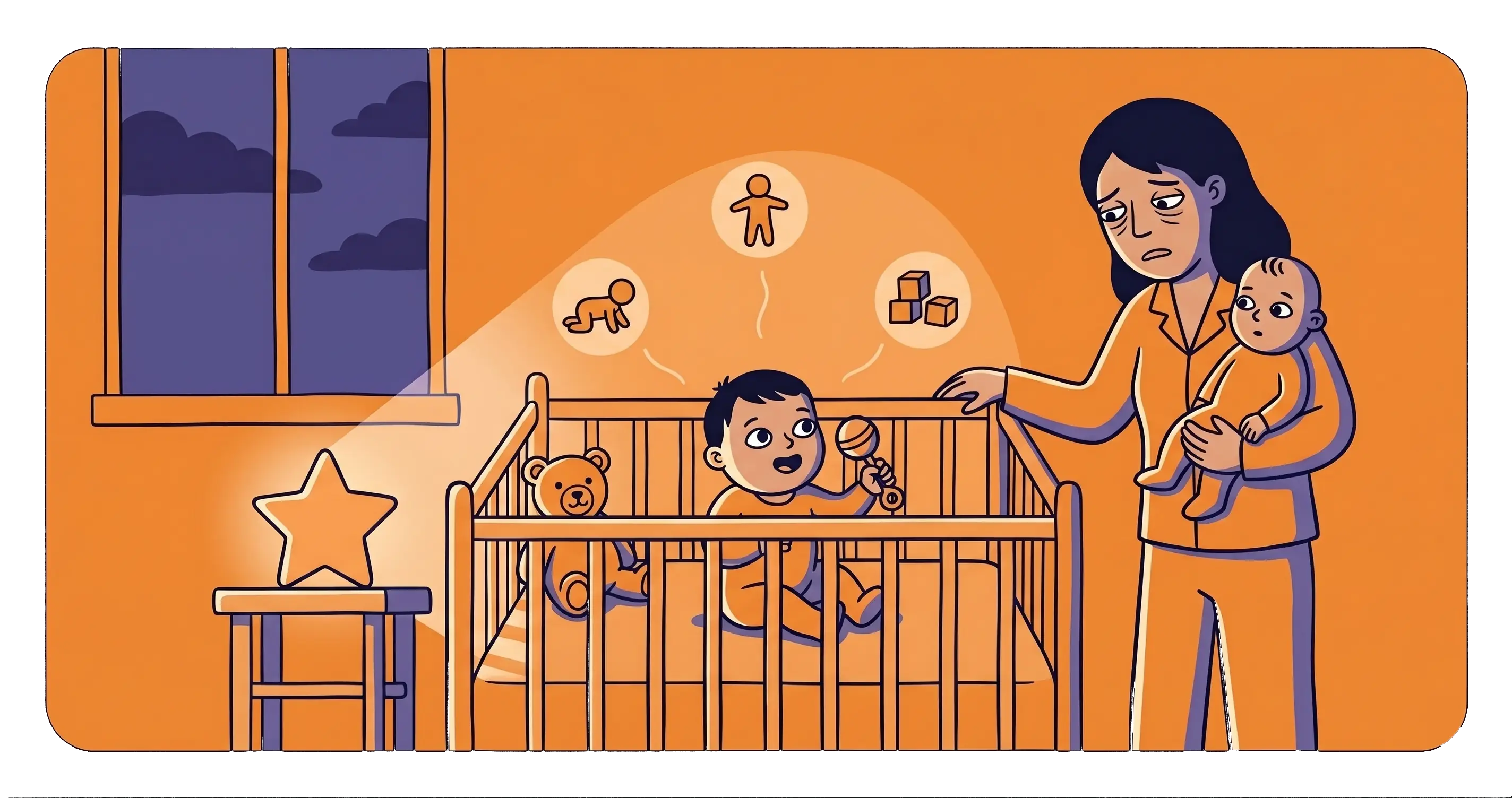
A night terror usually begins suddenly. The child may sit up in bed, scream, cry, make violent movements, have rapid breathing, sweat, or appear very frightened. Their eyes may be open, yet they do not recognize the parent and do not respond logically to questions.
An episode typically lasts from a few to several minutes, although it may seem much longer to the parent. After it ends, the child usually falls back into a peaceful sleep, and in the morning, remembers nothing.
How to React During a Night Terror?
- Stay close and remain calm. Observe the child without bombarding them with questions.
- Ensure safety. Move away hard and sharp objects, secure stairs and windows. If the child tries to get up, gently protect them from injury.
- Do not forcibly wake. Shaking, loud calling, or turning on bright lights may increase disorientation.
- Do not hold tightly, unless necessary to prevent a fall or injury.
- Wait for the episode to end spontaneously. Afterward, help the child get comfortable and return to sleep.
A parent's calm presence may not always shorten the episode, but it reduces additional stimuli and ensures safety.
How to Recognize a Nightmare and Help Your Child?
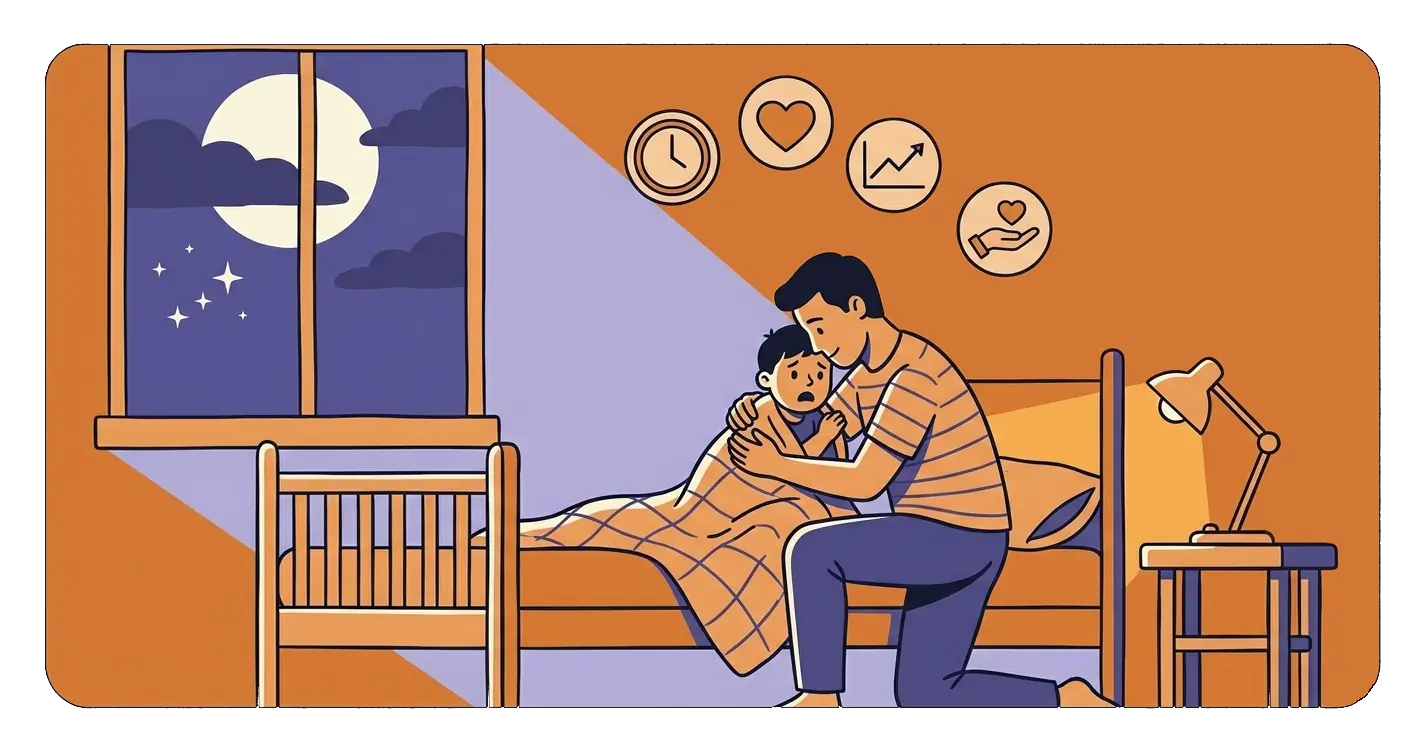
After a nightmare, the child is awake, recognizes the caregiver, and usually wants to be hugged. They may talk about a monster, accident, separation, or other disturbing event from the dream. A younger child may not always be able to describe the nightmare but responds to the parent's voice and gradually calms down.
What to Do After a Nightmare?
- Approach calmly and say: “I’m here, you’re safe”.
- Hug the child if they need it.
- Help them realize they are in their room and the dream is over.
- You can offer a favorite stuffed toy or turn on a soft light for a moment.
- After calming down, return to the usual bedtime routine.
It’s not worth dismissing emotions with phrases like “there’s nothing to be afraid of” or questioning the dream in detail in the middle of the night. A short message acknowledging the fear is better: “That was scary, but now you’re safe”. If the child wants to talk about the nightmare, you can revisit it calmly during the day.
At What Age Do Nightmares and Night Terrors Occur?
Nightmares can occur in children of various ages but become easier to identify when the child can describe the dream content. Night terrors are most commonly observed in preschool and early school-aged children, although they can occur earlier or later.
In infants, nighttime crying is more often related to hunger, pain, infection, reflux, teething, discomfort, or the need for closeness. Based on crying alone, it is difficult to identify a nightmare or night terror. For the youngest children, basic needs and symptoms of illness should be checked first.
What Can Intensify Night Episodes?
Night terrors may occur more frequently during periods of sleep deprivation, irregular daily routines, fever, stress, or changes in the environment. Nightmares, on the other hand, may intensify after strong experiences, exposure to frightening content, or during periods of increased emotional tension.
Supporting healthy sleep involves consistent bedtimes and wake-up times, a predictable routine, and limiting stimulating activities before bed. The American Academy of Pediatrics emphasizes the importance of regularity, an appropriate sleep environment, and a calm evening ritual [3].
How Much Sleep Does a Child Need?
According to the American Academy of Sleep Medicine, the approximate sleep requirement per day, including naps, is [4]:
- Infants 4–12 months: 12–16 hours,
- Children 1–2 years: 11–14 hours,
- Children 3–5 years: 10–13 hours,
- Children 6–12 years: 9–12 hours,
- Teenagers 13–18 years: 8–10 hours.
These are approximate ranges. Individual children's needs may vary slightly, so in addition to the number of hours, it is worth observing the child's mood, sleepiness, and functioning during the day.
A Calm Bedtime Routine
The evening ritual doesn’t have to be elaborate. What’s more important is that it is predictable and follows a similar order each day. It may include:
- Winding down play and dimming the lights,
- Washing and changing into pajamas,
- A short book or calm conversation,
- A hug and a consistent goodnight message.
Before bed, it’s advisable to limit intense activity, loud play, screens, and age-inappropriate content. A regular routine can support sleep but does not guarantee the complete elimination of nightmares or night terrors.
Sleep Diary – What to Record?
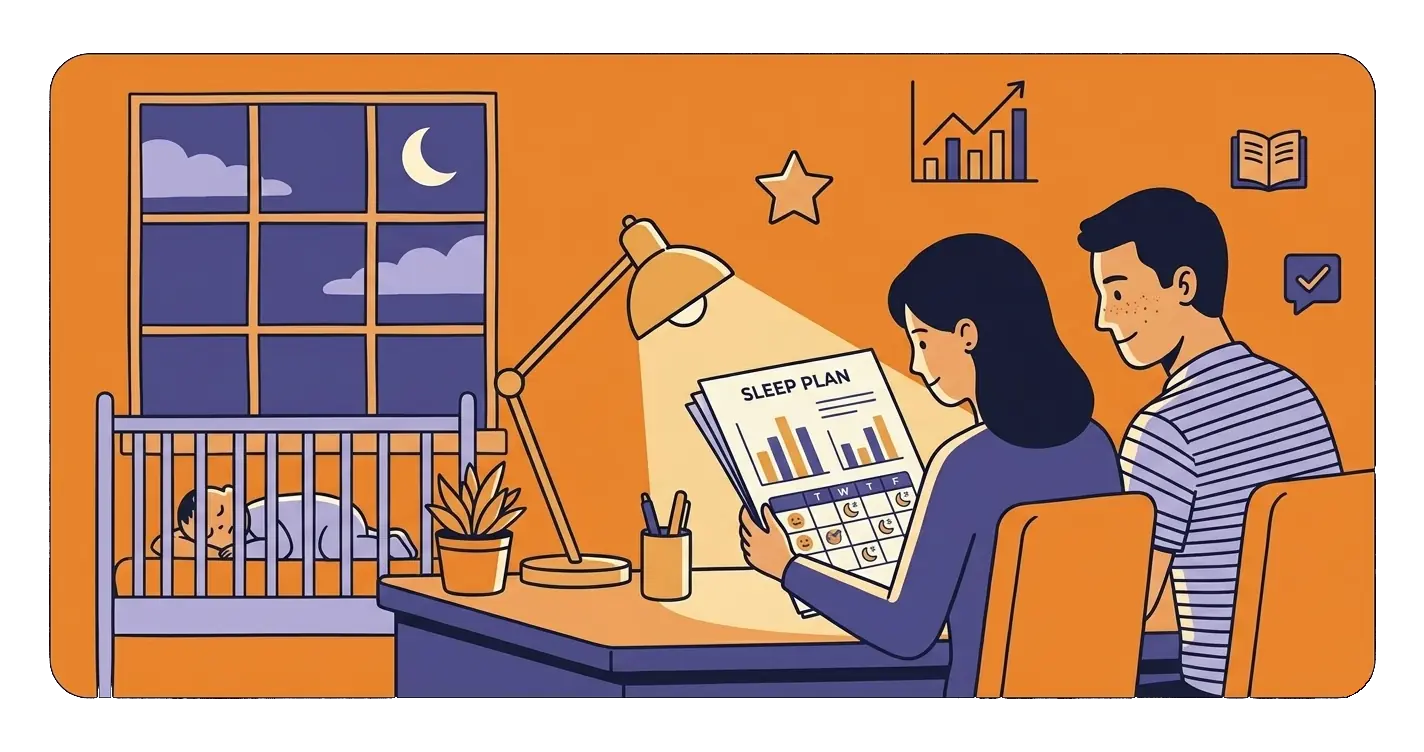
If episodes recur, it is worth keeping a simple sleep diary for at least two weeks. Such notes help identify the connection between nighttime events and sleep deprivation, illness, or changes in daily rhythm. The AASM provides a sleep diary that can help organize observations [5].
In the diary, record:
- The time of going to bed and falling asleep,
- The time of waking up and naps,
- The time and approximate duration of the episode,
- The child's behavior and ability to make contact,
- Illness, fever, medication, or an exceptionally stressful day,
- Snoring, mouth breathing, and pauses in breathing,
- The child's mood the next day.
If safe, a short recording of the episode may be helpful during consultation. However, do not record at the expense of ensuring the child's safety from injury.
When to Consult a Doctor or Specialist?
A single, typical episode does not always require urgent consultation. However, it is worth discussing the situation with a pediatrician if the diagnosis is uncertain or if nighttime events affect the child's safety, sleep, or functioning.
Red Flags
Consult a doctor if:
- Episodes are frequent, intensify, or regularly disrupt the entire family's sleep,
- There are falls, injuries, leaving the room, or other dangerous behaviors,
- The child is noticeably sleepy, irritable, or has difficulty concentrating during the day,
- There is loud snoring, mouth breathing, choking, or noticeable pauses in breathing during sleep,
- Movements are always the same, rhythmic, or one-sided, there is body stiffening, drooling, cyanosis, or loss of bladder control,
- Events occur during the day or appear during wakefulness,
- Episodes started suddenly after an injury, medication change, or along with other concerning symptoms,
- Nightmares recur after a traumatic event or cause severe fear of sleep.
Urgent medical help is required if the child has difficulty breathing, turns blue, suffers a serious injury, does not regain typical contact after the episode, or if the event may be a seizure.
Depending on the symptoms, the pediatrician may recommend a neurological, ENT, psychological consultation, or an evaluation at a sleep medicine clinic.
Frequently Asked Questions
Should You Wake a Child During a Night Terror?
Usually not. Attempting to abruptly wake them may increase disorientation and agitation. The most important thing is to secure the environment, stay nearby, and calmly wait for the episode to pass. The exception is a situation of immediate danger, where you need to protect the child from injury.
Does a Child Remember a Night Terror?
Most often, no. A night terror occurs during partial awakening from deep NREM sleep, so in the morning, the child usually does not remember the event. After a nightmare, however, they may remember the entire dream or a fragment of it.
Are Night Terrors Dangerous?
Typical night terrors themselves are usually not dangerous. The risk is primarily associated with violent movements, getting out of bed, or the possibility of falling. Therefore, it is necessary to secure the room and consult a doctor if episodes lead to injuries or do not follow a typical course.
Can Nightmares and Night Terrors Occur in the Same Child?
Yes. They are different phenomena, but one child can experience both nightmares and night terrors. Observing the contact during the event, the timing of its occurrence, and memory the next morning can be helpful.
Can Sleep Deprivation Trigger a Night Terror?
Sleep deprivation and irregular bedtimes can increase the likelihood of night terrors in susceptible children. It is worth ensuring adequate sleep duration and a predictable daily rhythm, but the persistence of episodes does not mean the parent is making a mistake.
Summary
The most important difference concerns the child's state during the episode. After a nightmare, the child is awake, recognizes the parent, accepts comfort, and may remember the dream. During a night terror, they remain partially asleep, contact is limited, and they usually remember nothing in the morning.
With a nightmare, help the child regain a sense of security. With a night terror, do not try to wake them abruptly — secure the environment and calmly observe. If the course is atypical, there are breathing disturbances, injuries, or concerning movements, consult a doctor.
Sources
- NHS, Night terrors and nightmares in children.
- Sleep terrors: an updated review – updated review on night terrors in children.
- American Academy of Pediatrics, Healthy Sleep Habits.
- American Academy of Sleep Medicine, Recommended Amount of Sleep for Pediatric Populations: A Consensus Recommendation.
- American Academy of Sleep Medicine, materials on keeping a sleep diary (Sleep Diary).