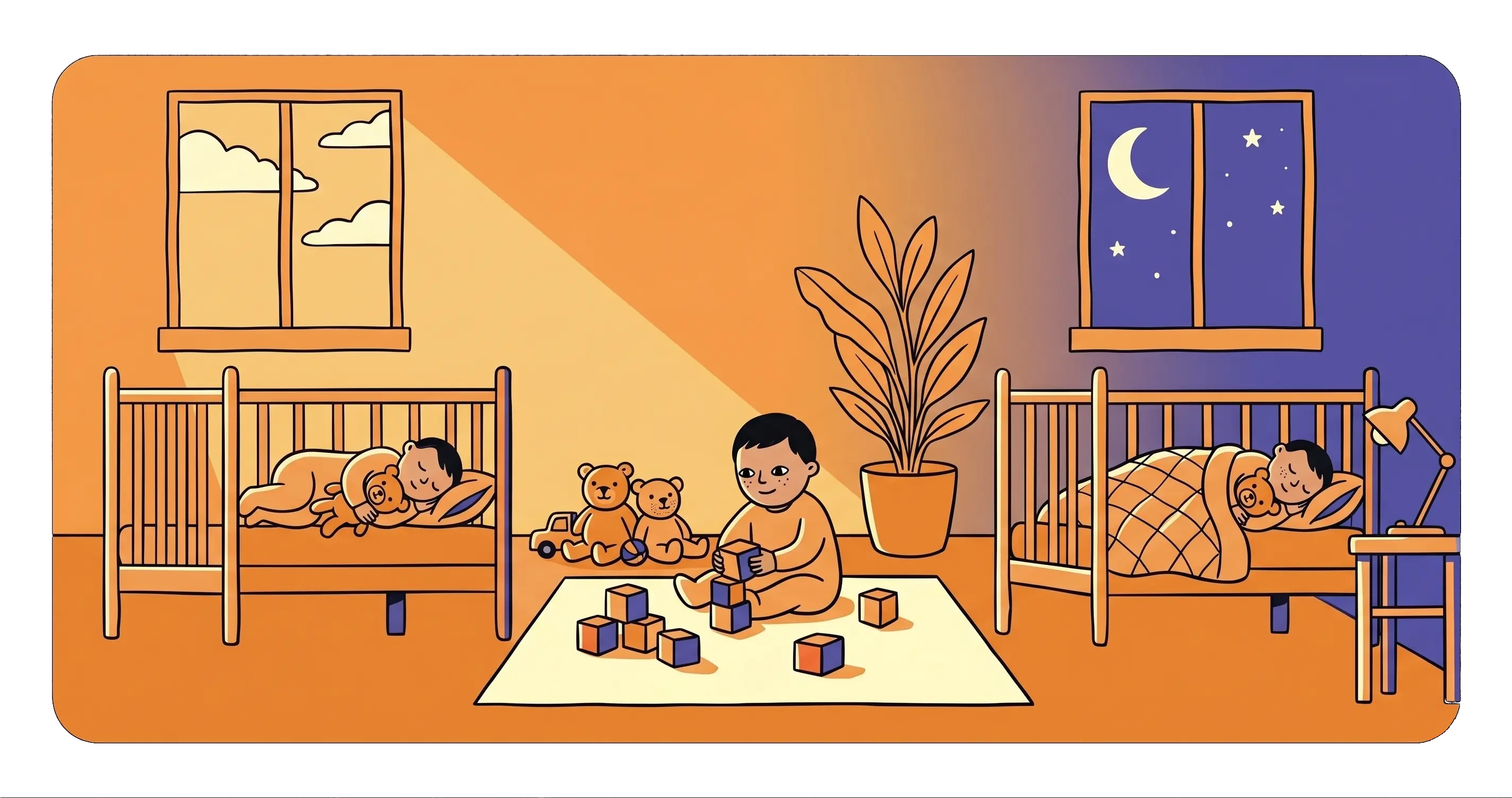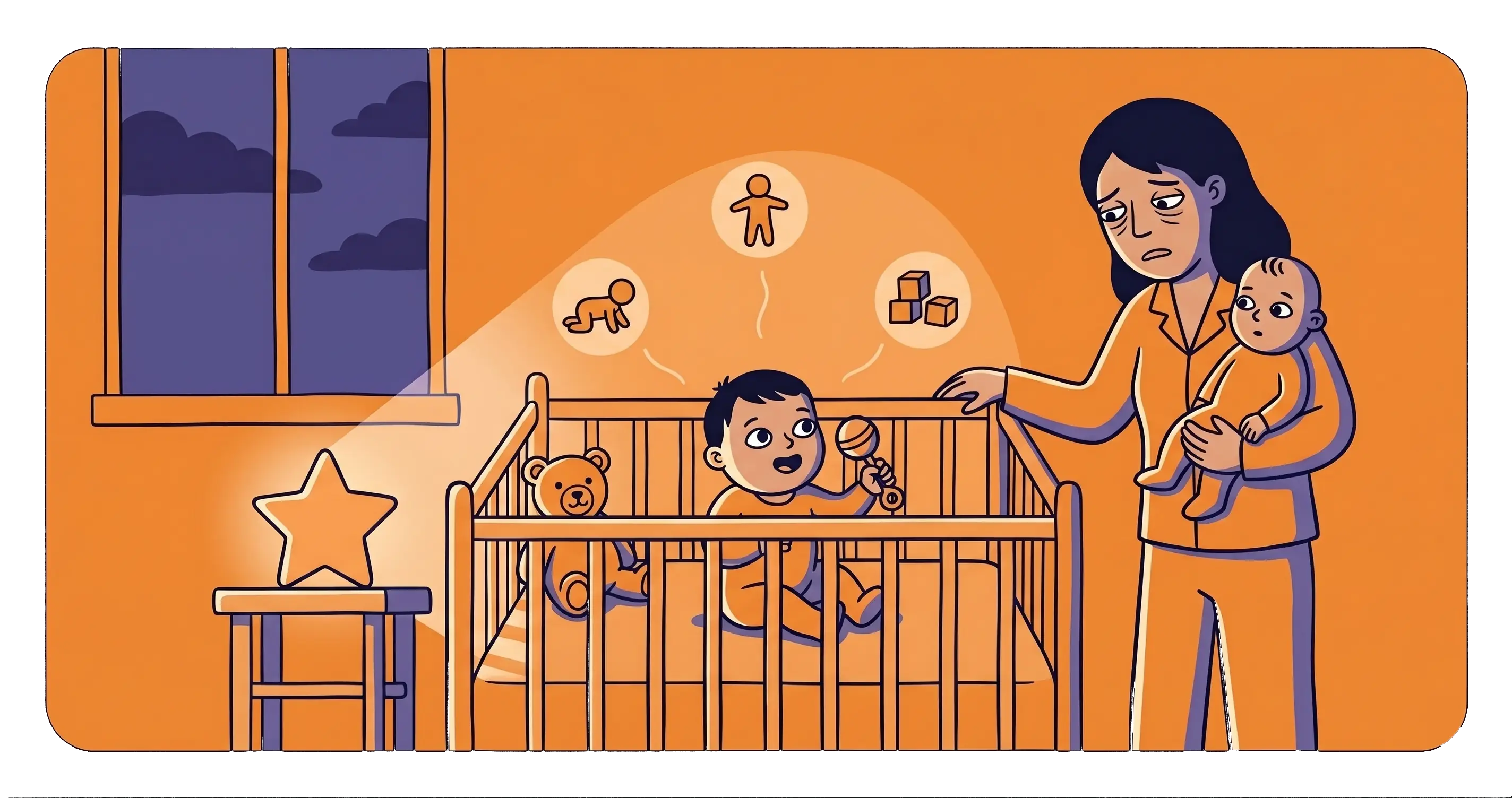
Difficult nights, short naps, and long bedtimes can be a temporary stage in a child's development. However, if problems persist, affect family functioning, or are accompanied by concerning symptoms, it's worth seeking appropriate support. Depending on the situation, this may be a sleep consultant, pediatrician, ENT, or sleep medicine specialist.
When Do Sleep Difficulties Require Closer Attention?
Children's sleep changes with age. Temporary worsening may be related to infection, teething, intense development, changes in nap frequency, or new home situations. Night awakenings in infants don't necessarily indicate a disorder — they may stem from the need for feeding and closeness.
It's worth examining the situation more closely when difficulties last for several weeks, occur almost daily, and clearly burden the child or caregivers. It's not just the number of awakenings that matters, but also the child's age, health, total sleep amount, and daytime functioning. Regular sleep times, predictable routines, and conditions conducive to relaxation are fundamental to healthy sleep habits [2].
Signals that may warrant a consultation about sleep organization include:
- regularly prolonged bedtimes,
- very irregular sleep and nap times,
- difficulty adjusting nap numbers to the child's age,
- frequent awakenings requiring long soothing each time,
- strong tension around the evening routine,
- caregiver fatigue hindering safe daytime functioning.
The mere presence of a parent, feeding, carrying, or rocking at bedtime isn't automatically a "bad habit." Support can be sought when the current method no longer meets the family's needs or becomes overly burdensome for caregivers.
When Can a Child Sleep Consultant Help?
A sleep consultant can primarily help organize behavioral and organizational factors. This includes the daily schedule, nap times, evening routine, bedroom conditions, and response to awakenings. Behavioral interventions are considered an important part of managing pediatric behavioral insomnia [4][5].
Consultation may be useful if the child is healthy, developing properly, and the main difficulty involves:
- an unpredictable daily rhythm,
- long or tense bedtimes,
- problems transitioning to a different number of naps,
- the need for gradual changes in falling asleep methods,
- lack of a consistent nighttime response plan.
The term "sleep consultant" doesn't automatically imply a medical profession. Before starting cooperation, it's worth checking the person's education, experience, work method, and competence boundaries. A reliable consultant doesn't diagnose diseases, recommend stopping medications or night feedings without a doctor's agreement, and refers the family to the appropriate specialist when medical symptoms arise.
What Should a Safe Consultation Look Like?
Support should consider the child's age and developmental stage, health status, feeding, temperament, and the entire family's capabilities. There is no single method suitable for all children. The plan should not violate safe infant sleep principles: placing the child on their back, using a flat and firm surface, and leaving the sleep space free of pillows, quilts, bumpers, and loose items [2].
Caution should be exercised with individuals promising full-night sleep in a set number of days, ignoring the need for feeding or medical symptoms, or proposing solutions inconsistent with safe sleep principles.
When to See a Pediatrician?
A pediatrician should be the first point of consultation if sleep difficulties may result from pain, illness, or feeding problems. Medical evaluation is recommended especially when, in addition to awakenings, there are:
- poor weight gain or feeding difficulties,
- recurrent vomiting, severe reflux, or noticeable pain after meals,
- persistent cough, wheezing, or breathing problems,
- fever, pain, or sudden behavioral changes,
- severe itching or skin changes disrupting sleep,
- unusual stretching, tremors, or repetitive movements suggesting seizures,
- significant sleepiness, irritability, or daytime functioning decline.
For infants, decisions about limiting night feedings should be discussed with a pediatrician or other specialist managing the child. Nutritional needs depend on factors such as age, feeding method, growth rate, and health status.
When is an ENT or Sleep Medicine Specialist Needed?
ENT Consultation
Regular snoring in a child shouldn't be treated solely as an annoying sound. It may accompany airway narrowing, tonsil enlargement, or obstructive sleep apnea. It's worth consulting a pediatrician or ENT for:
- loud, regular snoring,
- mouth breathing during sleep and daytime,
- recurring breathing pauses, gasping, or sudden air intake,
- restless sleep combined with breathing effort,
- chronic nasal obstruction,
- morning headaches, concentration difficulties, or excessive sleepiness.
Breathing disorders during sleep can affect behavior, learning, development, and functioning, requiring medical evaluation [3]. Simply organizing the evening routine doesn't address their cause.
Sleep Medicine Clinic Consultation
A pediatrician may refer a child to a sleep medicine specialist when symptoms are atypical, persist despite basic management, or require sleep study evaluation. Such assessment may be needed for suspected sleep apnea, narcolepsy, sleep-related movement disorders, or dangerous and frequent parasomnias. Diagnosing pediatric sleep disorders should consider both medical and behavioral causes [1][4].
When to Consult a Doctor Urgently?
Don't wait for a sleep routine consultation if the child has symptoms of breathing disorders or acute health deterioration.
Call for medical help at 112 or go to the nearest emergency department if there are:
- bluish lips or skin,
- prolonged breathing pauses or noticeable breathing effort,
- loss of consciousness, limpness, or difficulty waking the child,
- a seizure, especially the first or prolonged one,
- sudden, significant general condition deterioration.
If unsure about the urgency, contact a pediatrician or medical help. A sleep consultant doesn't replace a medical examination.
How to Prepare for a Discussion About Your Child's Sleep?
It's helpful to keep a simple sleep diary for 7–14 days. It doesn't have to be recorded to the minute. Useful information includes:
- morning wake-up time,
- nap times and durations,
- evening routine start and sleep time,
- number and approximate time of awakenings,
- night feedings,
- soothing and sleep methods,
- snoring, unusual movements, or breathing difficulties,
- child's mood and behavior during the day.
The diary helps distinguish isolated bad nights from a repetitive pattern. It also aids the doctor or consultant in tailoring further actions. Recording a short video of snoring or unusual sleep behavior can be helpful during a medical visit, provided it can be done without delaying emergency help.
What to Expect After Implementing Changes?
The pace of improvement is individual. It depends on the child's age, health, temperament, the nature of the problem, and the ability to consistently apply agreed solutions. For some families, the first noticeable change is a calmer evening, while for others, improvement appears gradually, initially affecting the daily rhythm.
Don't expect every child to stop waking at night. Short awakenings are a natural part of sleep, and for infants, they may still be associated with the need for feeding and contact. The goal of support should be safe, sustainable solutions and improved family functioning, not achieving a predetermined outcome.
Frequently Asked Questions
Do frequent awakenings always indicate a sleep disorder?
No. Awakenings can be physiological, especially in infants. Age, feeding needs, resettling methods, total sleep amount, and the child's daytime mood are important. Awakenings combined with pain, breathing problems, abnormal development, or significant functioning decline require evaluation.
Can a sleep consultant diagnose reflux or sleep apnea?
No, unless they are also a doctor conducting the consultation within their credentials. Diagnosing diseases is the domain of medical specialists. A consultant should recognize warning signs and recommend contacting a pediatrician, ENT, or sleep medicine clinic.
Do you need to see a pediatrician before a sleep consultation?
Not always. If the child is healthy and developing properly, and the difficulty mainly involves daily rhythm or routine, you can start with an organizational consultation. A medical visit is necessary when there are symptoms of pain, illness, breathing disorders, feeding, or growth issues.
Does changing the way a child falls asleep mean leaving them to cry?
No. There are various behavioral approaches, including gradual methods and those involving caregiver presence. The approach should consider the child's age, health, temperament, and family boundaries. No method should violate safe sleep principles.
Can regular snoring be initially addressed with routine changes?
Don't limit yourself to routine changes. Regular snoring, breathing pauses, mouth breathing, or breathing effort during sleep require a conversation with a pediatrician and often ENT or sleep medicine clinic assessment.
Summary
A sleep consultant can help when the main issue is sleep times, naps, evening routine, or response to awakenings. However, they don't replace a pediatrician or medical diagnostics. Symptoms of pain, feeding and growth problems, regular snoring, breathing pauses, and unusual sleep behaviors require evaluation by the appropriate specialist.
The most important thing is to match help to the cause of difficulties. Sometimes organizing daily habits is enough, while other times medical examination and further diagnostics are needed.
Sources
- Polish Society for Sleep Research — materials on sleep and sleep disorders.
- American Academy of Pediatrics, Healthy Sleep Habits.
- American Thoracic Society, Healthy Sleep in Children.
- Management of sleep disorders in children — review of managing sleep disorders in children.
- Behavioral insomnia — review on pediatric behavioral insomnia.