Why Does Your Baby Only Fall Asleep in Your Arms?
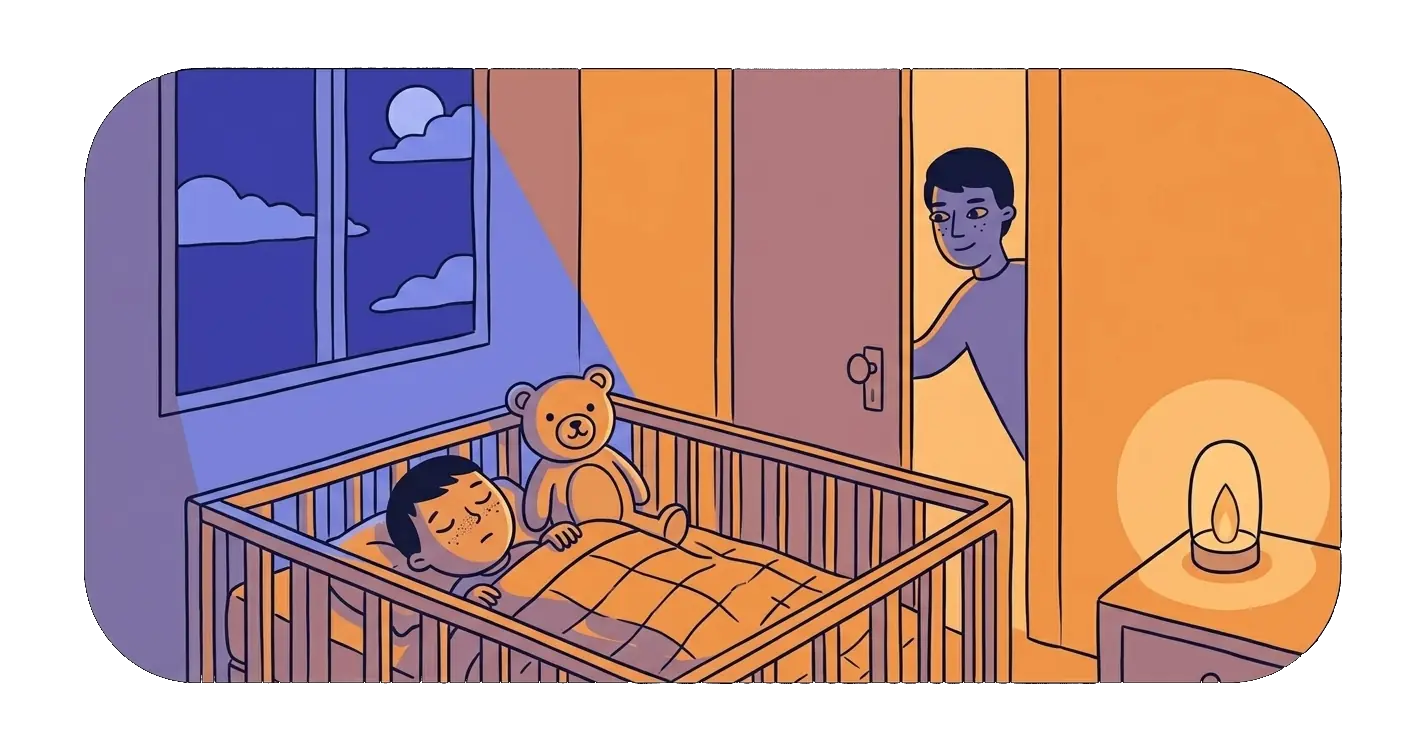
Falling asleep while being held, rocked, or fed is common, especially in the first months of life. The closeness of a parent provides warmth, a familiar scent, movement, and a sense of security for the infant. This doesn't mean the child is spoiled or that the parent has made a mistake.
It's important to distinguish three aspects: the physiological need for closeness in a newborn, established sleep associations, and safe sleep guidelines. Each requires a slightly different approach.
The Need for Closeness in a Newborn
A newborn cannot yet regulate arousal independently like an older child. They may need frequent feeding, contact with a parent's body, and help transitioning from wakefulness to sleep. At this stage, the goal doesn't have to be independent sleeping. More important are proper feeding, safe sleep conditions, and responding to signals of hunger and discomfort.
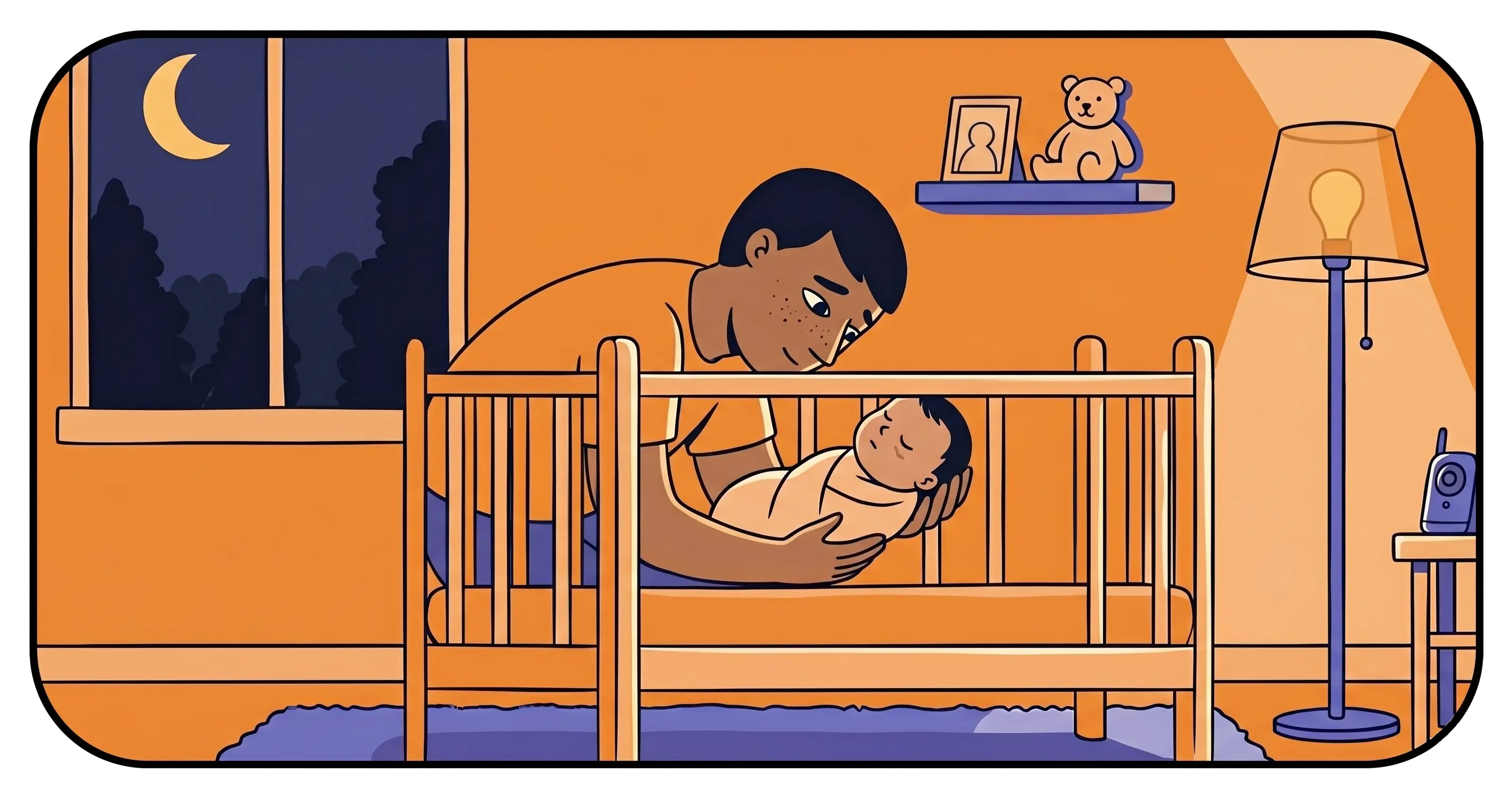
If a baby falls asleep in your arms, you can calmly transfer them to the crib. However, do not fall asleep with the infant on a couch, chair, or in a position where they could slide or have restricted airflow.
What Are Sleep Associations?
A sleep association is a condition that a child begins to associate with sleep, such as rocking, nursing, a pacifier, a parent's presence, or a specific song. These associations are not inherently wrong. However, they can become burdensome if the child needs them at every wake-up, and the current method of putting them to sleep no longer suits the family.
Sleep difficulties and nighttime awakenings can be maintained by the way the environment responds, the daily rhythm, and the conditions accompanying falling asleep. Behavioral changes should be tailored to the child's age and developmental capabilities [3].
Safe Sleep Is More Important Than How the Baby Falls Asleep
Regardless of whether the baby falls asleep in your arms, while nursing, or in the crib, after falling asleep, they should be placed according to safe sleep guidelines. The American Academy of Pediatrics recommends that for the first year of life, the baby should be placed on their back for every sleep, on a firm, flat, and non-inclined surface designed for infants [1].
- The crib or bassinet should have a fitted, firm mattress and a tight sheet.
- The sleep area should be free of pillows, quilts, bumpers, wedges, nests, mobiles, or soft toys.
- Do not burden the baby with blankets, swaddles, or sleep sacks with added weight.
- The infant should sleep in their own space, ideally in the parents' room for at least the first 6 months.
- If the baby falls asleep in a car seat, swing, or other sitting device outside of travel, transfer them to a flat sleep surface as soon as possible.
Particularly dangerous is falling asleep with an infant on a couch or chair. If you feel you might fall asleep during nighttime feeding, prepare the environment to minimize risk, and after waking, place the baby back in their own crib [2].
Is It a Developmental Stage or a Sign of Discomfort?
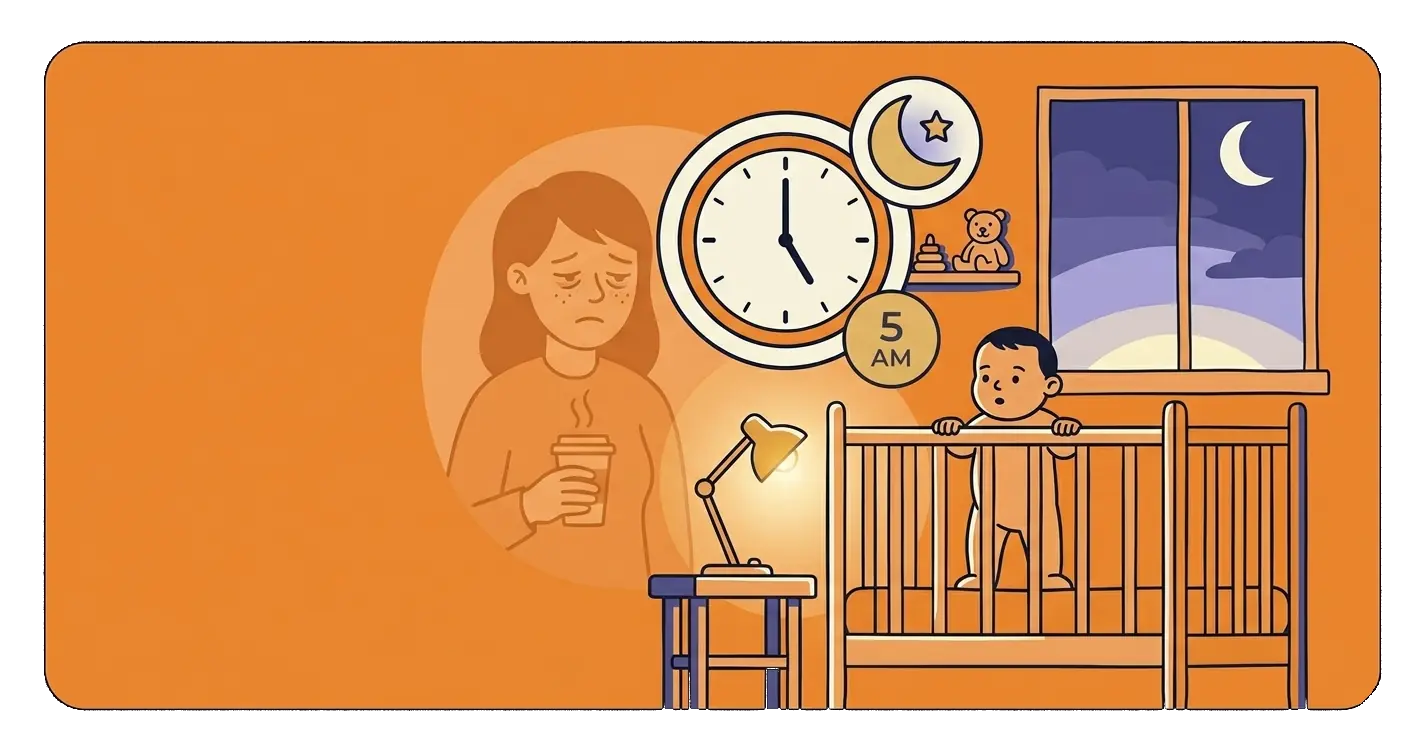
A greater need for holding may occur periodically, for example, during intense development, changes in nap rhythm, or temporary discomfort. The fact that a child falls asleep more easily with a parent usually doesn't indicate illness.
Before starting a change, it's worth assessing the child's overall functioning. Pay attention to whether they are eating properly, gaining weight, breathing freely, and calming down during contact with a caregiver. If difficulties involve not only falling asleep but also feeding, breathing, or behavior during the day, it's important to find the cause first.
When to Start Transitioning to the Crib?
The best time is a period of relative stability: the child is healthy, not experiencing significant pain, and the caregiver can proceed in a similar way for several consecutive days. Introducing changes during an infection, intensified feeding problems, or a major family crisis can be more challenging.
There's no need to wait for the perfect day. It's worth choosing one small goal, such as reducing the intensity of rocking or practicing one transfer during the day. A consistent routine and regular sleep times help the child recognize signals of impending rest [5].
A Step-by-Step Plan for Infants
In the first year of life, the pace of changes should consider the child's age, feeding, and temperament. For a newborn or younger infant, do not limit nighttime feedings without consulting a pediatrician, especially if there are difficulties with weight gain.
- Choose one trial per day. Initially, this may be the first nap or evening sleep, not every sleep.
- Introduce a short ritual. Diaper change, dimming the lights, feeding, and a few minutes of calm cuddling are enough. The ritual should not be long or complicated.
- Gradually reduce movement. First, rock gently, then stop the movement while still holding the baby close.
- Try laying down. You can lay the baby down asleep or drowsy. The rule of always laying the baby down "drowsy but awake" is not mandatory and doesn't work for every infant.
- Stay close after laying down. For a moment, you can speak calmly or place your hand on the baby's body. Before leaving, remove your hand and ensure no additional items are left in the crib.
- Respond to escalating cries. If the baby becomes increasingly upset, pick them up, soothe them, and try again or end the attempt. Stepping back one stage doesn't negate the entire process.
While laying down, you can keep the baby close to your body, then gently place them in the crib. Regardless of the technique, the final position of the infant should be on their back.
A Step-by-Step Plan for Older Children
For a child over one year old, established associations, evening predictability, and boundaries set by the caregiver may play a larger role. Behavioral methods involving routine, gradually reducing parental presence, or planned checking on the child can reduce problems with falling asleep and nighttime awakenings [4]. However, there is no one method suitable for every family.
- Establish a consistent evening sequence. For example, bath, pajamas, book, cuddle, and bed.
- Replace rocking with calm presence. First, hold the child without walking, then sit with them, and finally move calming to the crib or bed.
- Gradually increase distance. For a few evenings, sit by the bed, then move the chair further away until the child falls asleep without constant presence nearby.
- Use short, calm messages. Repeat the same information, such as: "It's bedtime, I'm close." Avoid starting new games and long negotiations.
- Respond similarly to nighttime awakenings. It's easier for the child to understand the change when the way of helping at night resembles that used in the evening.
There's no need to leave the child without support if such a method doesn't suit the family. You can reduce assistance very gradually, maintaining presence and verbal contact.
When the Baby Falls Asleep While Nursing
Falling asleep during feeding is physiological, especially for the youngest infants. Nursing satisfies not only hunger but also the need for sucking and closeness. There's no need to separate feeding from sleep if this method is safe and suits the family.
However, if a parent wants to gradually change this association, they can move feeding slightly earlier in the routine. After feeding, it's worth adding a short, repeatable element: burping, cuddling, a song, or calm holding. Initially, it's enough to end feeding just before full sleep during one selected sleep.
Do not limit feedings solely to make the baby wake less often. The frequency of feeding depends on factors such as age, feeding method, development, and weight gain.
Common Challenges When Implementing Changes
- Changing several elements at once. It's harder for the child to adapt when sleep time, ritual, feeding method, and sleep location change simultaneously.
- Starting during illness. A stuffy nose, fever, pain, or feeding problems increase the need for support.
- Bedtime too late. An overtired child may be more agitated and harder to calm down.
- Expecting immediate results. The course of change is not linear. One difficult evening doesn't mean the plan isn't working.
- Ignoring signals of hunger or pain. The sleep plan should not replace assessing the child's health needs.
How to Recognize Progress?
Progress doesn't always mean independent sleeping through the night. It can be shorter rocking, calmer laying down, accepting a different calming method, or easier return to sleep after waking.
Don't stick to a rigid timeline. Some children need a few days, others a few weeks. If protests increase, the child becomes more overtired, or feeding worsens, it's worth slowing down and reassessing the plan.
When to Consult a Doctor or Specialist?
Contact a pediatrician if sleep difficulties suddenly appear or are accompanied by symptoms that may indicate illness. Consultation is especially needed for:
- breathing problems, loud snoring, breathing pauses, or blueness,
- significant feeding deterioration, fewer wet diapers, or poor weight gain,
- frequent choking, severe vomiting, or noticeable pain while lying down,
- unusual, hard-to-soothe crying or significant behavior change,
- excessive sleepiness, weakness, or difficulty waking the child,
- fever in an infant, especially a temperature of 38°C or higher in a child under 3 months old.
In cases of breathlessness, blueness, significant weakness, or difficulty waking the child, urgent medical help is needed. If the child is healthy but sleep problems are a long-term burden on the whole family, it's worth talking to a pediatrician or a specialist in children's sleep.
Frequently Asked Questions
Does Holding to Sleep Spoil the Baby?
No. The need for closeness is natural, especially for newborns and younger infants. The method of putting to sleep can be changed if it becomes too burdensome, but it shouldn't be treated as a parenting mistake.
Does the Baby Have to Be Laid Down Drowsy but Awake?
No. This is one possible strategy, not a mandatory rule. A younger infant can be laid down after falling asleep. Over time, you can try laying them down a bit earlier if the family wants to reduce help with falling asleep.
Can a Baby Be Allowed to Sleep on Their Side or Stomach?
During the first year of life, the infant should always be placed on their back to sleep. If the baby can turn independently in both directions and turns during sleep, there's usually no need to constantly reposition them on their back. The crib should still remain empty.
How Long Should the Change in Sleeping Method Take?
There is no set timeline. The pace depends on age, temperament, health status, and previous habits. It's worth assessing the overall direction of changes, not just a single night.
Is White Noise Safe?
It can be part of the routine if the device is outside the crib, not close to the baby's head, and operates at a moderate volume. Cords should remain completely out of the child's reach.
Summary
For a newborn, falling asleep in arms usually stems from a physiological need for closeness and regulation. For an older infant or child, it may additionally become an established sleep association. It is not inherently wrong but can be gradually changed if it no longer serves the family.
Start with one sleep, a short ritual, and a small reduction in previous assistance. Ensure a safe sleep environment and respond to signals of hunger, pain, or increasing tension. If you need an organized plan, you can use the SleepComplainer form. Based on your responses and expert knowledge, you'll receive guidance tailored to your child's age and the current family situation.
Sources
- American Academy of Pediatrics, Sleep-Related Infant Deaths: Updated 2022 Recommendations for Reducing Infant Deaths in the Sleep Environment, Pediatrics.
- American Academy of Pediatrics, HealthyChildren.org, How to Keep Your Sleeping Baby Safe: AAP Policy Explained.
- Review of literature on behavioral insomnia and sleep difficulties in infants and young children.
- American Academy of Sleep Medicine, review of behavioral treatment methods for sleep onset and nighttime awakening problems in young children.
- American Academy of Pediatrics, HealthyChildren.org, materials on healthy sleep habits and children's sleep needs.