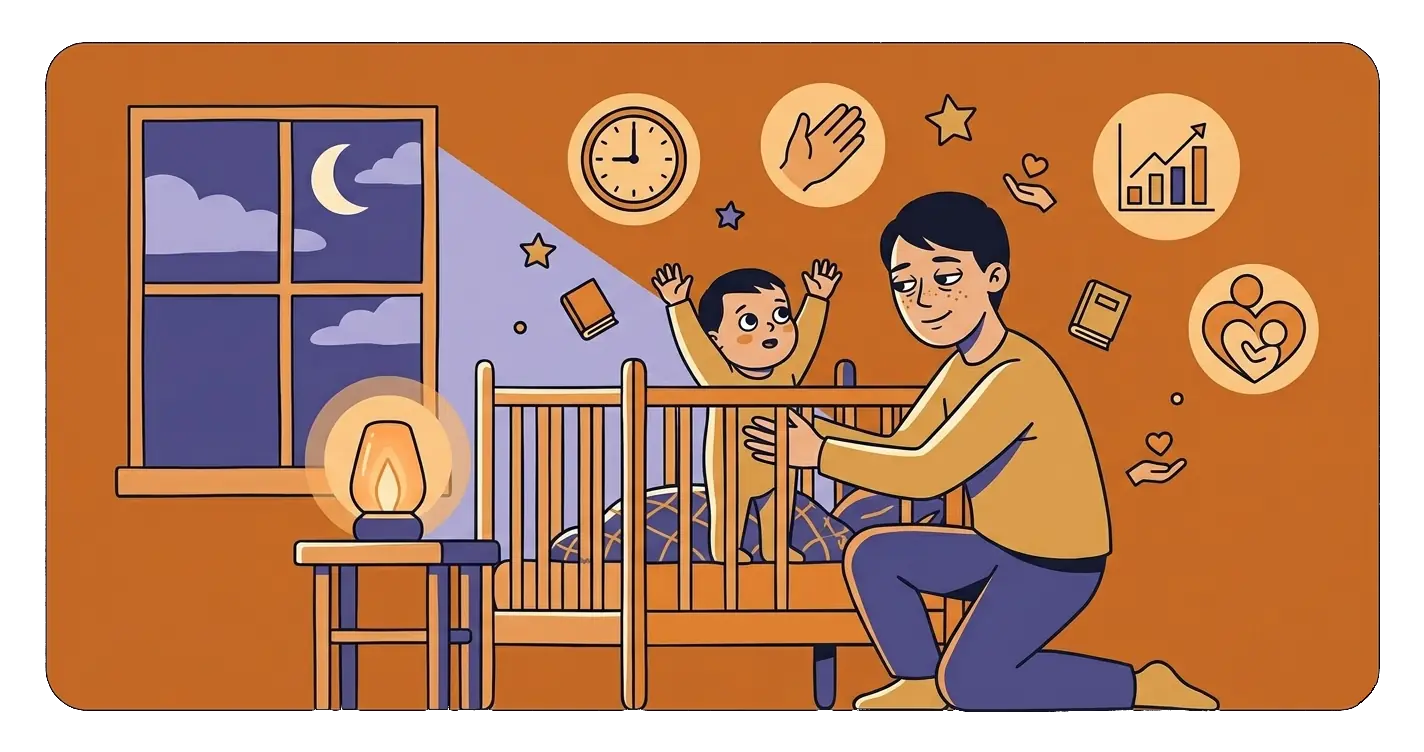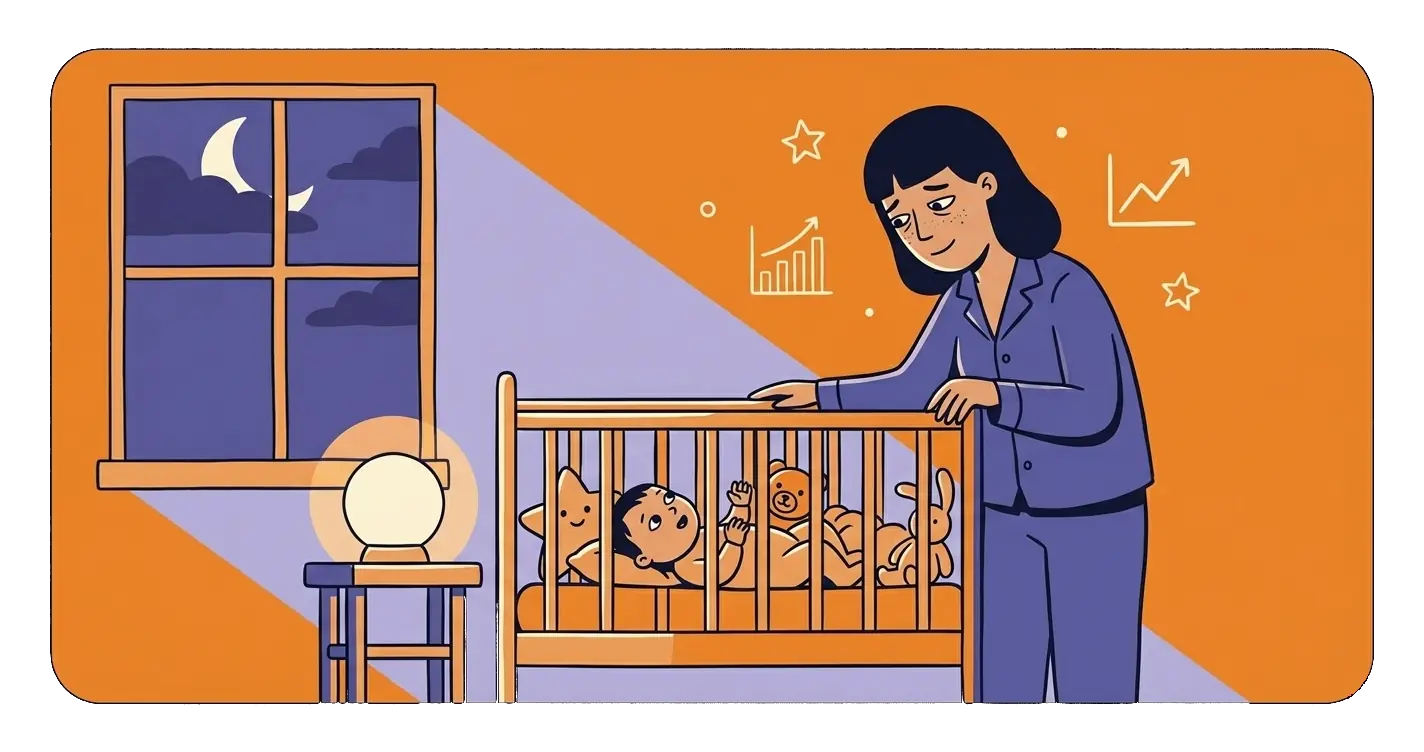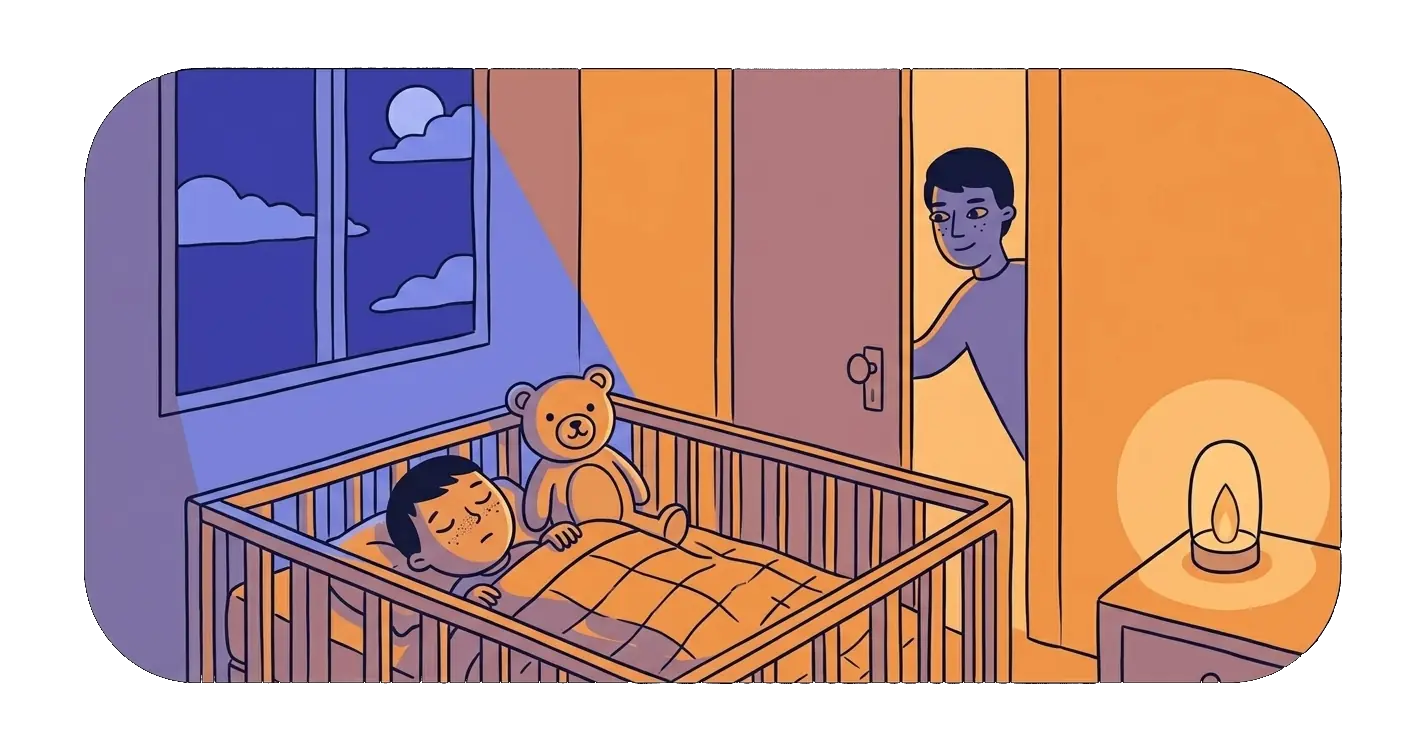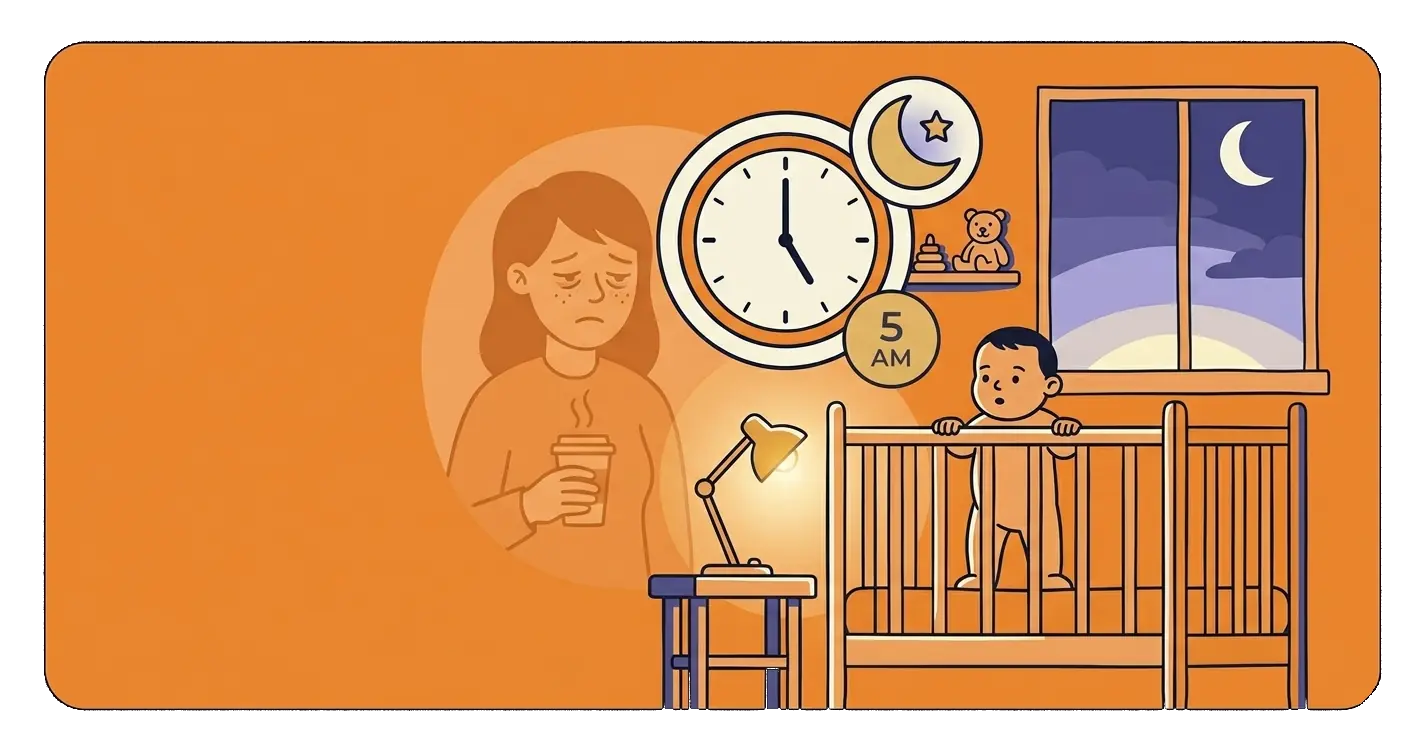
A peaceful evening doesn't require perfect conditions or an elaborate plan. Children usually benefit most from a predictable sequence of events and consistent signals that bedtime is approaching. Dimmed lights, quieter activities, hygiene, a book, and a similar way to end the day help transition from play to rest.
The routine should be tailored to the child's age, temperament, and needs, as well as the family's capabilities. Its purpose is not to guarantee immediate sleep but to create safe and repeatable conditions conducive to relaxation.
Why Does a Bedtime Ritual Help Children?
A child doesn't transition from intense activity to sleep in an instant. They need time to slow down, limit stimuli, and prepare for separation from a parent for the night. A repetitive routine can become a clear signal: the day is ending, now it's time to rest.
The American Academy of Pediatrics recommends regular sleep times and calm activities performed each evening in a similar order [1]. The importance of a predictable daily plan, adequate sleep, and consistent hours is also emphasized by the American Thoracic Society [2].
The most important elements of an evening ritual are:
- a similar start time each day,
- a few simple activities in a fixed order,
- gradually reducing light, noise, and activity,
- a calm, consistent ending,
- adjusting the length of the routine to the child's age.
The ritual does not replace the need for adequate sleep. If a child is overtired or their nap ended too late, even a well-prepared evening can be challenging.
How to Prepare for the Evening?
Choose a Realistic Bedtime
There is no single correct bedtime for all children. Consider age, needed sleep duration, morning wake-up time, naps, and the child's daily functioning. Fairly consistent wake-up and sleep times, even on weekends, are helpful. Differences of about 30–60 minutes usually disrupt the rhythm less than large shifts.
If a child regularly becomes very irritable, tearful, or overly stimulated in the evening, try starting the routine 10–15 minutes earlier for a few days and observe the reaction. Avoid shifting bedtime in different directions daily.
Start Calming Down Before Bedtime
For many families, 20–30 minutes of a calm routine is sufficient. Children who need more time to transition between activities may benefit from a slightly longer but still simple ritual. Recommendations for parents emphasize that repetitive activities before sleep help children anticipate the next stages of the evening [3].
In the last hour before sleep, it's advisable to limit intense play, loud sounds, and bright lights. Screens should be turned off at least an hour before putting the child to bed. Content watched in the evening and light emitted by devices can hinder relaxation [5].
Bedtime Ritual for Children Aged 0–3 Years
In the first three years of life, needs change rapidly. An infant's routine will be shorter and more flexible than a two-year-old's evening plan. Especially in the first months, priority should be given to feeding according to the child's needs, safe sleep, and responding to their signals.
0–6 Months
A newborn does not yet have a mature day and night rhythm, so do not expect a fixed bedtime or sleeping through the night. However, simple signals can be introduced from the start:
- dim the lights and reduce noise,
- feeding and burping if needed,
- changing the diaper and dressing for sleep,
- a short cuddle or lullaby,
- placing in a safe sleep space.
Infants should be placed on their backs, on a flat and firm mattress, without pillows, loose blankets, bumpers, or toys. Falling asleep with an infant on a couch or chair is particularly dangerous. Safe sleep principles should take precedence over adhering to a routine to the minute [1].
6–18 Months
At this age, children increasingly recognize a repetitive sequence of events. An example ritual might include:
- calm play or cuddling,
- feeding,
- washing and diaper change,
- pajamas and a sleep sack appropriate for the temperature,
- a short book or lullaby,
- placing in the crib.
Bathing doesn't have to be part of every evening. If it clearly stimulates the child, it can be moved to an earlier time, leaving only brief hygiene before sleep.
18–36 Months
Toddlers often try to influence the evening's course. They may ask for another book, extra drink, or to return to play. A short routine and limited choices, such as choosing between two pajamas or two books, can help.
Example plan:
- end active play,
- toilet or diaper change,
- brush teeth and put on pajamas,
- one short book,
- cuddle, wish good night, and turn off the lights.
Boundaries should be communicated calmly and in advance. A short message that sleep follows the book is usually clearer than negotiating each step multiple times.
Bedtime Ritual for Children Aged 3–7 Years
Preschoolers and younger school-aged children still need closeness but already understand the established sequence well. They can also participate in preparing a simple picture plan or list of evening activities.
The routine can last about 20–40 minutes and include:
- 5–10 minutes of winding down — ending running and loud play,
- 10 minutes of hygiene — toilet, brushing teeth, and pajamas,
- 10–15 minutes of closeness — a book or quiet conversation,
- short conclusion — cuddle, wish good night, and turn off the lights.
Before starting to read, it's good to agree on how many books you'll read. If the child often asks for water or to use the toilet, these can be included in the routine before putting them to bed. The bedroom should be calm, darkened, and have a comfortable temperature [4].
What to Do if a Child Only Falls Asleep While Feeding, Rocking, or with a Parent?
Falling asleep while nursing, in arms, or in the presence of a parent is not inherently wrong. Change is primarily needed if the current method has become burdensome, unsafe, or no longer meets the family's needs.
Instead of making a sudden change, gradually modify the evening's end:
- move feeding slightly earlier, then add tooth brushing, a book, or cuddling,
- gradually shorten rocking or carrying,
- sit next to the bed instead of lying with the child, then slowly increase the distance,
- use a similar way of responding each evening,
- provide the child with closeness and support appropriate to their age.
Not every child is ready for independent sleep at the same age. Resistance during change doesn't automatically mean the plan is wrong, but very strong or increasing anxiety is a signal to slow down and increase support.
Common Challenges with Evening Routine
Starting Too Late
Overtiredness can manifest not only as yawning but also as irritability, crying, or increased activity. If this pattern repeats daily, it's worth cautiously moving the routine to an earlier time.
Too Many Stimuli
Intense play, exciting cartoons, bright lights, and screen use make transitioning to calm rest difficult. The last part of the day should be noticeably quieter than earlier activities.
Too Long a Routine
An elaborate routine can become tiring and create more opportunities for negotiation. If preparations take an hour, it's worth reducing them to three or four fixed steps.
Different Evening Routine Every Day
Flexibility is necessary, but constant changes make it hard to predict what will happen next. Even when traveling, you can maintain key signals like pajamas, a book, a lullaby, and a similar way of saying goodbye.
How to Evaluate if the Routine is Working?
Don't expect every change to have an immediate effect on the first evening. For about 1–2 weeks, observe:
- if the child transitions more easily between stages,
- if the end of the evening is calmer,
- if the time to fall asleep gradually shortens,
- if resistance is less intense,
- how the child functions in the morning and throughout the day.
If there's no improvement, check the start time, length, and stimulation level during the routine. Change one element at a time, as it helps assess what truly helps.
Simple Plan to Start
You don't need to overhaul the entire day at once. To start, you can:
- turn off screens and limit intense play before sleep,
- choose three or four fixed activities, like washing, pajamas, a book, and cuddling,
- start them at a similar time for consecutive days,
- record the start time of the routine, sleep, and wake-up for a week.
The best routine is one the family can calmly repeat. It doesn't have to look identical every day, but its key elements should remain recognizable to the child.
When to Consult a Doctor or Specialist?
Sleep difficulties can be temporary, but sometimes they require a pediatrician's assessment. Consultation is advised when:
- the child regularly snores loudly, has breathing pauses, gasps for air, or breathes with great effort,
- is excessively sleepy during the day or has noticeable difficulty concentrating and functioning,
- sleep is disrupted by pain, severe itching, coughing, breathlessness, frequent spitting up, or other issues,
- unusual movements, episodes of lost contact, or concerning behaviors occur,
- sleep problems persist despite a regular routine and significantly burden the child or family,
- the parent suspects the child is getting too little sleep for their age.
Breathing pauses combined with cyanosis, limpness, difficulty waking, or marked breathlessness require urgent medical attention.
Frequently Asked Questions
How Long Should a Bedtime Ritual Last?
Typically, 20–30 minutes is sufficient. An infant may need a shorter routine, while an older child may need a slightly longer one. More important than exact timing is a calm, predictable sequence.
Does Bathing Have to Happen Every Night Before Bed?
No. Bathing can help but is not a mandatory part of the ritual. If it stimulates the child or complicates the evening, it can be moved to an earlier time or replaced with brief hygiene.
What to Do if a Child Keeps Getting Out of Bed?
First, ensure toilet use, water, and a moment of closeness before turning off the lights. Then calmly guide the child back to bed, using a short, consistent message. Long conversations and negotiations can unintentionally prolong the evening.
After How Many Days Can You Evaluate a New Routine?
Initial changes may appear after a few days, but a fuller assessment is best made after about 1–2 weeks of regular application. However, there is no single timeline suitable for every child.
Is Falling Asleep with a Parent Incorrect?
No. A parent's presence can be an important source of security. It should be gradually reduced only if the current method is burdensome or the family wants to change it. There's no need to expect every child to fall asleep independently at the same age.
Sources
- American Academy of Pediatrics, HealthyChildren.org, Healthy Sleep Habits: How Many Hours Does Your Child Need?
- American Thoracic Society, Healthy Sleep in Children, educational materials for patients and parents.
- Caring for Kids, Canadian Paediatric Society, Healthy sleep for your baby and child.
- Children’s Hospital of Philadelphia, Healthy Sleep Habits.
- American Academy of Pediatrics, HealthyChildren.org, recommendations on media and screen use by children.