Nighttime Awakenings in Infants: Causes, Solutions, and Checklist
Is it Normal for Infants to Wake Up So Often at Night?
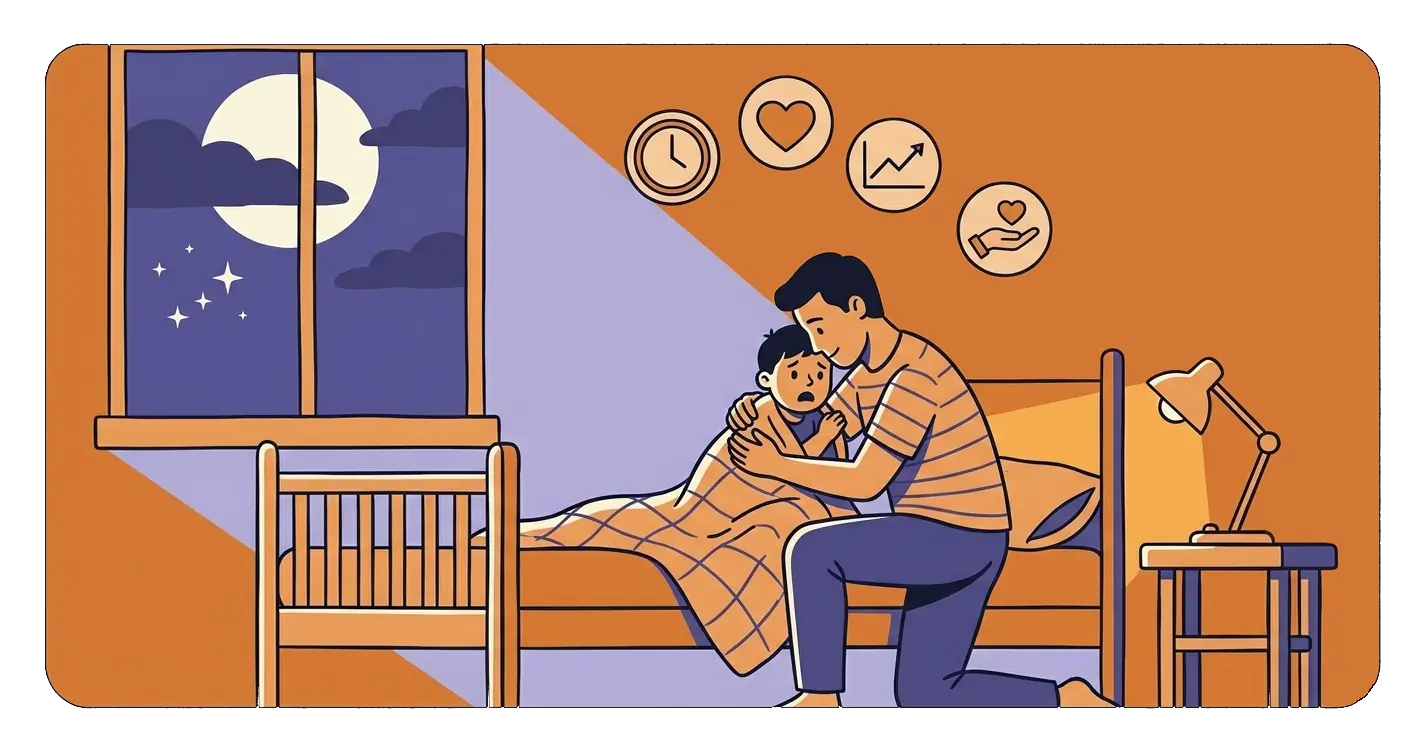
Parents often reach out to us after another challenging night with one question: “Is it normal for my baby to wake up almost continuously?” 😴 Honestly? This question often stems not only from fatigue but also from uncertainty about whether something important is being overlooked.
From our experience, not every nighttime activity means a true awakening. An infant might murmur, squirm, sigh, or even briefly open their eyes and continue sleeping. In practice, we see that many parents respond to this “half-sleep” because it sounds like waking up — but it's not always the case.
We usually take a broader view: how old the child is, what the awakening looks like, and what they need to fall back asleep. Sometimes it's just a typical night for an infant. Other times, it's a signal to look at feeding, the daily schedule, the evening routine, or health.
In this article, we'll walk you through this step by step. We'll show you what might be normal, what often causes frequent awakenings, and what you can check tonight 🌙
What is Normal at Different Ages?
There isn't a single number of awakenings that fits every infant. In our work with families, it's very clear that age makes a big difference. What is completely normal for a newborn in the first weeks of life might look different for an older infant.
0–3 Months: Nights Can Be Fragmented
In the beginning, nights are often just... chaotic. The baby is still developing a daily rhythm, and nighttime feedings are usually natural. In practice, we observe that parents are most stressed by how “noisy” such a little one sleeps.
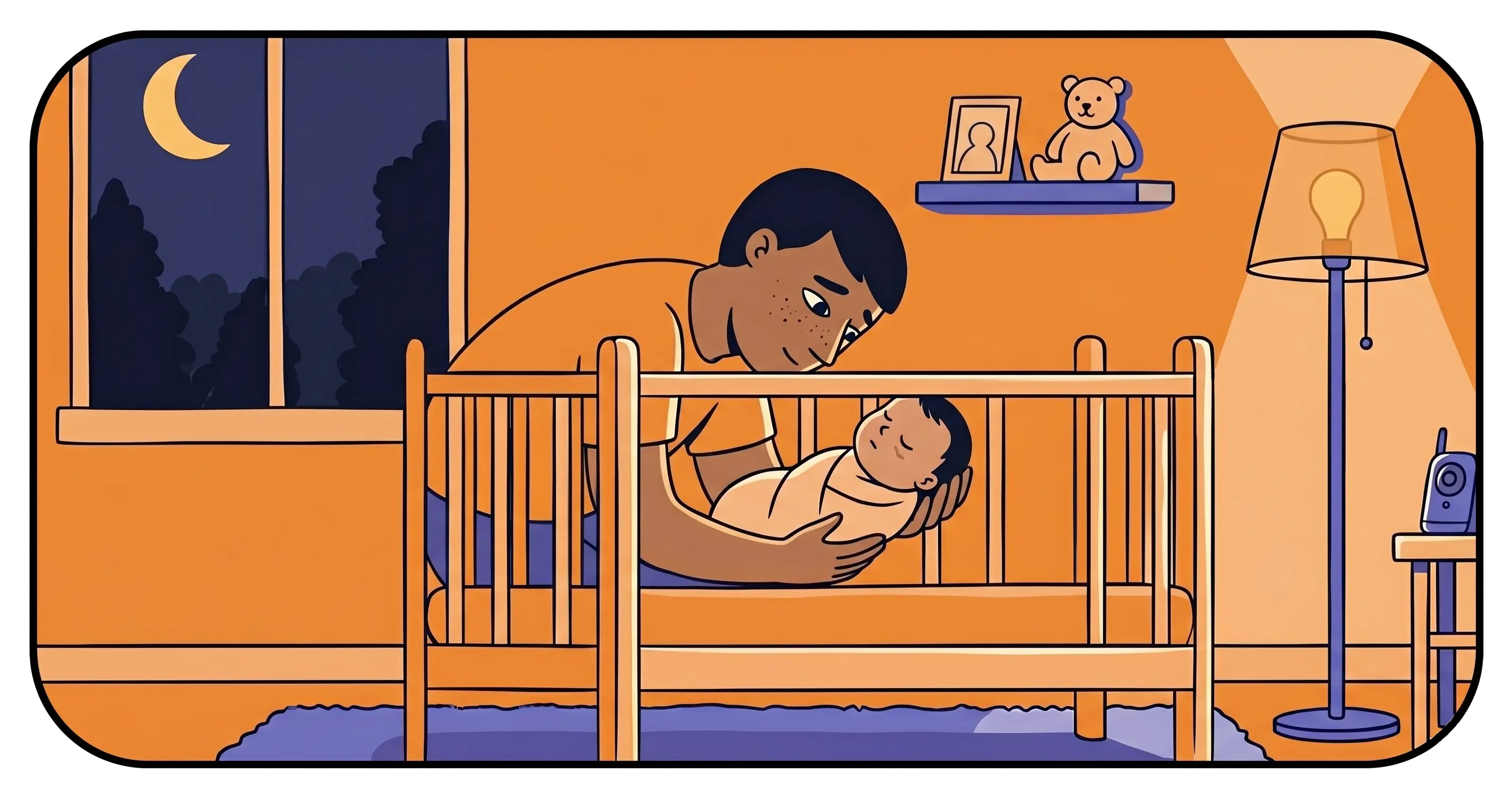
If the baby wakes up, feeds well, and then relaxes in your arms or at the breast, we usually don't consider this unusual. At this age, frequent awakenings don't necessarily indicate a problem.
4–6 Months: Sleep Becomes Lighter
This is when many parents tell us: “Things were getting better, and now suddenly everything has fallen apart”. Indeed, in practice, we often see that around this time, the baby more easily “falls out” of sleep and needs more help to return to it.
For some, this lasts a few days; for others, longer. From our experience, not only age matters but also how the baby falls asleep in the evening.
7–12 Months: Nights Reflect the Entire Day
In the second half of the first year, we usually look at more elements at once. The daily schedule, nap lengths, evening calmness, the way of falling asleep, and whether the child is in a more intense developmental phase all matter 👶
In practice, we see that the number of awakenings alone doesn't tell the whole story. It's much more important whether the child quickly returns to sleep after waking or if each nighttime break turns into a longer rescue operation.
Why So Many Awakenings? Common Causes
When a parent tells us their infant wakes up every hour, it's rarely about one simple reason. Usually, several factors overlap. That's why instead of guessing, it's worth calmly checking the most common leads.
Hunger
This is the first lead nearly every parent considers — and sometimes rightly so. If the child really eats after waking, not just suckling briefly for comfort, then relaxes and sleeps again, hunger might be a real cause.
In our work with families, we often see a simple difference: - a hungry child eats actively and thoroughly, - a child seeking mainly comfort is more “attaching to sleep” than actually feeding.
Pay attention to: - whether nighttime feeding is complete, - whether sleep indeed lengthens afterward, - whether there's a noticeable increase in appetite during the day.
Discomfort and Sleep Conditions
Sometimes the cause is small but makes a big difference. Too warm, too bright, a wet diaper, itchy skin, uncomfortable clothing, noise from the living room — all these can disrupt the night more than it seems.
From our experience, the topic of an overstimulated evening comes up particularly often. When a lot happens before sleep, the child falls asleep tired but not necessarily calm. This often manifests at night.
Check today: - room temperature, - sleep clothing, - light and sounds, - whether the last hour before sleep was calm.
Intense Developmental Period
We often see this in practice: for a few days or even 1–3 weeks, the child sleeps worse because they are in a more demanding phase. Learning something new, being more “attached” to the parent, having difficulty calming down, calling out more at night.
This doesn't always look the same. One child wakes more often, another has trouble falling asleep, yet another does both at once. From our experience, such a period usually passes, but it's worth especially ensuring a simple, predictable evening.
Way of Falling Asleep
This is one of the most common reasons for frequent awakenings after 4 months. If the child falls asleep only in a very specific way — at the breast, in arms, with strong rocking, with a constantly adjusted pacifier — they might seek exactly the same in the middle of the night.
Parents often tell us: “He falls asleep quickly, so everything must be okay”. Yet in practice, we often see that this quick falling asleep with a lot of help returns at night like a boomerang.
When to Consider Consulting a Pediatrician?
Not every difficult night is a health issue. But there are situations where we don't encourage waiting and observing for weeks. If something sounds, looks, or feels “off,” it's worth checking.
Pay Attention to Breathing 🚩
Consult a pediatrician if you notice: - loud, regular snoring, - breathing pauses, - gasping for air, - choking at night, - noticeable effort in breathing, - constant mouth breathing.
In our work with families, this is always a topic to check, not to wait out.
Look for Signs of Pain or Illness 🚩
It's worth consulting your child if nighttime awakenings are accompanied by: - fever, - cough, runny nose, infection, - noticeable discomfort when lying down, - very difficult soothing, - strong anxiety, - itching or irritated skin, - morning fatigue despite long sleep.
From our experience, parents usually sense when it's not just “a bad night.” If you have such a feeling, it's really worth following it.
How to Check What's Really Happening at Night?
If nights are tough, we have one important rule: don't change everything at once. It's very tempting, especially after a few difficult nights, but in practice, calm observation helps more than a nighttime revolution.
Keep a Simple Diary for 3–7 Days 📝
It doesn't have to be perfect or beautiful. Just a few short notes a day.
Record: - morning wake-up time, - naps and their length, - feeding times, - start of the evening routine, - bedtime, - each nighttime awakening, - what helped fall back asleep.
In practice, after a few days, a pattern often emerges. For example, the child wakes more often after being put to bed too late or after very short naps.
Look for Patterns, Not Perfection
It's not about creating the perfect chart. It's about finding 1–2 most likely causes. That's usually enough to get started.
From our experience, the most common patterns are: - too long awake time before sleep, - bedtime too late, - too little daytime sleep, - a lot of help falling asleep, - nighttime feedings more for sleep than hunger.
What Can You Do Right Now to Make the Night More Peaceful?
The good news is that often you don't need to make a big change. In our work with families, the most effective approach is usually organizing the basics. It might not sound spectacular, but it truly works.
Organize the Day
Start with simple frameworks: - similar wake-up time in the morning, - reasonably predictable naps, - not too late bedtime, - last awake time adjusted to the child's age.
In practice, we often see improvement after a few days when the day stops being “all over the place.” Sometimes it's enough to move bedtime 10–15 minutes earlier every 2–3 days and nights become noticeably calmer.
Calm the Evening 🌙
In the evening, less really is more. You don't need a million activities for a child to fall asleep well. From our experience, a simple, repeatable routine works best.
For example: 1. dimming the lights, 2. short care routine or bath, 3. feeding, 4. a moment of closeness, 5. sleep.
Give such a routine 7–14 days before evaluating whether it helps.
Check the Bedroom
Sometimes improvement comes from really small changes. In practice, we often see that a child sleeps more soundly when the room is: - dark, - calm, - not overheated, - predictable.
It doesn't have to be a perfect catalog environment. It's just about making the night free of distractions.
How to Reduce Help with Falling Asleep Without Radical Methods?
This is a topic many parents fear because it immediately brings to mind leaving the child alone. We work differently. From our experience, you can reduce help calmly, gently, and step by step 🤍
If your child falls asleep only in one specific way, you can start with very small changes. Not everything at once.
What Usually Works Best?
In practice, we recommend: - shortening rocking by 1–2 minutes every few days, - putting the child down a bit earlier, before they completely “drift off,” - more often soothing in the crib, not only after fully waking up, - responding at night similarly to how you do in the evening.
For some families, the first signs of improvement appear after 5–7 days. A more noticeable change often comes after 2–3 weeks of calm consistency.
We also remember an important thing: if the child really eats and clearly needs it after waking, we don't try to forcefully “unlearn” feeding. We always want to understand the cause first.
Checklist for Tonight
From our experience, checklists work better than general resolutions like “we'll sort out sleep starting tomorrow.” That's why we leave you with a simple list to review before the night.
Health and Comfort
- [ ] Does the child not appear sick?
- [ ] Is the breathing calm?
- [ ] Is the skin not irritated?
- [ ] Are the diaper and sleep clothing okay?
- [ ] Is there no sign of pain or clear discomfort?
Feeding
- [ ] Were there enough opportunities to eat during the day?
- [ ] Was the last feeding calm and complete?
- [ ] Does the child usually really eat at night, not just seek comfort?
Daily Plan
- [ ] Were naps reasonably spaced?
- [ ] Was the last awake time not too long?
- [ ] Did the bedtime not shift too late?
Evening
- [ ] Was the last hour calm?
- [ ] Did the routine go more or less the same as usual?
- [ ] Is the sleep room dark and comfortable?
Nighttime Response
- [ ] Do we give ourselves a brief moment to observe during slight stirring?
- [ ] Do we respond immediately to increasing crying?
- [ ] Do we try to act in a similar, calm way instead of constantly changing strategies?
Common Mistakes We See in Tired Parents
It's important: we don't write about mistakes to judge you. Every parent operates on autopilot after a tough night. We just see certain repeating patterns.
Too Quick a Response to Every Sound
If the child only murmurs, sighs, or lightly squirms, they might still be sleeping. In practice, we observe that too quickly stepping in with help can unintentionally wake them more than help.
Of course, this doesn't apply to strong crying, a small infant, or situations where something worries you. Then react immediately.
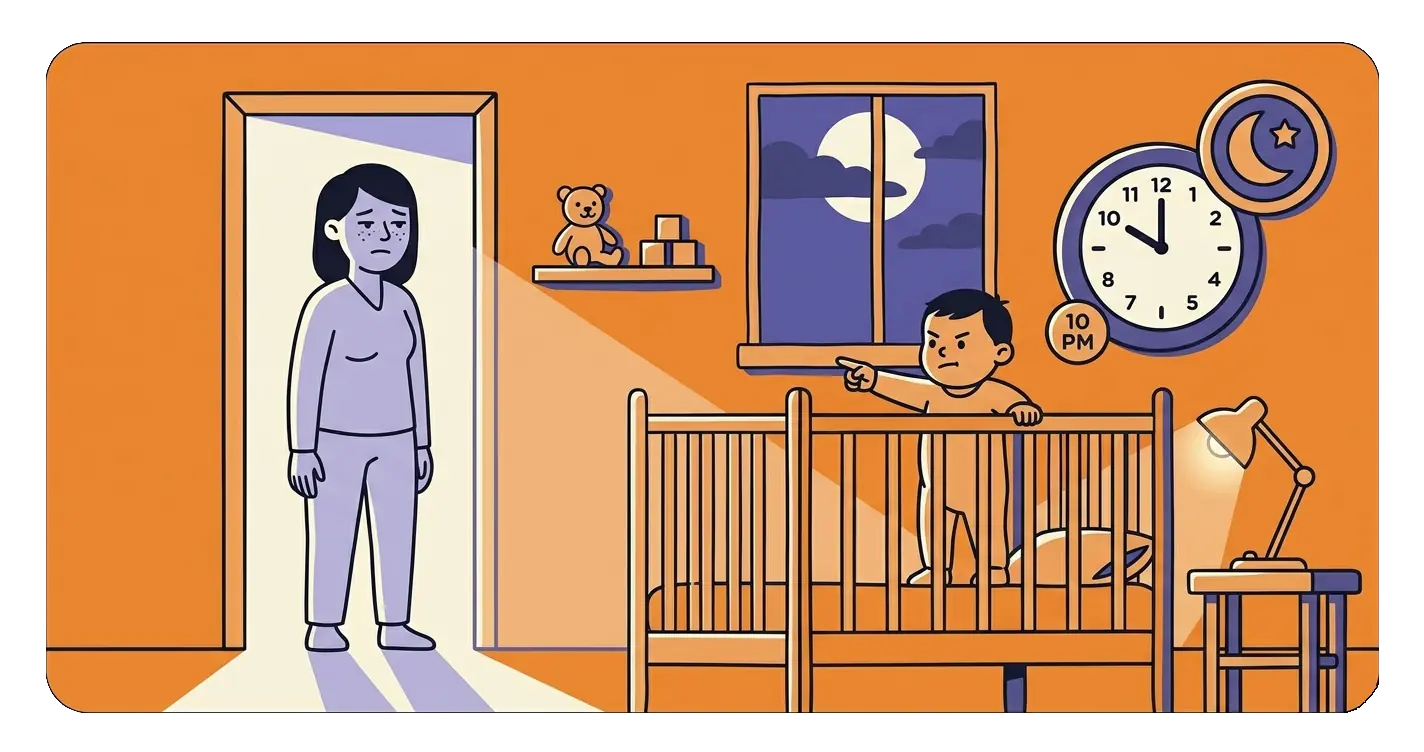
Putting to Bed Too Late
This is one of the most common topics in our work. Parents often hope that a later bedtime will result in a longer night. But in practice, the opposite often happens — the child falls asleep “crashed,” but then sleeps more restlessly.
We very often see this scenario: quick falling asleep, waking after 30–60 minutes, and then a difficult night. The good news is that after organizing the evening, improvement is often visible in 5–10 days.
Assuming Every Awakening is Hunger
This is understandable because feeding often works the fastest. But it doesn't always address the real cause. If the child only suckles briefly and quickly falls asleep, it's possible they're more seeking a familiar way to fall back asleep than food.
Trying to Change Everything at Once
New routine, new times, new sleep location, less help, more help, different pacifier — all at once. From our experience, this usually ends in even greater chaos. One specific change and a few days of observation work much better.
Summary: Where to Start?
If your child wakes up very often at night, first take a breath. This doesn't always mean you're doing something wrong. In practice, many nighttime difficulties can be explained and organized without major upheavals.
We would start with this: 1. observe the day for 3–7 days, 2. check health and comfort, 3. look at feeding, 4. organize the evening and daily plan, 5. see if the child falls asleep only with one form of help.
From our experience, even such a calm approach gives parents much more clarity. And when you know why the child wakes up, it's much easier to choose a solution that makes sense.
If you wish, we can help you analyze your situation and create a simple plan without pressure and guessing. Check out our consultation form — if you feel it's the right time, we'll be here for you.