Night Terrors vs. Nightmares in Children – How to Differentiate and Respond
When Your Child Screams at Night and It's Hard to Understand What's Happening
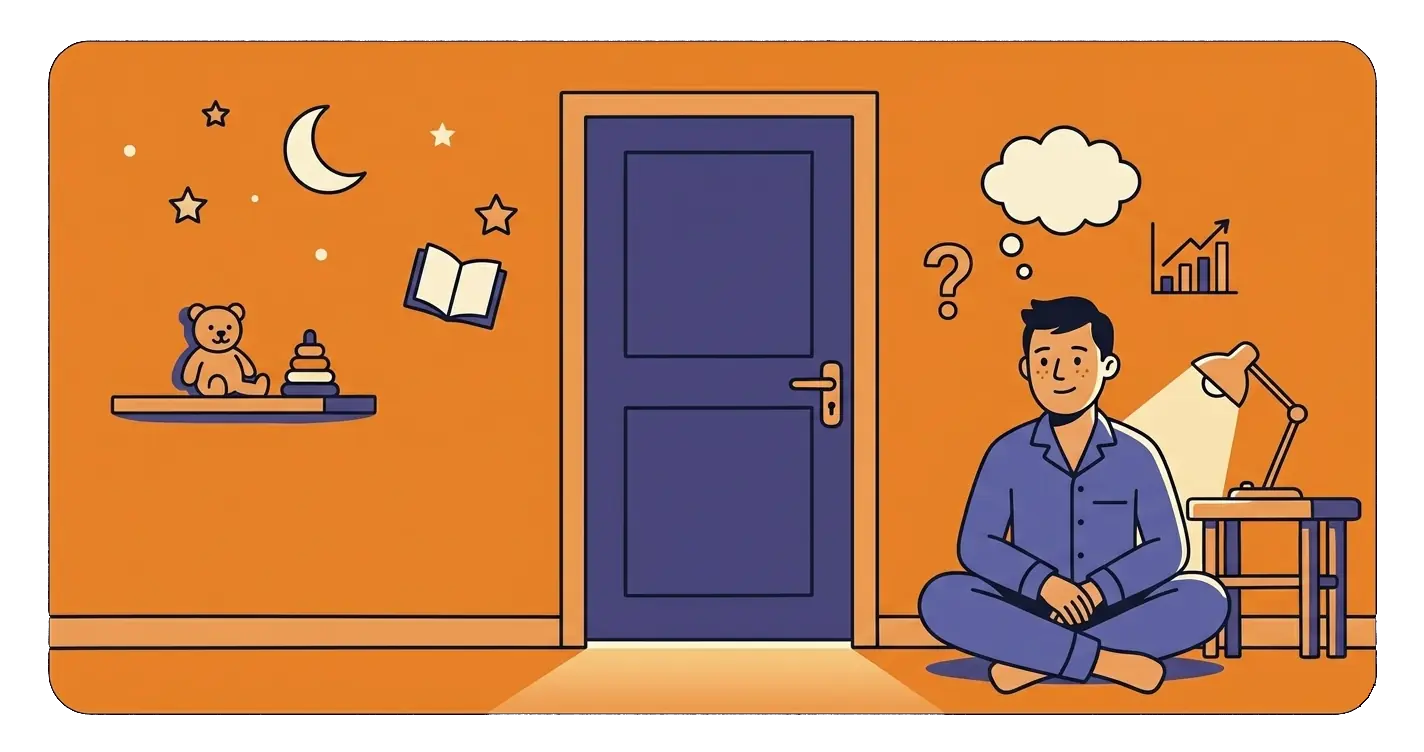
If you've ever jumped out of bed because your child suddenly started screaming, crying, or sat up with wide-open eyes, we know how much that can make your stomach churn. In our work with families, this is one of those topics where parents say, "It seemed like they didn't recognize me." And that's where the biggest doubt arises: was it a nightmare or a night terror? 😟
These two episodes are easy to confuse because, from a parent's perspective, both are simply very difficult. But in practice, we don't respond to them the same way. The most telling factor isn't the time of night, but rather whether the child is in contact with you, can be soothed, and remembers the nighttime event in the morning.
In this article, we'll guide you through this calmly and humanely. We'll show you what to look for, what to do at night, and when it might be worth seeking additional support.
How to Easily Identify What You're Dealing With
From our experience, it's best not to focus on one detail. It's much easier to spot the difference when you look at the entire situation. We usually suggest parents answer a few simple questions in their heads.
4 Questions That Really Help
- Did the child wake up, or do they seem like they're still asleep?
- Do they recognize you and respond to your voice?
- Can they be gradually soothed?
- Do they remember what happened in the morning?
With a nightmare, the child is usually truly awake. They seek you out, want closeness, hear what you're saying, and usually regain composure after a moment. Sometimes they immediately say they had a scary dream, and other times they just need a strong hug and a moment.
With a night terror, the scene can be entirely different. The child may scream, toss and turn, cry, have open eyes, yet seem as if they're "not there with you." In practice, we observe that the parent speaks calmly, is nearby, yet the child doesn't seem to register it. In the morning, there's usually no memory of it.
The timing of the nighttime episode can also provide a clue, but we wouldn't treat it as the only indicator. We often see that night terrors occur earlier in the night, while nightmares happen closer to morning, but more important than the clock is how the child behaves during and right after the event. 🌙
Quick Guide
More likely a nightmare if the child: - calls for you and recognizes you, - wants to cuddle, - responds to simple words, - gradually calms down, - remembers the dream or part of it in the morning.
More likely a night terror if the child: - screams or cries as if in their sleep, - has open eyes but weak or no contact, - doesn't calm down despite your presence, - appears very agitated, - remembers nothing in the morning.
When It's a Night Terror — What to Do and What to Avoid
In practice, we see that night terrors often start suddenly and look really dramatic. The child may sit up, start screaming, throw off the covers, try to get up, or move chaotically. For a parent, it can be shocking, but the episode usually passes on its own — often after a few minutes, sometimes a bit longer.
The most important thing we tell parents is: don't try to forcibly wake the child. This instinct is completely understandable, but it usually doesn't help. From our experience, it often leads to even more confusion rather than a quicker end to the episode.
What to Do During the Episode
The best approach is calm presence and ensuring safety. It's not about "fixing" the situation immediately, but about helping the child safely get through it.
You can do this by:
- staying close and remaining nearby,
- speaking softly and briefly, for example: "I'm here",
- removing hard or sharp objects from reach,
- if the child tries to get up, support them to prevent injury,
- limiting stimuli — no bright lights and no rush.
In our work with families, we often see the same pattern: the calmer the adult, the more peacefully the episode ends. It doesn't always shorten its duration, but it greatly helps not to add tension.
What Not to Do
There are also reactions that occur instinctively but usually hinder more than help:
- don't shake the child,
- don't forcibly wake them,
- don't ask a series of questions,
- don't hold them tightly unless it's to protect from injury,
- don't immediately turn on bright lights.
We once had a family who, for several weeks, tried to "snap" their daughter out of such an episode with conversation, hugging, and turning on a lamp. The parents acted out of care, but the nights only became more chaotic. When they simplified their response to calmly being present and securing the environment, the tension at home noticeably decreased.
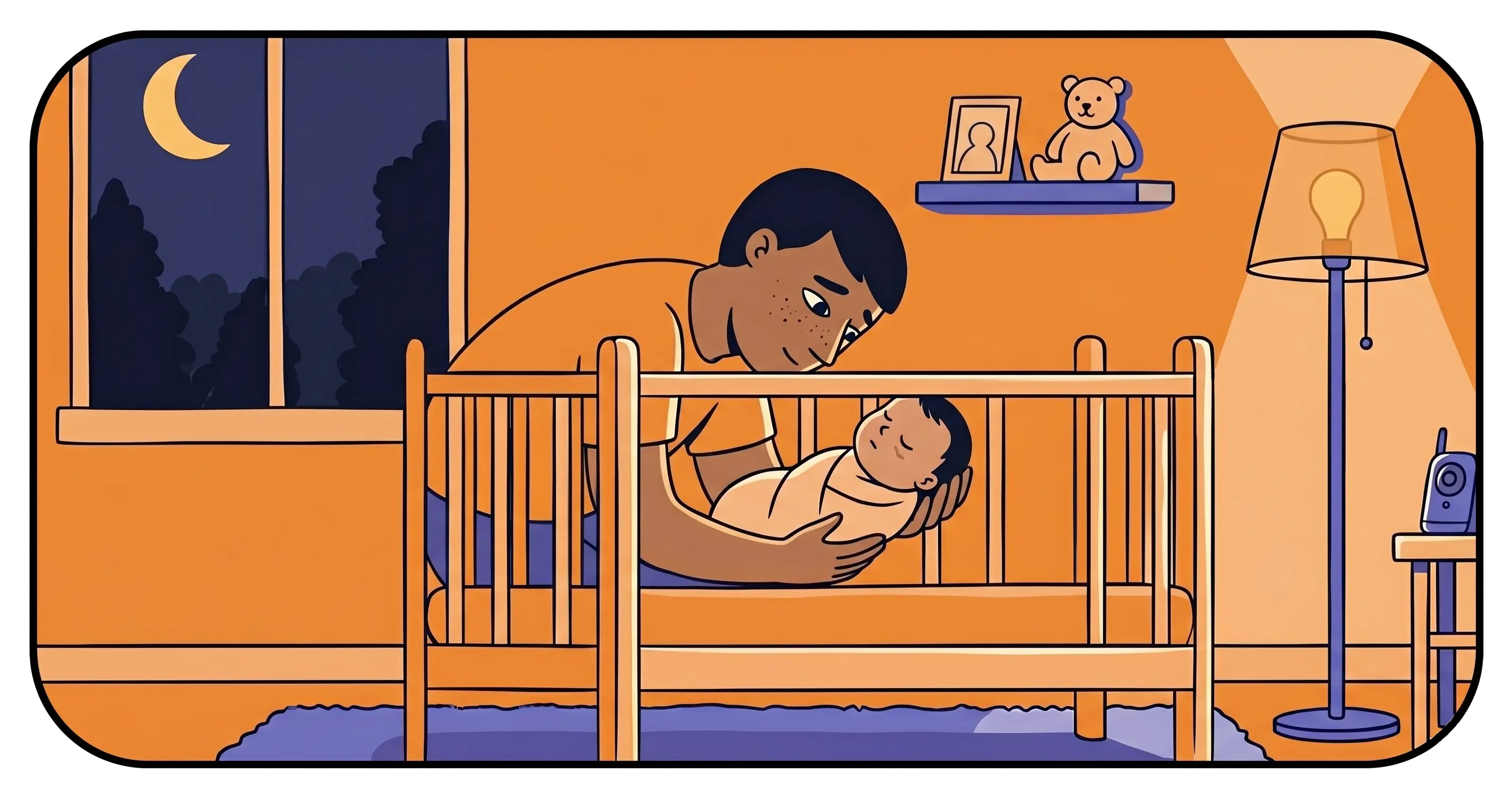
Afterwards, it's usually best to simply help the child return to sleep. Adjust the pillow, cover them, stay nearby for a moment, and let the night return to its usual rhythm.
When It's a Nightmare — Your Child Needs You a Bit Differently
With a nightmare, the situation is more "interactive." The child truly wakes up, hears you, seeks closeness, and wants to be reassured that they're safe. In practice, we observe that here the biggest difference is not the number of words, but the tone of voice, closeness, and a simple message: you're here, everything is okay. 😢
For many children, the mere fact that you appear quickly and calmly is half the battle. There's no need for a half-hour nighttime conversation about emotions. It's enough to help the child return from what was in their head to what's here and now.
What to Do Immediately
We usually recommend a simple approach:
- approach calmly,
- say a few short sentences,
- hug if the child wants it,
- help them look around the room,
- return to calm sleep.
You can say, for example: - "I'm here with you" - "It was just a bad dream" - "You're in your bed" - "It's over now"
From our experience, many children visibly relax within 2–10 minutes. Returning to sleep often takes a few more minutes, though after a very intense dream it may take a bit longer.
How to Help Your Child Return to Reality
Here, simplicity works well. There's no need to explain everything in great detail — just a few anchor points are enough.
It helps when you: - show the child the room, - hand them their favorite teddy or blanket, - remind them they're at home, - describe the situation in simple words: "It was a dream and it's over now".
We remember a boy who always checked one thing after nightmares — whether his nightlight was in place. That was his small signal that "everything is normal." In practice, such small things often work better than lengthy explanations.
What Not to Say
Some phrases sound innocent, but in the middle of the night, they usually don't help:
- "Nothing happened"
- "There's nothing to be afraid of"
- "Come on, don't exaggerate"
- immediately asking about every detail of the dream.
In our work with families, we see that a child regulates faster when they don't have to additionally "prove" that they were really scared.
At What Age Does This Most Often Occur
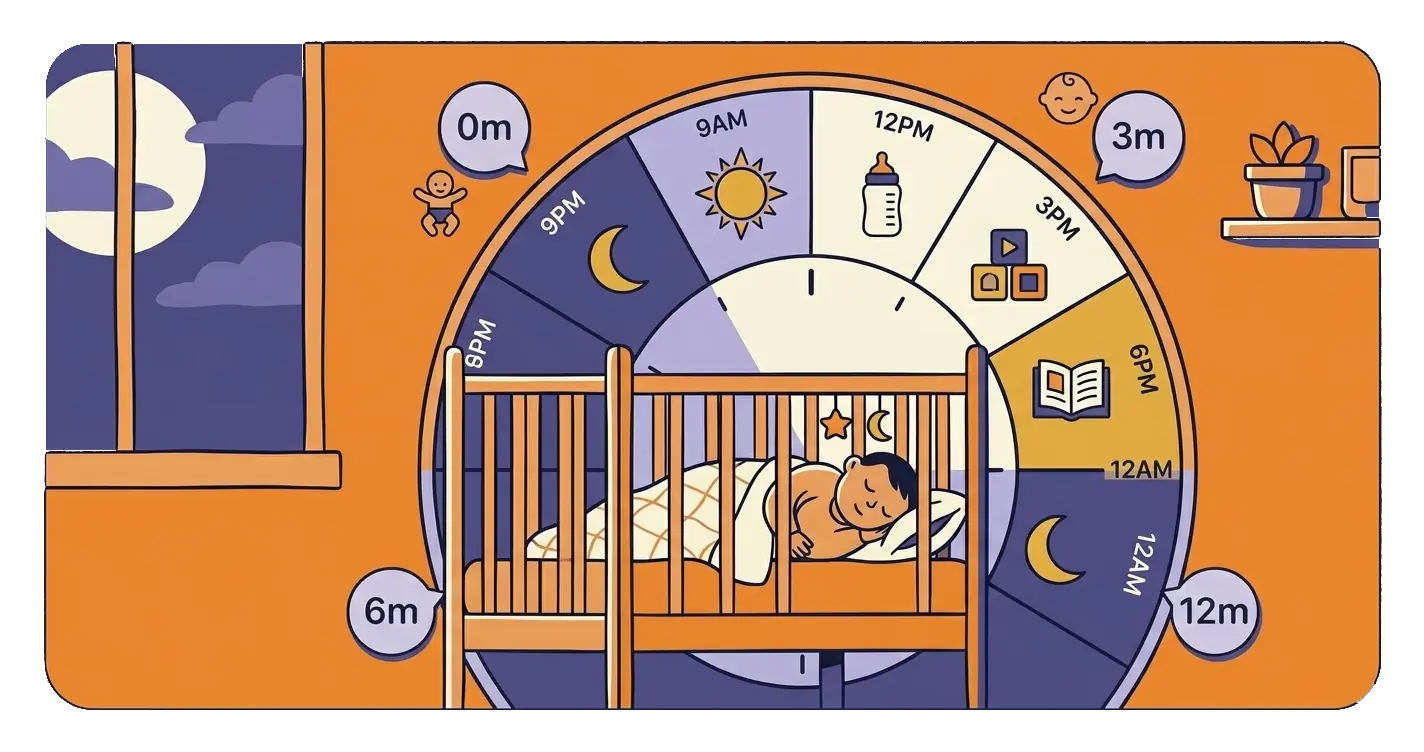
Parents often ask us if an infant can also have a nightmare or night terror. In practice, with the youngest children, we more often talk about a difficult night rather than a specific type of nighttime episode. With little ones, more mundane issues usually take the forefront: hunger, discomfort, teething, illness, tension from the day, or lack of sleep. 👶
That's why with small children, we start with the basics and see if everything around sleep is as organized as possible: - daily rhythm, - feeding, - amount of sleep, - thermal comfort, - evening wind-down.
If these elements start to align, it's usually easier to see what we're really dealing with within a few days to 2 weeks. Chaos decreases, and the pattern becomes more readable.
Nightmares are more often seen when a child has a more developed imagination and can recount at least a piece of what they experienced. In practice, this often happens from around 2.5–3 years old and later.
Night terrors are more common in preschoolers and younger school-age children. The good news is that for many children, they occur less frequently and become less intense over time.
What Most Often Intensifies Such Nights
From our experience, very often the backdrop of difficult nights is simply overtiredness. A child who goes to bed late, skips a nap, or has a very intense day is more prone to nighttime episodes. It's one of those patterns we see very regularly. 😴
Besides fatigue, other contributing factors include: - big emotions during the day, - changes in routine, - infection or fever, - evening overstimulation, - irregular sleep times.
In practice, we observe that just 7–14 days of calmer, more predictable evenings can make a significant difference. The problem doesn't always disappear completely, but very often episodes occur less frequently or are milder.
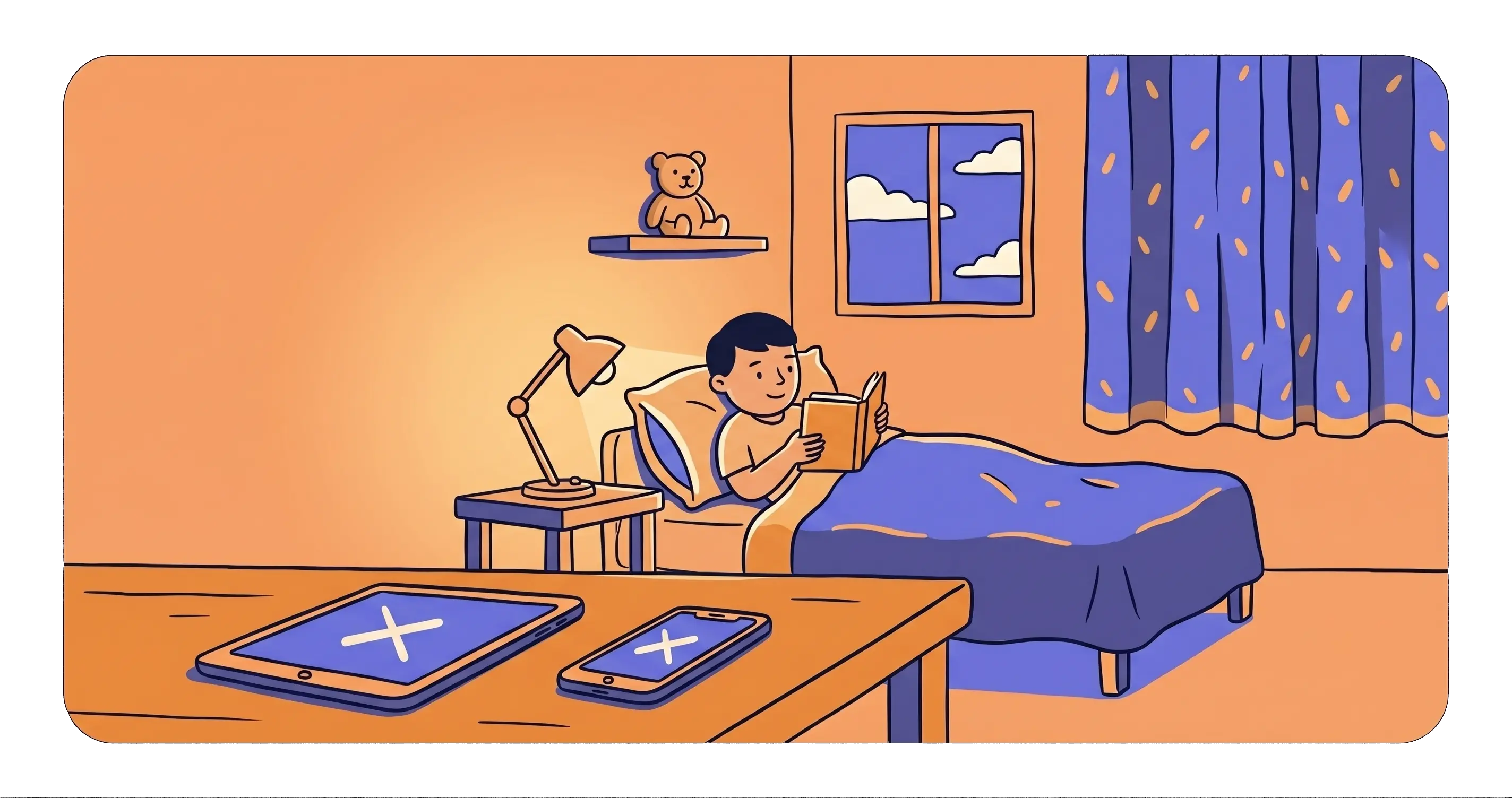
In the evening, it's especially worth avoiding: - screens just before bed, - very loud play, - running around the house at the last minute, - content that might scare or excite.
The gentler the transition into the night, the easier it usually is to have a more peaceful sleep. It doesn't sound spectacular, but these simple things often make the biggest difference.
How to Prevent Nighttime Episodes Daily
In our work with families, the most improvement usually appears when we organize not just the episode, but the entire sleep rhythm. If a child is prone to nightmares or night terrors, predictability helps a lot. A child's nervous system really likes to know what to expect.
For 7–14 days, it's worth sticking to a similar plan as much as possible: - waking up at a similar time, - nighttime sleep without extending the evening, - naps adjusted to age, - going to bed earlier after a more challenging day.
An Evening That Truly Calms
It's not about a perfect, Instagram-worthy routine. It's about something simple, repeatable, and calm. In practice, the best routine is one that lasts about 20–30 minutes and looks similar every day. 🌙
We usually recommend: 1. dimming the lights, 2. washing and changing, 3. a short book or calm conversation, 4. a hug and a consistent goodnight farewell.
It's also good to check the sleep environment: - comfortable clothing, - pleasant temperature, - as calm a room as possible, - few distractions.
Notes That Really Help
If the nights are difficult, we strongly encourage keeping a simple journal for at least 2 weeks. It doesn't have to be perfect or detailed. Just a few specifics recorded daily.
Note: - bedtime, - wake-ups, - naps, - time of the episode, - illness or fever, - exceptionally tiring day, - changes in the plan.
In practice, such notes often reveal a pattern that isn't visible when you're tired. A parent feels that "it happens randomly," but after two weeks, it turns out that the toughest nights return after later sleep or days full of stimuli.
Common Mistakes We See in Parents
Parents make them out of care, not ignorance — and that's worth saying outright. When a child screams at night, we naturally want to do anything to stop it. The problem is that some reactions accidentally add even more tension.
We most often see situations like: - forcibly waking the child, - talking too much and too fast, - turning on bright lights, - holding tightly without need, - morning questioning like an interrogation.
With night terrors, an excess of words and touch usually doesn't help. With nightmares, there's no need for a lengthy analysis at two in the morning either. From our experience, calmness, simplicity, and observing the pattern work best, not fighting the episode itself.
In practice, we also see that parents sometimes immediately assume the worst-case scenario. And very often, we're dealing with a child who is simply overtired, overwhelmed by the day, or has temporarily more disrupted sleep. 🤍
When It's Worth Consulting the Situation
Not every single episode requires immediate consultation. But there are times when it's good not to handle it alone. If the nights become frequent, intense, or simply cause you significant concern, it's worth looking at the issue more broadly.
We particularly encourage consultation when: - the child has episodes several times a week, - the situation becomes increasingly intense, - there are injuries or risky behaviors, - there's noticeable fatigue and irritability during the day, - you're unsure if it's definitely a nightmare or night terror.
It's also worth paying attention to sleep as a whole. In our work with families, such signals often suggest that it's good to check something more: - loud snoring, - breathing pauses, - constant mouth breathing, - very restless sleep for most of the night.
Before a consultation, it's good to prepare a few simple pieces of information. This really helps assess the situation and shortens the path to a sensible plan.
You can note: 1. when the episode usually occurs, 2. how long it lasts, 3. how the child behaves, 4. if the day was more tiring or irregular, 5. what the evening routine looks like, 6. if safe — a short recording.
Summary: First, We Look at Contact with the Child
If we were to leave you with one most important thought, it would be: with a nightmare, the child usually recognizes you and seeks comfort, while with a night terror, they appear frightened but aren't fully in contact with you. This difference most often clarifies the whole picture. 🌙
In practice, it's not about making a perfect diagnosis at night. It's enough to notice a few key things: - whether the child responds to you, - whether they can be soothed, - whether they remember anything in the morning, - whether episodes have a repeatable pattern.
The simplest action plan looks like this: - with a nightmare — be close, soothe, name reality, and help return to sleep, - with a night terror — don't forcibly wake, ensure safety, and calmly wait out the episode, - in both situations — look at the daily rhythm, amount of sleep, and evening wind-down. 💤
Most of these nights become easier over time. And if you want to organize the situation, make sure of what you're seeing in your child, or simply need a calm step-by-step plan, you can reach out to us through our consultation form: /SleepAssessment