Naps, Nighttime Sleep, and Total Sleep – How Are They Connected?
It's important to evaluate a child's sleep over the course of a full day. Both the length of nighttime sleep and the total of naps, their timing, and the child's mood upon waking matter. Sleep needs change with age, and natural differences can occur between children [1].
The need for sleep gradually builds during waking hours. A nap partially reduces this need, so a long or late nap can delay evening drowsiness. However, reducing daytime sleep doesn't always improve nighttime rest. If naps are too short or the child stays active for too long, they may become overtired by evening: irritable, tearful, or overly stimulated. Falling asleep can be difficult in this state, and the night may be more restless.
Guidelines for total sleep duration include naps. Children aged 4–12 months typically need 12–16 hours of sleep per day, children aged 1–2 years need 11–14 hours, those aged 3–5 years need 10–13 hours, and children aged 6–12 years need 9–12 hours [2]. These are population ranges, not mandatory targets for every child. For infants under 4 months, sleep patterns are particularly variable, so no single range is recommended by AASM.
How to Differentiate Between a Late Nap and Overtiredness?
Evening restlessness alone doesn't indicate whether a child napped too much or too little during the day. In both cases, fussiness, protest, or difficulty calming down can occur. The entire day's schedule matters: nap times and lengths, the time the last nap ended, wakefulness duration, and the child's mood.
| Symptom | Possible Interpretation | What to Check? |
|---|---|---|
| The child is calm, active, and not sleepy at usual bedtime | The last nap may have been too late or too long | Time the last nap ended, bedtime, and total daytime sleep |
| Bedtime regularly shifts later after a longer nap | The nap may have reduced the evening sleep need | Whether this pattern repeats over several days, not just once |
| Evening brings crying, irritability, and difficulty calming down | Possible overtiredness or sensory overload | Length of prior wake periods, nap quality, and afternoon routine |
| Naps last 20–30 minutes, and the child wakes up unhappy | Daytime sleep may not provide enough recovery | Total daily sleep and behavior upon waking |
| The child regularly refuses one nap and takes a long time to fall asleep at night | Possible transition to fewer naps | Whether the pattern persists for 1–2 weeks and isn't linked to illness or environmental change |
| After shortening a nap, the child is noticeably more irritable, falls asleep earlier from exhaustion, or wakes more often at night | The nap may have been shortened too much or too soon | Daytime mood, nighttime sleep onset, awakenings, and total sleep |
| Older child regularly naps despite adequate nighttime sleep opportunity | Possible nighttime sleep deficit or health issue | Regularity of sleep timing, snoring, nighttime rest quality, and daytime sleepiness at school |
Sleep development in the early years is dynamic. Sleep gradually concentrates at night, and the number of naps decreases, but the pace of these changes is individual [3]. Therefore, decisions to shorten naps shouldn't be based solely on age or a single difficult evening.
When Does Shortening a Nap Make Sense?
A small adjustment may be justified when a consistent pattern occurs over several days:
- The child isn't sleepy at the usual evening rest time,
- Falling asleep takes noticeably longer than before,
- The problem worsens after a longer or later nap,
- The child functions well during the day and shows no signs of sleep deprivation,
- Total sleep falls within the approximate range appropriate for their age.
It's best to start with one small change. You can shorten the last nap by about 10–15 minutes or end it a bit earlier, without shifting all other parts of the day. Then observe the situation for 3–5 days.
If falling asleep at night becomes easier and the child remains in a good mood without excessive sleepiness, the adjustment was likely appropriate. However, if increased irritability, very early sleep onset from exhaustion, more frequent awakenings, or earlier mornings occur, it's worth returning to the previous nap length.
When Can Shortening Naps Worsen Nighttime Sleep?
Reducing daytime sleep is usually not a good solution when the child is already sleeping too little. Overtiredness doesn't always look like calm drowsiness. Some children show it through increased activity, protest, crying, or difficulty calming down.
Signs of too little sleep may include:
- Very short naps combined with dissatisfaction upon waking,
- Noticeable irritability at the end of wake periods,
- Frequent falling asleep during feeding, car rides, or brief, calm activities,
- Difficulty lasting until usual bedtime,
- Worsened mood and nighttime sleep after reducing naps.
In such cases, it's worth first checking if the child has suitable conditions for naps, isn't staying awake too long, and if their total daily rest meets developmental needs. Sleep ranges by age should be treated as a reference point and combined with observing the child's functioning [4].
How to Safely Change the Last Nap?
- Record the current rhythm. For at least 3–7 days, note nap times and lengths, evening sleep onset, awakenings, and morning wake-up times.
- Look for a repeatable pattern. Check if harder falling asleep indeed occurs after a late or longer nap.
- Change only one element. Shorten the last nap by 10–15 minutes or move its end slightly earlier.
- Don't abruptly extend wakefulness. If the child struggles to make it to evening after the change, an earlier bedtime may be better than prolonging activity.
- Evaluate day and night. Consider not only the speed of falling asleep but also mood, nighttime awakenings, morning wake-up time, and total sleep.
A sleep diary helps notice patterns that are hard to spot based on memory from a single day. AASM provides sample materials for conducting such observations [5].
Naps by Age – General Guidelines
The number of naps isn't an independent criterion for proper sleep. More important is whether the child gets enough sleep throughout the day, functions well between naps, and can fall asleep at night without a prolonged struggle.
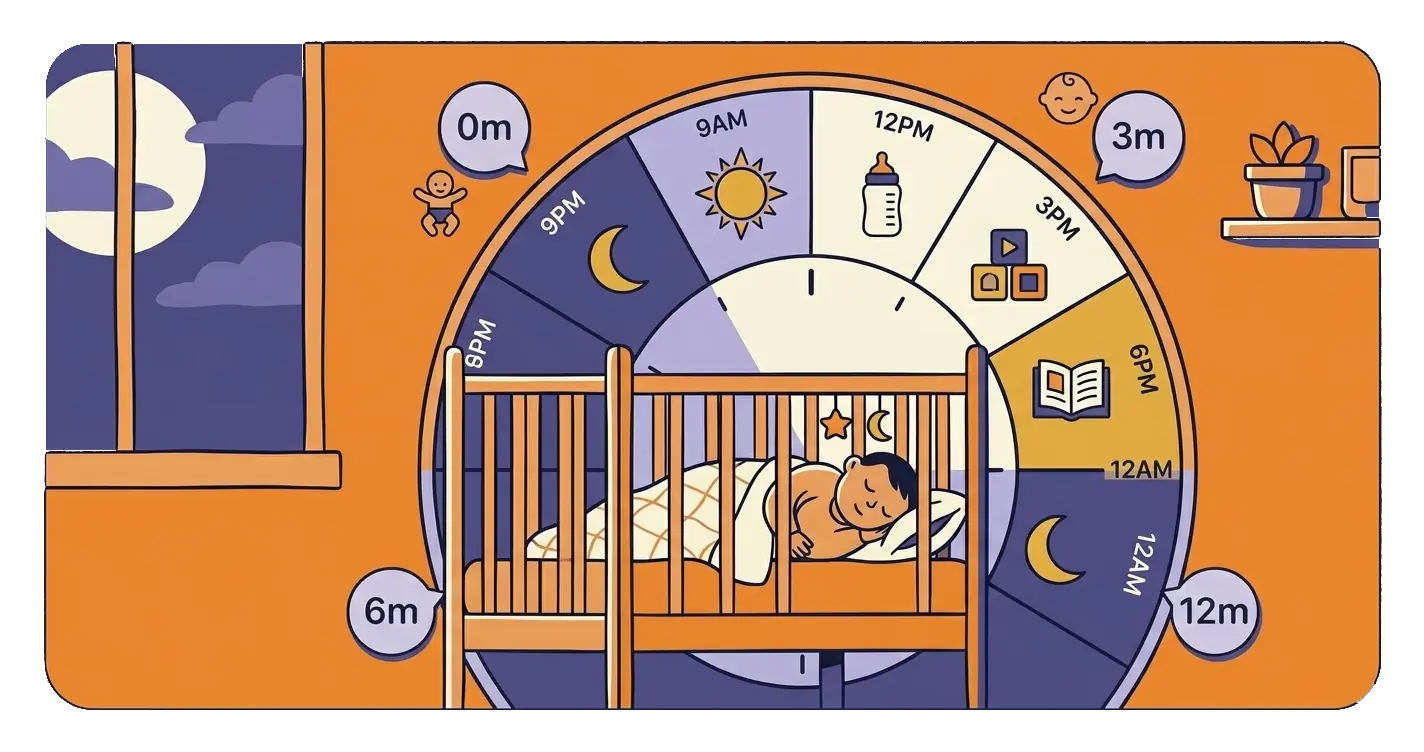
- 0–3 months: Sleep is irregular and spread over many segments. The priority is responding to the infant's needs, not limiting naps by the clock.
- 4–6 months: Many children have 3–4 naps, but the rhythm is still developing intensely.
- 7–12 months: 2–3 naps often occur. The timing of the last one may increasingly affect evening sleep onset.
- 1–2 years: Most children gradually transition from two naps to one. The change can be uneven.
- 2–3 years: Some children still need one nap, while for others, it starts to hinder falling asleep at night.
- 4–5 years: Many children no longer nap regularly. If a nap occurs, its late timing may delay nighttime sleep.
- 6 years and older: A regular need for naps may indicate too short or insufficiently restorative nighttime sleep.
The given values are approximate. Transitioning to fewer naps shouldn't be rushed just because the child has reached a certain age.
Too Long a Nap or Ready to Drop a Nap?
A one-time nap refusal doesn't mean readiness to change the entire rhythm. The cause could be an unusual morning, an exciting event, travel, infection, teething, or a change in environment.
Possible readiness to reduce the number of naps is indicated by a set of symptoms persisting for about 1–2 weeks:
- Regular refusal of one nap despite providing calm conditions,
- Increasingly longer time to fall asleep during the day or evening,
- The last nap shifting to late afternoon,
- Maintaining a good mood and activity despite skipping a nap,
- Stable nighttime sleep on days with fewer naps.
If skipping a nap leaves the child clearly overtired, falling asleep accidentally, or the night becomes more restless, they're likely not ready for a permanent change. During the transition period, some children need varying numbers of naps depending on the day.
What to Avoid When Adjusting the Sleep Schedule?
- Drastically reducing daytime sleep. Shortening naps by an hour can quickly lead to sleep deprivation.
- Making multiple changes at once. It complicates assessing what improved or worsened the situation.
- Judging the plan after one evening. Sleep can temporarily change due to infections, stress, travel, and new skill development.
- Daily late rescue naps. Even a short nap late in the afternoon can delay nighttime sleep for some older children.
- Forcing the child to stay up later. A later bedtime doesn't guarantee a later morning and can increase overtiredness.
- Treating sleep ranges as a rigid plan. Observing the child is as important as the numbers.
When to Consult a Doctor or Specialist?
Sleep problems don't always stem from the nap schedule. It's worth contacting a pediatrician if there are:
- Loud, regular snoring, breathing pauses, gasping, or significant breathing effort during sleep,
- Blue skin, limpness, or difficulty waking – urgent medical help is needed in such cases,
- Noticeable daytime sleepiness despite adequate sleep duration,
- Sudden and persistent sleep change combined with pain, fever, breathing problems, or other illness symptoms,
- Frequent uncontrolled sleep in older children,
- Sleep issues affecting feeding, development, behavior, or family functioning,
- Persistent difficulties despite calm, consistent schedule changes.
For infants, the way they're put to sleep should follow safe sleep guidelines. The child should be placed on their back on a firm, flat surface, without pillows, loose bedding, bumpers, or soft objects in the sleep area.
Frequently Asked Questions
Does a Longer Nap Always Worsen Nighttime Sleep?
No. A longer nap may be necessary for a child who had a shorter night or an intense day. The problem is more likely when a late or long nap regularly delays falling asleep, and the child doesn't show evening sleepiness.
Should You Wake a Child from a Nap?
Sometimes gently ending the last nap can help maintain a stable nighttime sleep schedule. However, don't routinely wake a child just to limit total sleep. For newborns and young infants, feeding, health, and developmental needs take precedence, as established with a pediatrician if needed.
How Long to Observe the Effects of Shortening a Nap?
A small change can usually be assessed over 3–5 days, provided the child tolerates it well. If clear signs of overtiredness appear, there's no need to wait – it's worth reversing the change. Decisions about permanently reducing the number of naps are better based on a pattern persisting for about 1–2 weeks.
Is a 30-Minute Nap Too Short?
Not necessarily. If the child wakes up in a good mood, functions well, and gets enough sleep throughout the day, a short nap may be their natural pattern. More significant is repeated dissatisfaction upon waking and increasing fatigue.
Will Skipping a Nap Make a Child Sleep Through the Night?
There's no guarantee. Too little daytime sleep can make it harder to calm down, increase awakenings, or lead to very early sleep onset. Nighttime sleep also depends on age, health, circadian rhythm, sleep conditions, and natural developmental awakenings.
Summary
Naps and nighttime sleep form a combined daily balance, but the relationship between them isn't a simple equation. A too-long or late nap can reduce the evening sleep need, while too short daytime sleep can lead to overtiredness and an equally challenging evening.
Before making changes, it's worth keeping a sleep diary for a few days, assessing total sleep, and paying attention to the child's mood. If the pattern indicates a too-late last nap, it's best to shorten it gradually, by 10–15 minutes, and change only one element at a time. In case of difficulties, you can use the consultation form to organize observations based on responses about the child's rhythm.
Sources
- American Academy of Pediatrics, Healthy Sleep Habits: How Many Hours Does Your Child Need?
- American Academy of Sleep Medicine, Recommended Amount of Sleep for Pediatric Populations: A Consensus Recommendation.
- Scientific Review on Infant Sleep Development.
- Sleep Education, Healthy Sleep Ranges by Age.
- American Academy of Sleep Medicine, Sleep Diary.