How Much Should a Baby Sleep?
The need for sleep in the first year is significant, but it varies among children and changes as they develop. Therefore, a sleep chart should be viewed as a guideline, not a strict plan to fit every baby into.
According to the American Academy of Sleep Medicine, infants aged 4–12 months should typically sleep a total of 12–16 hours per day, including naps [1]. For children younger than 4 months, sleep patterns are highly variable, so AASM has not set a formal standard for this group. Educational materials often suggest an approximate range of 14–17 hours per day [2].
However, numbers alone are not enough to assess whether a child is sleeping adequately. Factors such as mood, appetite, activity, development, how they fall asleep, and whether they have calm periods of interaction upon waking are also important.
Infant Sleep Chart by Age
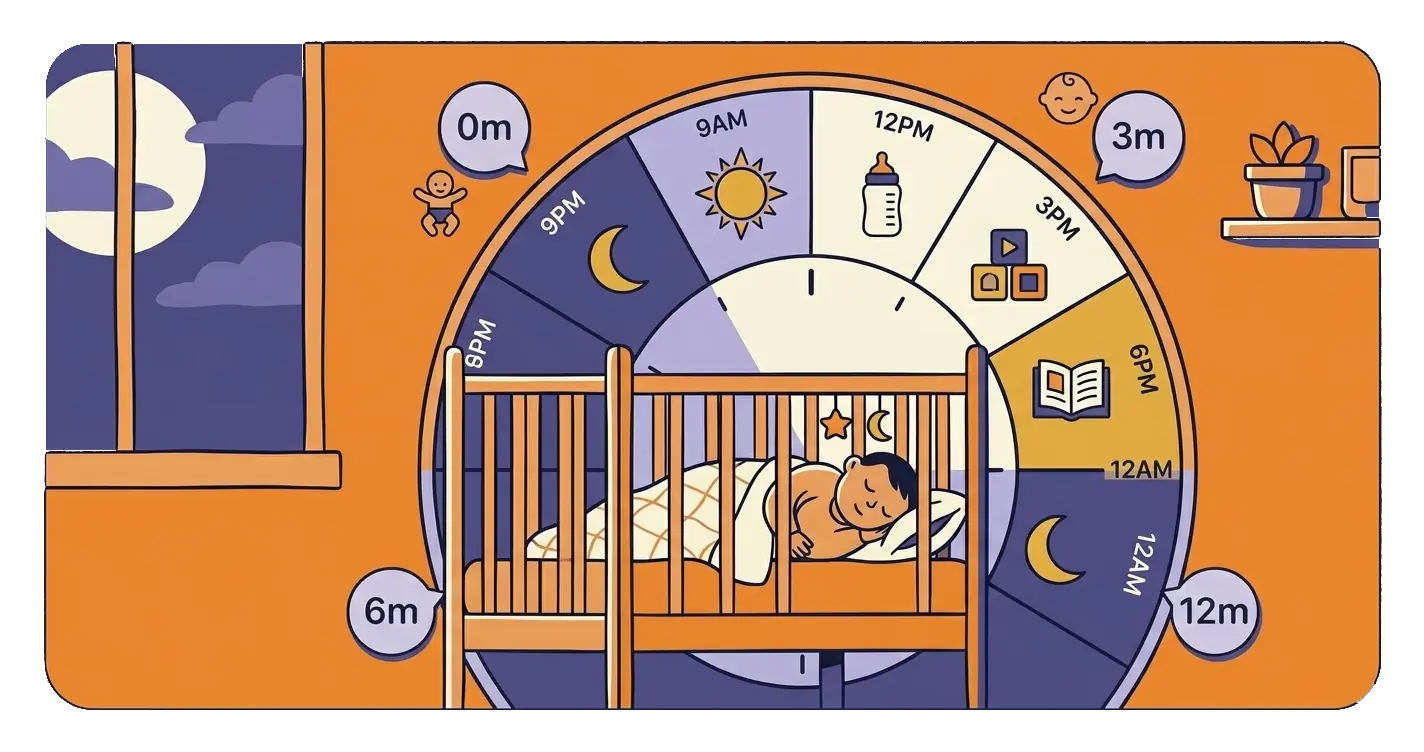
| Child's Age | Approximate Sleep Duration per Day | How to Interpret the Range? |
|---|---|---|
| 0–3 months | about 14–17 hours | Approximate range. Sleep is usually divided into many segments, and AASM does not define a formal standard for children under 4 months. |
| 4–6 months | 12–16 hours, including naps | Official AASM range. The number and length of naps can vary greatly. |
| 7–12 months | 12–16 hours, including naps | Official AASM range. In the second half of the year, the rhythm often becomes more predictable, but night awakenings can still occur. |
Important: the values given include all sleep within 24 hours, both night and naps. There is no mandatory ratio between night and day sleep. Two children may sleep the same amount in a day but have completely different sleep patterns.
When Does the Chart Help, and When Not?
When the Chart Can Be Helpful
The chart helps assess the overall rhythm when:
- you want to check if the total sleep time is within the broad range appropriate for the age;
- you're unsure whether to include naps in the daily sleep total;
- you notice difficulty falling asleep and want to organize information from several consecutive days;
- you're preparing notes before talking to a pediatrician.
When the Chart Is Not Enough
Do not assess sleep solely based on the number of hours. The chart does not account for health status, feeding method, temperament, prematurity, or temporary developmental changes. It also won't answer why a child snores, wakes up in pain, or has difficulty breathing.
If an infant sleeps slightly less than the range suggests but gains weight properly, has an appetite, is interested in their surroundings, and has calm waking periods, the difference in hours alone may not indicate a problem. Conversely, a child within the chart may need consultation if sleep is very restless or accompanied by concerning symptoms.
How Does Infant Sleep Change in the First Year?
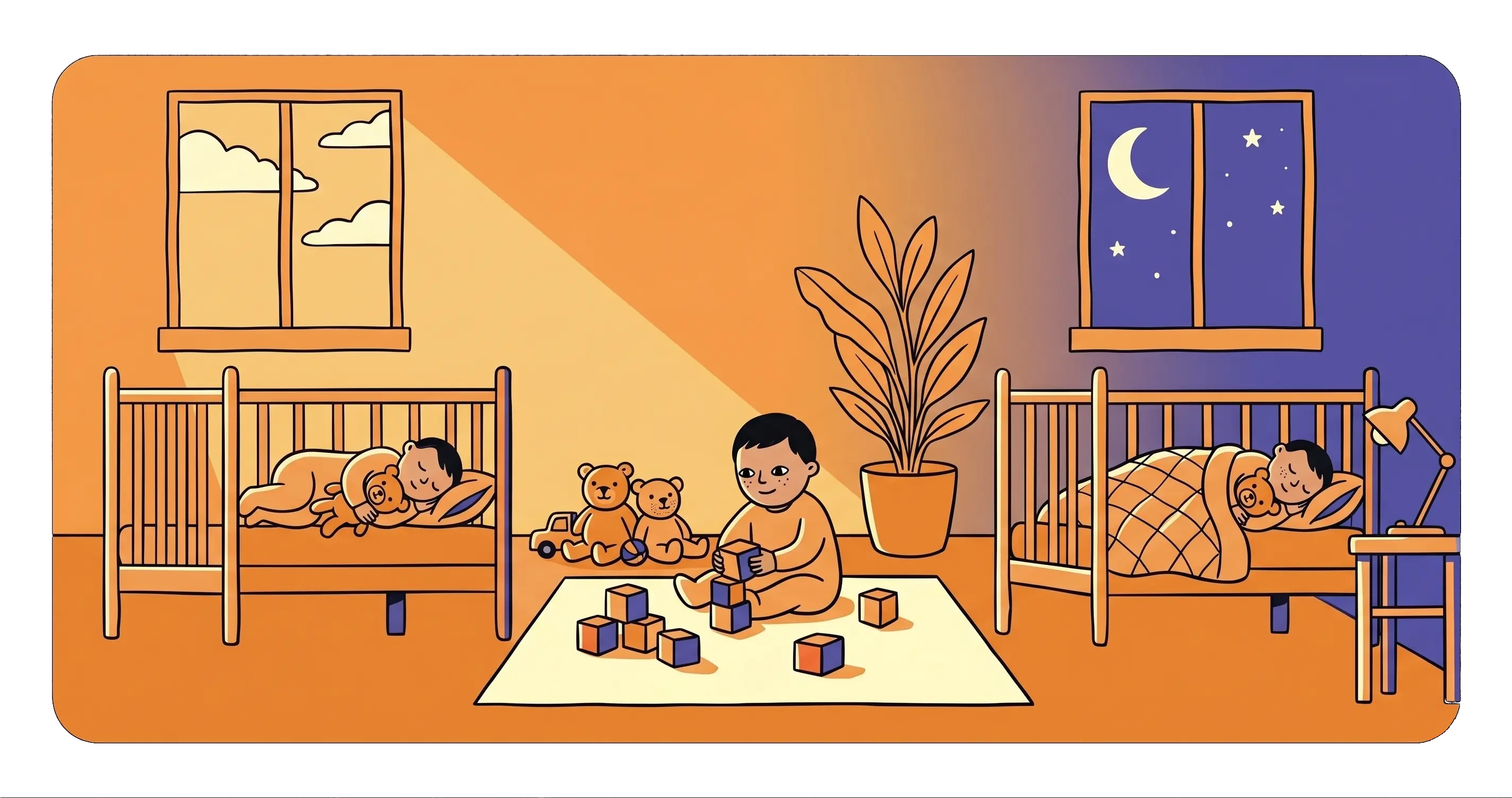
A newborn does not yet have a mature day-night rhythm. They sleep in many short segments, waking for feeding among other things. Over time, night sleep usually lengthens, and more activity occurs during the day. This is a gradual process, and the pace of change can vary among individual children [4].
Around 3–6 months, the rhythm often becomes more discernible. However, this does not mean the child should sleep through the night without waking. Waking for feeding, the need for closeness, or discomfort can still be physiological.
In the second half of the first year, the number of naps usually gradually decreases. The transition between different nap arrangements is not always smooth: one day the child may need extra sleep, and another day they may stay active longer.
How to Assess If a Child Sleeps Enough?
It's best to look at both sleep duration and daily functioning. Adequate sleep is one element supporting a child's health, development, and well-being, but the need is not identical for all infants [3].
The following observations may be helpful in assessment:
- how the child behaves upon waking;
- whether they have calm periods of wakefulness and interest in their surroundings;
- whether they eat properly and gain weight;
- how long it takes to fall asleep;
- whether they are constantly irritable or difficult to soothe at the end of the day;
- whether they breathe freely during sleep.
Yawning, looking away, reduced activity, rubbing eyes, or increasing irritability may indicate fatigue. However, they are not specific symptoms. Similar behavior can occur with hunger, pain, infection, or overstimulation.
What to Do If the Child Does Not Fit the Chart?
Before changing the entire daily plan, it's worth keeping a simple diary for a few days. It allows for a more accurate assessment of sleep than recalling after a difficult night.
Record:
- morning wake-up time;
- start and end of each nap;
- approximate bedtime in the evening;
- night awakenings and feedings, if they can be noted without additional burden;
- the child's mood upon waking and before sleep;
- symptoms of illness, teething, or discomfort.
There's no need to measure every minute. The goal is to notice a repeatable pattern. If the child regularly becomes very irritable before sleep, try starting the evening wind-down a bit earlier. It's best to introduce one small change at a time and observe the reaction, rather than abruptly overhauling the entire day.
How to Gently Support Sleep Rhythm?
An infant's daily plan doesn't need to be scheduled to the minute. Usually, predictable frames that can be adjusted to feeding, naps, and the child's current well-being work better.
- In the morning, provide access to natural light and usual household activities.
- In the evening, limit excess stimuli, intense play, and bright light.
- Introduce a short ritual, such as feeding, changing the diaper, dimming the lights, and using a calm voice.
- Observe the child, not just the clock. Wake windows published online are not rigid medical standards.
- Don't intentionally extend wakefulness hoping a very tired child will sleep longer.
Sleep can be temporarily affected by infections, teething, changes in feeding, travel, intense motor development, or a greater need for closeness. A few difficult nights don't necessarily mean a lasting problem.
Safe Sleep Is More Important Than a Schedule
Regardless of the length and timing of sleep, an infant should be placed on their back, on a firm, flat sleep surface. The crib should not contain pillows, quilts, bumpers, loose blankets, toys, or positioners. The AAP recommends a separate sleeping space in the parents' room for at least the first 6 months of life [5].
Sofas, armchairs, soft mattresses, or inclined surfaces should not be used for sleep. If a child falls asleep in a car seat, swing, or bouncer outside of travel, they should be moved to a safe, flat surface as soon as possible.
When to Consult a Doctor or Specialist?
Contact a pediatrician if sleep difficulties persist, cause concern, or are accompanied by symptoms that may indicate a health problem. Consultations are especially needed for:
- regular, loud snoring;
- observed breathing pauses, choking, or gasping during sleep;
- bluish lips or skin;
- significant respiratory effort, retraction of spaces between ribs, or rapid breathing;
- unusual drowsiness, difficulty waking, or noticeably weaker interaction;
- refusing to feed, few wet diapers, or improper weight gain;
- repeated vomiting, severe pain, fever, or intense itching disrupting sleep;
- sudden and noticeable change in sleep rhythm combined with a deterioration in the child's overall condition.
Breathing pauses, bluish discoloration, significant breathing difficulties, or inability to wake the child require urgent medical attention.
Frequently Asked Questions
Does a Baby Have to Fit the Chart Every Day?
No. Daily sleep duration can vary from day to day. More important is the pattern observed over a longer period and the child's well-being, development, and health status. Repeated large deviations should be discussed with a pediatrician, especially if accompanied by concerning symptoms.
Do Night Awakenings Mean Too Little Sleep?
Not always. An infant may wake for feeding or briefly between sleep cycles and still achieve an appropriate total amount of sleep in a day. The frequency of awakenings, ease of falling back asleep, and daytime functioning are important.
Should I Wake a Baby from a Nap?
There is no one rule suitable for all children. In the first weeks, the priority is proper feeding and weight gain, so the waking method should be established with a pediatrician or midwife. For an older, healthy infant, the decision depends on the overall daily rhythm, sleep duration, and medical recommendations.
How Many Naps Should a Baby Have?
The number of naps is variable and not as precise a standard as total sleep time. Younger infants sleep multiple times during the day, and in the second half of the first year, naps usually gradually decrease. More important than the specific number is whether the total sleep and the child's functioning are appropriate.
Do I Need to Strictly Follow Wake Windows?
No. Wake windows can be an observational guide but are not official medical standards and should not replace the child's signals. Wake duration depends on factors such as age, time of day, length of the previous nap, and health status.
Summary
For ages 4–12 months, the recommended sleep time is usually 12–16 hours per day, including naps. For younger infants, sleep is more variable, and the range of about 14–17 hours is approximate. The chart helps assess the overall rhythm but does not replace observations of mood, feeding, development, and health status.
If you want to organize the situation, record sleep times and the infant's behavior for a few days. Introduce small changes, maintain a predictable routine, and adhere to safe sleep guidelines. Consult a pediatrician if there are concerning symptoms or doubts.
Sources
- Paruthi S. et al., Recommended Amount of Sleep for Pediatric Populations: A Consensus Recommendation of the American Academy of Sleep Medicine, Journal of Clinical Sleep Medicine, 2016.
- American Academy of Sleep Medicine, Sleep Education, Healthy Sleep Habits and Recommended Sleep Duration for Children.
- American Academy of Pediatrics, HealthyChildren.org, Healthy Sleep Habits: How Many Hours Does Your Child Need?.
- Galland B.C. et al., Normal Sleep Patterns in Infants and Children: A Systematic Review of Observational Studies, Sleep Medicine Reviews, 2012.
- Moon R.Y. et al., American Academy of Pediatrics, Sleep-Related Infant Deaths: Updated Recommendations for Reducing Infant Deaths in the Sleep Environment, Pediatrics, 2022.