What Does It Mean for a Child to "Sleep Through the Night"?
Comparing children's nighttime sleep can easily lead to unnecessary worry. One infant may sleep for longer stretches within the first six months, while another still regularly needs feeding or parental help. Both scenarios can be part of normal development.
In studies, the term "sleeping through the night" doesn't have to mean 10–12 hours of uninterrupted sleep. Depending on the definition used, it may refer to a stretch lasting 5, 6, or 8 hours. Therefore, when you hear that an infant "sleeps through the night," it doesn't always mean sleeping from evening to morning without feeding or any waking.
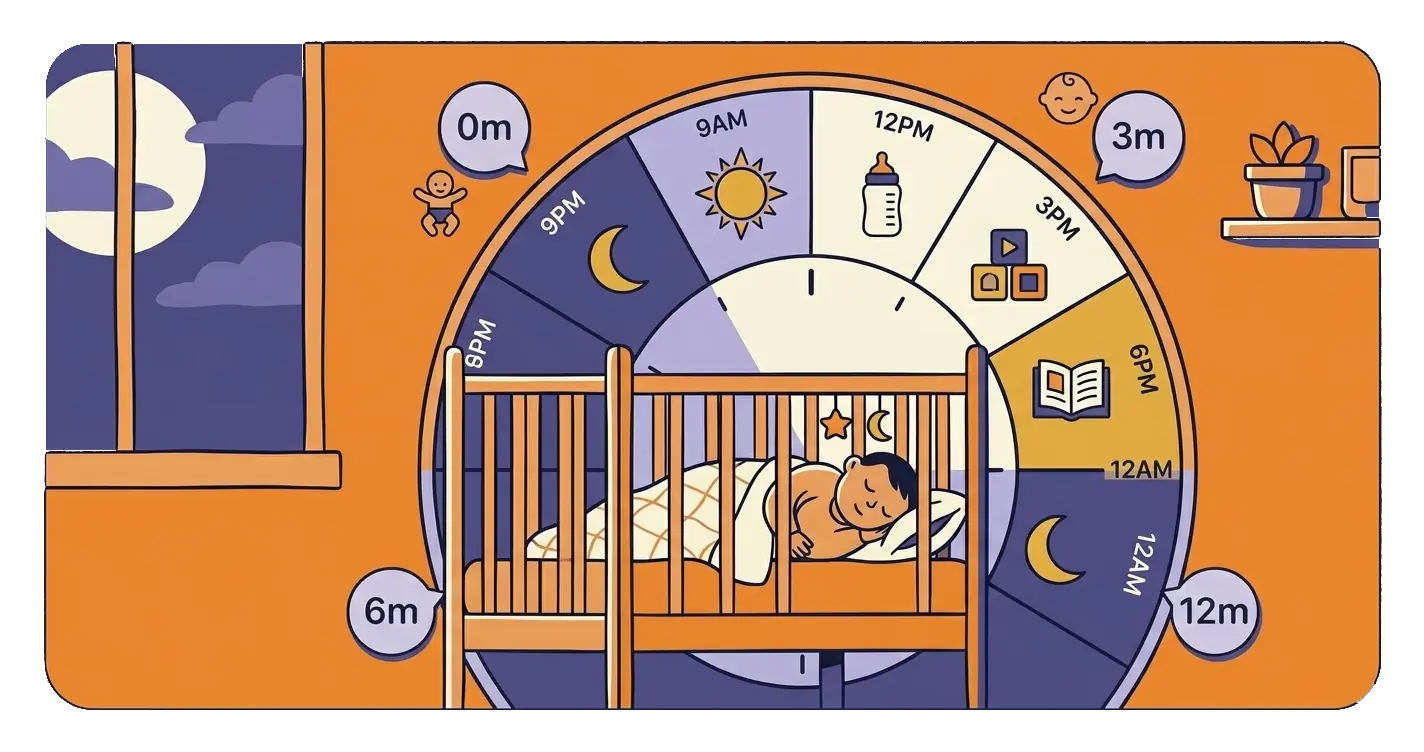
Brief awakenings between sleep cycles are natural even for adults. The difference is that older children and adults often fall back asleep without fully waking up. In the first year of life, sleep organization is still maturing, and the length of cycles, proportions of different phases, and circadian rhythm gradually change [3].
It's worth observing not just the number of awakenings, but also:
- the length of the longest sleep stretch,
- ease of falling back asleep,
- the child's mood during the day,
- feeding, weight gain, and development,
- total amount of sleep in a 24-hour period.
Child's Sleep in Different Age Groups
0–3 Months: Sleep Spread Throughout the Day
A newborn doesn't yet have a fixed division between day and night. Sleep occurs in several segments, and frequent awakenings for feeding are typical and necessary. At this stage, the goal should not be to extend sleep at any cost.
It's helpful to gently support the developing circadian rhythm: exposure to daylight in the morning, regular household activity during the day, and dimmed lights with limited stimuli during nighttime feedings. However, you should not intentionally delay feeding a newborn to make them sleep longer. If the child was born prematurely, has feeding difficulties, or is not gaining weight well, a pediatrician may recommend waking them for meals.
4–12 Months: Gradual Extension of Nighttime Sleep
During this period, many children begin to have a longer initial stretch of nighttime sleep. However, this doesn't mean every infant should already be sleeping without awakenings and feedings. The pace of sleep maturation is individual, and temporary setbacks may accompany infections, teething, intense motor development, or changes in the environment.
According to the American Academy of Sleep Medicine, infants aged 4–12 months should typically sleep a total of 12–16 hours a day, including naps [1]. This is a general range, not a requirement to be met every day to the minute.
At this age, it's worth looking at the entire day's schedule. Both overly long wake periods and late naps can make it difficult to fall asleep in the evening. A predictable yet flexible sequence of feedings, activities, naps, and nighttime sleep can help.
1–3 Years: Longer Nights, but Possible Return of Awakenings
Many toddlers sleep through most of the night, but awakenings can still occur. They may be caused by illness, separation anxiety, nightmares, changes in nap frequency, or the need for the same help they had falling asleep in the evening.
Children aged 1–2 years typically need 11–14 hours of sleep a day, and those aged 3–5 years need 10–13 hours, including naps [1]. Instead of focusing solely on awakenings, it's also important to assess daytime behavior. Irritability, difficulty concentrating, or falling asleep in random situations may indicate insufficient sleep.
4–10 Years: Importance of Regularity and Evening Calm
In older children, sleep is usually more stable, but difficulties with falling asleep, night fears, nightmares, or very early awakenings can occur. Children aged 6–12 years should regularly sleep about 9–12 hours a day [4].
Regular sleep and wake times, physical activity during the day, and limiting evening screen time are important. Consistent habits help the body prepare for rest, although they don't guarantee a complete absence of awakenings [2].
What Affects the Length of Nighttime Sleep?
There's no specific date by which every healthy child should be sleeping through the night. Sleep is influenced by factors such as:
- age and stage of nervous system maturation,
- temperament and sensitivity to stimuli,
- feeding needs,
- number and timing of naps,
- sleeping environment conditions,
- method of falling asleep,
- illness, pain, teething, or developmental changes,
- travel, change of caregiver, or starting daycare or preschool.
Feeding, holding, or rocking to sleep are not mistakes in themselves. However, if every awakening requires a lengthy recreation of the same conditions, and the family is exhausted, you can gradually expand the repertoire of soothing methods. Changes should consider the child's age, health, and readiness.
How to Gently Support Nighttime Sleep?
Observe the Rhythm of the Entire Day
For a few days, you can record the times of waking, naps, feedings, evening falling asleep, and nighttime awakenings. Such a diary helps identify a repeatable pattern. It doesn't have to be kept to the minute.
Introduce a Short Evening Routine
A predictable sequence can include dimming the lights, washing, feeding or dinner, a book, and a calm goodnight. The American Academy of Pediatrics emphasizes the importance of regular times and calm habits preceding sleep [2]. The routine doesn't have to be long or identical every day — its clarity is more important.
Adjust Naps to the Child's Age and Needs
Limiting naps is not a universal way to improve nighttime sleep. Excessive fatigue can make falling asleep difficult and lead to a restless night. On the other hand, a late or exceptionally long nap can delay bedtime. It's best to introduce changes one at a time and assess them in the context of the entire day.
Gradually Reduce Help with Falling Asleep
If the current method of putting the child to sleep is difficult for the family to maintain, small changes can be introduced: shorten rocking, end feeding just before sleep, or stay nearby after laying the child down and soothe them with your voice. There's no need to implement all changes at once. Independent falling asleep is not a condition for proper development or a guarantee of an uninterrupted night.
Safe Sleep for Infants
Attempts to extend sleep should never come at the expense of safety. According to the American Academy of Pediatrics, infants should be placed on their backs, on a firm and flat sleep surface. There should be no pillows, quilts, bumpers, positioners, stuffed toys, or loose textiles in the crib [5].
The safest arrangement is for the infant to sleep in their own crib or bassinet in the parents' room, without sharing a sleep surface with them. Infants should not be left to routinely sleep in a car seat, bouncer, swing, or on an inclined mattress. After feeding, it's best to place them in a safe spot before the caregiver falls asleep.
What to Do When a Child Suddenly Starts Waking More Often?
A sudden change in sleep doesn't always indicate a persistent problem. First, check for signs of infection, pain, teething, appetite changes, or other unusual behavior. Then consider whether nap times, sleep location, caregiver, or daily routine have changed recently.
During a temporary difficulty, it's good to maintain a calm and predictable evening. If disturbances persist, worsen, or affect the child's and caregivers' functioning, it's worth discussing them with a pediatrician. A sleep diary from the past week can be helpful.
When to Consult a Doctor or Specialist?
Medical evaluation is advised when sleep problems may stem from pain, illness, or breathing difficulties. Symptoms requiring consultation include:
- loud, regular snoring, breathing pauses, choking, or noticeable breathing effort during sleep,
- bluish discoloration of the lips or skin — in such cases, urgent help should be sought,
- fever, severe pain, unusual sleepiness, or difficulty waking,
- significant appetite decline, feeding difficulties, or insufficient weight gain,
- frequent vomiting, increased crying when lying down, or other signs of discomfort,
- sudden, significant sleep change without a clear cause,
- excessive daytime sleepiness, concentration problems, or falling asleep in unsafe situations,
- persistent difficulties that significantly burden the child or family.
For infants, the decision to limit nighttime feedings should be discussed with a pediatrician, especially if the child was born prematurely, is ill, or has trouble gaining weight. If no medical causes are found and the issue mainly concerns sleep organization, consulting a child sleep specialist may be helpful.
Frequently Asked Questions
Does Six Hours of Sleep Mean an Infant Sleeps Through the Night?
In some studies, this is how sleeping through the night is defined. However, in everyday language, parents often mean 10–12 hours from evening to morning. Therefore, before comparing children, it's important to clarify what this term means.
At What Age Should a Child Stop Eating at Night?
There is no single age appropriate for all children. Factors include feeding method, growth rate, health status, and the amount of food consumed during the day. Nighttime feedings are typical in the first months. The decision to limit them is best discussed with a pediatrician.
Should You Wake a Newborn for Feeding?
It depends on age, weight, feeding progress, and medical recommendations. Some newborns, especially those born prematurely or not gaining weight well, require regular waking. After achieving proper weight gain, a pediatrician may recommend a different approach.
Will Shortening Naps Improve Nighttime Sleep?
Not necessarily. A too-long or late nap can make falling asleep in the evening difficult, but excessive daytime sleep restriction can lead to overtiredness. Naps should be adjusted to the child's age and behavior, not eliminated solely to extend nighttime sleep.
Do Frequent Awakenings Mean Parents Are Making a Mistake?
No. Awakenings are part of infant sleep development and can increase during illness, teething, or developmental changes. It's worth looking for possible causes and supporting a predictable daily rhythm, but the number of awakenings alone is not an assessment of parental competence.
Conclusion
"Sleeping through the night" doesn't always mean 10–12 hours of sleep without the slightest awakening. In studies, it can mean a much shorter, several-hour stretch. A child's sleep develops gradually, and its course depends on age, health, temperament, feeding, and the entire day's rhythm.
The most helpful approach involves realistic expectations, safe sleep conditions, a predictable evening, and observing the child instead of comparing them to peers. If awakenings are accompanied by concerning symptoms or family exhaustion becomes difficult to bear, professional support is advisable.
Sources
- American Academy of Sleep Medicine, Recommended Amount of Sleep for Pediatric Populations: A Consensus Recommendation.
- American Academy of Pediatrics, HealthyChildren.org, materials on healthy habits and children's sleep routines.
- Review of literature on the development, maturation, and organization of infant sleep.
- American Academy of Sleep Medicine, Sleep Education, Healthy Sleep Habits and Recommended Sleep Ranges.
- American Academy of Pediatrics, Sleep-Related Infant Deaths: Updated 2022 Recommendations for Reducing Infant Deaths in the Sleep Environment.