Sugar in Your Child's Diet: How to Limit Sweets Without a Battle?
When the Topic of Sweets Comes Up Daily
Parents often ask us: “How can we limit sweets without making them the highlight of the day?” Honestly, this is a very common dilemma. From our experience, the problem usually doesn't start with one piece of chocolate, but rather with the lack of simple, consistent rules at home. 🍎
In practice, we see this often: one day it's “okay, just today,” and the next it's “no, absolutely not.” For a child, this is unclear, so they try again, harder, and more often. And the parent feels like the whole day revolves around the question of something sweet.
We don't like the approach of “all or nothing.” In family life, solutions that can be maintained for weeks, not just a couple of days, work best. That's what we'll focus on here.
To clarify, when we talk about the problem, we mainly mean added sugar in products, not the sugar naturally present in fruits or milk. In our work with families, what's more important than counting every gram is how often the sweet taste appears during the day and whether it has a predictable place.
In this article, we'll show you: - when sweet becomes too much, - where sugar most often sneaks into a child's menu, - how to set rules without arguments and constant negotiations, - how to calmly reduce the amount of sweets over a few weeks. 🍓
How Much Sugar is Too Much?
Parents often want to hear one simple number. We understand — specifics give a sense of control. But from our experience, it's better to understand where the sugar is coming from rather than obsessively counting.
The most important thing is to distinguish: added sugar in yogurt, desserts, or drinks is different from the sugar naturally present in whole fruits or milk. These shouldn't be lumped together. 🍓
For the youngest children, it's best to not add any extra sugar to their diet. For older kids, you can roughly assume that 10–12 g of added sugar per day is already quite a bit. This isn't a rigid limit for every child, but a helpful reference point for parents to understand the scale.
To put it in perspective: one teaspoon of sugar is about 5 g. So, those 10–12 g are roughly two teaspoons for the entire day. In practice, this amount can disappear quickly — sometimes in just one yogurt and a drink.
In our work with families, we often see the same moment of surprise: a parent says there's “almost no sweets,” but then it turns out that the sweet taste appears in the morning cereal, later in yogurt, then in a mousse, and in the evening in cocoa. It's this daily pattern that makes the biggest difference.
Simpler Than Counting Grams
Day-to-day, it's much easier to stick to one rule: sweet should be an addition, not the backdrop of the entire day.
What does this usually mean in practice? - water as the main drink, - breakfasts without added sugar, - fewer ready-made “kids'” products, - checking ingredients for 2–3 weeks until you get into the rhythm.
How to Approach the Topic Depending on Age
In practice, it's better to think about the stage of development rather than just the number of grams.
- infant — no added sugar, not getting used to sweet taste as the norm,
- toddler — ensure sweet doesn't appear several times a day “by chance,”
- preschooler — introduce clear rules: when and how much,
- school-age child — talk more about choices, portions, and situations outside the home.
From our experience, this division is simply more practical for parents.
Where Does Sugar Hide Most Often?
In practice, we observe that sugar rarely “ruins the diet” just because of a candy bar. Much more often, the problem is with products that look innocent, are advertised as convenient, or are made especially for children. And that's why it's so easy to overlook something.
Parents often tell us: “I buy things for my little one, so I thought they were okay.” It's very understandable. But the label on the package doesn't always match a good composition.
Products That Most Often Mislead Us 🍓
We most often see added sugar in products like: - fruit and fruit-milk desserts, - flavored yogurts for children, - flavored porridges, - ready-made puddings, gruels, and rice with fruits, - purees and fruit sauces, - teas for children, - juices and fruit drinks, - cookies and crisps “for toddlers.”
These are the things that can build a habit of sweet taste from morning to evening. And then the parent feels like they're not giving sweets, yet the child increasingly demands something sweet.
We remember a mom who came to us convinced that the biggest problem was weekend cookies. After reviewing the menu, it turned out that more sweet stuff came from daily cocoa, fruit yogurts, and purees than from the dessert itself. This is a very common scenario.
How to Check a Product Without Analyzing the Whole Store
We recommend a simple 10-second method. First, look at the ingredients. If sugar, syrup, juice concentrate, maltodextrin, or other sweetening additives appear high up, that's already a warning sign.
Then glance at the table and check the “of which sugars” position. The number alone doesn't tell the whole story, but it's great for comparing two similar products. In practice, such quick comparisons make shopping much easier.
The Simplest Shopping Filter 🛒
If you want to simplify your choice, stick to the rule: shorter ingredients list and fewer oddities are usually a better direction. You don't need to get a degree in labels. Just compare a few products from the same shelf for 1–2 weeks, and then new choices will start to become automatic.
Why Does a Child So Often Want Sweets?
This is one of the most important questions. Because very often, the problem isn't that the child “likes sugar too much,” but that sweets start to serve various functions: comforting, occupying time, helping to survive fatigue, or filling too long gaps between meals. 🍎
In our work with families, we regularly see several recurring causes: - sweets are constantly visible and easy to reach, - meals appear at random times, - the child is hungry but doesn't eat filling meals, - adults themselves often snack on something sweet, - sweets become the answer to boredom, tension, or fatigue.
It's also good to distinguish between hunger and craving for a specific taste. If a child really needs food, they will usually accept something ordinary: a sandwich, natural yogurt, fruit with something more filling, or a normal dinner. If only a chocolate or lollipop is in question, it's more often a craving than real hunger. 🍪
From our experience, a short observation over 3–5 days helps a lot: 1. When does the child ask for sweets? 2. What did they eat before? 3. Were they tired or overstimulated? 4. Were sweets in sight?
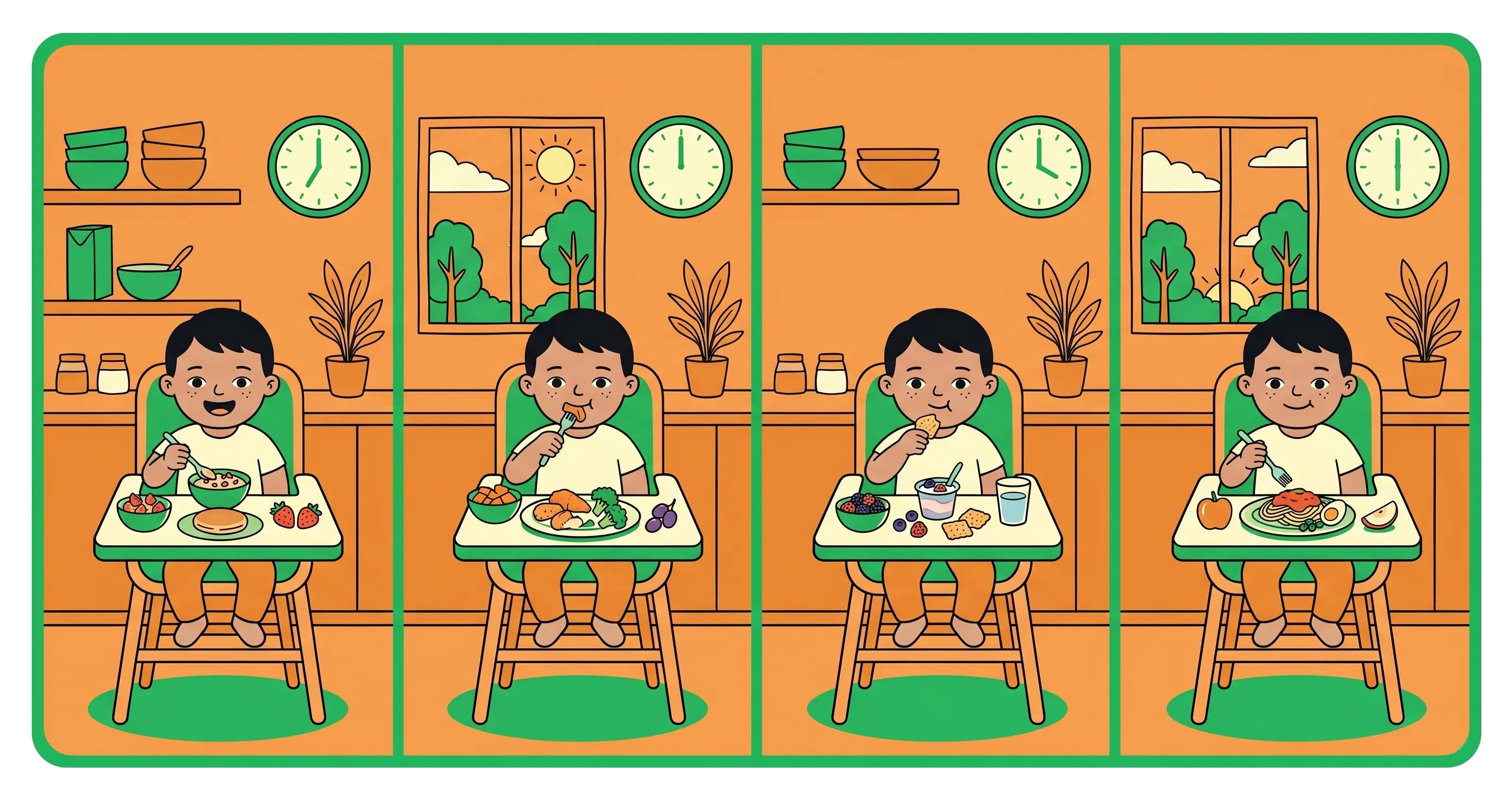
Often, after just a week, a parent sees a pattern. We once had a family where the daily “hunt for sweets” started around 5:00 PM. After organizing lunch and afternoon snack, the topic clearly calmed down, without any strict bans. In practice, such small adjustments give more than a battle over every candy.
How to Limit Sweets Without Arguments?
From our experience, it's not strictness that works best, but predictability. A child is much more likely to accept rules when they know what to expect. When sweets are available without end one moment and suddenly disappear the next, tension usually only increases. 🍪
In practice, a simple setup works well: we set the framework, and the child doesn't have to negotiate it every day. With younger children, the first effects are often visible after just 7–14 days if adults truly stick to a shared plan.
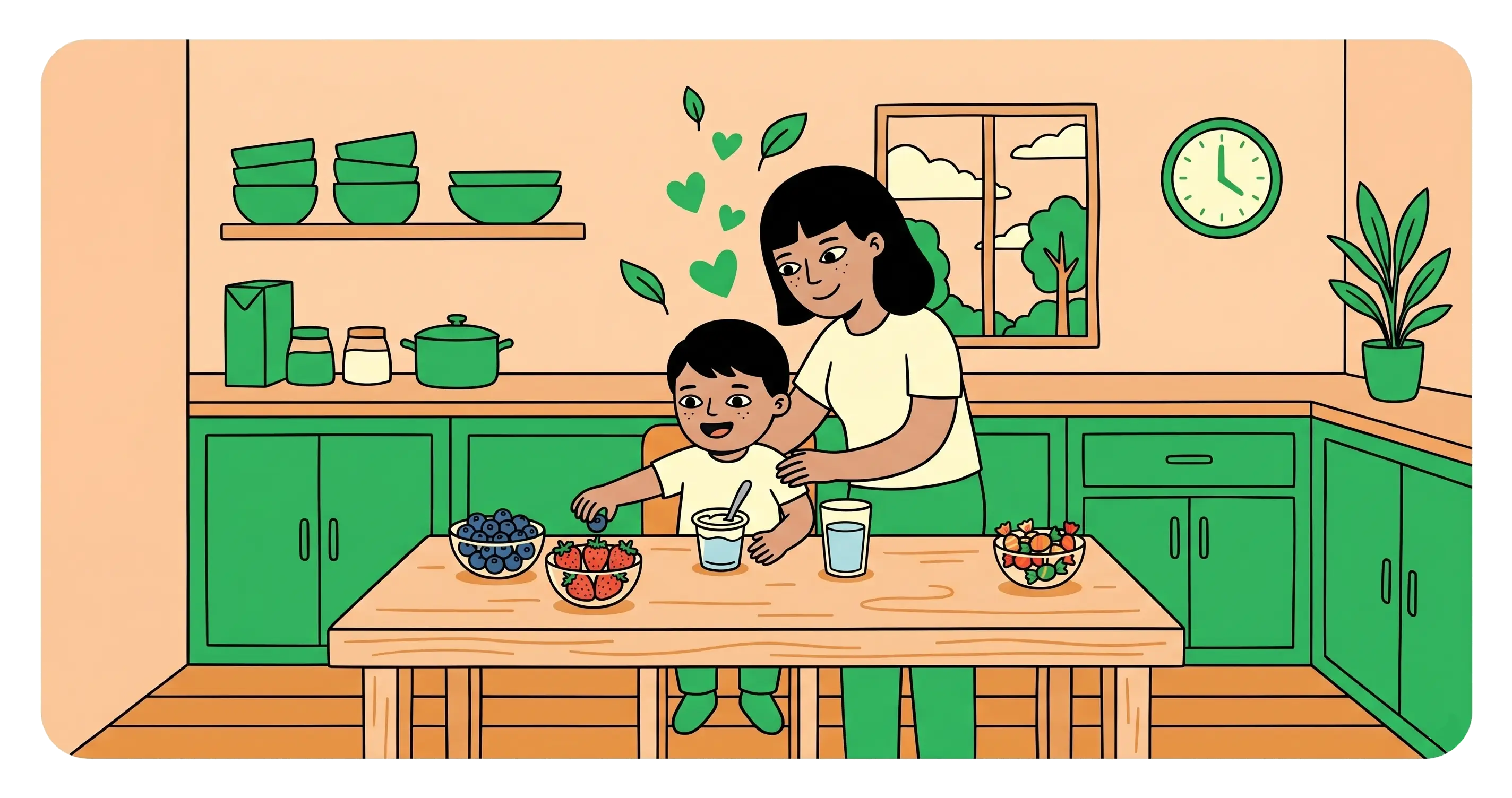
We most often recommend such home rules: - sweets after meals, not instead of meals, - not throughout the day “a little at a time”, - not as comfort or reward, - not in front of screens, - water as the daily drink, - a small, agreed portion instead of endless refills.
In everyday life, short messages work best. For example: - “Today, dessert is after lunch.” - “Sweets for today are already done.” - “Now we're choosing something that will really satisfy.”
No lectures, no shaming, no scaring.
Not Every Family Needs the Same Plan
It's important: there is no one ideal model for everyone. In some homes, a regular dessert after lunch works great. The child quickly catches the rhythm and stops asking for sweets every hour.
In other families, a model of 2–3 predictable occasions per week works better. This is a common choice for older children, a busier daily schedule, or when a daily dessert only heightens expectations. In practice, what matters is not which model you choose, but whether you can maintain it calmly and consistently.
Ready-Made Phrases That Help
Parents often tell us that the hardest part is responding “here and now.” That's why it's worth having a few simple phrases on hand.
For toddlers: - “Sweets are after lunch.” - “Now we're drinking water.” - “I see you want it. Today, it's already been.”
For preschoolers: - “You can choose dessert after lunch or for an afternoon snack.” - “We don't buy something sweet with every shopping trip.” - “Now we're choosing a snack that will make your tummy happy.”
For older children: - “In our home, sweets don't replace meals.” - “You can eat the portion we agreed on earlier.” - “Let's check together how much sweet there has been today.”
Plan for Changes Over 2–8 Weeks
If you want to really change something, don't go for a revolution under the slogan “zero sweets from tomorrow”. From our experience, this usually ends with quick fatigue and even more tension. A calm plan spread over several weeks works much better. 🍓
1. First, Observation
For 3–4 days, simply note when the sweet taste appears. Not just candy bars or cookies, but also drinks, yogurts, cereals, mousses, cocoa, desserts, and porridges.
Pay special attention to: - drinks, - flavored yogurts, - breakfast cereals, - ready-made desserts, - cocoa and sweet milk snacks.
Even this observation often opens eyes. In practice, parents very often discover that the biggest problem isn't the weekend dessert, but the everyday little things.
2. Choose Only 1–2 Changes
Don't try to fix everything at once. We usually encourage starting with what's easiest to implement and what will provide quick relief.
The most common solutions are: - replacing sweet drinks with water, - natural yogurt with fruit instead of flavored, - one set moment for dessert instead of snacking all day.
3. Change Gradually
In practice, children accept change much better when it is gentle but consistent. You can reduce portions, choose less sweet versions, or dilute drinks with water. After 2–3 weeks, many families notice that the child starts to accept a less intensely sweet taste. 🙂
4. Set Common Household Rules
After a few weeks, it's worth ensuring that the new rules don't apply only to the child. If a toddler hears “You can't,” while adults snack without limits, resistance grows rapidly.
In practice, what works best is what includes the whole family: - water on the table, - sweets out of sight, - dessert within set limits, - less spontaneous buying of “something small.”
Common Mistakes That Intensify the Topic of Sweets
The first mistake is a very strict ban. When a child hears that something is “never allowed,” they usually don't learn calmness but focus even more on that product. 🍭 From our experience, boundaries that are clear but not extreme work much better.
The second mistake is shaming. When a child hears that they ate something “bad,” “terrible,” or “unhealthy to the extreme,” unnecessary tension builds around food. We prefer a simple message: sweets are sometimes, in a certain amount, and do not replace normal food.
Another trap is using sweets as a tool for regulating emotions. Dessert for good behavior, a lollipop after crying, something sweet “to cheer up” — this quickly reinforces the association that sugar helps with everything. In practice, other forms of support work much better: a moment of closeness, playing together, rest, a sticker, or simply being present. 🙂
We also often see the trap under the slogan “it's a healthy version”. Honey, date syrup, or homemade baked goods don't always solve the problem if the child still receives the message all day that everything should be distinctly sweet. Sometimes the biggest change isn't swapping the product, but lowering the overall amount of sweet taste.
What to Serve Instead of Sweets?
A substitute should be realistic, not just ideal on paper. If something is too complicated, expensive, or requires cooking from scratch every day, it usually won't last long. That's why we focus on simple and repeatable solutions. 🍓
In practice, these work well: - fresh fruits served in an interesting way, - natural yogurt with fruits, - homemade fruit jelly, - yogurt with mashed banana, - more filling milk or grain-based desserts prepared at home.
If a child quickly looks for food again after something sweet, it's a sign to opt for more substantial options: - rice with milk and fruits, - semolina or millet with fruit puree, - natural yogurt with banana and flakes, - fruit served after a meal, not instead of it.
100% fruit purees without added sugar are treated more as an emergency plan than a basis for daily snacks. They work well outside the home, in the car, or on a walk. But at home, whole fruits and snacks that are more filling and require chewing usually fare better.
In our work with families, we often see that the form of serving makes a huge difference. The same fruit thrown loose on the table may be ignored, but served in a box, on a small plate, or as a “choice set” suddenly becomes much more interesting.
A Few Myths That Often Confuse Parents
Parents often ask us if a child immediately “goes wild” after sugar. 🍭 From our experience, this is usually too simple an explanation. After a party or birthday, emotions, noise, fatigue, late hours, and lots of stimuli overlap. Sugar rarely acts here in isolation from the rest.
The second common myth is the belief that juice is a safer daily option than sweets. However, in practice, juice still reinforces the habit of a sweet taste and shouldn't replace water. If it does appear, it's better to treat it as an addition, not a basic drink. 🧃
The third myth concerns “better” forms of sweetening. Honey, syrups, or other naturally sounding additives often give the impression of being neutral, but for a child, they still mean one thing: food should be sweet. And we usually aim to gradually lower that sweetness threshold over 2–4 weeks.
Summary: Calmly, Clearly, Consistently
If we have to point out what really works, it would be not perfection, but consistency. In practice, the greatest relief for families comes from simple rules maintained for 2–4 weeks. Without daily negotiations, without scaring, without making dessert the central point of the day. 🙂
What usually helps: - water as the main drink, - regular meals every 3–4 hours, - reading the ingredients of the most frequently purchased products, - clear answer to the question: when and how much sweet appears at home, - not using sweets for rewarding and comforting.
From our experience, it's not about making sweets disappear from a child's life completely. It's about not letting them rule everyday life. For one family, dessert after lunch will work, for another, 2–3 planned occasions a week. The most important thing is that this model fits your life and is possible to maintain.
If you want to organize the topic of sweets in a calm way tailored to your child's age, you can use the NutritionHelper consultation form. Together, we'll help you create a plan that can be implemented in everyday family life.