How Much Water Does a Child Need? Hydration by Age
Is Your Child Really Drinking Enough?
Parents often keep track of whether their child has eaten vegetables, how much protein they've had, and if they're snacking too much on sweets. But drinking? This often takes a back seat. From our experience, this is where many of the small daily issues hide: mood swings, decreased appetite, evening crankiness, or headaches after an active day 💧
In practice, we see that children rarely say directly, "I'm thirsty." More often, they become irritable, less willing to eat, or suddenly "lack energy." And then parents wonder what's going on, when the solution can be quite simple.
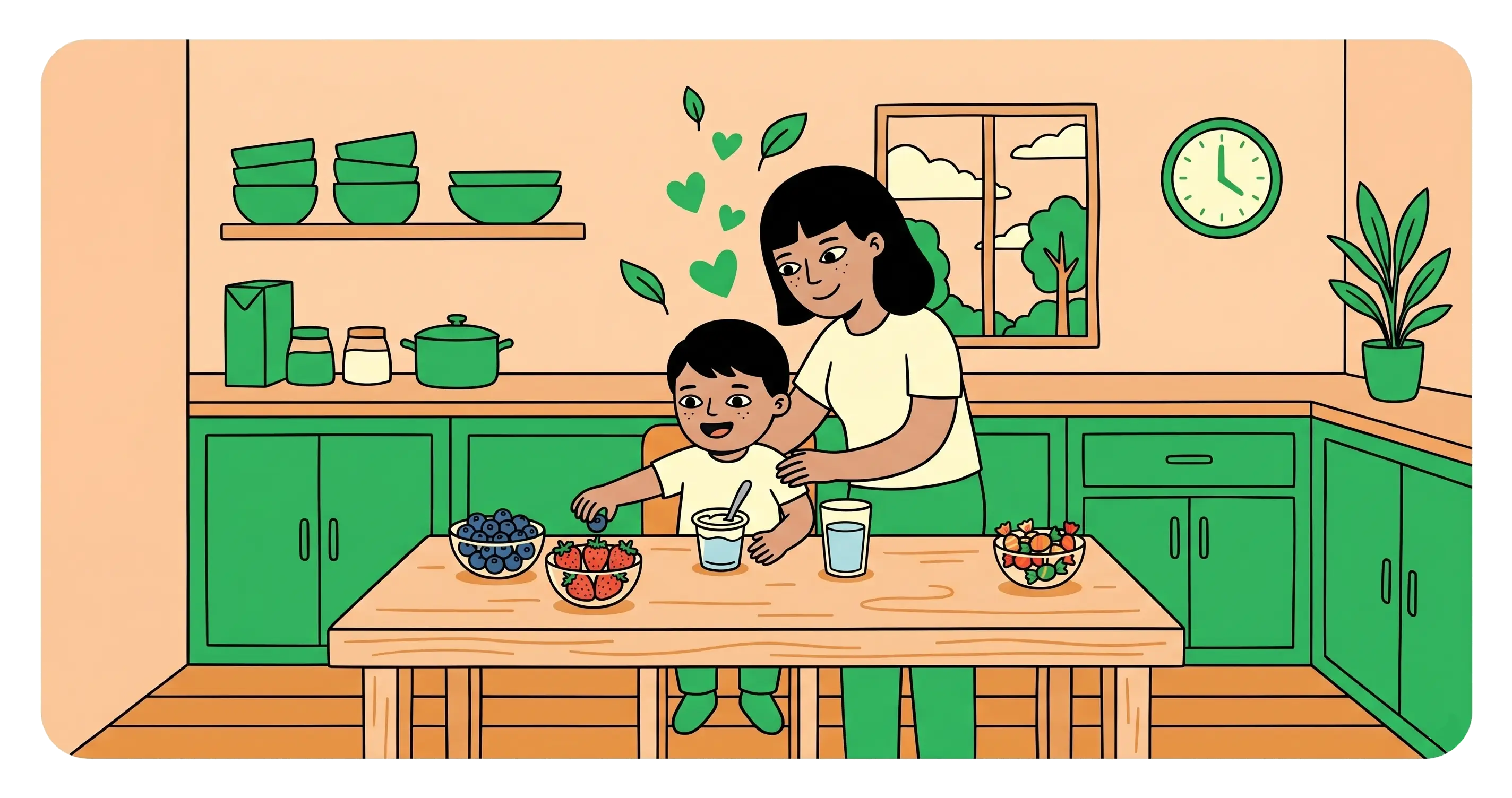
It's also important to remember that hydration isn't just about what's in a bottle or cup. Children get fluids from milk, soup, fruits, vegetables, yogurt, or porridge. In our work with families, we often reassure parents that if a child isn't drinking a large amount of plain water, it doesn't necessarily mean they're drinking too little.
For the youngest, it's different. Until about 6 months of age, a healthy infant breastfed or given properly prepared formula usually doesn't need additional water. If they're eating well, have wet diapers, and are developing normally, there's often no need to "top up" with extra fluids.
In this article, we'll show you: - how much fluid a child typically needs at different developmental stages, - how much of that is usually just water, - when to start offering water to an infant, - how to notice if there aren't enough fluids, - and how to make regular drinking easier without constant reminders.
From our experience, even small changes in daily rhythm can have an effect quite quickly — sometimes in a few days, and sometimes in 1–2 weeks.
How Much Fluid Does a Child Need? A Simple Guide by Age
Parents often ask us if seeing 800 ml or 1600 ml in a table means that's how much pure water a child should drink. No, that's not how it works. In practice, it's about the total daily fluid intake, which includes not only water but also milk and what the child "drinks" with their food 🥣
Therefore, it's most convenient to look at it in two steps: 1. how much fluid a child needs in total, 2. how much of that is usually drinking water.
In our work with families, we emphasize one important thing: these numbers are approximate. One child might eat a lot of soup and fruit, another hardly any. One might run around the yard all day, another might have a quieter day. So the table is meant to help, not stress.
Child Hydration by Age — Approximately
| Child's Age | Approximate Total Daily Fluid Amount | How Much is Usually Drinking Water? |
|---|---|---|
| 0–6 months | approx. 700 ml | usually 0 ml additional water |
| 6–12 months | approx. 800–1000 ml | usually a few dozen to about 200–300 ml |
| 1–3 years | approx. 1250 ml | often about 300–500 ml of water, the rest from milk and food |
| 4–6 years | approx. 1600 ml | often about 500–750 ml of water, depending on diet |
| 7–9 years | approx. 1700 ml | usually about 700–1000 ml of water |
| 10–12 years | approx. 1900–2100 ml | usually about 1000–1300 ml of water |
From our experience, what helps parents most is not memorizing numbers but combining the table with observing their child. If the child has energy, urinates regularly, doesn't have dry lips, and functions as usual, we're usually closer to the right track than when trying to stick to a plan down to 10 ml.
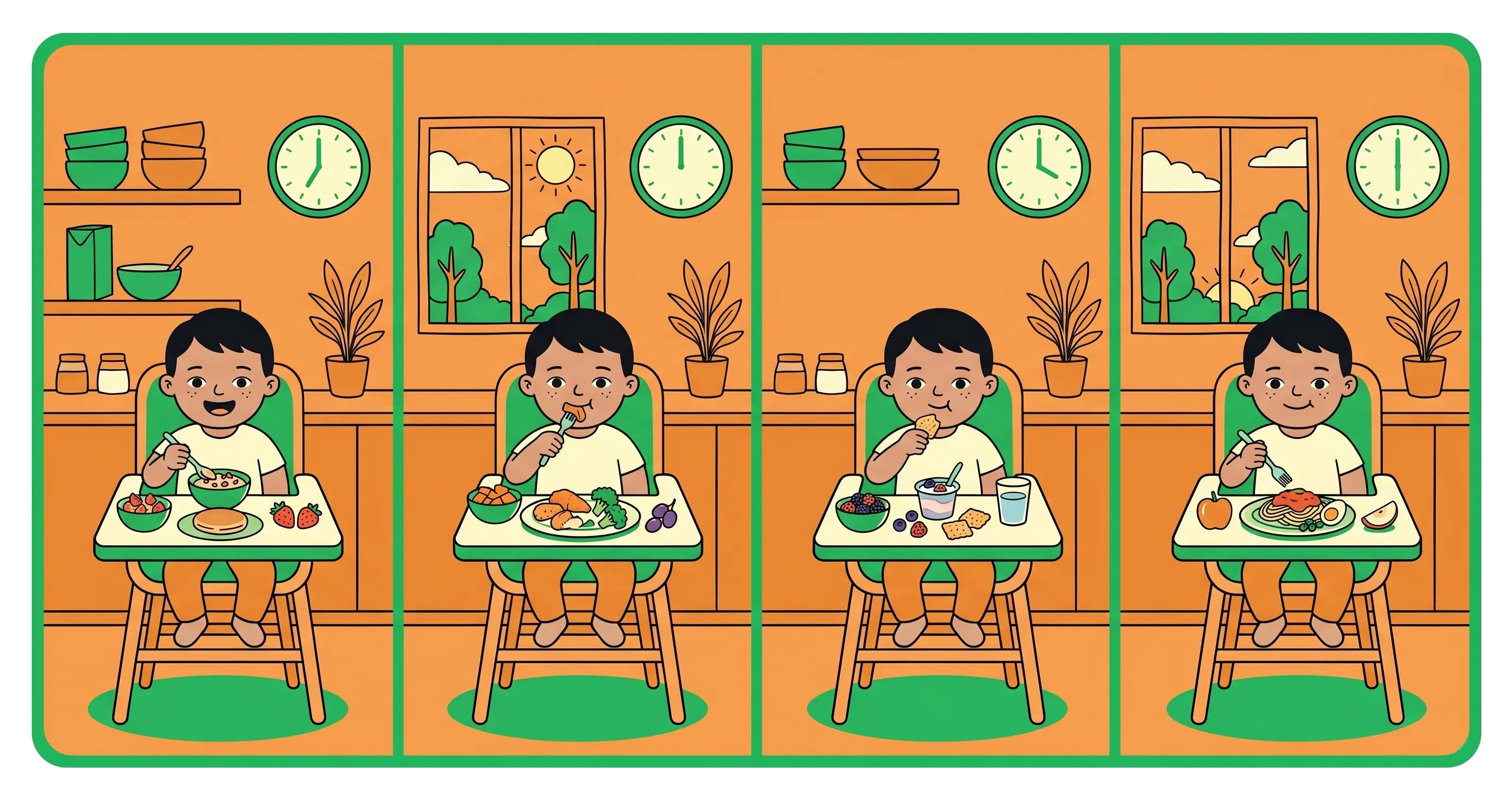
We've also had many families who initially counted every sip meticulously. After a few days, it turned out that a simple daily rhythm made more sense: drinking with meals, after a walk, and after playtime. This is usually easier to maintain than constantly monitoring a bottle.
How Much Water for a Child in Practice? Step by Step
0–6 months
At this age, the foundation of hydration is simply milk. If the infant is breastfed or given properly prepared formula, this usually meets their needs.
Typically, it looks like this: - total: about 700 ml per day, - main source of fluids: milk, - additional water: usually not needed, - solid food: practically not significant yet.
Parents sometimes worry that in warmer weather, the infant needs to be given extra water. In practice, what's more important is whether the child is nursing well, wants to eat, and wets diapers as usual.
6–12 months
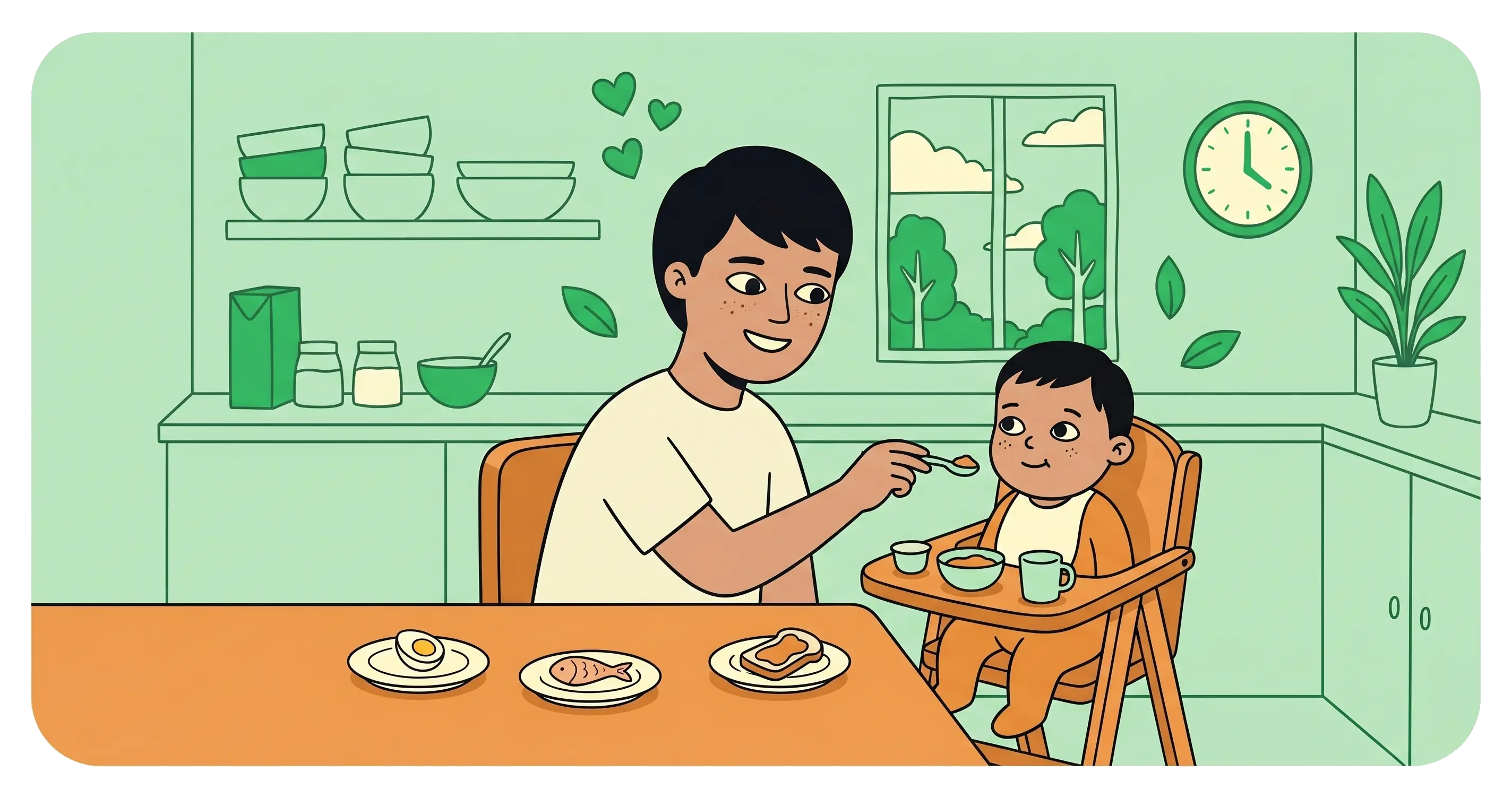
After starting to introduce solid foods, the situation gradually changes. Milk is still very important, but there's also room for small amounts of water and fluids from meals.
We usually see this setup: - total: about 800–1000 ml per day, - foundation: still largely milk, - additional water: usually from a few sips to about 200–300 ml, - food: increasing amounts of porridge, vegetables, fruits, and soups.
From our experience, parents are often surprised at how little water an infant actually drinks at first. And that's okay. At the start, the goal isn't a "full cup," but rather a calm introduction to the taste and act of drinking.
1–3 years
This is when the most unpredictable stage begins. One day the child drinks eagerly, the next hardly at all. In practice, we see this very often and it's usually nothing unusual.
Approximately: - total: about 1250 ml per day, - drinking water: often about 300–500 ml, - the rest: milk, yogurts, soups, fruits, vegetables, and other meals.
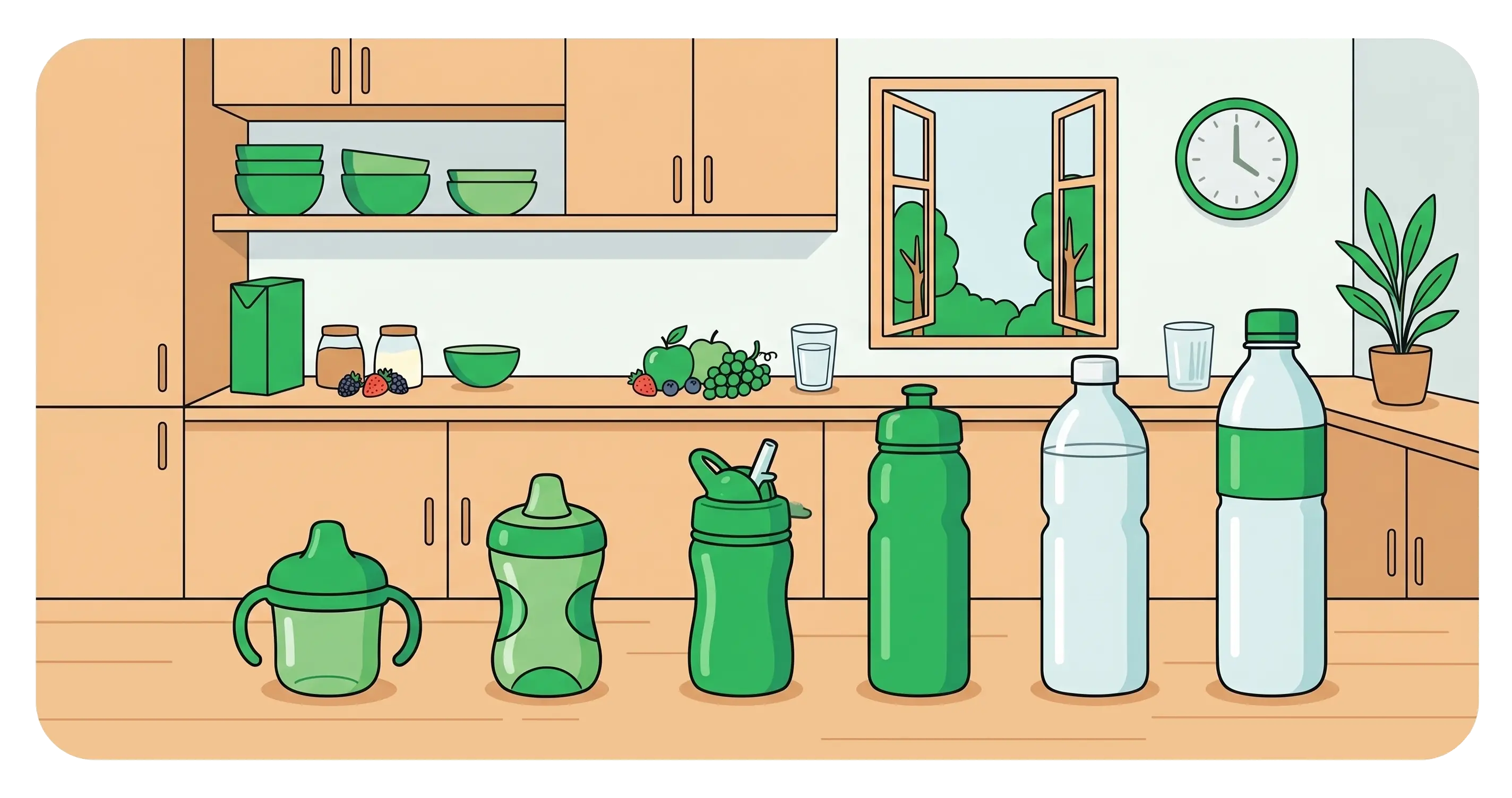
In our work with families, the principle that works best for toddlers is: water should be visible and easily accessible. A cup on the table and a bottle within reach make a bigger difference than multiple reminders.
4–6 years
At this age, the proportion of plain water usually increases. The child is more independent but can also get so caught up in play that they simply forget to drink.
We usually assume: - total: about 1600 ml per day, - drinking water: usually 500–750 ml, - the rest: fluids from food and other drinks given sensibly.
In practice, we observe that preschoolers often drink better at home than elsewhere. If your child comes home from preschool and immediately drinks half a cup, it's a valuable clue for us that they might have drunk too little during the day.
7–12 years
For older children, water usually becomes the main drink. The problem is not usually lack of access, but simple forgetfulness — especially at school, during training, and while playing with peers.
Approximately: - 7–9 years: about 1700 ml per day, - 10–12 years: about 1900–2100 ml per day, - drinking water: usually about 700–1300 ml, depending on age and day.
From our experience, a simple habit works very well for school-aged children: a few sips in the morning, a bottle for school, drinking after returning home and after activity. No big philosophy, but regularly.
Water for Infants — When to Introduce It?
This is one of the questions we hear very often. Parents want to know if an infant should already be drinking water or not. In practice, we usually answer: calmly, usually not from the first months.
Until about 6 months of age, a healthy infant breastfed or given formula typically doesn't need additional water. If they're eating well, gaining weight, have wet diapers, and are in good shape, milk usually suffices.
In our work with families, we often encounter situations where someone in the environment tells parents: "give some water because it's hot." And then it turns out the baby simply drinks milk less eagerly. Therefore, water given without need doesn't provide benefits and sometimes just disrupts the feeding rhythm.
What do we look at before deciding that additional water isn't needed? - the child eats regularly and effectively, - has wet diapers as usual, - grows and develops properly, - is active and communicative, - doesn't have fever, diarrhea, or vomiting.
We usually start offering water around the time of introducing solid foods. At first, it can really be 2–3 sips with a meal. From our experience, the less pressure at the start, the easier it is for the child to later accept water as something natural 🙂.
What Changes in Summer, During Heatwaves, and with Increased Activity?
In summer, children usually need more fluids — sometimes a bit more, sometimes noticeably more. It all depends on how much they move, how long they're in the sun, and if they have the opportunity to drink regularly ☀️
In practice, we see this especially in children who are so absorbed in play that they completely ignore thirst. A parent says, "here's water," and the child responds "later," and an hour passes. This is a very typical scenario.
Therefore, on warm days, it's best to incorporate drinking into the daily plan rather than asking "do you want a drink?": - a few sips before leaving the house, - small portions during play, - drinking immediately after returning, - more meals rich in water, like fruits, vegetables, soups, or yogurt.
From our experience, children respond much better to small portions given regularly than to the suggestion of drinking a large amount at once. On the playground, beach, or bike, it really makes a difference.
We once cared for a family where the child "suddenly" lost energy every afternoon during the summer. The problem wasn't in the food but in the fact that from breakfast to lunch, they drank almost nothing. After introducing a simple rhythm — a few sips before going out, halfway through play, and after returning — improvement was visible in just 2–3 days.
Fever, Diarrhea, Vomiting — When Does Hydration Require More Attention?
These are situations where it's not worth putting the topic "off until later." From our experience, this is when children can lose fluids faster than parents expect. This is especially true for infants and younger toddlers.
In practice, the best rule is: small amounts, but often. If the child doesn't want to drink or vomits after a larger amount, it's better to give fluid little by little: - 1–2 teaspoons, or - a few small sips every 2–5 minutes.
We then look not only at how much the child drank. Equally important is: - whether they urinate as usual or almost as usual, - whether they are communicative, - whether their lips aren't noticeably dry, - whether they even want to take fluids.
In our work, we see that parents often try to "make up" everything with one larger portion. And that usually works worse than calmly, frequently giving small amounts.
How to Tell if a Child is Drinking Too Little?
This question comes up very often because the symptoms aren't always obvious. A child doesn't have to immediately look sick. Sometimes the first sign is simply that they're more irritable, have dry lips, or go to the bathroom less often.
What Do We Look at Daily?
For infants, we usually get the most information from: - the number of wet diapers, - the desire to eat, - the child's overall activity.
If the rhythm is usually similar and suddenly there are noticeably fewer diapers, it's worth stopping and examining the situation.
For older children, we pay attention to: - less frequent urination, - darker urine, - stronger-smelling urine, - dry lips or tongue, - decreased energy.
From our experience, with mild dehydration, improvement often appears quite quickly. After just a few days of more regular drinking, parents notice that the child goes to the bathroom more often, is in a better mood, and complains less about fatigue.
When to React Faster?
There are also situations that shouldn't be waited out. We pay special attention when a child: - urinates significantly less than usual, - has very dark urine, - is sleepy, apathetic, or difficult to wake up, - has dry lips and no tears, - doesn't want to drink or vomits everything.
In such moments, it's best not to guess but to contact a doctor. Especially if we're talking about an infant or a child during an infection.
What is Best to Give to Drink?
On a daily basis, the simplest answer is also usually the best: water 💧 It's the best way to build a calm, natural drinking habit.
In practice, we most often recommend: - non-carbonated water, - given regularly and without pressure, - preferably with meals and between them.
From our experience, children learn to drink water more easily if they see this habit in their parents. It's a small thing, but it really works. If you reach for water at the table, the child treats it as something ordinary, not a special "task."
It's also worth being cautious with drinks that quickly become too attractive: - juices, - flavored drinks, - sweetened teas, - isotonics.
In our work with families, we often see the same pattern: a child gets used to the sweet taste, and then plain water "doesn't suit them anymore." Therefore, if juice does appear, it's better to offer it in a small amount and with a meal, rather than sipping throughout the day.
Common Mistakes in Child Hydration
One of the more common mistakes is the belief that the more water, the better. For children, it doesn't work that simply. Especially for the youngest, too much water isn't a good idea either.
We most often see such situations: - giving extra water to an infant without clear need, - replacing milk with water, - giving juices instead of water, - forcing a child to drink a whole cup even though they clearly don't want to anymore.
From our experience, replacing milk with water for an infant can quickly disrupt feeding. The parent feels that the child "drank something," but in practice, the baby gets too little energy and fills up on something that shouldn't replace a meal.
We also cared for a family where a two-year-old sipped juice from a bottle all day. Water practically disappeared from daily life. When the parents gradually returned to mainly offering water and set juice only for one meal, after about 2 weeks, drinking started to look much calmer.
Simple Safety Rules
It's worth remembering a few basics: - don't force a child to drink, - don't give additional water without need before 6 months, - don't replace milk with water, - during an infection, react faster if the child urinates little, vomits, or doesn't want to drink.
How to Make Regular Drinking Easier for a Child Daily?
Parents often tell us: "I remind them all day, and they still don't drink." From our experience, the problem is usually not the lack of goodwill from the parent, but that drinking doesn't have a fixed place in the daily plan.
That's why a simple scheme works best. Without pressure, without negotiations, without counting every sip.
A Plan That Usually Works
For many families, this rhythm works well: - water with breakfast, - a few sips before going out, - drinking after a walk or preschool, - water with lunch and dinner, - a few sips after activity.
This setup usually starts to "take hold" after 7–14 days. The child doesn't have to drink a lot at once. Regularity wins over large portions.
What Helps the Most?
In practice, the most effective are: - a bottle or cup always at hand, - water visible on the table, - simple situational reminders, like "let's drink before we go out," - juicy additions to the diet, like fruits, vegetables, soups, or yogurts.
In our work with families, we see that children respond much better to a calm routine than to frequent questions like "will you drink now?" The less tension around drinking, the easier it usually is to develop a good habit.
Summary: Child Hydration Without Stress
From our experience, the best way to manage child hydration is simply and calmly. It's not about fighting for the perfect number of milliliters every day. What's more important is whether the child drinks regularly, urinates, has energy, and feels good.
In practice, it's worth remembering a few things: - fluids aren't just water from a cup, - for infants, milk is the foundation, - after introducing solid foods, water is introduced in small steps, - in summer and during infections, observe the child more closely, - the best everyday drink is water.
If you feel that your child is drinking too little, often comes home from preschool or school thirsty, or you're unsure how to organize this in your daily life, fill out the NutritionHelper consultation form. We'll calmly guide you through it step by step.