Allergens in Your Baby's Diet: Calmly and Without Unnecessary Delay
Eggs, fish, gluten, and peanuts often cause more concern than other foods introduced during diet expansion. This is understandable, but for healthy infants, delaying the introduction of potentially allergenic foods is not recommended. These should be included in the diet after starting to expand the diet, in a safe form appropriate for the child's age [1].
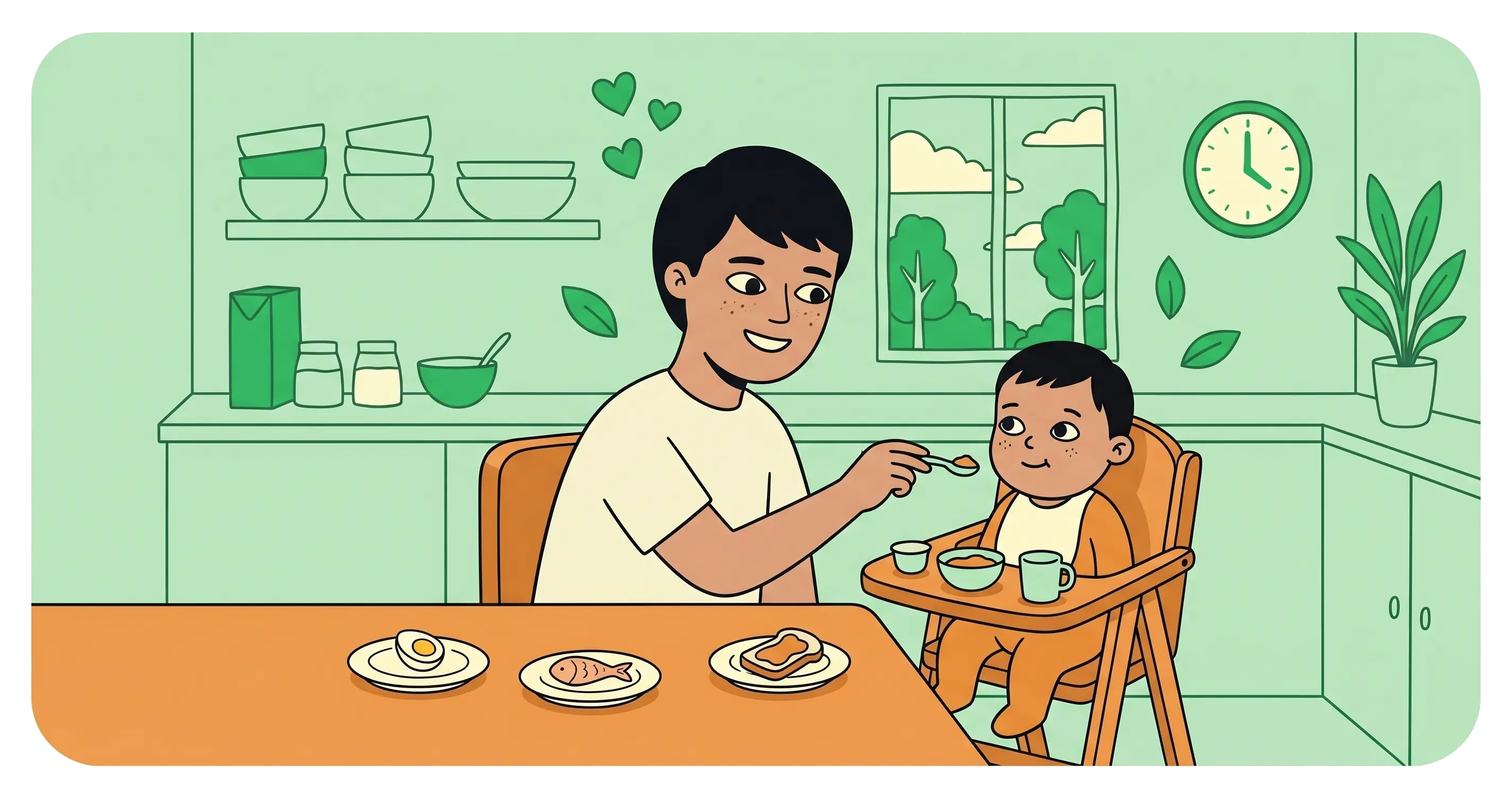
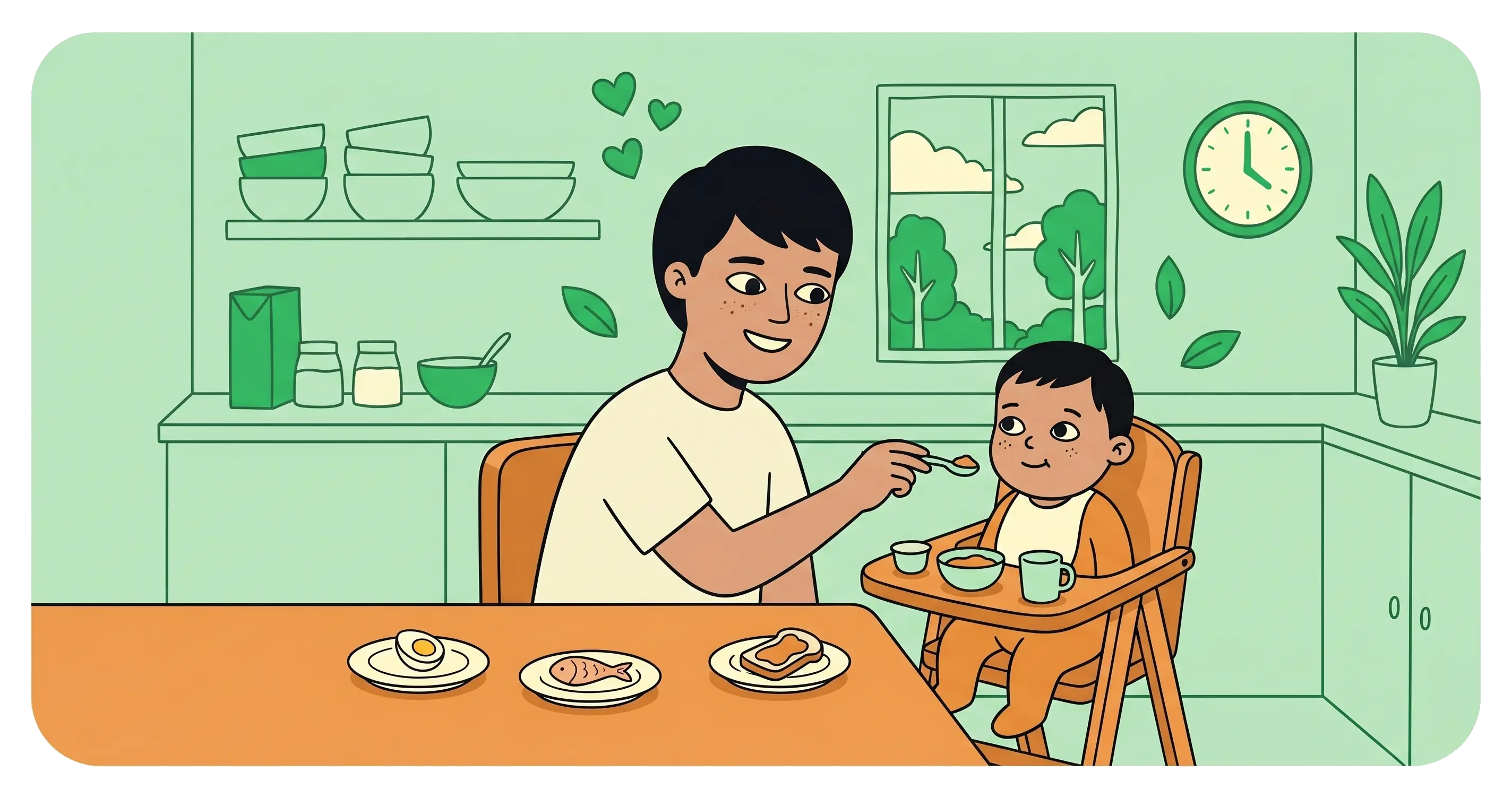
There's no need to introduce all allergens at once or create a complicated schedule. A simple plan helps: one new allergen, a small amount, given during the day, and observe the child. If the product is well-tolerated, it should remain in the diet rather than treating the first introduction as a one-time trial.
When to Start Introducing Allergens?
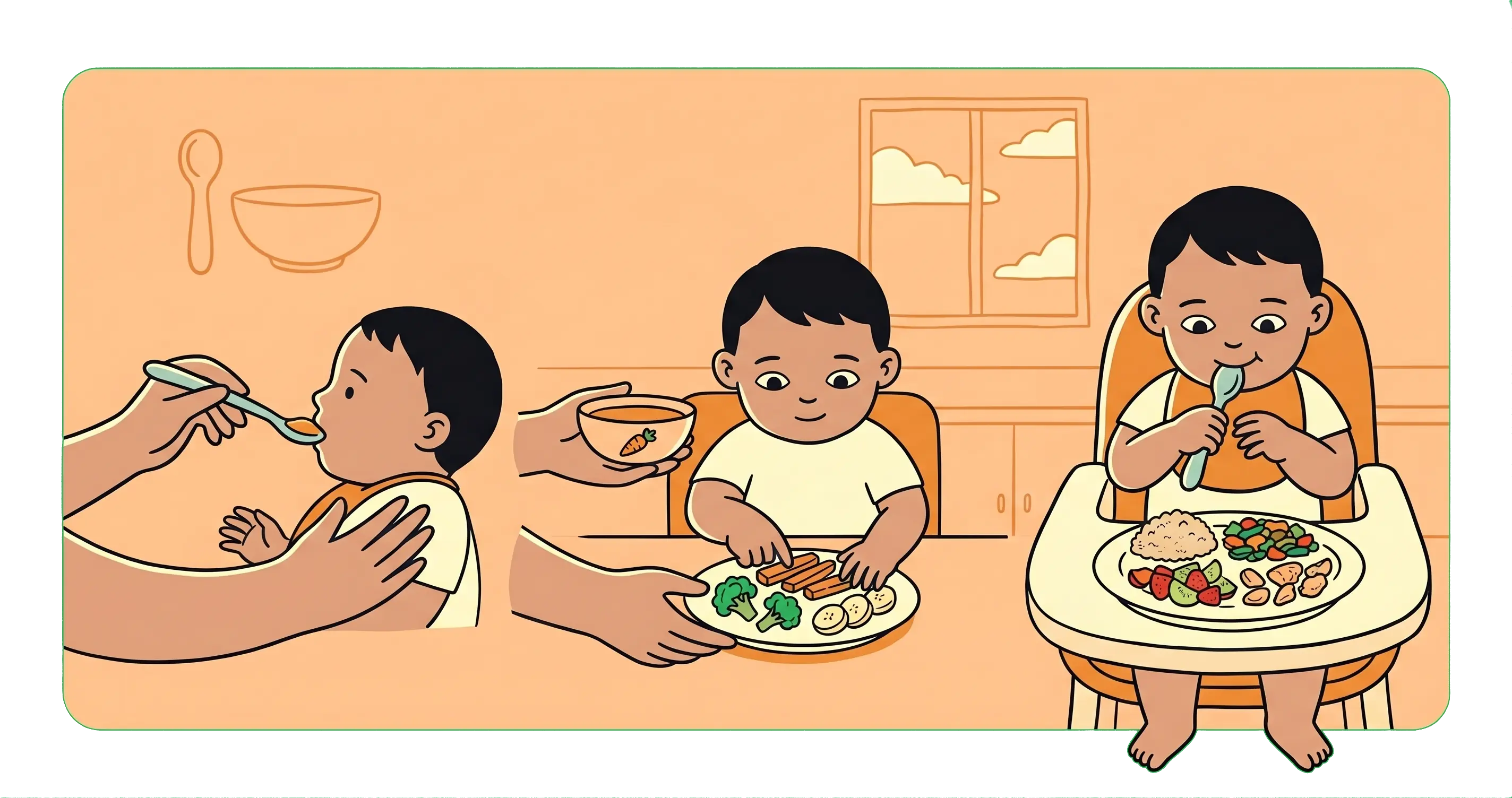
Complementary foods, including potentially allergenic products, should be introduced when the baby is developmentally ready for diet expansion. This usually happens around the 6th month of life. European guidelines indicate that complementary foods should not be introduced before the 4th month, but they should not be unnecessarily delayed beyond the period when the child is ready to eat [5].
Signs of readiness include:
- stable head and torso control while sitting with support,
- disappearance of the reflex to push food out with the tongue,
- ability to take and swallow food of an age-appropriate consistency,
- interest in food.
Current positions do not confirm that delaying allergens in healthy children prevents allergies. Early inclusion of cooked eggs and peanuts in a safe form can support the development of tolerance, especially when these products are later regularly present in the diet [3].
Simple Plan for Introducing a New Allergen
- Choose a day when the child is healthy. Infection, vomiting, diarrhea, or a noticeable worsening of skin changes can make it difficult to assess the reaction.
- Introduce the product in the morning or before noon. This allows you to observe the child for the following hours.
- Start with a small amount. It can be a small portion at the tip of a spoon, given alone or with a well-known meal.
- Do not introduce several new allergens in the same meal. This is not an absolute medical requirement, but it makes it easier to identify the product responsible for any symptoms.
- Gradually increase the portion. If no concerning symptoms appear, you can reach an age- and appetite-appropriate portion during subsequent servings.
- Return to the tolerated product. A well-accepted allergen should remain a regular part of a varied diet.
There is no need for a mandatory multi-day break after each new introduction. Parents who want to more easily observe reactions can introduce subsequent allergens at intervals tailored to the child's situation and their own sense of security.
How to Safely Introduce Common Allergens?
Eggs
Babies should be given thoroughly cooked or well-set eggs, not raw or semi-liquid. Introduce the whole egg, as both the white and yolk contain proteins important from an allergy perspective. A small amount can be mashed and mixed with familiar puree, porridge, or vegetables. Allergy prevention guidelines highlight the benefits of introducing well-cooked eggs during diet expansion [1].
Peanuts
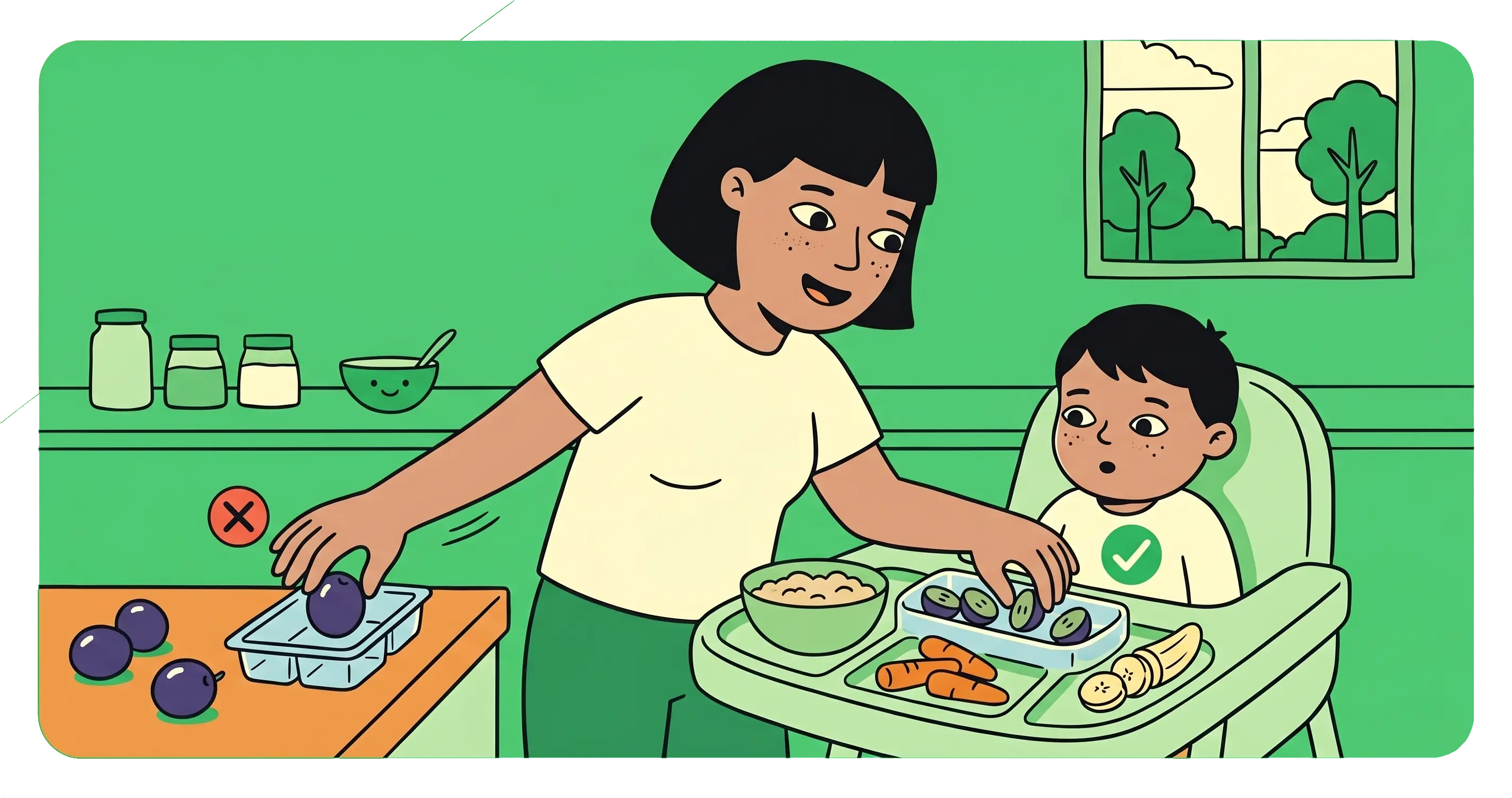
Peanuts or other nuts should not be given to infants whole, in pieces, or as a thick portion of peanut butter, as this poses a choking hazard. An appropriate form can be smooth peanut butter without chunks, diluted with water, feeding milk, or mixed with a well-known puree or porridge. You can also use fine nut powder intended for food.
Start with a small amount of the diluted product, and then — if the child shows no symptoms — gradually increase the portion. Do not test for allergies by applying the product to the skin or lips; the product should be fed to the child in a consistency safe for swallowing.
Fish
Fish should be thoroughly cooked, baked, or steamed, with all bones removed and broken down to a consistency appropriate for the child. Initially, choose fish without breading, large amounts of salt, or heavy additives. Fish are not only a potential allergen but also a valuable component of a varied infant diet.
Gluten
Gluten can be introduced along with other complementary foods, such as a small amount of wheat porridge, soft bread, or well-cooked pasta suitable for the child's abilities. There is no justification for prophylactically delaying gluten. Initially, avoid very large amounts, gradually increasing its presence in the diet [4].
Cow's Milk and Dairy Products
Small amounts of unsweetened natural yogurt, cheese, or milk used in meal preparation can appear during diet expansion. However, cow's milk should not replace breast milk or formula as the main drink before the 12th month of life.
What Symptoms May Occur After Eating?
An allergic reaction can occur within a few minutes to about two hours after a meal, although some symptoms appear later. Possible symptoms include:
- hives, itchy rash, or swelling,
- swelling of the lips, eyelids, or tongue,
- vomiting, stomach pain, or diarrhea,
- coughing, hoarseness, wheezing, or difficulty breathing,
- sudden drowsiness, limpness, paleness, or noticeable weakness.
Redness around the mouth can result from contact irritation, especially after an acidic product, and does not always indicate an allergy. However, if the symptom recurs, is accompanied by hives, swelling, vomiting, or other ailments, further product introduction should be stopped, and a doctor should be consulted. The diagnosis of a food allergy should include a thorough history and, depending on the situation, appropriately selected diagnostics [2].
After a suspected reaction, it is worth noting the name and amount of the product, the time of the meal, the time symptoms appeared, and their course. A photo of skin changes can be helpful during consultation.
When to Consult a Doctor Before Introducing?
Most healthy infants can explore allergens at home. However, a prior plan with a pediatrician or allergist is advisable if the child:
- has severe or difficult-to-control atopic dermatitis,
- already has a diagnosed food allergy, especially an egg allergy,
- has experienced an immediate reaction after eating, even if symptoms have resolved,
- has had hives, swelling, repeated vomiting, or breathing problems after a specific product,
- has other conditions or feeding difficulties increasing the risk of choking.
A family history of allergies does not usually mean that all trials must occur under medical supervision. However, it is worth discussing the situation with a pediatrician, especially if the parent has serious concerns or the child has severe skin changes.
Symptoms Requiring Urgent Help
Immediately call for medical help at 112 or 999 if, after eating, the following occur:
- difficulty breathing, wheezing, hoarseness, or persistent cough,
- swelling of the tongue or throat,
- sudden limpness, loss of consciousness, significant paleness, or weakness,
- rapidly escalating symptoms affecting multiple systems, such as hives combined with vomiting or shortness of breath.
In such a situation, do not wait for symptoms to resolve on their own. If the child has a doctor-prescribed action plan and an adrenaline auto-injector, use them according to the instructions received.
Common Mistakes When Introducing Allergens
- Unnecessarily delaying allergens despite the healthy child's readiness for diet expansion.
- Giving whole nuts or thick peanut butter, which increases the risk of choking.
- Giving raw or undercooked eggs instead of thoroughly cooked eggs.
- Introducing many new products simultaneously, making it harder to link any symptoms to a specific food.
- One-time product introduction without later returning to it.
- Re-attempting after a clear reaction without consulting a doctor.
Summary
For a healthy infant, it is not worth prophylactically delaying potentially allergenic products. Introduce them after starting diet expansion, one at a time, in small amounts, and in a safe consistency. Eggs should be well-cooked, and peanuts should be given only in a smooth and appropriately diluted form. Well-tolerated products should regularly return to the menu.
If the child has severe atopic dermatitis, a diagnosed allergy, or has previously reacted to food, consult a plan with a pediatrician or allergist before another attempt. Calm preparation does not mean delaying allergens but adjusting the method of introduction to the child's individual situation.
Frequently Asked Questions
Do you need to wait a few days between introducing allergens?
There is no obligation to maintain a rigid, multi-day break after each new product. Introducing one allergen at a time and leaving time for observation can, however, make it easier to identify the cause of any symptoms.
Can you give an infant peanut butter?
Yes, if it is smooth, without chunks, and diluted to a thin consistency. Do not give a thick portion straight from the spoon or whole or crushed nuts. Children with severe atopic dermatitis, egg allergy, or previous food reaction require prior consultation.
Should the first egg contain only the yolk?
There is no need to limit to the yolk. Introduce the whole, thoroughly cooked or well-set egg, starting with a small amount and increasing the portion if no symptoms occur.
Can allergens be introduced during an infection?
It is better to wait until the child feels well. Fever, diarrhea, vomiting, or worsening skin changes can make it difficult to determine whether symptoms are related to food.
What to do if a rash appears after a product?
Do not reintroduce the suspected product before clarifying the situation. Take a photo of the changes, note the time they appeared, and contact a pediatrician. If the rash is accompanied by shortness of breath, tongue swelling, weakness, or repeated vomiting, seek immediate help.
Sources
- European Academy of Allergy and Clinical Immunology (EAACI), EAACI guideline: Preventing the development of food allergy in infants and young children — 2020 update.
- National Center for Nutritional Education, Food Allergy in Children.
- Commentary on a publication in JAMA Pediatrics regarding early introduction of allergenic foods.
- Polish Society of Gastroenterology, Hepatology and Nutrition of Children, position on the principles of feeding healthy infants.
- European Society for Paediatric Gastroenterology, Hepatology and Nutrition (ESPGHAN), position on complementary feeding of infants.