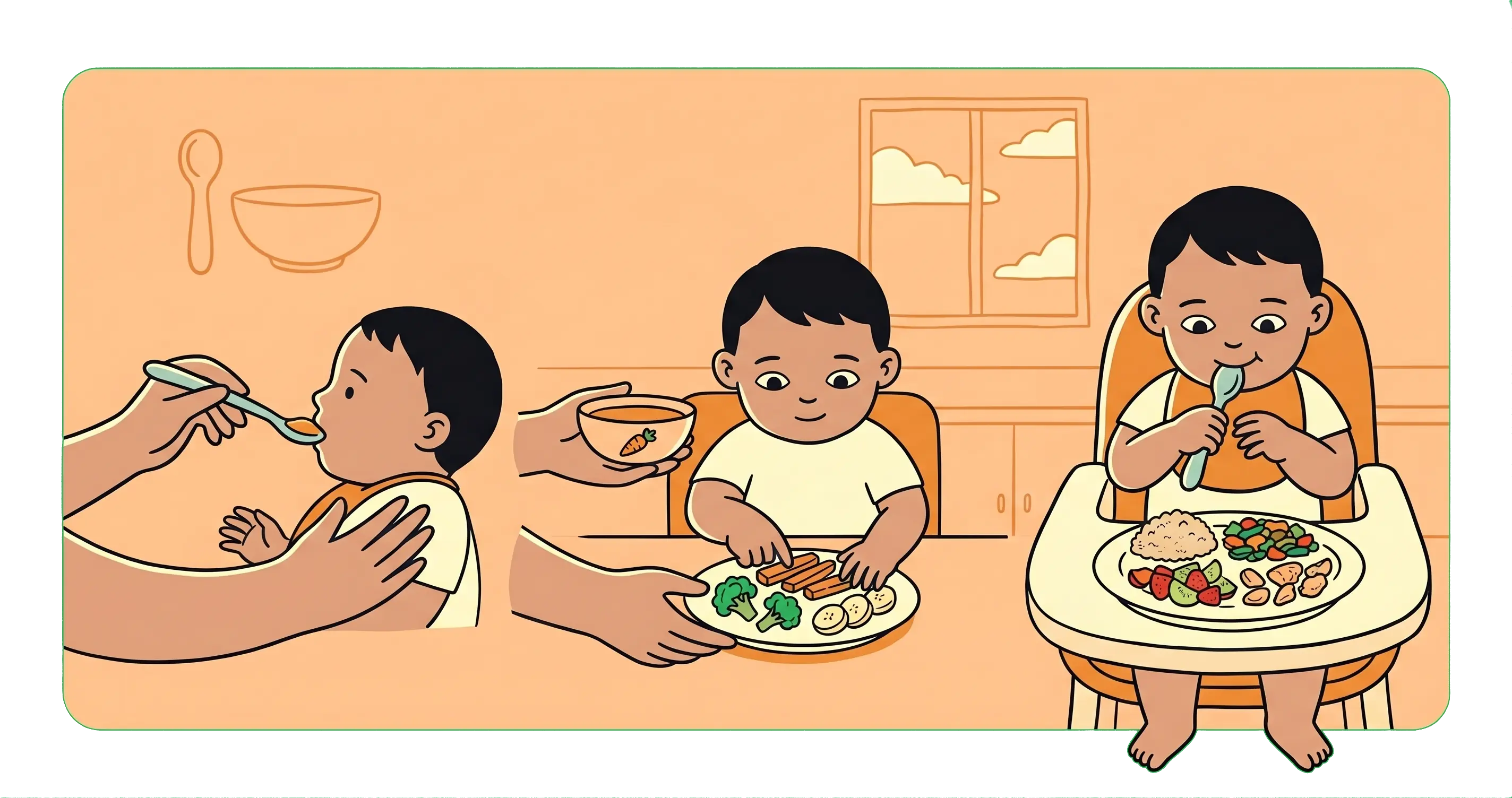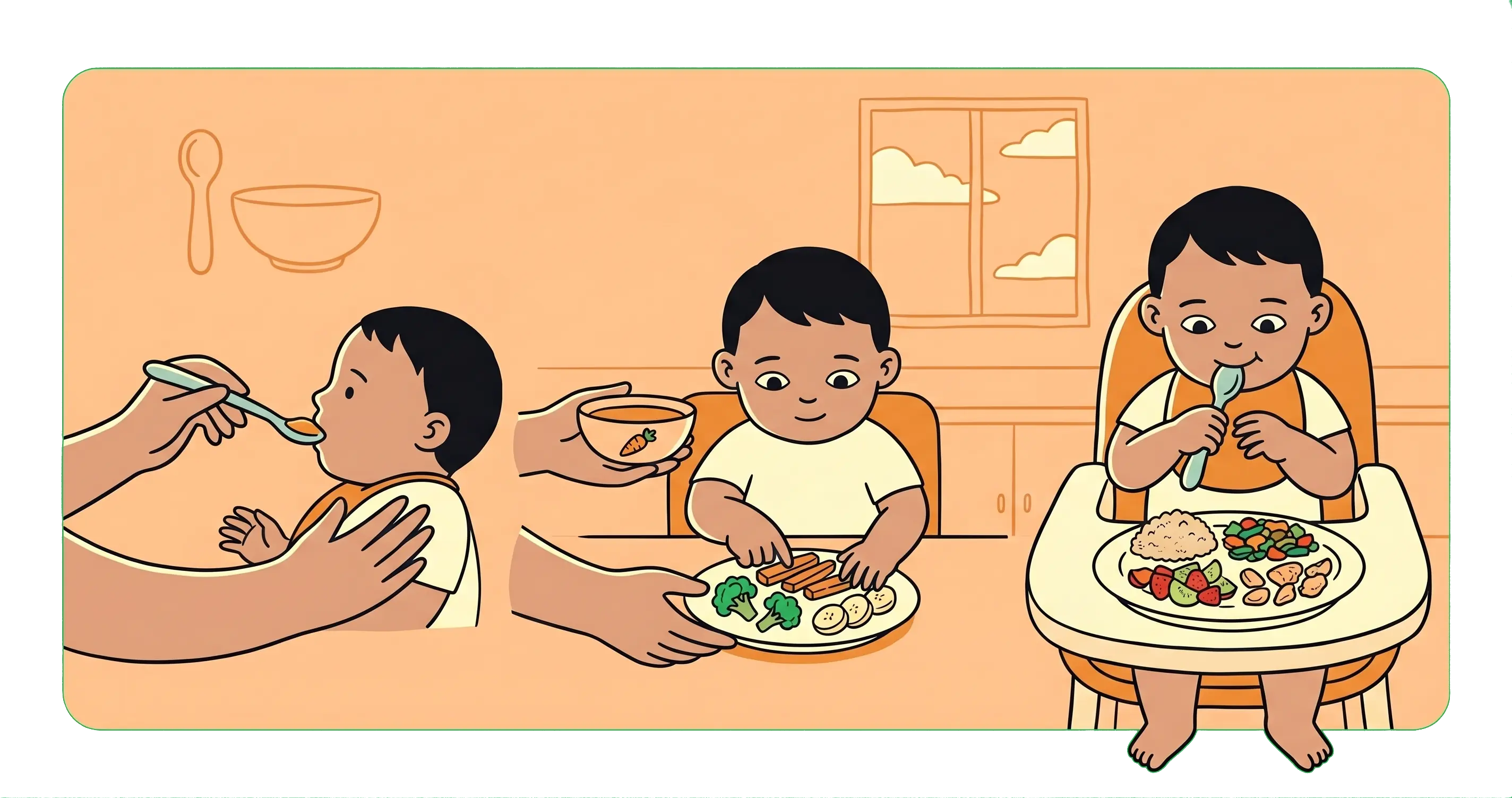
Introducing solid foods to an infant's diet doesn't require dividing all foods into 'allowed' and 'forbidden'. A more practical approach is to categorize foods into three groups: those truly inadvisable before 12 months, those that should be limited, and foods that become hazardous mainly due to improper serving form.
It's not just the meal's ingredients that matter, but also its texture, freshness, and preparation method. Breast milk or appropriately chosen formula remains the nutritional foundation in the first year, while complementary meals gradually expand the child's diet [1].
Three Categories of Foods to Watch Out For
1. Foods Truly Inadvisable Before the First Year
This group includes foods associated with risks of poisoning, infection, or improper substitution of breast milk or formula.
- Honey – should not be given before 12 months due to potential spores of bacteria causing infant botulism. This includes honey added to drinks, porridges, and homemade baked goods.
- Raw or undercooked meat, fish, seafood, and eggs – may harbor harmful bacteria or parasites. Meat, fish, and eggs should be properly cooked.
- Unpasteurized milk and products made from it – pose a higher risk of infection from bacteria like Listeria, Salmonella, and E. coli.
- Plant-based drinks as a substitute for breast milk or formula – do not meet an infant's nutritional needs. A small amount of plant-based drink can sometimes be an ingredient in a dish but should not replace primary milk without a doctor's or dietitian's recommendation.
- Rice drinks – are not recommended for infants and young children due to potential exposure to inorganic arsenic.
- Fish high in mercury – avoid large predatory fish. Opt for species recommended for young children, serve them cooked, and carefully remove bones.
- Alcohol, energy drinks, and caffeinated beverages – are not suitable for infants even in small amounts.
- Spoiled, expired, or improperly stored food – infants are particularly susceptible to dehydration and complications from foodborne infections.
Cow's milk should not be the primary drink before the first birthday. However, it can appear in small amounts as a meal ingredient, just like suitable natural yogurts or other pasteurized dairy products [2].
2. Foods to Limit
Salt and sugar aren't 'poison' if tasted accidentally, but they shouldn't be intentionally added to an infant's daily meals. Limiting them from the start helps children appreciate the natural taste of food and reduces the intake of highly processed products.
- Salt and high-salt products – do not add salt to your child's portion. Be cautious with bouillon cubes, ready-made sauces, spice mixes with salt, cold cuts, sausages, processed cheeses, salty cheeses, and snacks.
- Sugar and other sweetening ingredients – do not sweeten porridges, drinks, or desserts. Labels may list sugar, glucose syrup, high-fructose corn syrup, juice concentrates, and other syrups.
- Juices, sweetened drinks, and teas – water should be the primary drink when introducing solids. Instead of juice, offer soft fruit, which also provides fiber. The AAP does not recommend fruit juices for children before 12 months [5].
- Highly processed foods – crisps, cookies, sweet desserts, instant soups, ready-made sauces, and processed meats often contain a lot of salt or sugars and few nutrients needed by the child.
- Wild mushrooms – due to the risk of species confusion and severe poisoning, they should not be given to infants. They are also not essential in their diet.
You can add mashed fruit to porridge and season savory dishes with mild herbs. However, there's no need to make every meal sweet or heavily spiced.
3. Foods Risky Due to Serving Form
Some healthy foods can increase the risk of choking if they are hard, round, slippery, or served in large chunks. The risk depends on the food's texture and shape, as well as the child's specific skills.
- Whole nuts – should not be given to infants. Nuts can be offered in finely ground form or as a smooth paste diluted and mixed with a meal.
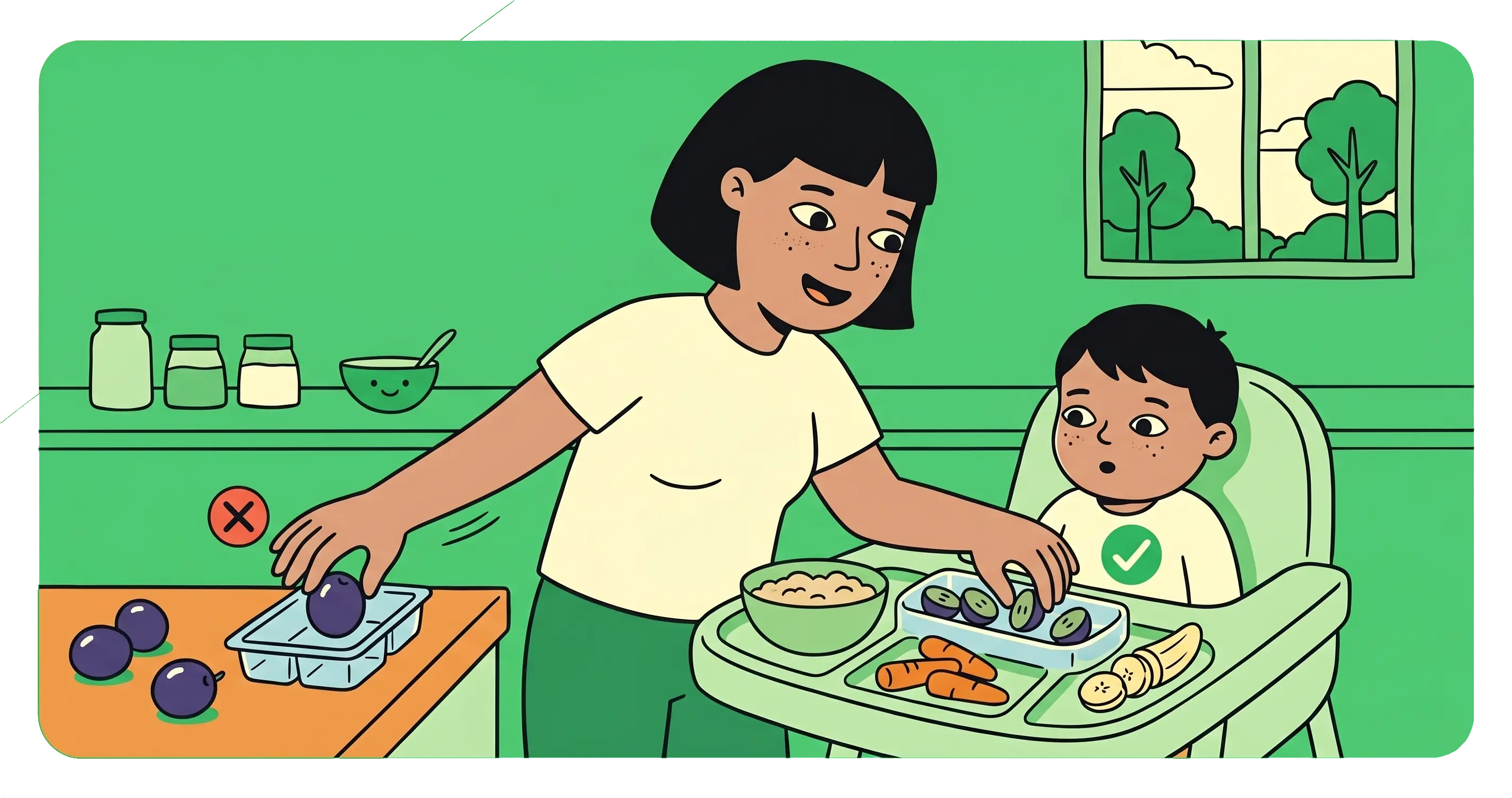
- Whole grapes and cherry tomatoes – should be cut lengthwise into appropriately small pieces.
- Raw carrots, hard apples, and other hard vegetables or fruits – should be cooked, grated, or prepared so that the child can easily mash them with their gums.
- Sausages and other round-shaped products – besides their unfavorable composition, they can block airways. Simply slicing them does not remove the risk.
- Large, hard, or dense meat pieces – meat should be soft and served in a form suited to the child's abilities.
- A spoonful of thick nut butter – the sticky mass can be difficult to swallow. The paste should be diluted or thinly spread.
- Popcorn, hard candies, and whole sausages – have a particularly dangerous form for a small child.
Infants should eat in a stable, upright position and always under direct adult supervision. Do not give food to a child lying down, running, or traveling without the caregiver's ability to react quickly.
Allergens: No Need to Delay Without Reason
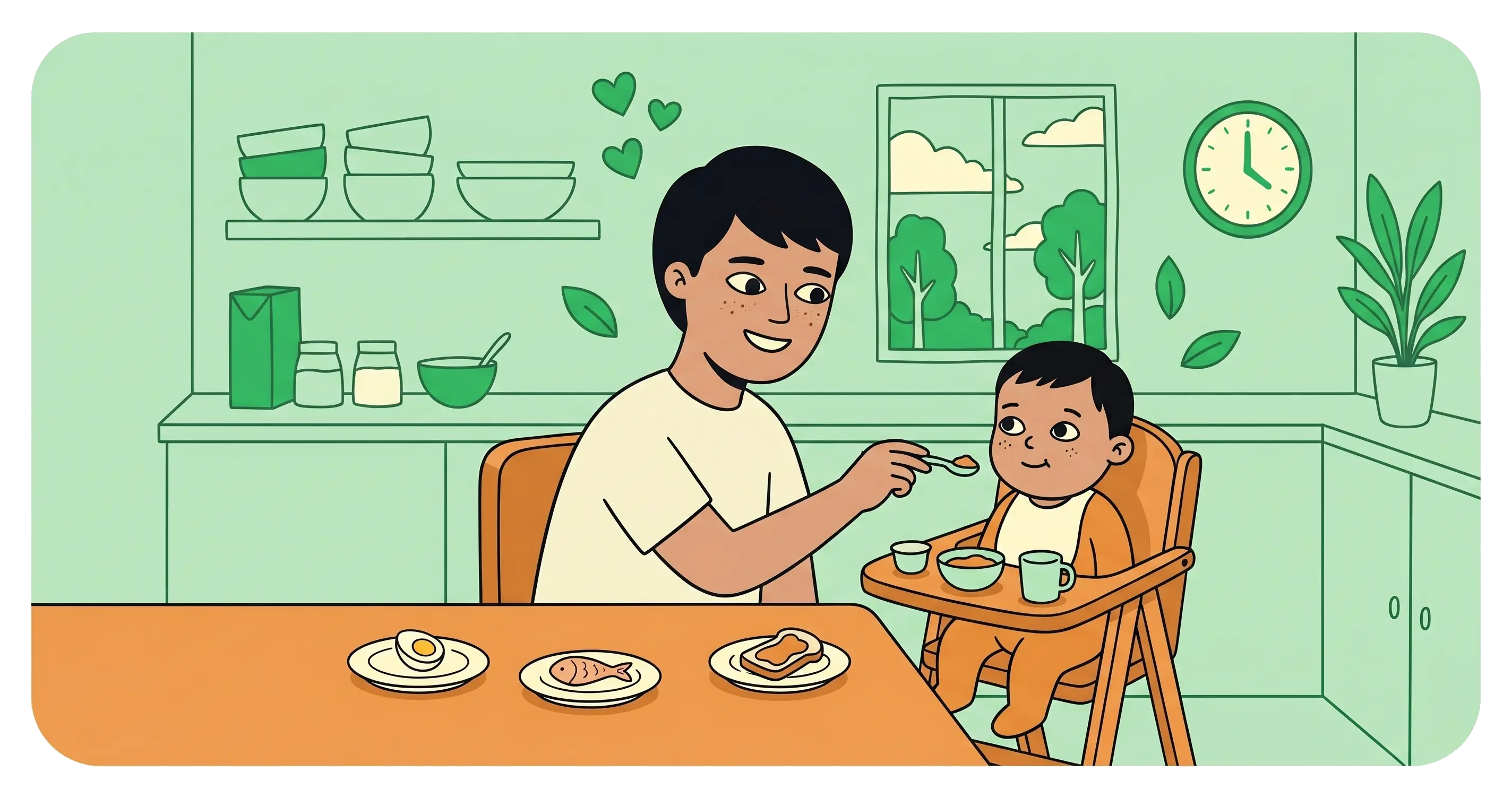
Eggs, fish, gluten, dairy, peanuts, and other allergens are not automatically forbidden in the first year of life. Current recommendations do not support the preventive delay of their introduction in healthy infants. Complementary foods are usually introduced around 6 months, according to signs of readiness, but not before 4 months [4].
A new allergen is best introduced at home, in a small amount, early in the day, and in a safe form. Eggs should be well-cooked, fish deboned, and peanuts offered as diluted smooth paste or powder mixed with a meal. If the product is well-tolerated, it should remain in the diet and be given regularly. There's no need to routinely wait several days between each new ingredient, although introducing one allergen at a time helps identify any reactions [3].
In cases of severe eczema, known food allergies, or previous reactions to food, the introduction of strong allergens should be discussed with a pediatrician or allergist beforehand.
How to Safely Prepare and Store Meals
- Wash hands, surfaces, dishes, and products that need washing.
- Separate raw meat and fish from ready-to-eat products.
- Thoroughly cook meat, fish, and eggs, and remove bones, seeds, and hard fragments.
- Do not leave perishable meals at room temperature for long periods.
- Do not store leftovers that have come into contact with the child's saliva, such as food left in their bowl.
- Do not reheat the same portion multiple times. After reheating, mix the meal and check its temperature.
- Follow the manufacturer's instructions regarding expiration dates and storage conditions.
How to Read Labels on Baby Products
The label 'for children' does not guarantee that a product is the best choice for daily use. It's worth checking:
- whether the product is suitable for the child's age,
- whether it contains honey, unpasteurized ingredients, or other inadvisable products,
- how much salt and sugars it contains and whether there are added sweetening substances,
- whether there are whole nuts, hard pieces, or other elements increasing choking risk,
- how to prepare and store it after opening.
The phrase 'no added sugar' does not mean a product without a sweet taste or naturally occurring sugars. The entire composition and the product's place in the daily diet are most important.
When to Consult a Doctor or Specialist
After introducing a new product, contact a pediatrician if the child experiences recurring vomiting, diarrhea, blood in stool, severe rash, worsening eczema, feeding problems, or poor weight gain.
Immediately call for help at 112 if after eating, there is difficulty breathing, wheezing, tongue or throat swelling, rapidly increasing facial swelling, cyanosis, limpness, unconsciousness, or marked weakness. Such symptoms may indicate a severe allergic reaction.
If the child cannot breathe, cough, or make sounds, choking may be occurring. Immediate first aid actions should be taken, and an ambulance called. All caregivers should complete an infant first aid course.
Frequently Asked Questions
Is honey in baked goods safe before the first year?
No. Before 12 months, avoid honey even as an ingredient in dishes and baked goods. Home cooking does not guarantee the removal of bacteria spores responsible for infant botulism.
Can infants eat yogurt and cheese?
Yes, pasteurized dairy products can be part of a complementary diet if they have the right texture and simple ingredients. It's best to choose natural yogurt without added sugar. Salty cheeses and processed cheeses should be limited. Cow's milk should not replace breast milk or formula as the main drink before the first birthday.
Can oat or almond drink be added to a dish?
A small amount of unsweetened plant-based drink can be used as a dish ingredient if the child has no contraindications. However, it should not be given instead of breast milk or formula. Exceptions are specialized preparations recommended by a doctor.
Is peanut butter allowed for infants?
Yes, if the child is ready for complementary foods, and the paste is smooth, has simple ingredients, and is served in a safe form. Do not give whole nuts or a spoonful of thick, sticky paste. For severe eczema or known allergies, the introduction of peanuts should be discussed with a doctor.
What to do if a child eats a bit of salty food?
Occasional tasting of a small amount is usually not a cause for panic. However, do not regularly add salt to meals. If the child eats a lot of salt, feels unwell, vomits, is excessively sleepy, or behaves unusually, urgently contact a doctor.
Summary
Before the first birthday, strictly avoid honey, raw animal products, unpasteurized foods, and drinks that shouldn't replace breast milk or formula. Limit salt, sugar, juices, and highly processed foods, while many valuable products only require a safe texture.
There's no need to delay eggs, fish, gluten, dairy, or peanuts just because they are allergens. Key factors are the child's readiness, a small initial portion, proper preparation, and observing reactions.
Sources
- Polish Society of Gastroenterology, Hepatology, and Nutrition of Children (PTGHiŻD), guidelines on feeding healthy infants.
- National Center for Nutritional Education (NCEZ), 'Feeding Healthy Infants'.
- National Center for Nutritional Education (NCEZ), materials on expanding infants' diets.
- European Society for Paediatric Gastroenterology, Hepatology and Nutrition (ESPGHAN), recommendations on the timing and principles of complementary feeding in infants.
- American Academy of Pediatrics (AAP), 'Infant Food and Feeding'.