BLW Without Pressure: A Method, Not an Ideology
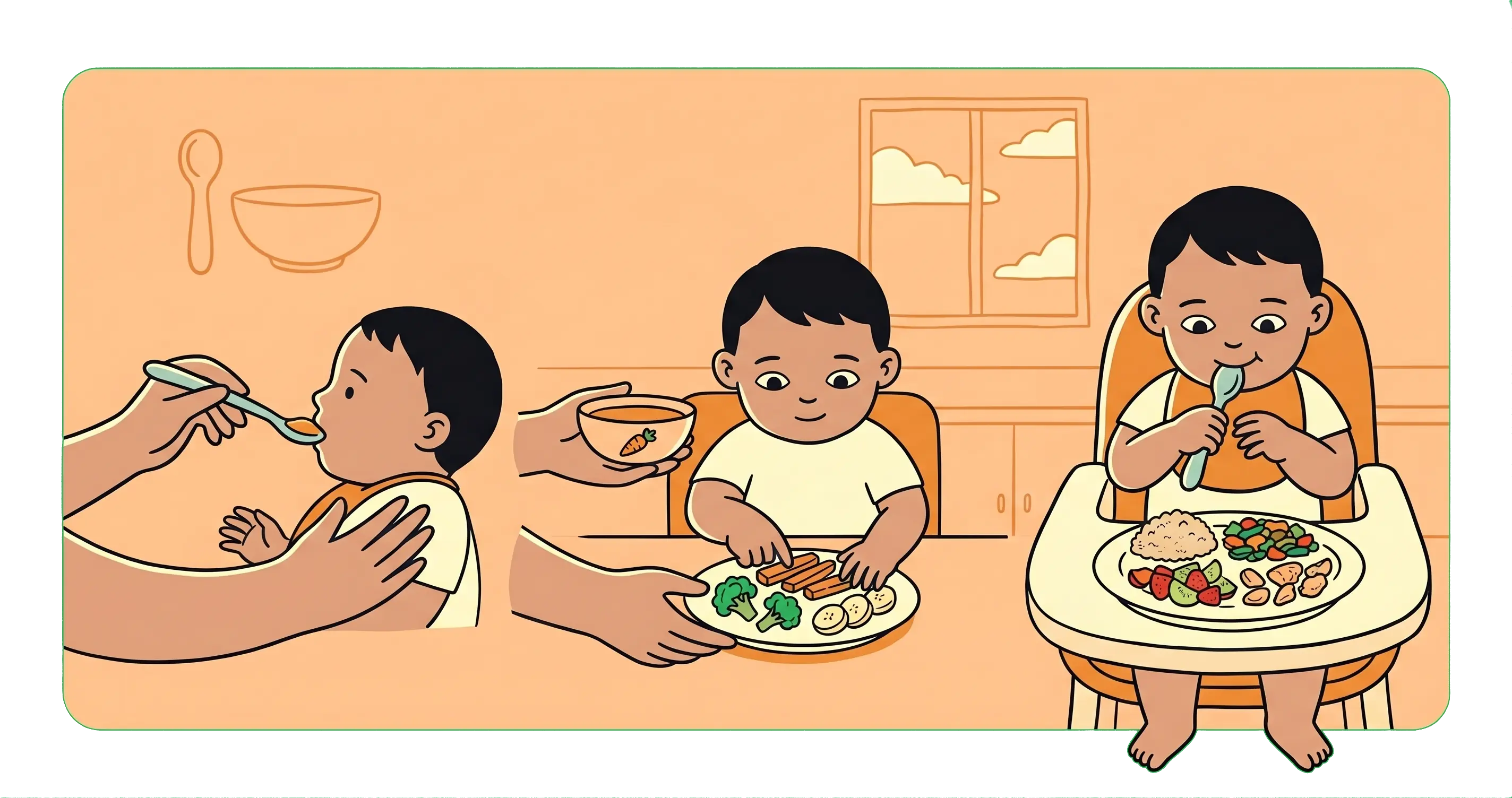
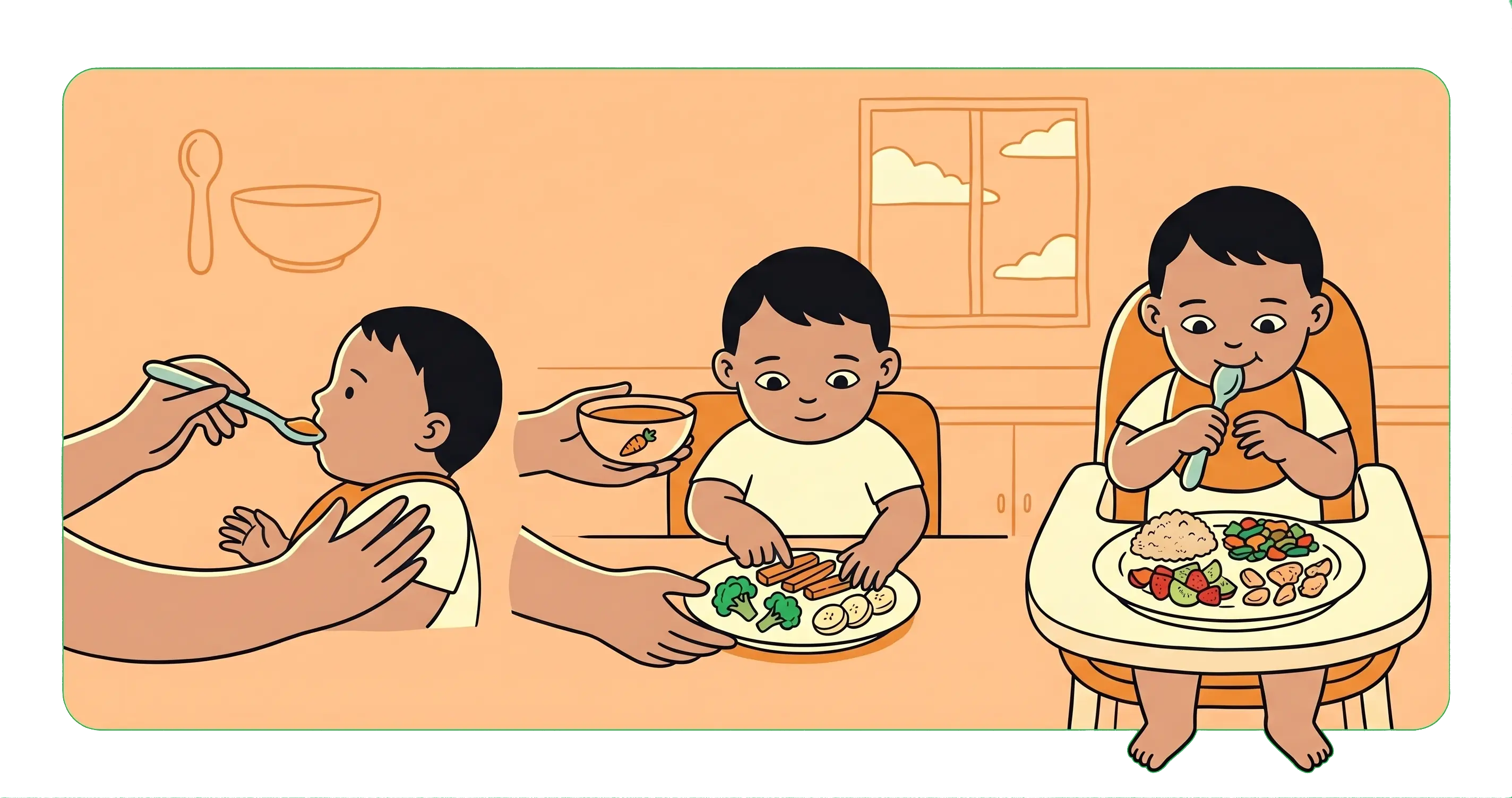
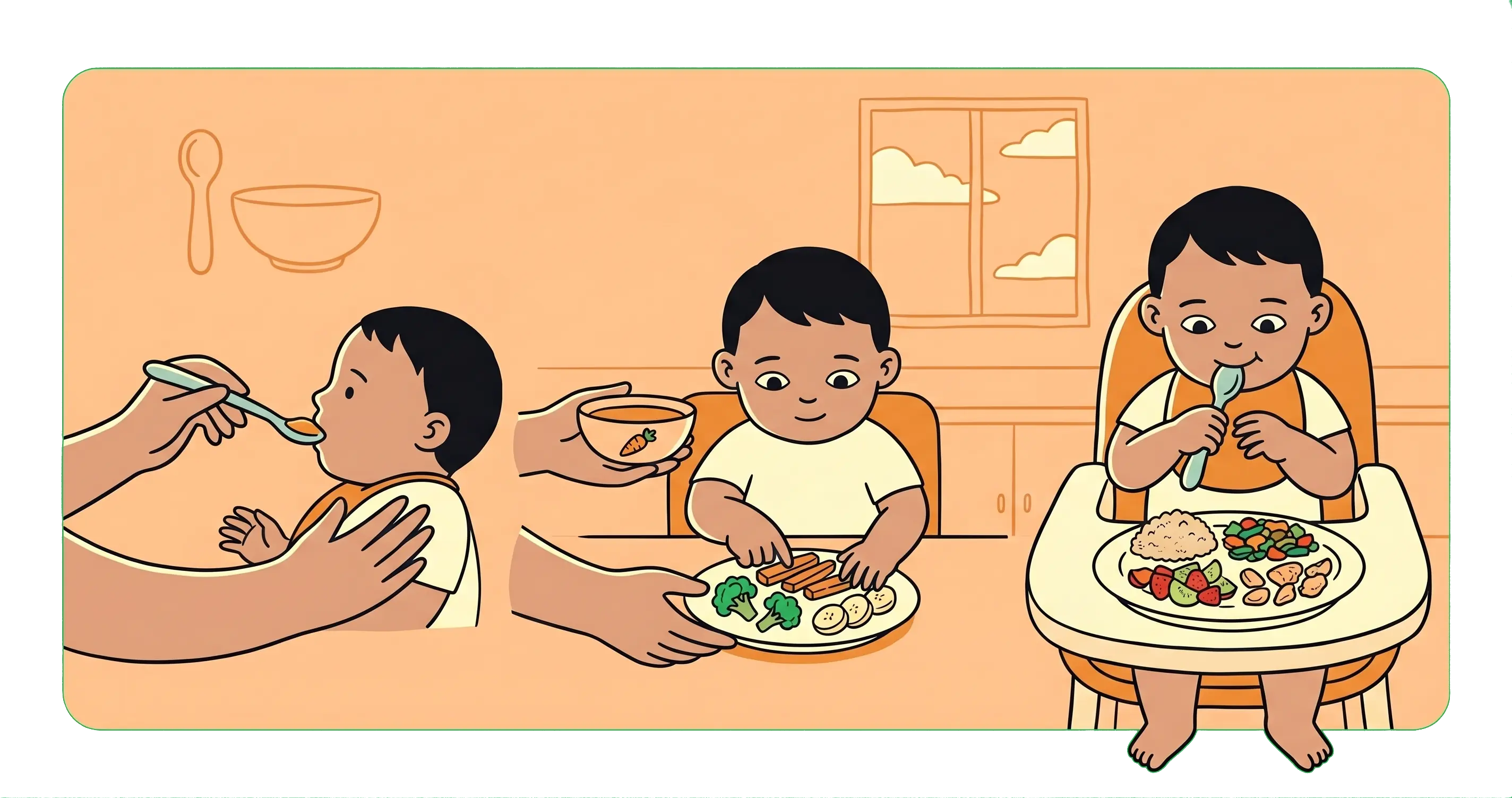
BLW, or Baby-Led Weaning, which involves introducing solids through self-feeding, can be one way to familiarize your baby with meals. However, it doesn't have to be used exclusively. Offering soft pieces can be combined with spoon-feeding, as long as the caregiver responds to the child's hunger and fullness cues, doesn't force eating, and ensures safe textures.
Initially, your child may mostly touch, squeeze, lick, and mash the food. This is part of learning new tastes, textures, and the movements needed during meals. Breast milk or formula remains the nutritional foundation, and the amount of complementary foods increases gradually.
When Can You Start BLW?
Age alone isn't enough to assess readiness. Complementary foods are usually introduced around 6 months, when the baby shows appropriate developmental skills. According to ESPGHAN, you shouldn't start before 4 months or delay beyond around 6 months without reason [1]. For preterm babies, developmental pace should be assessed individually, considering corrected age.
Signs of Developmental Readiness
A baby ready to self-feed should:
- maintain stable head and neck control,
- sit upright in a high chair without slumping or leaning to the sides,
- reach for objects, grasp them, and bring them to the mouth,
- show interest in food,
- be able to swallow food instead of constantly pushing it out of the mouth.
It's not necessary for the baby to sit independently on the floor for long periods. During meals, they must maintain a stable, upright position with proper torso support. Simply showing interest in a parent's plate doesn't confirm full readiness.
Safe Start Checklist
Before the first meal, check if:
- the baby is about 6 months old and shows signs of developmental readiness,
- they sit stably and upright in a properly fitted high chair,
- their head, neck, and torso are well-controlled,
- their feet have support if the high chair design allows,
- the food is soft and shaped to match the child's skills,
- an adult stays nearby and watches the child throughout the meal,
- the child is rested, calm, and not extremely hungry,
- the caregiver knows first aid for choking,
- iron-rich foods are included during the day.
Do not offer food in a reclined seat, bouncer, car seat, or stroller in a semi-reclined position. Meals should not involve walking, car rides, or playing with food in the mouth.
What Should First Meals Look Like?
Initially, one calm meal a day is enough. It doesn't have to last a specific number of minutes — you can end it when the child turns their head, closes their mouth, loses interest, or becomes visibly tired. Don't encourage finishing the portion.
You can offer one product or a few simple ingredients. New foods should be introduced gradually, but there's no need to prepare a completely new menu daily. Repeating flavors helps the child become familiar with them.
Safe Food Forms
For a child grasping with their whole hand, soft pieces about the size and shape of an adult finger are usually most comfortable. Part of the product should stick out of the fist. The food should be easily mashed between fingers or against the palate with the tongue.
As the pincer grasp develops, usually in the following months, you can offer smaller soft pieces. The size of the product should match the current skills, not just the age on the calendar.
Examples of First Foods
- well-cooked broccoli, cauliflower, sweet potato, potato, or carrot,
- ripe banana, pear, mango, or soft avocado,
- a strip of well-cooked omelet,
- soft, shredded meat formed into an easy-to-grasp piece,
- soft fish thoroughly cleaned of bones,
- tofu, a legume patty, or thick paste served on a spoon for self-feeding,
- thick iron-fortified cereal that can be offered on a pre-loaded spoon.
A spoon is not contrary to BLW. The child can grasp a pre-loaded spoon independently, and the parent can also feed responsively, waiting for the mouth to open and respecting refusal.
Iron in Your Child's Diet
Around the second half of the first year, iron stores accumulated during pregnancy gradually decrease. Therefore, dietary expansion shouldn't rely solely on fruits and vegetables. Reviews on complementary feeding highlight the importance of adequate iron intake to prevent deficiency [4].
Regularly offer iron-rich foods like meat, fish, well-cooked eggs, legumes, tofu, and iron-fortified cereals. Plant-based products should be paired with a source of vitamin C, such as broccoli, bell pepper, or fruit, as it aids in the absorption of non-heme iron.
The BLISS study evaluated a modified, safer approach to BLW, recommending offering an iron-rich product at each meal. No deterioration in iron status indicators was found compared to traditional weaning, but the authors emphasized the importance of a well-planned diet [3].
How to Reduce the Risk of Choking?
BLW shouldn't increase choking risk if the child is developmentally ready, sits correctly, is under constant supervision, and the foods have safe textures and shapes. Available studies don't conclusively show a higher risk than traditional weaning, but the quality of some data is limited, so safety rules remain crucial [2].
Foods Requiring Form Change or Exclusion
Do not give infants:
- whole nuts or large portions of thick nut butter,
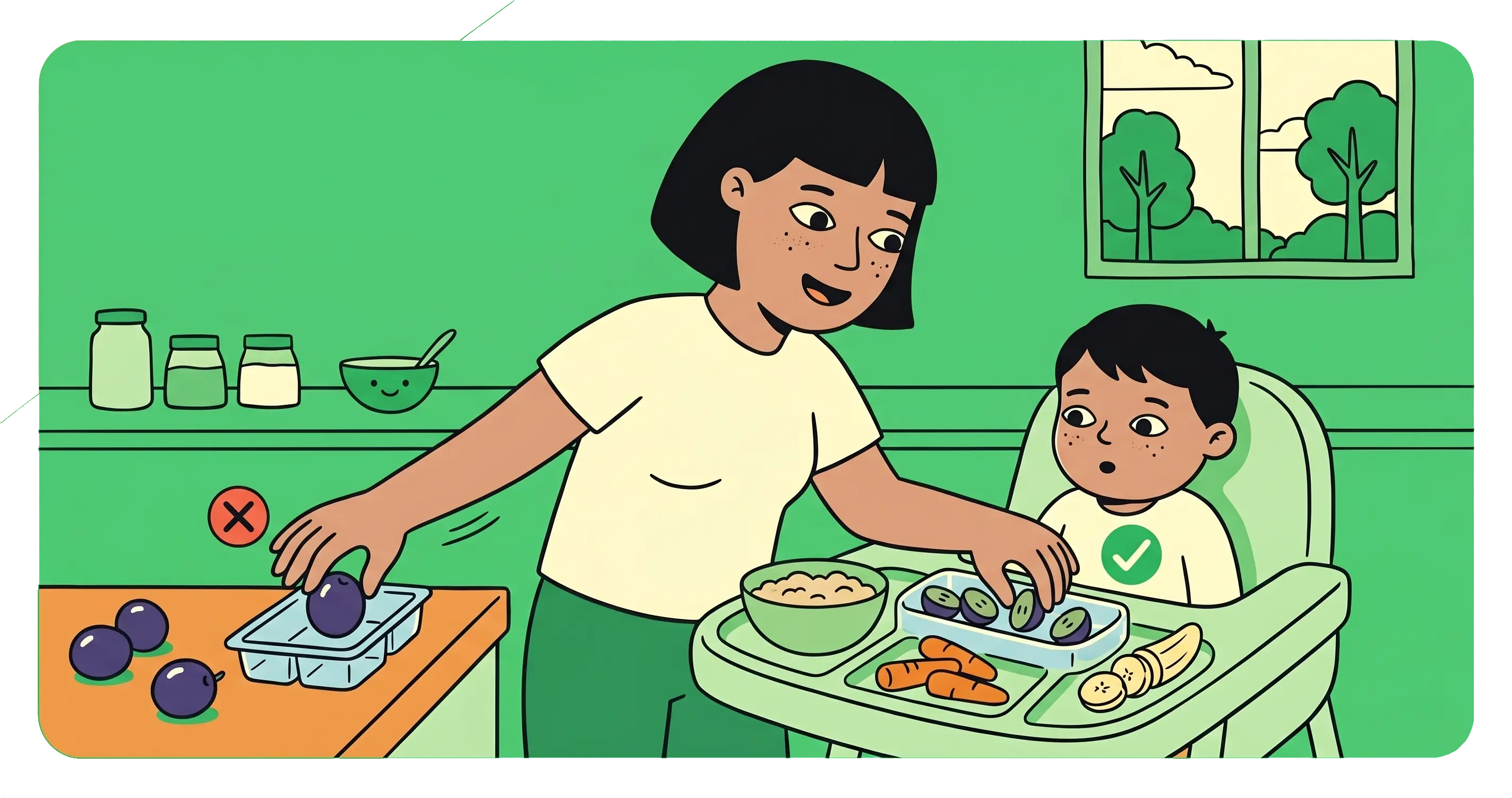
- whole grapes, cherry tomatoes, cherries, and similar round products,
- slices of sausage or hot dogs,
- hard pieces of raw apple and carrot,
- popcorn, hard candies, and small, hard snacks,
- meat with bones and fish with bones,
- large, hard, or chewy pieces of food.
Grapes and cherry tomatoes should be cut lengthwise into quarters. Nuts can be offered finely ground, and nut butter thinly spread or diluted. Apples and carrots should be cooked until soft or prepared in another age-appropriate form.
Gagging vs. Choking
Gagging, also known as the gag reflex, can be noisy. The child coughs, makes sounds, pushes food out with their tongue, turns red, or tears up. If they are breathing and coughing effectively, stay calm and let them handle the food themselves. Do not blindly put fingers in the mouth, as this can push the piece deeper.
During choking, the airflow is blocked. The child may be unable to breathe, cry, or cough effectively, becomes silent, and their skin may turn blue. This is a life-threatening situation requiring immediate first aid and calling for help at 112 or 999. Every caregiver should take a practical infant first aid course.
Common Mistakes When Starting BLW
Judging Meals Solely by the Amount Eaten
Initially, it's also important to explore the smell, taste, and texture and practice grasping and bringing food to the mouth. The development of these skills can vary. However, you should still monitor the child's growth and ensure the nutritional value of meals.
Offering Only Fruits and Vegetables
They are valuable but don't meet all nutritional needs. The diet should include sources of iron, energy, protein, and fat from the start.
Improper Positioning or Lack of Constant Supervision
The child shouldn't eat in a semi-reclined position or without an attentive adult present. The caregiver must be close enough to immediately notice any difficulties.
Treating BLW as the Only Correct Solution
Not every family and not every child prefers self-feeding with pieces. Different textures and feeding methods can be safely combined. According to recommendations, feeding methods should change as the child's skills develop [5].
When to Consult a Doctor or Specialist?
Talk to a pediatrician, pediatric dietitian, or speech therapist if:
- around 6 months, the child doesn't control their head stably or can't maintain an upright position in a high chair,
- has difficulty swallowing, frequently coughs, chokes, or turns blue while eating,
- regularly vomits during meals or appears to be in pain,
- isn't gaining weight properly, loses weight, or eats less and less,
- refuses all textures other than liquid or meals cause severe anxiety,
- was born prematurely, has muscle tone disorders, a neurological condition, an oral cavity defect, or other developmental difficulties,
- there's a suspicion of iron deficiency, such as paleness, weakness, or abnormal growth,
- hives, swelling, repeated vomiting, coughing, or breathing difficulties occur after new food.
Breathing difficulties, increasing swelling of the tongue or throat, loss of consciousness, and ineffective coughing require immediate help by calling 112 or 999.
Frequently Asked Questions
Does a Baby Need Teeth to Start BLW?
No. An infant can mash appropriately soft foods with their gums. However, the products must be easily crushed between fingers, and their form should match the child's skills.
Can BLW Be Combined with Spoon-Feeding?
Yes. A mixed approach is correct if the child sits safely, the texture is appropriate, and the adult respects fullness cues. Do not force the spoon into the mouth against the child's will.
Should the Baby Eat Three Meals a Day Initially?
It's not necessary. You can start with one meal and gradually increase the number, observing the child's readiness and appetite. Breast milk or formula remains the nutritional foundation.
Should an Iron-Rich Food Be Offered at Every Meal?
It's advisable to regularly offer iron sources, preferably at most main meals. Not every single plate needs to be perfectly balanced, but the diet shouldn't rely solely on fruits and vegetables.
Does Gagging Mean You Should Stop BLW?
Not always. The gag reflex can occur during the learning process. However, you should check the child's position, texture, and form of products. Repeated episodes of choking, coughing while swallowing, or breathing difficulties require consultation.
Summary
A safe start to BLW is based on developmental readiness, stable positioning, constant supervision, and proper food preparation. Iron sources should regularly appear in the diet, and milk remains an important foundation. BLW can be flexibly combined with spoon-feeding — the key is safety, variety, and responding to the child's cues, not strictly adhering to one method.
Sources
- ESPGHAN. Complementary feeding guidelines.
- Systematic review: BLW, choking risk and iron status.
- BLISS trial: iron status in baby-led weaning.
- Review: complementary feeding and iron status.
- ESPGHAN. Infant feeding timeline.