Why Won't My Child Eat Lumps or Chunks?
Learning to eat foods other than milk takes time. A child is not only discovering new flavors but also how to move food with their tongue, mash it with their gums, form a bite, and swallow. Initially, they might push food out with their tongue, spit it out, make faces, or trigger a gag reflex.
Introducing solid foods typically begins around 6 months of age when a baby shows developmental readiness. Recommendations emphasize gradually varying the texture of meals as the child's skills grow, rather than sticking to smooth purees for months [1]. However, this doesn't mean every child should progress through stages at the same pace.
Lumps and Soft Chunks – What's the Difference?
The terms "lumps" and "chunks" are often used interchangeably, but they refer to different ways of serving food.
- Lumps are small, soft irregularities in a meal served with a spoon, like vegetables mashed with a fork instead of blended into a perfectly smooth puree.
- Soft chunks are separate pieces of food that a child can grasp with their hand and put into their mouth independently. They should be soft enough for an adult to easily mash between their fingers.
A child may handle soft chunks well but dislike lumpy purees. Mixed textures require recognizing both the smooth part of the meal and the small fragments within it. Conversely, a child might tolerate mashed food on a spoon but need more time to learn to grasp and bite chunks independently.
Readiness for Exploring New Textures
The pace of introducing new textures should primarily depend on the child's skills, not a rigid schedule. Before offering foods other than milk, the baby should have stable head and torso control, sit safely with support, and be able to reach for objects and bring them to their mouth. Interest in food and the gradual fading of the reflex to push everything out with their tongue are also important.
Polish infant nutrition guidelines emphasize adapting the type and texture of food to the child's age and development [2]. Introducing new textures should not be delayed without a clear reason. Prolonged reliance on smooth purees can hinder later adaptation to more complex textures [3].
Step-by-Step Texture Progression
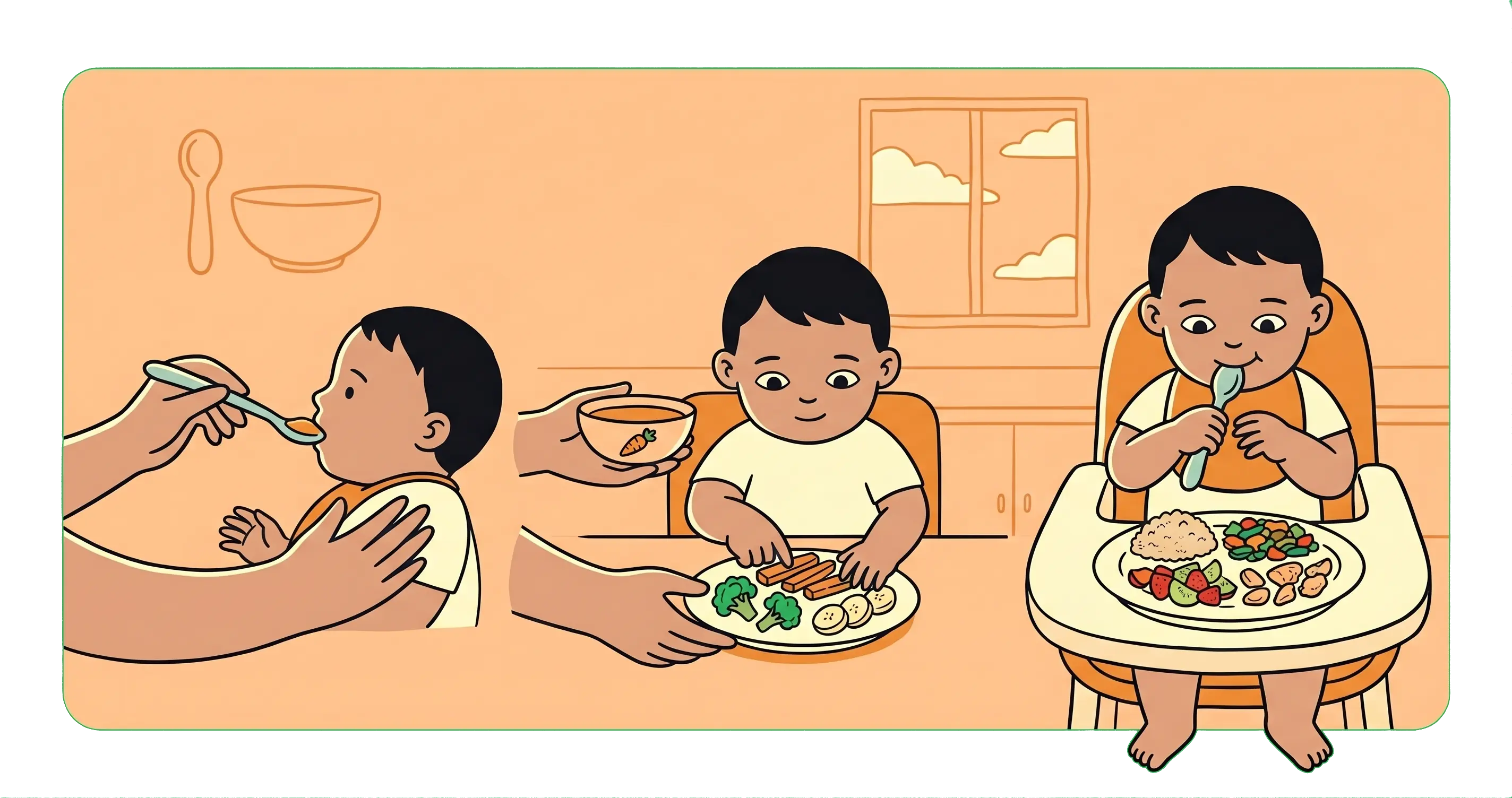
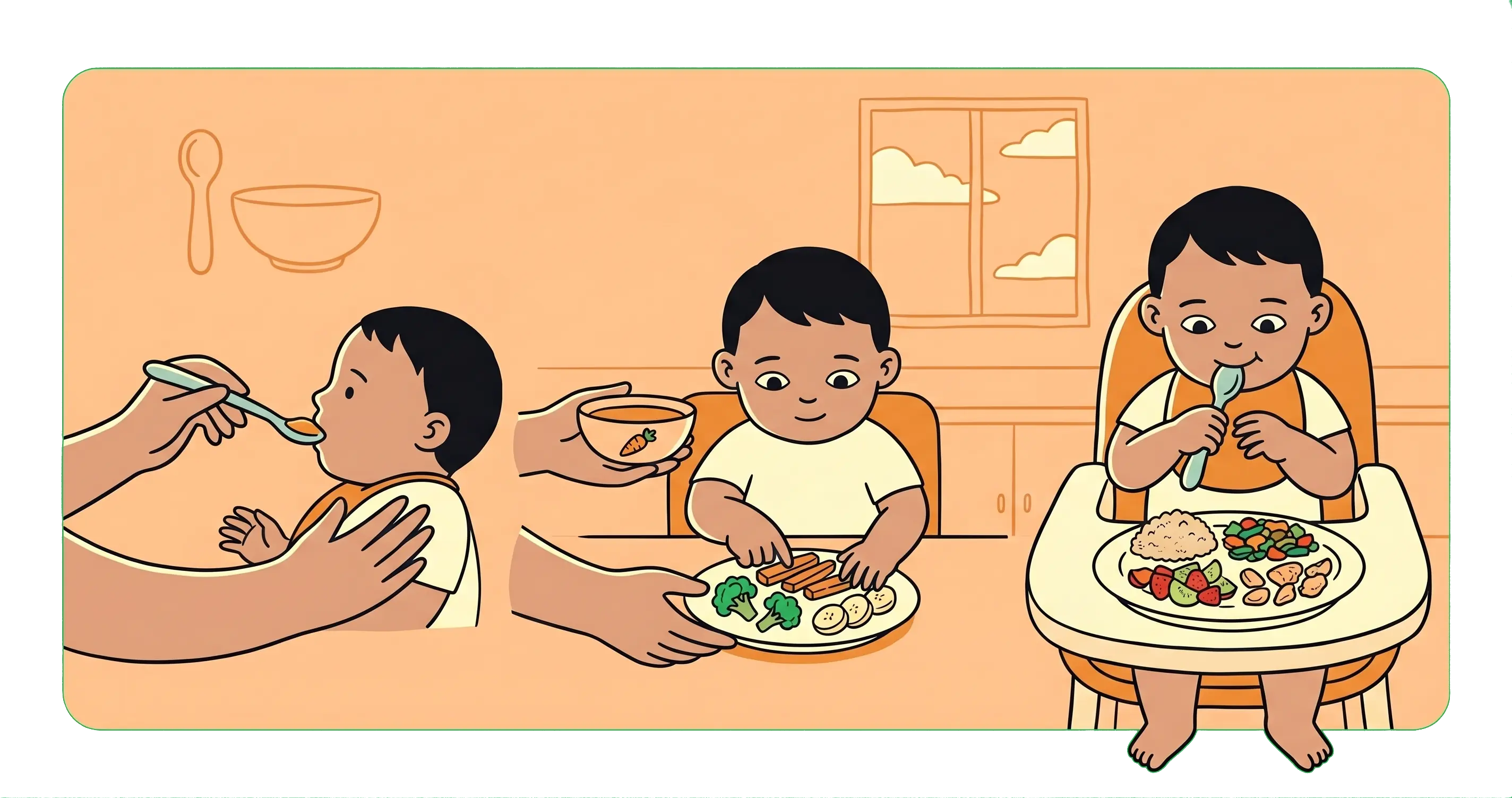
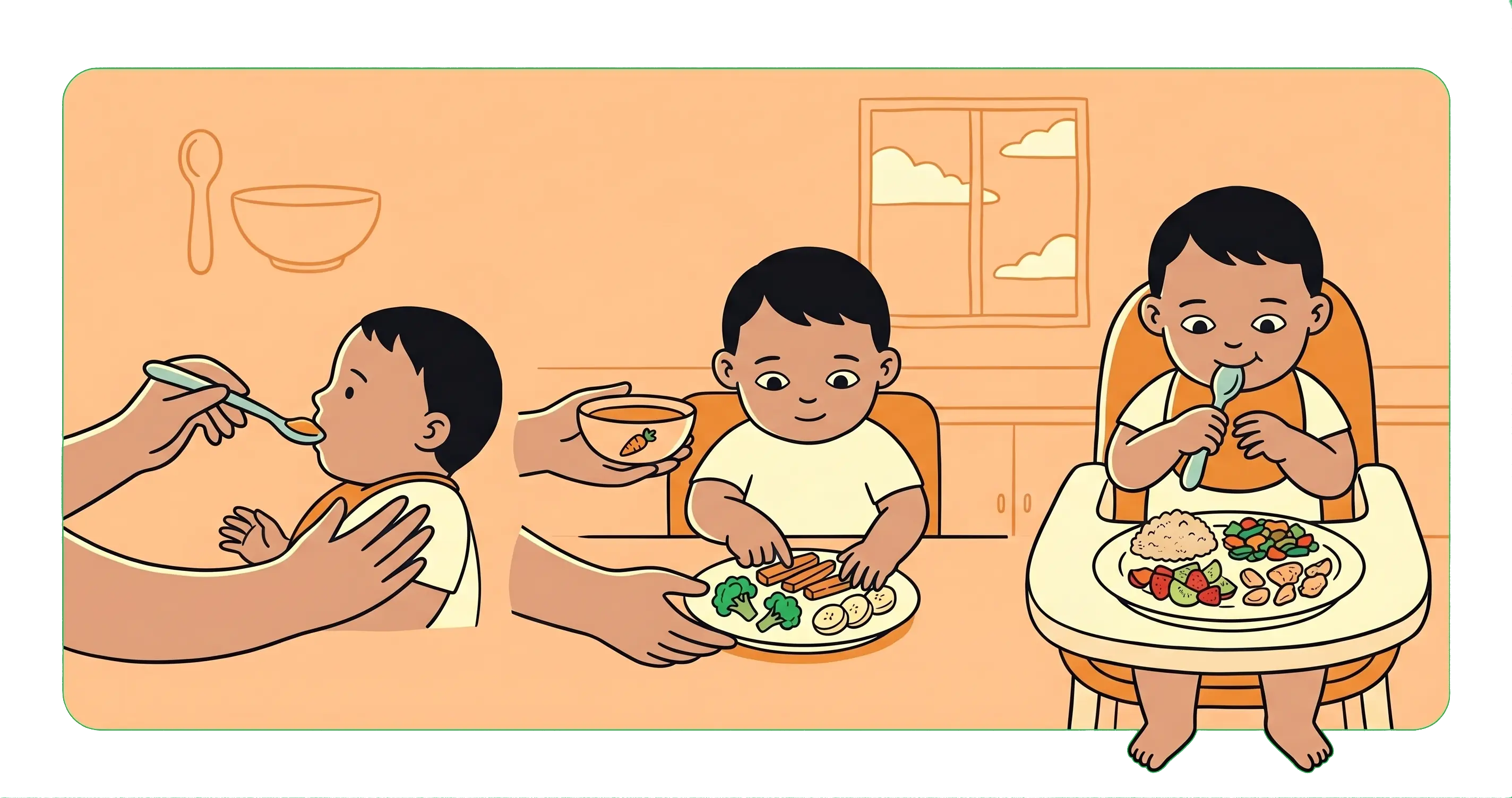
There's no obligation to start with perfectly smooth purees or use one feeding method. You can combine spoon-feeding with safe foods for self-feeding. It's wise to match each stage to the child's current abilities.
Stage 1: Smooth and Easy-to-Scoop Texture
If the child is just starting to expand their diet or is particularly cautious with new experiences, you can offer small amounts of smooth, soft food on a shallow spoon. The portion should not fill the entire mouth.
Stage 2: Fork-Mashed Meal
The next step might be a less finely mashed puree or a soft product mashed with a fork. Lumps should be soft and easily break down under the pressure of the tongue and gums. Do not hide hard fragments in a smooth puree.
Stage 3: Distinct, Soft Lumps
If the child tolerates mashed meals, you can gradually increase the size and number of soft lumps. Initially, a few small trials during a meal are enough. The goal is not to consume a specific portion but to practice new skills.
Stage 4: Soft Chunks for Self-Feeding
You can offer very soft pieces of cooked vegetables, ripe banana, avocado, peeled pear, omelet, or well-cooked pasta. The shape should match the child's grasping method. Initially, larger pieces that can be held with the whole hand are easier; as the pincer grasp develops, the child can manage smaller pieces.
Progression doesn't have to be linear. One day, the child might eat a mashed meal, and the next, choose a soft chunk or just touch it. Regular, calm opportunities to explore food are more important than quickly moving between stages. The American Academy of Pediatrics recommends responsive feeding, which involves observing hunger, fullness, and readiness cues without pressure [4].
How to Respond to Spitting and Gagging?
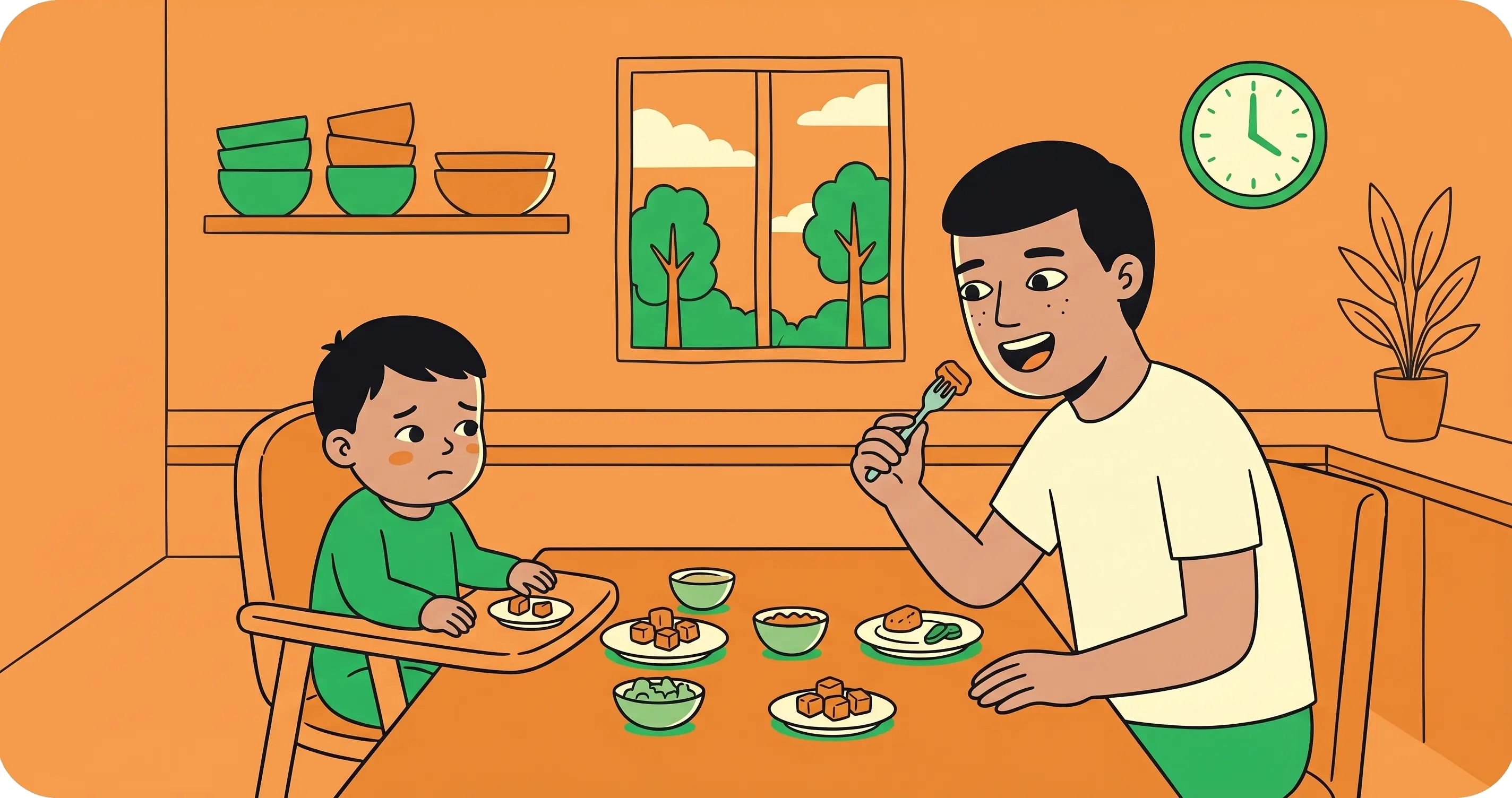
Spitting out food doesn't always mean refusal. The child might be removing a piece they can't yet handle. It's best to remain neutral, wait, and not immediately offer another portion.
The gag reflex, also known as gagging, is not choking. During gagging, the child usually makes sounds, coughs, sticks out their tongue, turns red, may have watery eyes, or vomit. Air still flows, and the body tries to move the food forward and out of the mouth.
In such a situation, observe the child and let them handle the bite independently. Do not blindly put fingers in the mouth, as this can push the food deeper. If reactions are very frequent, intense, or occur even with smooth foods, it's worth discussing them with a specialist.
Choking vs. Gagging – Key Differences
Gagging usually means that food or liquid has irritated the airways, but the child can still breathe and cough effectively. Coughing is a defensive mechanism. Do not shake the child or remove food with fingers unless visible.
Choking is a partial or complete blockage of the airways by a foreign object. Symptoms of severe obstruction include inability to breathe, cry, or cough effectively, silent mouth opening, increasing weakness, and cyanosis. This is a life-threatening condition requiring immediate first aid appropriate for the child's age and calling emergency services at 112 or 999.
Every caregiver should know how to provide first aid to an infant and child. It's best to practice beforehand in a certified course, as there's no time to look for instructions during an incident.
How to Increase Safety During Meals?
- The child should eat in a stable, upright position, with head and torso control.
- They must be under constant supervision by a sober adult during meals.
- Do not feed the child lying down, while walking, playing, or driving.
- Food should be soft and prepared according to the child's skills.
- Avoid whole nuts, hard raw vegetables, popcorn, hard candies, and other products that easily block airways.
- Round foods like grapes or cherry tomatoes should be cut lengthwise into appropriately small pieces, not served whole.
- Never leave the child alone, even if they previously handled a similar meal well.
What Helps a Child Accept Lumps and Chunks?
New textures are best introduced regularly but in small amounts. You can place two or three soft pieces on a plate or offer a few spoonfuls of a less smooth meal. The child should have the opportunity to touch, mash, and spit out food.
Helpful tips include:
- offering meals when the child is rested and moderately hungry,
- using a small, shallow spoon,
- taking breaks between portions,
- allowing the child to reach for food independently,
- avoiding distractions, rushing, and coaxing,
- ending the meal when signs of fullness or clear fatigue appear.
Progress can mean more than just swallowing a piece. Important stages also include tolerating food on the plate, touching it, licking it, putting it in the mouth, and calmly spitting it out. Complementary feeding guidelines emphasize the need to develop texture during the period when the child is acquiring biting and chewing skills [5].
When to Consult a Doctor or Specialist?
A single gag reflex or spitting out a lump usually doesn't indicate a disorder. Consultation with a pediatrician, speech therapist specializing in feeding, pediatric dietitian, or feeding therapist is needed if there's no progress or symptoms suggest oral-motor difficulties.
Red flags include:
- accepting only perfectly smooth purees around 9-10 months or later, despite regular, calm attempts,
- frequent coughing, gagging, or choking episodes during eating or drinking,
- wet, gurgling voice or breath after swallowing,
- difficulty swallowing saliva, liquids, or foods of various textures,
- holding food in cheeks, very long meals, or clear difficulty moving a bite with the tongue,
- most food falling out of the mouth despite repeated attempts and passage of time,
- regular vomiting, pain, arching, or intense crying during feeding,
- complete refusal to put food or objects in the mouth,
- recurrent respiratory infections, especially if accompanied by symptoms during meals,
- poor weight gain, growth stalling, or weight loss,
- loss of previously acquired eating skills.
Urgent medical help is needed for cyanosis, apnea, loss of consciousness, or choking with ineffective coughing. If the child also struggles with drinking and saliva or feeding clearly causes pain, do not wait for spontaneous improvement.
Frequently Asked Questions
Does a Child Need Teeth to Eat Soft Chunks?
No. Very soft food can be mashed with the tongue and gums. Key factors are developmental readiness, stable position, and appropriate softness and form of the product.
Does the Gag Reflex Mean Returning to Purees?
Not always. Occasional gagging can accompany learning new textures. You can reduce the portion or take a small step back, but it's worth continuing to provide calm exposure to texture. Frequent, intense gag reflex, especially with every texture, requires consultation.
What to Do if a Child Spits Out Every Lump?
Offer very small amounts of soft lumps, don't pressure them to eat, and observe changes over the following days. It may also help to see if the child better tolerates separate soft chunks than lumpy purees. Lack of any progress for several weeks indicates a need to assess feeding methods and oral-motor skills.
Can Spoon-Feeding Be Combined with Self-Feeding?
Yes. A child can receive mashed meals on a spoon and simultaneously have access to safe, soft chunks. Respond to their signals and do not put food in their mouth against their refusal.
When Should a Child Stop Eating Only Smooth Purees?
There is no single date suitable for all children, but around 9-10 months, maintaining only perfectly smooth textures and not tolerating even soft lumps should be discussed with a pediatrician or feeding specialist.
Summary
Learning to eat lumps and soft chunks is a process dependent on the child's development. The safest approach combines gradual texture variation, stable positioning, constant supervision, and no pressure. Spitting out or occasional gag reflex can be part of learning, while frequent coughing during most meals, swallowing difficulties, lack of progress, and growth issues require consultation.
If a child is stuck at one stage, gather information about tolerated textures, meal experiences, and accompanying symptoms. Based on these observations, a specialist can assess whether a change in feeding method, medical examination, or support in developing oral-motor skills is needed.
Sources
- ESPGHAN: complementary feeding guidelines.
- National Center for Nutrition Education (NCEZ): expanding infant diets.
- Polish Society of Gastroenterology, Hepatology, and Nutrition of Children (PTGHiŻD): principles of feeding healthy infants.
- American Academy of Pediatrics (AAP): Infant Food and Feeding.
- ESPGHAN: infant feeding timeline.