When to Start Introducing Solid Foods to Your Baby?
Introducing solid foods involves gradually adding foods other than breast milk or formula. There isn't a one-size-fits-all date for every child. Both age range and developmental readiness of the baby are important.
According to recommendations, complementary foods should not be introduced before the 17th week of life, which is the start of the 5th month, nor should their introduction be unnecessarily delayed beyond the 26th week. Most healthy infants show readiness around 6 months of age [1][2]. Breast milk or appropriate formula remains the nutritional foundation.
Age alone is not enough to make this decision. European guidelines emphasize that the method and timing of starting complementary feeding should consider the child's development, including head and trunk control and feeding skills [3].
Signs of Readiness for First Meals
Before starting solid foods, check if your child:
- can hold their head steady and keep it aligned with their body,
- sits with support without slumping or tilting to the side,
- can bring food to their mouth and attempts to swallow,
- opens their mouth at the sight of a spoon or reaches for food,
- does not automatically push every bite out with their tongue.
Interest in a parent's plate may accompany readiness, but it alone is not a sufficient criterion. More frequent night awakenings, putting hands in the mouth, or increased milk demand do not automatically mean it's time to start solids.
Where to Start with Introducing Solid Foods?
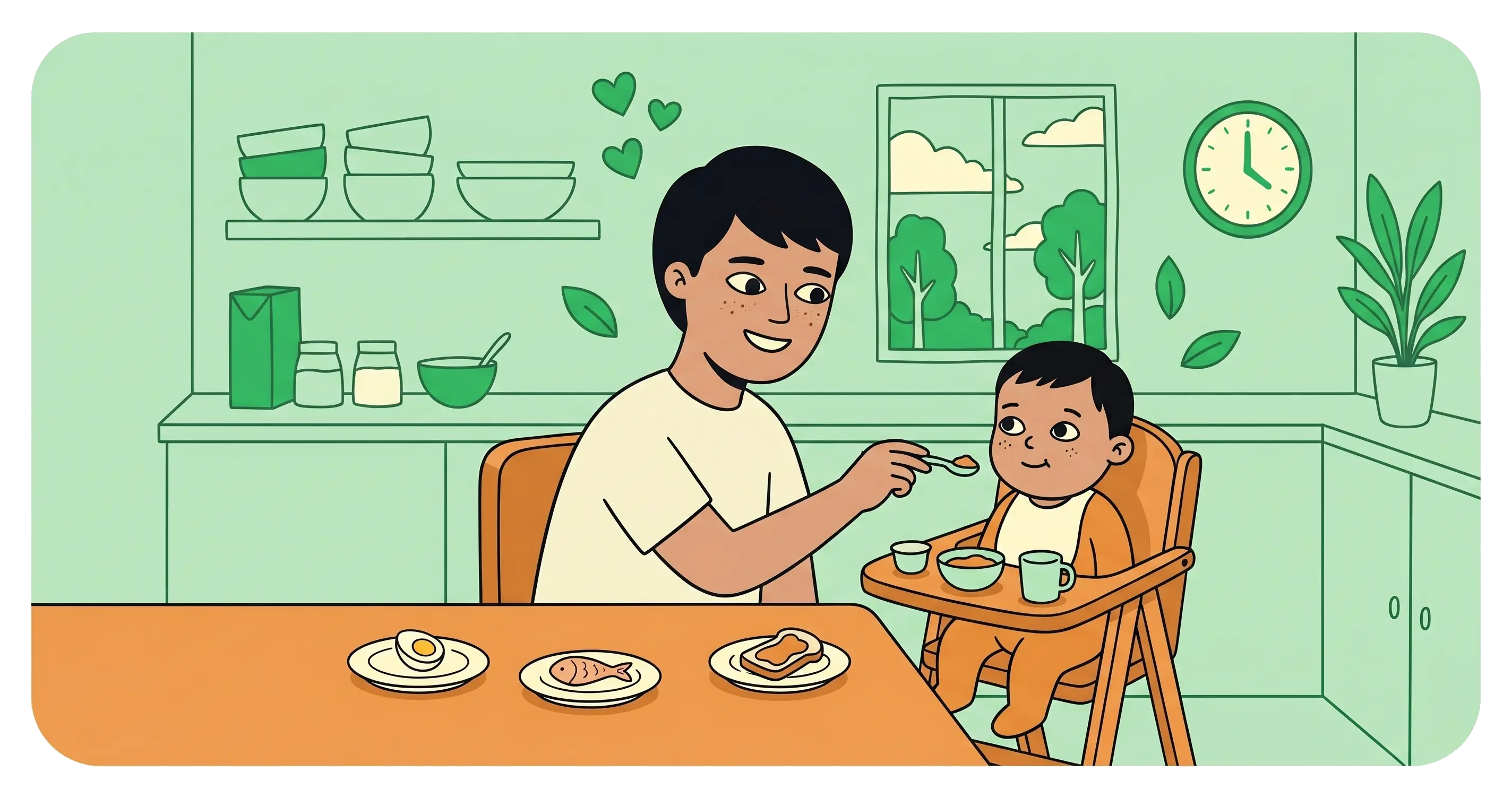
There is no mandatory order for introducing foods. The first food doesn't have to be carrot or apple. It's beneficial to offer a variety of food groups from the start: vegetables, grains, meat, fish, eggs, fruits, and properly prepared legumes.
Initially, one small meal a day is enough. A few spoonfuls, a few attempts to touch the food, or one soft piece held in the hand is a valuable learning experience. The child doesn't need to eat the entire portion right away.
Examples of First Foods
- cooked potato, pumpkin, broccoli, cauliflower, or zucchini,
- oatmeal, millet, or another grain product suitable for infants,
- well-cooked and finely shredded meat, such as turkey, chicken, or beef,
- well-cooked egg,
- flaked fish without bones,
- smoothly mashed lentils or beans, served in small amounts,
- soft fruits, such as pear, plum, or banana.
There's no need to serve only one vegetable for several days. However, when introducing potentially allergenic foods, it's wise to be more cautious and avoid combining several new allergens in one meal.
Simple Plan for the First Weeks
The plan should be flexible and adapted to the child's hunger and fullness cues:
- First week: one calm food encounter per day. It's best to choose a time when the child is rested and not very hungry.
- Second week: still one meal, gradually increasing the variety of foods and textures.
- Third and fourth weeks: depending on the child's interest, you can move to one or two small meals a day.
There's no need to strictly adhere to this schedule. One day a child may eat a few spoonfuls, and the next only touch the food. Initially, regular experiences, a safe position, and a calm atmosphere are more important than quantity.
Why is Iron So Important?
Around 6 months of age, the iron stores accumulated during fetal life begin to deplete. For this reason, the first meals should regularly include foods that are sources of iron [1][5]. It's not advisable to limit the diet to just vegetables and fruits.
Iron sources suitable for infants include:
- meat, especially beef and poultry,
- fish,
- well-cooked egg,
- iron-fortified cereals and grain products,
- lentils, beans, chickpeas, and tofu, served in a safe form.
Iron from plant sources is absorbed less efficiently than iron from meat. Its absorption can be supported by combining the meal with a product containing vitamin C, such as broccoli, cauliflower, tomato, or fruit. Iron supplementation should not be started independently — the decision is made by a doctor based on age, diet, test results, and risk factors.
Textures: Spoon, Pieces, or Mixed Method?
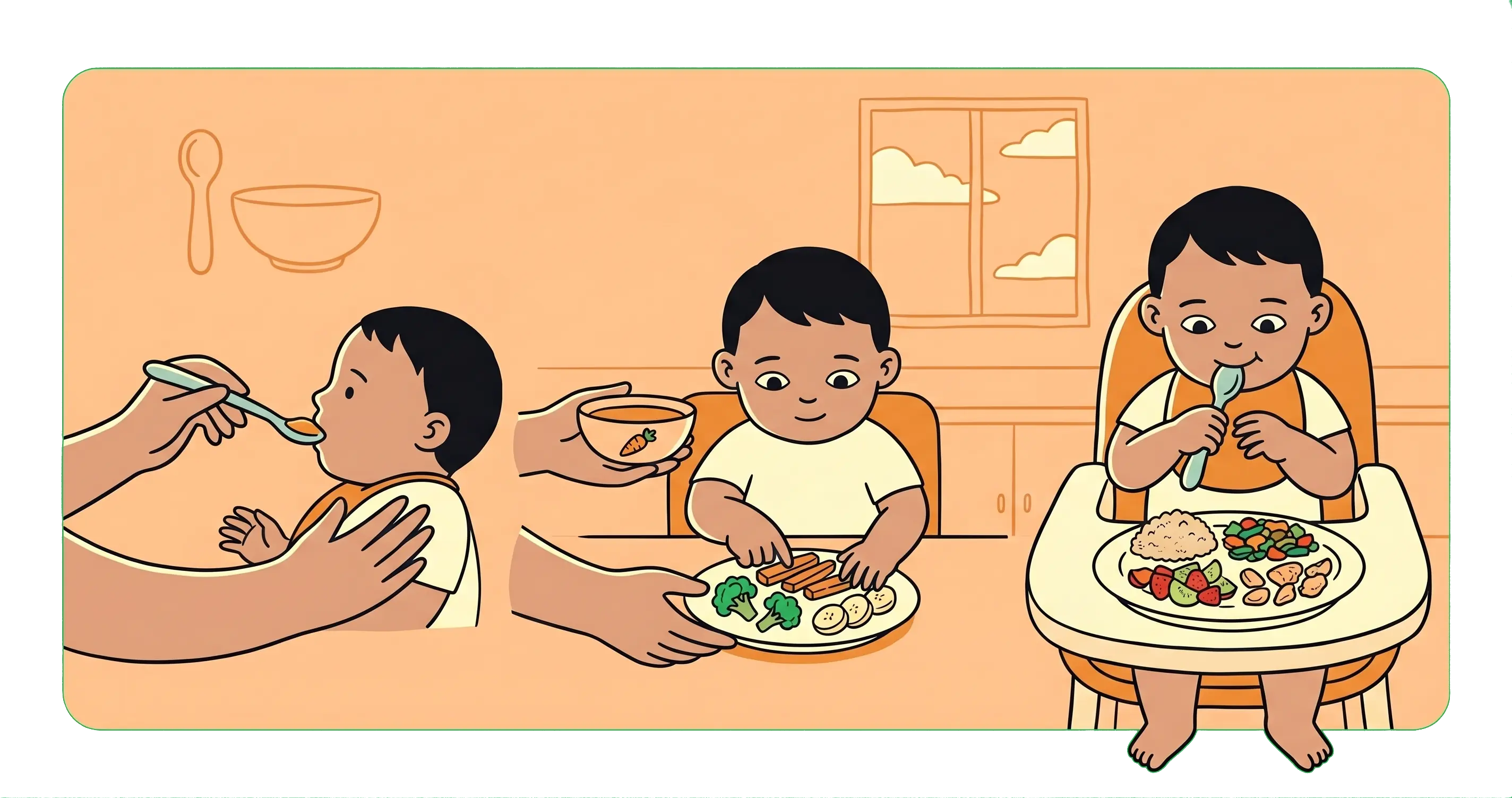
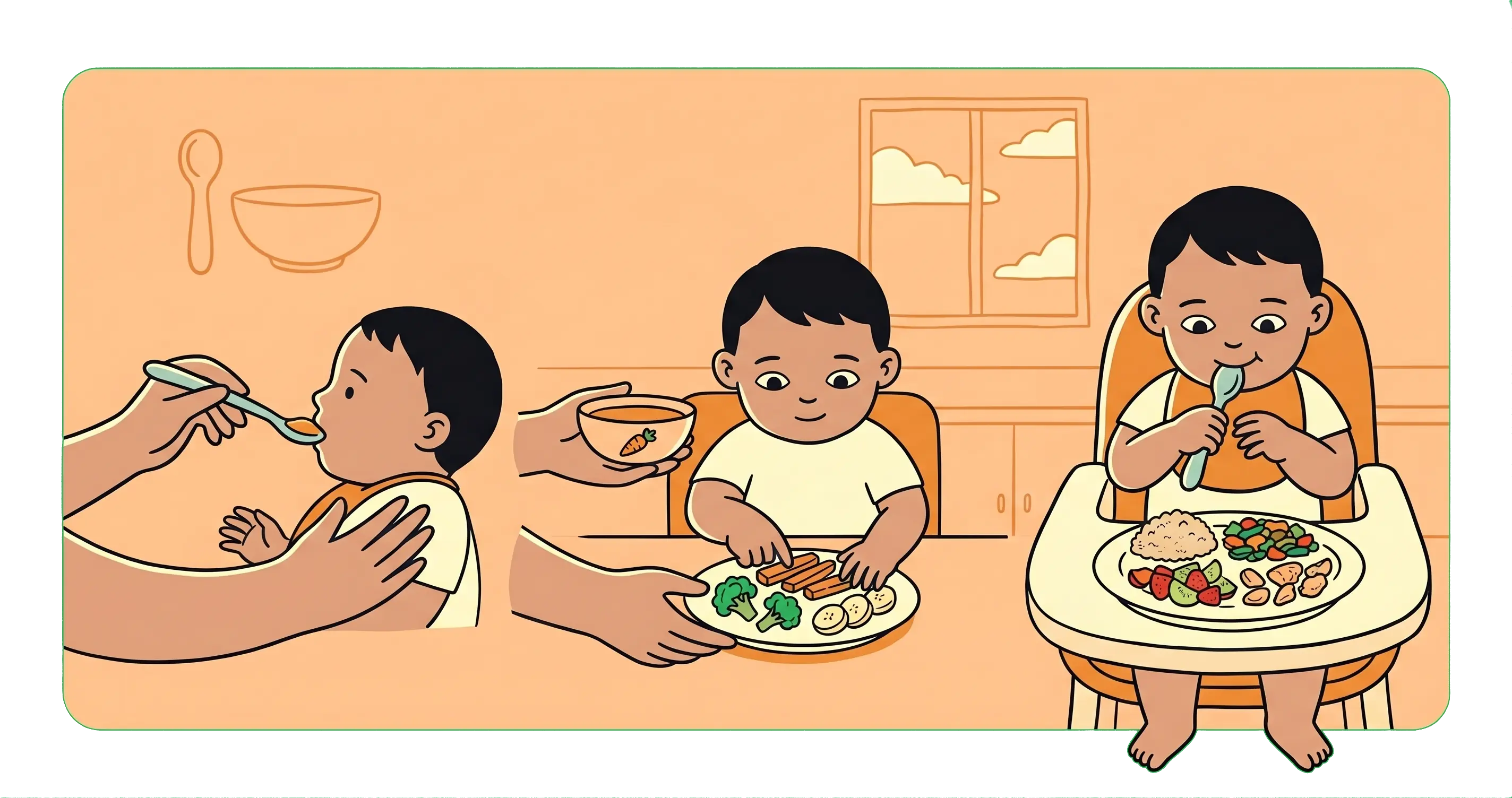
You can feed your child with a spoon, offer appropriately prepared pieces for self-feeding, or combine both methods. There's no need to treat them as mutually exclusive. The most important factors are safety, developmental readiness, and the child's ability to actively participate in the meal.
Feeding with a Spoon
Initially, you can offer smooth or mashed foods, but it's important not to stick to uniform purees for too long. As skills develop, it's beneficial to introduce lumpy textures and soft pieces. Gradually varying textures supports learning to bite and chew [4].
Bring the spoon close to the mouth and allow the child to open their mouth independently. Do not force the spoon in or use distraction to offer another bite.
Finger Foods
The food should be soft enough to easily mash between fingers. Initially, larger, elongated pieces that the child can grasp with their whole hand, such as a soft stick of potato, a broccoli floret, or a piece of well-cooked omelet, usually work well.
The infant should eat in a stable, upright position and remain under constant adult supervision. Do not offer food in a semi-reclined position, during car rides, or during intense play.
Foods That Increase Choking Risk
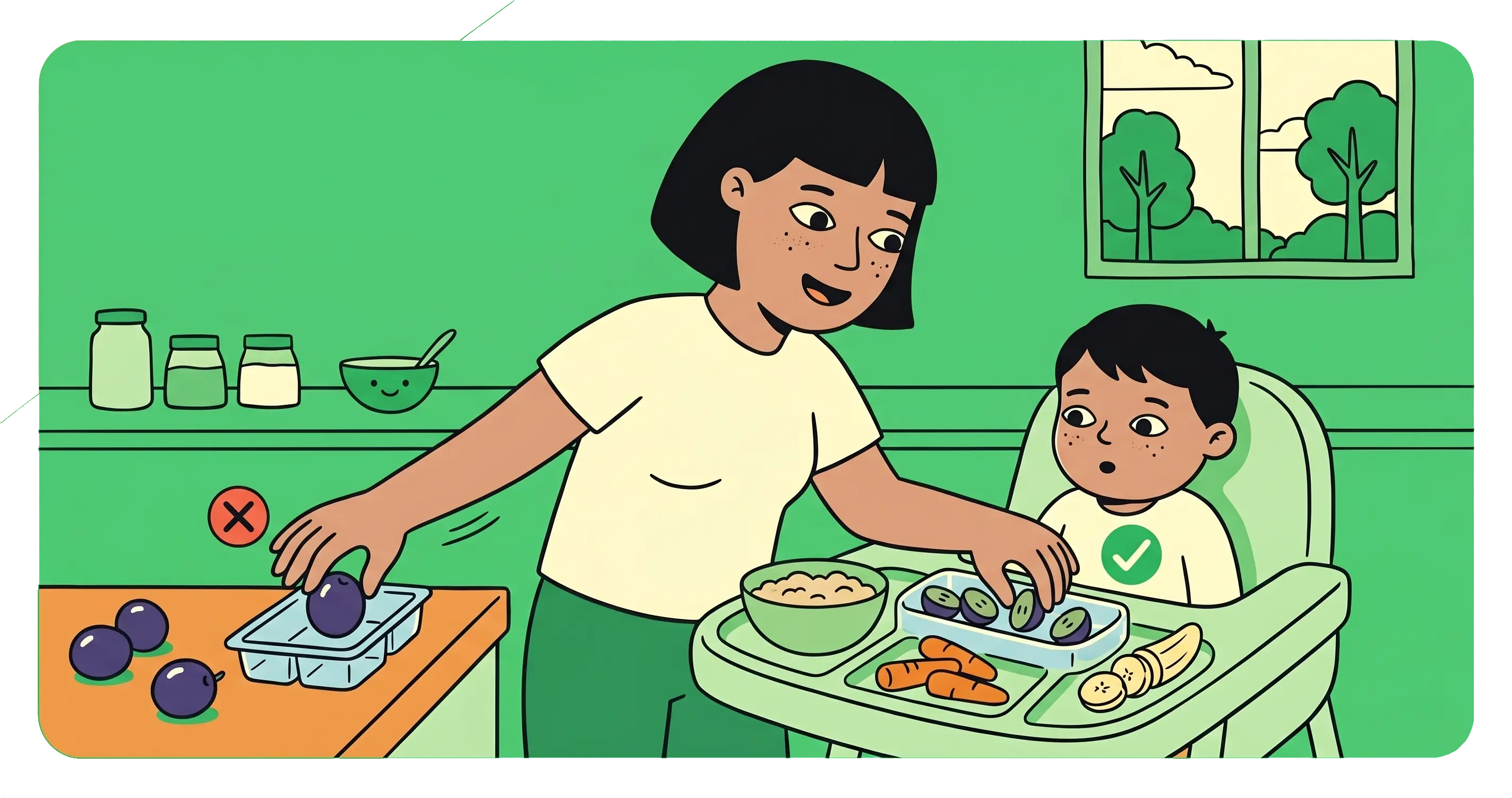
Particularly dangerous are hard, small, round, slippery, or sticky foods. These include whole nuts, whole grapes and cherry tomatoes, raw carrot slices, pieces of raw apple, popcorn, hard candies, sliced sausages, and thick portions of peanut butter. Grapes and tomatoes should be cut lengthwise into smaller pieces, and hard vegetables and fruits should be cooked or grated.
What Not to Give Your Baby?
- Honey before 12 months of age due to the risk of infant botulism.
- Raw or undercooked meat, fish, and eggs.
- Unpasteurized milk and products made from it.
- Foods high in salt, sugar, and highly processed foods.
- Juices and sweetened drinks. Water can be offered with meals.
- Cow's milk as the main drink before 12 months. It can be used in small amounts as an ingredient in a dish earlier.
How to Safely Introduce Allergens?
Routine delay in introducing eggs, peanuts, fish, wheat, and other potentially allergenic foods is not recommended. They can be included after starting solid foods, in a form appropriate for the child's age and skills. Available guidelines indicate that deliberately delaying allergens does not prevent allergies [2][3].
It's best to introduce a new allergen at home, in the morning or early in the day, when the child is healthy. Start with a small amount and do not introduce several new allergens on the same day. If the product is well tolerated, keep it in the diet and offer it regularly.
How to Serve Eggs and Peanuts?
- Egg: should be well-cooked or thoroughly set. You can offer a small amount of mashed egg or a well-cooked omelet.
- Peanuts: only as smooth peanut butter diluted with water, the milk the child uses, or added to porridge. Do not offer whole nuts or thick portions of butter straight from the spoon.
For infants with severe eczema, diagnosed food allergy, or previous reaction to a product, the method of introducing allergens should be discussed with a pediatrician or allergist.
What Might Be Normal During Learning to Eat?
Initially, a child may make faces, spit out food, touch it, and smear it, and eat more one day than the next. There may also be temporary changes in the smell, color, or consistency of stools. A few undigested food fragments in the diaper are usually not a cause for concern.
It's important to respect fullness signals: closing the mouth, turning the head away, pushing the spoon away, losing interest, or trying to leave the high chair. The parent's role is to decide what, when, and where is offered. The child decides whether and how much to eat. Pressure, entertaining with screens, and sneaking in extra spoonfuls can hinder recognizing hunger and fullness.
When to Consult a Doctor or Specialist?
It's worth discussing the plan for introducing solid foods individually if the child:
- was born prematurely — corrected age may be significant,
- has muscle tone disorders, a neurological condition, or an anatomical oral cavity defect,
- does not show developmental readiness signs around 6 months,
- has difficulty gaining weight or there is a weight loss,
- regularly coughs, chokes, or vomits during feeding attempts,
- has persistent difficulties with biting, chewing, or swallowing,
- refuses all textures or every meal is associated with severe tension,
- has severe eczema, diagnosed allergy, or previously reacted to food.
Depending on the issue, a pediatrician, pediatric dietitian, allergist, or feeding specialist may be helpful.
Red Flags Requiring Urgent Help
After introducing a new product, stop feeding and urgently contact a doctor if generalized hives, repeated severe vomiting, facial or lip swelling, wheezing, or significant weakness occur.
Immediate medical help is required for: difficulty breathing, blueness, increasing tongue or throat swelling, loss of consciousness, limpness, and inability to cough, cry, or make a sound during choking. Call emergency services at 112 or 999 and begin appropriate first aid actions.
Loud choking with coughing and gag reflex may be part of learning to eat. Choking, however, can be silent, as it involves airway blockage. Before starting solid foods, it's advisable to complete an infant first aid course.
Common Mistakes When Introducing Solid Foods
- Starting solely based on age, without assessing developmental readiness.
- Expecting large portions from the first days. Initially, eating is primarily a learning experience.
- Offering only vegetables and fruits, without regular sources of iron.
- Staying too long with smooth purees and not offering subsequent textures.
- Delaying allergens without medical indications.
- Adding salt, sugar, or offering juices to encourage eating.
- Applying pressure. A new taste may require many calm exposures before being accepted.
Frequently Asked Questions
Can you start introducing solid foods in the 4th month?
Do not start before the 17th week of life. Even after this time, age alone is not enough — the child must show developmental readiness. For most healthy infants, the right time is around 6 months.
Does the baby need to sit independently?
The baby doesn't need to sit independently or sit for long without support. However, they should have stable head and trunk control and maintain a safe, upright position in a chair with proper support.
Should you offer vegetables first, then fruits?
There is no mandatory order. You can start with vegetables, but from the first weeks, it's worth including iron sources and gradually increasing the variety of the diet.
Should you replace milk feeding immediately after the first spoonful?
No. Initially, complementary foods do not automatically replace full milk feeding. Breast milk or formula remains the nutritional foundation, and the proportions gradually change as the amount and frequency of meals increase.
Can you combine spoon feeding with offering pieces?
Yes. The mixed method is a valid approach if the texture and size of the food are adapted to the child's skills, and the infant eats in a stable position under constant adult supervision.
What to do if the child spits out every new product?
Spitting out doesn't necessarily mean the child dislikes the food. It may result from immature oral skills or surprise at a new taste and texture. It's worth returning to the product without pressure. If the difficulty involves all textures, persists, or is accompanied by coughing, choking, and poor weight gain, consultation is needed.
Calm and Safe Beginning
Introducing solid foods is best started based on a combination of age range and developmental readiness. For most children, this occurs around 6 months. In the first weeks, milk remains the nutritional foundation, and small portions of new foods primarily serve as learning experiences.
It's important to include iron sources from the start, gradually change textures, safely introduce allergens, and respect fullness signals. An ideal diet plan or rapid portion increase is not necessary. Regularity, variety, and calm observation of the child are more important than speed.
Sources
- National Center for Nutritional Education (NCEZ), materials on feeding healthy infants.
- Polish Society of Gastroenterology, Hepatology and Nutrition of Children (PTGHiŻD), position on feeding healthy infants.
- European Society for Paediatric Gastroenterology, Hepatology and Nutrition (ESPGHAN), guidelines on complementary feeding.
- ESPGHAN, recommendations on infant feeding schedule and texture introduction.
- American Academy of Pediatrics (AAP), Infant Food and Feeding.