School Lunchbox for Kids – Ideas and Shopping List
Introduction: School and Preschool Lunchbox Without Morning Chaos
Your child returns with a nearly full lunchbox, and you wonder why you bother packing it at all? Parents often tell us that the most exhausting part isn't preparing the food, but the time spent when it all comes back uneaten. From our experience, it's usually not about being "picky," but rather that the lunchbox is too big, too complicated, or simply inconvenient to eat on the go. 🍎
In practice, we see that predictable routines work best in the morning. Not fancy recipes, not five compartments, and not a daily revolution, but a simple setup that can be recreated without much thought. When parents have a clear plan, mornings become noticeably calmer after just a few days.
In this article, we'll show you how we organize lunchboxes in our daily work with families: what to include, how much to pack, what not to complicate, and how to shop without buying half the store. You'll find ready-made sets, a weekly plan, and practical tips for younger and older children. Everything is designed to be implemented immediately, without the pressure of perfection.
What’s Really Worth Packing in a Lunchbox
In our work, the best lunchbox is one with a few simple elements that doesn’t try to "do it all." Kids don't need a mini catering service. Usually, something filling, something substantial, a piece of vegetable or fruit, and water is enough. 💧
We think very practically: can the child open it, grab it, chew it, and eat it in a few minutes? If not, even the best ingredients won't help. In practice, small portions fare much better than large sandwiches that look overwhelming from the start.
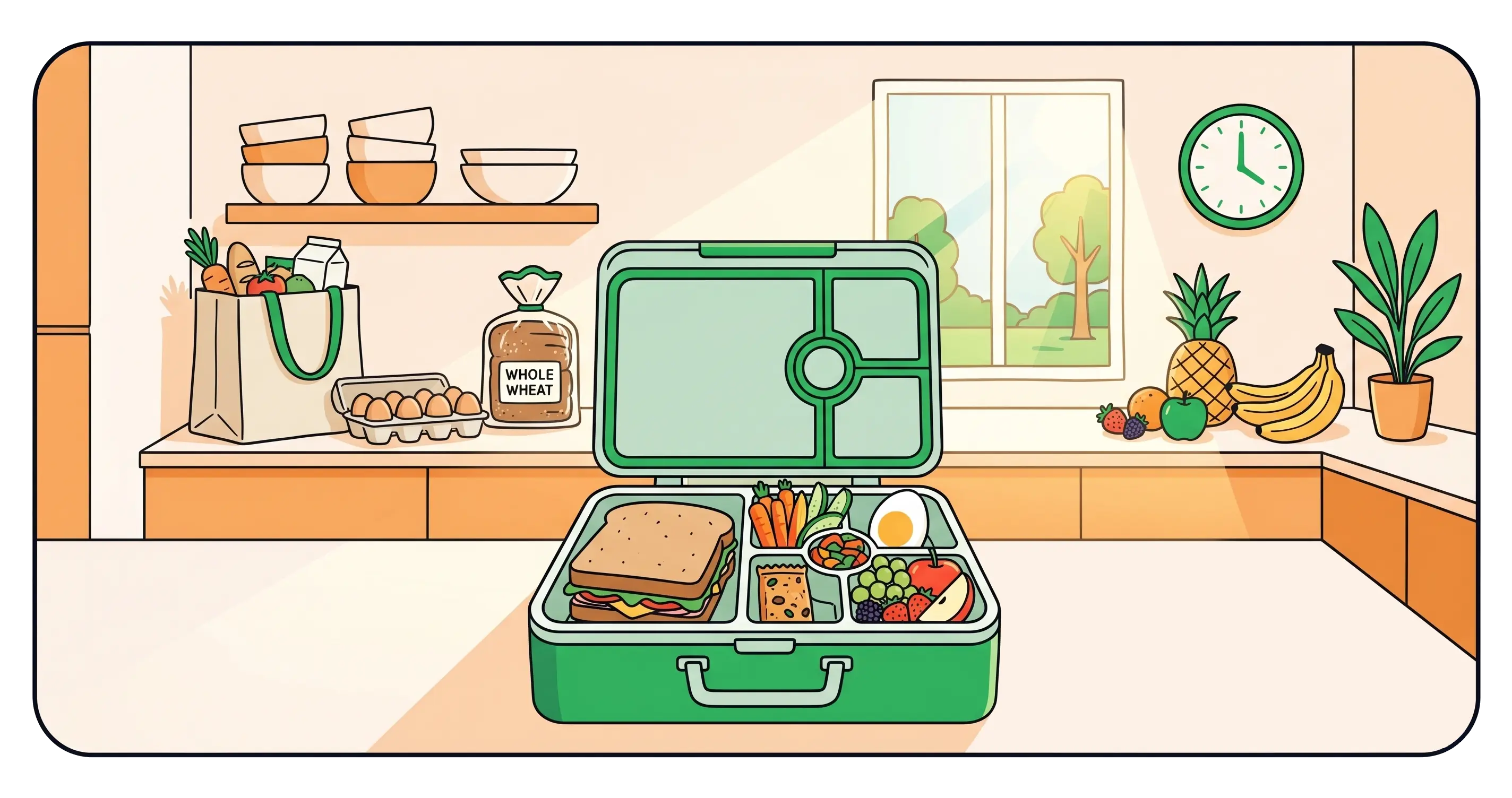
The simplest setup might look like this: - small base: a piece of bread, half a tortilla, mini roll, pancake - substantial addition: egg, cottage cheese, cheese spread, natural yogurt, dip - fresh element: cucumber, tomato, banana, apple, mandarin - water to drink
Parents often ask if they can just throw in a fruit or a roll and call it a day. Sure, sometimes that works, and the world won't end. But from our experience, such a set often leaves the child hungry sooner, distracted, or looking for something sweet before lunch.
How to Match the Lunchbox to Your Child's Age
Children 1–3 Years
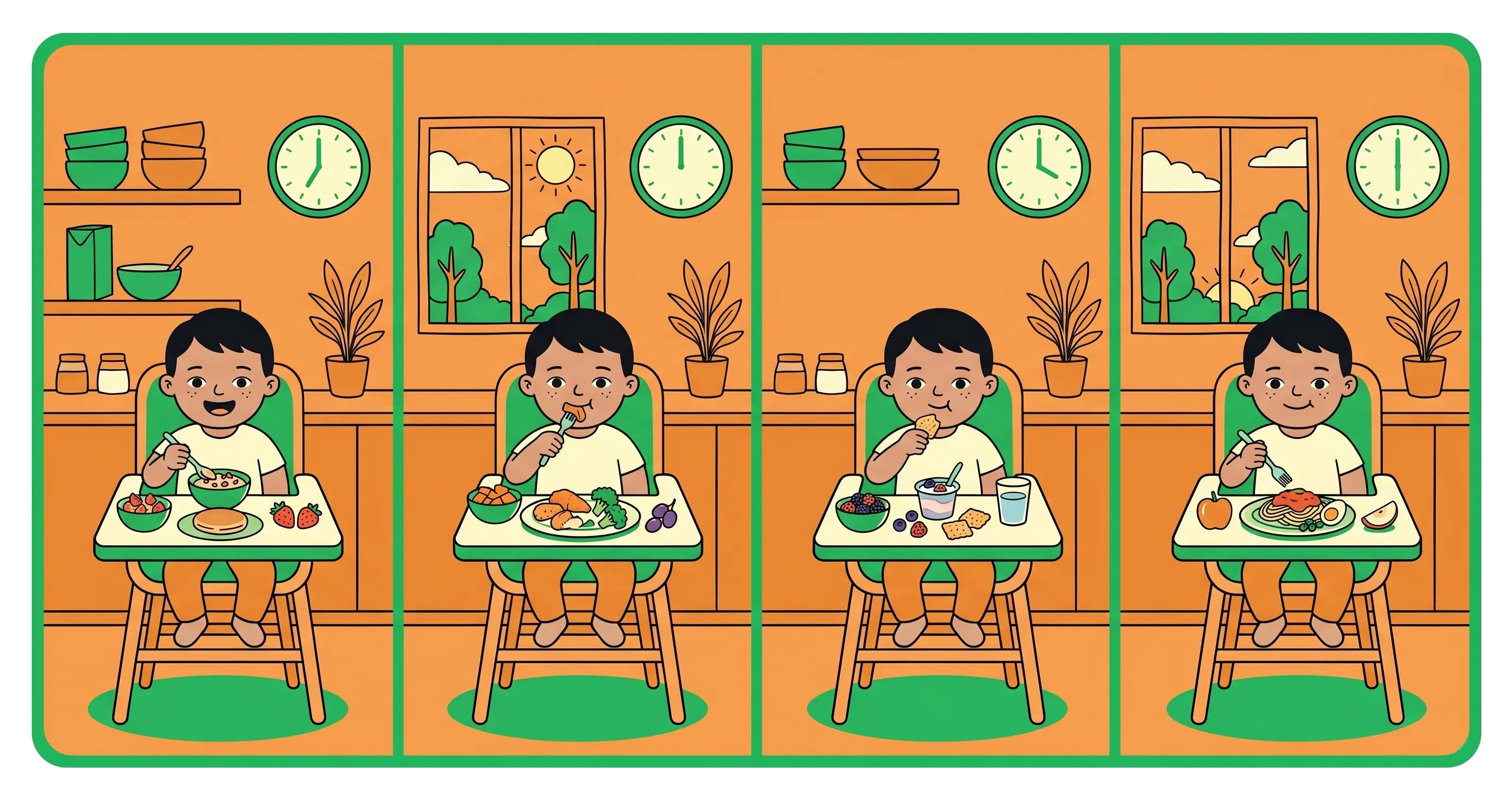
For toddlers, simplicity and safety are key. Food should be soft, small, and easy to grasp. In practice, pieces of bread with a gentle topping, mini pancakes, yogurt in a small container, and soft fruits cut into easy-to-eat pieces work well.
From our experience, the form makes the biggest difference here. The same banana eaten in pieces usually disappears faster than a whole one tossed loosely into the box. Similarly with a sandwich — a small triangle often wins over a large slice.
Children 4–6 Years
In preschool age, we can take it a step further, but it's still important to remember that the child eats independently and usually has little time. That's why sets that don't require much effort work best. In practice, we often recommend: - a small sandwich or half a tortilla, - egg, cheese spread, or a few slices of cheese, - a few pieces of vegetable or half a fruit.
In our work with families, we often see one thing: preschoolers are much more likely to eat what's divided into smaller parts. A large roll can be overwhelming, while several small elements look simply easier.
Children 7–12 Years
Older children usually need a more substantial portion, especially if the school day is long. Larger sandwiches, wraps, eggs, cheese, and vegetable additions work well here. 🥪 It's also worth considering the day's schedule: packing for three lessons is different from packing for a child who has training after school.
From our experience, older kids often eat better from a lunchbox that isn't "childish" in form. Sometimes a simple wrap wrapped in paper works better than colorful compartments with ten mini additions. It's a small detail, but it really makes a difference.
Quick Morning Lunchbox Ideas
In the morning, one thing matters: not starting the day standing over the counter wondering what to make today. That's why we encourage parents to rotate a few tried-and-true sets. When you have 3–5 options, packing becomes much lighter and takes just a few minutes.
Here are sets that often work well: - small cheese sandwich + cucumber + water - half a tortilla with cottage cheese + mandarin - piece of bread with egg spread + a few pieces of tomato - oat pancake + natural yogurt - mini roll + hard-boiled egg + vegetable sticks - sandwich with mild cold cuts + half an apple
In practice, we see that things that don't fall apart in hands and don't make a mess when the box is opened work best. If something is too wet, slippery, or requires utensils, the chance of eating it right away decreases. Children usually choose what's easiest.
From our experience, preparing some things the night before helps a lot. You can boil eggs, make pancakes, cut vegetables, or prepare the box right away. In the morning, all that's left is assembling everything and adding water to the bottle. It's a small change, but for many families, it ends the morning chaos.
What to Do When Your Child Eats Almost Nothing from the Lunchbox
If the box regularly comes back full, we don't assume right away that the child "doesn't like healthy things." In practice, the reason is usually much more mundane: too large a portion, too many elements, too difficult to open, or food that looks unappetizing after two hours. 🍓
For a picky eater, the rule works well: one sure thing, one familiar thing, and one small step further. Not five new things at once. If the child likes bread and banana, that's a good starting point, and the new element can be added symbolically.
For example: - half a small sandwich with cottage cheese, - a few slices of banana, - 2 sticks of a new vegetable.
In our work, we often observe that reducing the amount of food yields results faster than "enhancing" the box. A child who sees a small portion is more likely to start eating at all. And when they experience for a few days that the lunchbox is manageable, acceptance usually grows within a few days to 2 weeks.
We've also had many situations where a child rejected "sandwiches" but willingly ate the exact same ingredients laid out separately. It's a good example that sometimes you don't need to change the menu — just the way it's presented.
Common Mistakes When Packing a Lunchbox
Parents very often pack healthy but impractical things into the box. And that's the moment when theory loses to the reality of a school break. In practice, we most often see a few recurring difficulties.
What Usually Doesn't Work
The most common problems are: - too large portions, - only dry snacks, - lack of a substantial addition that provides fullness, - very wet sandwiches and fruits that release juice, - products difficult to open or eat without help.
From our experience, wafers, crisps, sweet rolls, or random bars solve the problem only temporarily. The child eats them quickly, but the fullness doesn't last long. On the other hand, a sandwich with a lot of sauce usually looks unappetizing after a few hours, even for an adult.
What to Give Instead
Simple substitutes work much better: - mini sandwich instead of a large roll, - egg or cheese instead of just crisps, - whole fruit or vegetable pieces instead of another sweet snack, - water instead of a sweet drink. 🧃
In practice, it's not about everything being "perfect." It's about the child being calmly full until the next meal after eating the lunchbox and not returning with a big hunger an hour later.
What Can Be Safely Packed Without a Fridge
This question comes up very often, especially at the beginning of the school year. And rightly so, because not every product handles a few hours in a backpack well. We look at it very practically: what you pack, when the child will eat it, and what the temperature is. 🌡️
If the child eats the second breakfast early, more delicate items like cottage cheese, natural yogurt, or egg spread can be included. It's best if they are well chilled before leaving and sealed in a tight container. If you have the option, a thermal bag or a small cooling pack really makes a difference.
If the food has to wait longer, it's usually safer to opt for simpler options: - bread with cheese, - oat pancakes, - vegetables cut into sticks, - fruits that transport well, - drier sandwiches without sauces.
In our work, we see that parents often focus on what can be packed, rather than when the child will realistically open it. And it's this detail that usually decides whether a product makes sense. If the meal has to sit for half a day, it's better to simplify the choice than to take a risk.
A Weekly Plan That Eases the Mind
You don't have to create a new menu every day. From our experience, a week based on a few repeatable sets works best. The child then has familiar tastes, and you don't start each evening with the question: "what for the box tomorrow?" 🍎
In practice, a simple rhythm works well: - Monday: cheese sandwich + cucumber + mandarin - Tuesday: half a wrap with a mild addition + fruit - Wednesday: bread with egg spread + vegetable - Thursday: sandwich with cottage cheese + a few vegetable sticks - Friday: oat pancake + yogurt or fruit
It doesn't have to look identical every week. It's more about the base than a rigid plan. In our work, we see that after 1–2 weeks of such a repeatable system, parents feel more at ease, and less food is wasted.
Simple Shopping List
To avoid buying random things, it's worth having a short, fixed list: - bread or tortilla - oat flakes - eggs - cheese, cottage cheese, natural yogurt - cucumber, tomato, lettuce - apples, bananas, mandarins - water - alternating additions, e.g., hummus, seeds, fruit puree
From our experience, these "boring" lists work best. When the basics are at home, making a lunchbox stops being a project and becomes a regular part of the morning.
How to Match the Lunchbox to Your Child's Daily Schedule
Not every day looks the same, so not every lunchbox should look the same. If the child has a short day, a small, simple set is usually enough. If they stay at school longer or have sports after class, it's worth considering a more filling option. 💪
For a shorter day, these work well: - half a sandwich, - natural yogurt with fruit, - oat pancake, - piece of bread with spread and vegetable.
For a longer day, something more substantial usually works better: - larger sandwich, - half a tortilla with a protein addition, - egg, - portion of vegetables or fruits, - water.
In practice, we also observe that in hot weather, children often eat less and choose lighter things. Then it's worth simplifying the box even more and sticking to familiar products. On the other hand, on a busy day, it's good not to skimp on the portion but to add one more small, filling element.
Summary: The Lunchbox Should Be Real, Not Ideal
From our experience, the best lunchbox isn't the most creative one, but the one the child actually eats. Most often, a simple setup, convenient form, and portion matched to age and daily schedule win. When the box is predictable and easy to manage, results are usually visible within 1–2 weeks.
In practice, it's worth starting with a few sure things and not adding pressure. One small sandwich, a protein addition, fruit or vegetable, and water often suffice. And if something doesn't work, it's usually better to change the form or amount than to immediately swap the entire menu.
If you want, we can help you match the lunchbox to your child's age, appetite, and challenges. Feel free to reach out through the NutritionHelper consultation form.