Is it normal for a 2-year-old to eat more one day and less the next?
A 2-year-old's appetite can noticeably change from day to day. Factors like growth rate, activity, sleep, infections, and mood all play a role. Therefore, the amount eaten at one meal shouldn't be seen as a measure of their entire diet.
It's best to evaluate their diet and appetite over the course of a week. Also important are the child's energy levels, development, and growth patterns. The portions mentioned in this article are approximate — one day your child might ask for seconds, and another day they might only take a few bites.
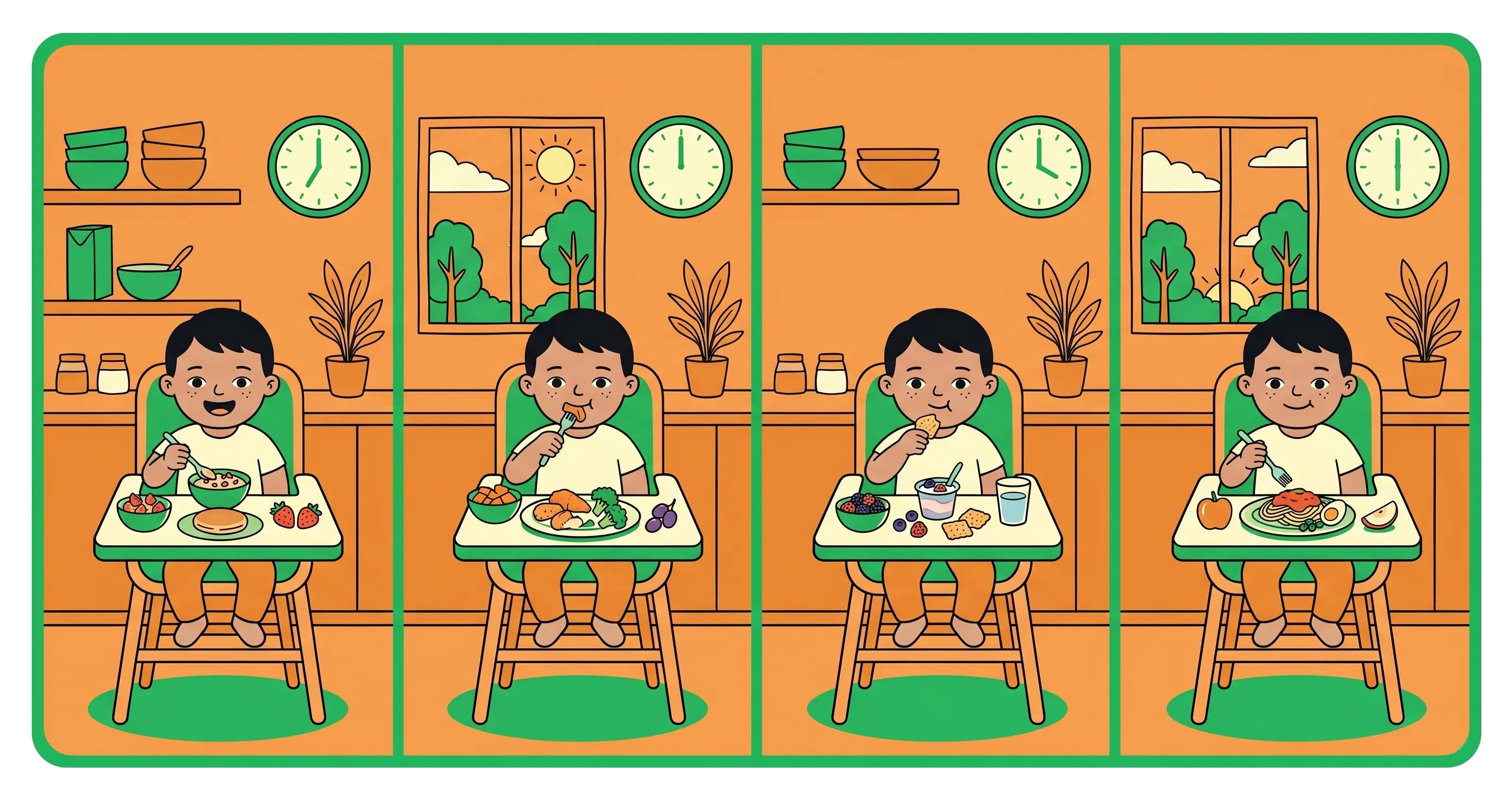
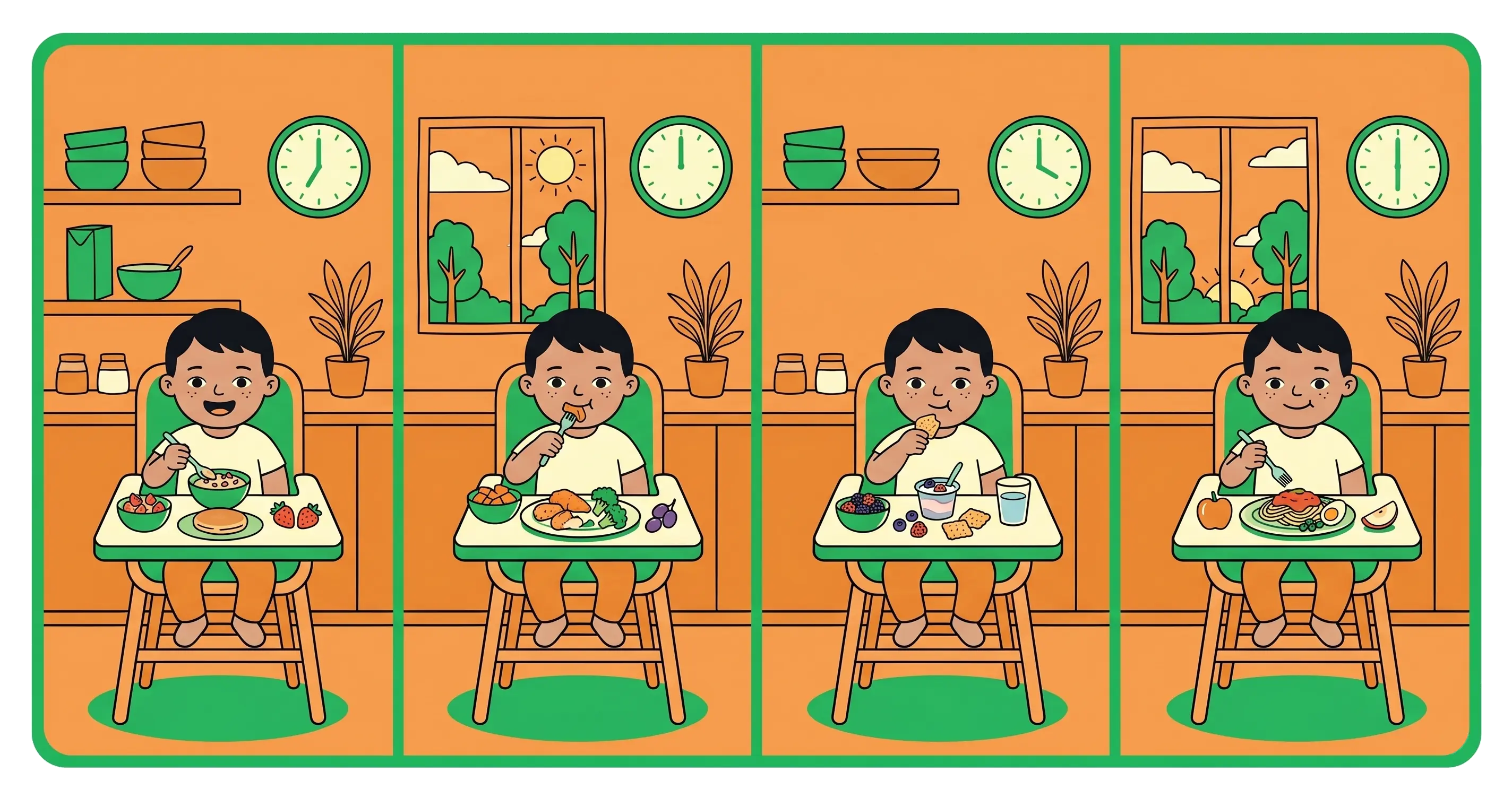
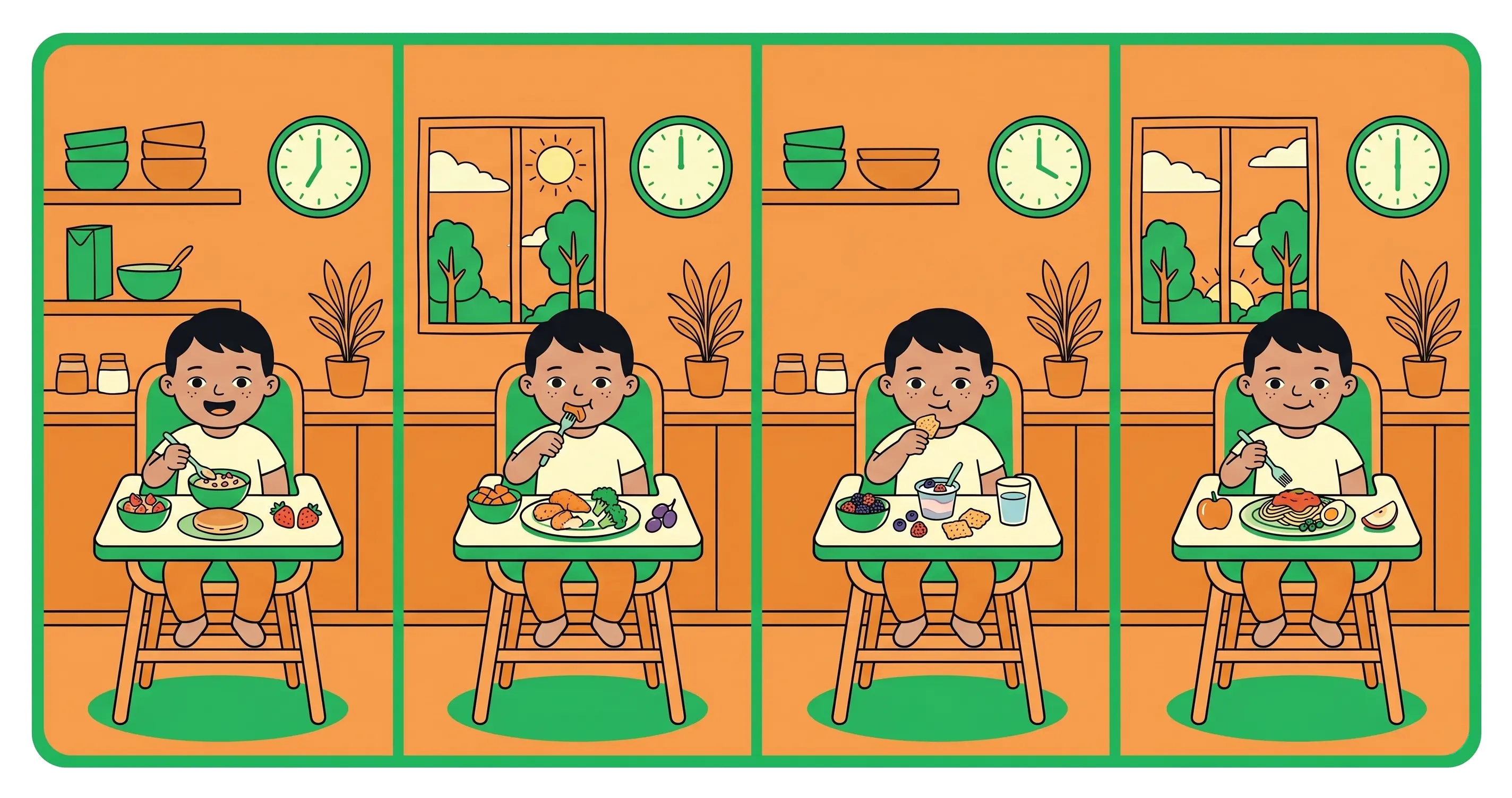
The key is a predictable routine: usually 4–5 meals a day, with breaks in between and limited snacking. This setup helps your child recognize hunger and fullness, and allows parents to observe appetite more calmly.
How many meals should a 2-year-old have each day?
For most 2-year-olds, 4–5 meals work well: breakfast, an optional second breakfast, lunch, afternoon snack, and dinner. These can be spaced approximately every 3–4 hours, adjusted to sleep, activity, and family rhythm. It's not necessary to watch the clock to the minute.
Between meals, it's best to offer primarily water. Regularly giving snacks like crisps, fruits, biscuits, milk, or sugary drinks can reduce appetite for main meals. Water is the primary drink for keeping your child hydrated [5].
Juices, fruit drinks, and sweetened teas shouldn't be daily thirst quenchers. It's advisable to limit free sugars in these drinks, as well as added sugar in homemade dishes [2].
What should be included in a 2-year-old's meal plan?
Not every meal needs to include all food groups. More important is the variety seen throughout the day and week. Sample meal plans for children show that a nutritious menu can be built from simple, repeatable dishes [1].
In a weekly meal plan, consider including:
- grains and starches: bread, oatmeal, groats, rice, pasta, and potatoes;
- fruits and vegetables: in various colors, flavors, and textures;
- protein sources: eggs, fish, meat, legumes, and dairy products;
- fat sources: olive or canola oil, 100% nut pastes, avocado, and fish;
- water: offered regularly throughout the day.
This variety helps provide essential nutrients like iron, calcium, protein, fiber, and essential fatty acids. Children's nutrition guidelines emphasize the importance of variety and adapting food to the child's age and needs [3].
Dairy and Vitamin D
Milk, natural yogurt, kefir, and cottage cheese can be part of the meal plan, but they shouldn't replace other foods. If your child drinks a lot of milk and often refuses other meals, it's worth discussing the amount with a pediatrician or dietitian.
Vitamin D needs are usually not met through diet alone. Supplementation should be tailored to current recommendations, diet, and the child's health, ideally after consulting a pediatrician.
Shared meals instead of separate cooking
A 2-year-old can generally eat appropriately adapted family meals. It's important to limit salt and sugar, ensure safe textures, and mild seasoning. Ingredients can be served separately if the child doesn't like mixed dishes.
What is a portion size for a 2-year-old?
There is no single correct portion size for every 2-year-old. Needs vary by child and can change daily. It's best to start with a small amount and allow for seconds. Parents decide what, when, and where to serve, while the child decides if and how much to eat — this approach supports responding to hunger and fullness cues [4].
Approximate initial portion might include, for example:
- 2–3 tablespoons of cooked vegetables;
- a few pieces of soft fruit;
- half a slice of bread;
- 2–4 tablespoons of cooked groats, rice, or pasta;
- half an egg or a small portion of meat, fish, or legumes.
These are just examples, not mandatory norms. A child might eat less, ask for more, or choose only some elements. Appetite should be assessed over the week, not just one plate.
How to plan a week without constant cooking?
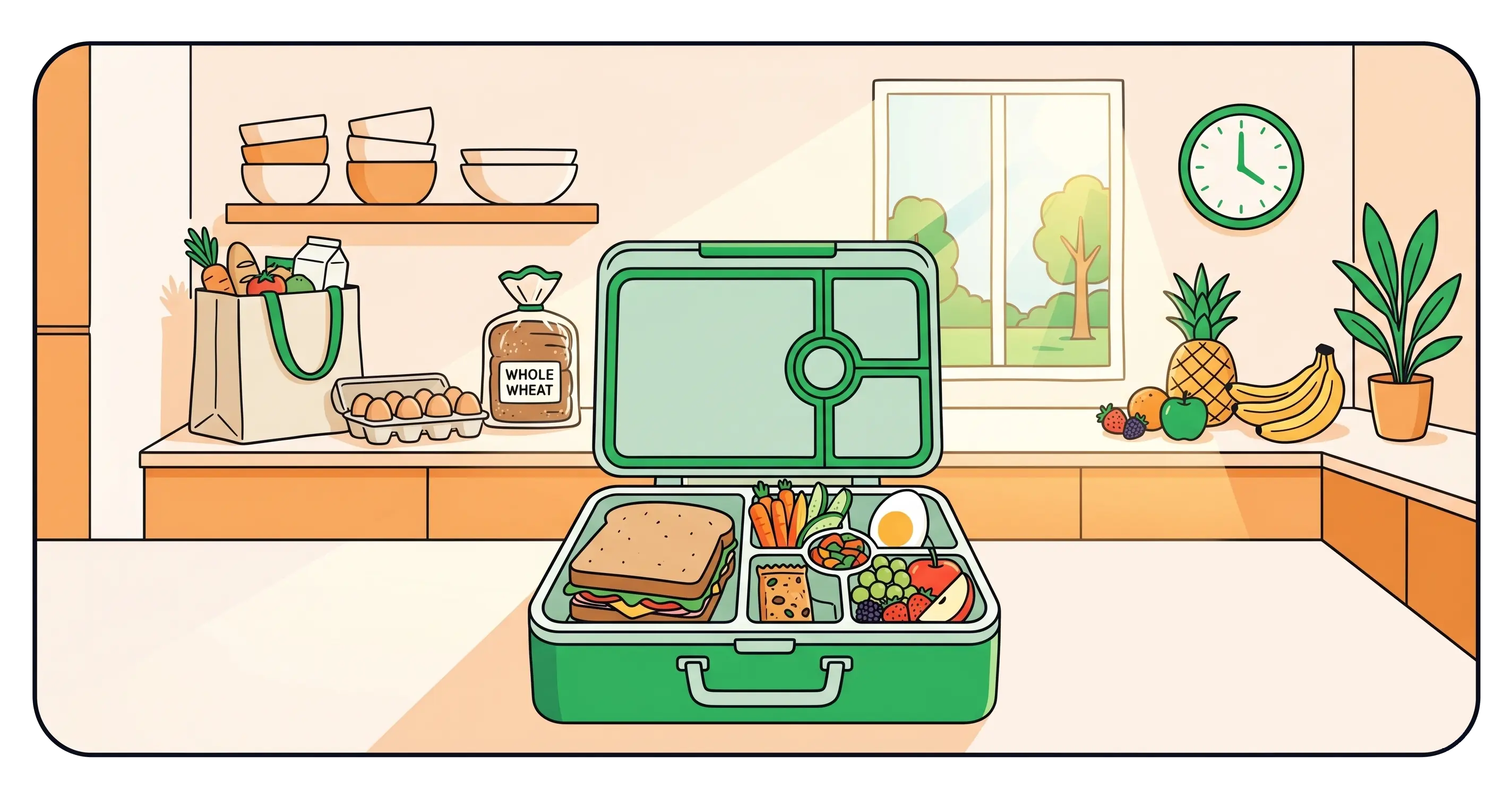
A practical meal plan can be based on a few repeatable staples: oatmeal, sandwiches, soups, groats, rice, pasta, eggs, fish, legumes, and seasonal fruits and vegetables. Repeating dishes is acceptable and can increase a sense of security at the table.
Preparation is easier by cooking larger amounts of groats or rice, making sandwich spreads, washing vegetables, or preparing meatballs for two days. Cooked food should be quickly cooled, stored in the fridge, and reheated thoroughly.
7-Day Meal Plan for a 2-Year-Old
The following plan is an example, not an individual recommendation. All portions are approximate. Meal size should be adjusted to the child's appetite, and the amount eaten should be assessed over the week.
Day 1
- Breakfast: oatmeal with milk, banana, and a small amount of ground nuts;
- Second breakfast: soft pear;
- Lunch: vegetable soup with meat or lentils and bread;
- Afternoon snack: natural yogurt with raspberries;
- Dinner: sandwich with cottage cheese and cucumber.
Day 2
- Breakfast: semolina with grated apple;
- Second breakfast: bread with avocado spread;
- Lunch: turkey meatballs, rice, and soft vegetables;
- Afternoon snack: fruit and a few tablespoons of natural yogurt;
- Dinner: scrambled eggs with bread and tomato.
Day 3
- Breakfast: omelet with oats and fruits;
- Second breakfast: mandarin and a piece of bread;
- Lunch: groats, chicken in mild sauce, and broccoli;
- Afternoon snack: smoothie with natural yogurt and fruits without added sugar;
- Dinner: sandwich with hummus and soft pepper.
Day 4
- Breakfast: bread thinly spread with 100% peanut butter and banana;
- Second breakfast: natural yogurt with blueberries cut into smaller pieces;
- Lunch: pasta with mild tomato sauce, turkey, or lentils;
- Afternoon snack: baked apple;
- Dinner: couscous with vegetables and natural yogurt.
Day 5
- Breakfast: millet porridge with pear;
- Second breakfast: sandwich with egg paste;
- Lunch: baked fish, potatoes, and cooked vegetables;
- Afternoon snack: cottage cheese with fruits;
- Dinner: pancake with natural cheese and fruits.
Day 6
- Breakfast: oatmeal with fruits and a teaspoon of canola oil or nut paste;
- Second breakfast: vegetables and bread with hummus;
- Lunch: creamy vegetable soup with croutons and egg;
- Afternoon snack: natural yogurt and fruit;
- Dinner: patties from groats or rice with vegetables.
Day 7
- Breakfast: egg, bread, and cucumber;
- Second breakfast: fruit and a small sandwich;
- Lunch: bean patties, potatoes, and soft vegetables;
- Afternoon snack: natural yogurt with oats;
- Dinner: sandwiches with fish paste, cottage cheese, or hummus.
If your child eats four meals and doesn't need an extra snack, there's no need to push for a fifth. Conversely, if they have a bigger appetite, you can offer seconds. The plan should support the day's rhythm, not replace observing the child's signals.
What to do if your child refuses lunch?
A one-time refusal is usually not a cause for concern. Check if your child has been snacking, drank a lot of milk or a sweet drink, or if the portion was too large.
Helpful strategies include:
- serving a small, approximate portion with the option for seconds;
- including at least one familiar item on the plate;
- serving a new item alongside a familiar one, without forcing a taste;
- maintaining a calm, time-limited mealtime;
- avoiding immediate substitutes just because the child refused lunch;
- returning to the next planned meal instead of constant snacking.
Your child may need many calm exposures to a new food before accepting it. Looking, touching, and smelling are also part of getting familiar with food.
Safety during meals
A 2-year-old should eat while sitting and under adult supervision. Hard or round foods require proper preparation: grapes and cherry tomatoes should be cut lengthwise into smaller pieces, hard vegetables softened or grated, and whole nuts should not be given to young children. Peanut butter should be spread thinly rather than served on a spoon.
When to consult a doctor or specialist?
Variable appetite and reluctance to try new foods are common at this age. However, consultation with a pediatrician, and depending on the issue, a pediatric dietitian, speech therapist, or feeding therapist, is needed when:
- the child loses weight, doesn't gain according to their growth curve, or has noticeably less energy;
- eating is accompanied by pain, frequent vomiting, chronic diarrhea, or constipation;
- there are choking, coughing during meals, or difficulties with chewing or swallowing;
- the child refuses entire food groups or their diet gradually narrows to a few items;
- they also refuse to drink, urinate significantly less, have dry lips, or are excessively sleepy;
- meals regularly cause significant anxiety and stress for the child or family.
Sudden breathing difficulties during meals require immediate emergency assistance.
Frequently Asked Questions
Does a 2-year-old need to eat five meals a day?
Not always. The recommended rhythm is usually 4–5 meals. The number should be adjusted to the day and the child's appetite, maintaining breaks and limiting snacking.
What if my child only ate a few spoonfuls of lunch?
There's no need to urge them to finish the portion. Calmly end the meal and return to eating at the next planned time. Appetite should be assessed over the week, not just one lunch.
Do the suggested portions need to be measured?
No. These are approximate starting portions. You can serve a small amount and offer more if the child still signals hunger.
Can a 2-year-old eat a similar breakfast every day?
Yes. Repetition itself is not an issue if the meal plan remains varied over the week. A familiar breakfast can be gradually changed by adding different fruits, spreads, or grains.
What to offer to drink between meals?
Water is the best basic choice. Milk and milk drinks can be part of a meal, but regularly drinking caloric beverages between meals can reduce appetite.
Summary
A 2-year-old's meal plan doesn't need to be followed to the gram. The most important aspects are 4–5 predictable meals, limiting snacking, water between meals, and variety assessed over the whole week. Portions should be approximate: it's better to start with a small amount and allow for seconds than to expect a full plate to be eaten.
Sources
- National Center for Nutrition Education (NCEZ), "Meal Plans for Preschool Children".
- National Center for Nutrition Education (NCEZ), materials on free sugars, 2025.
- Polish Society of Gastroenterology, Hepatology, and Nutrition for Children (PTGHiŻD), children's nutrition guidelines.
- American Academy of Pediatrics (AAP), "Infant Food and Feeding".
- National Center for Nutrition Education (NCEZ), materials on children's hydration.