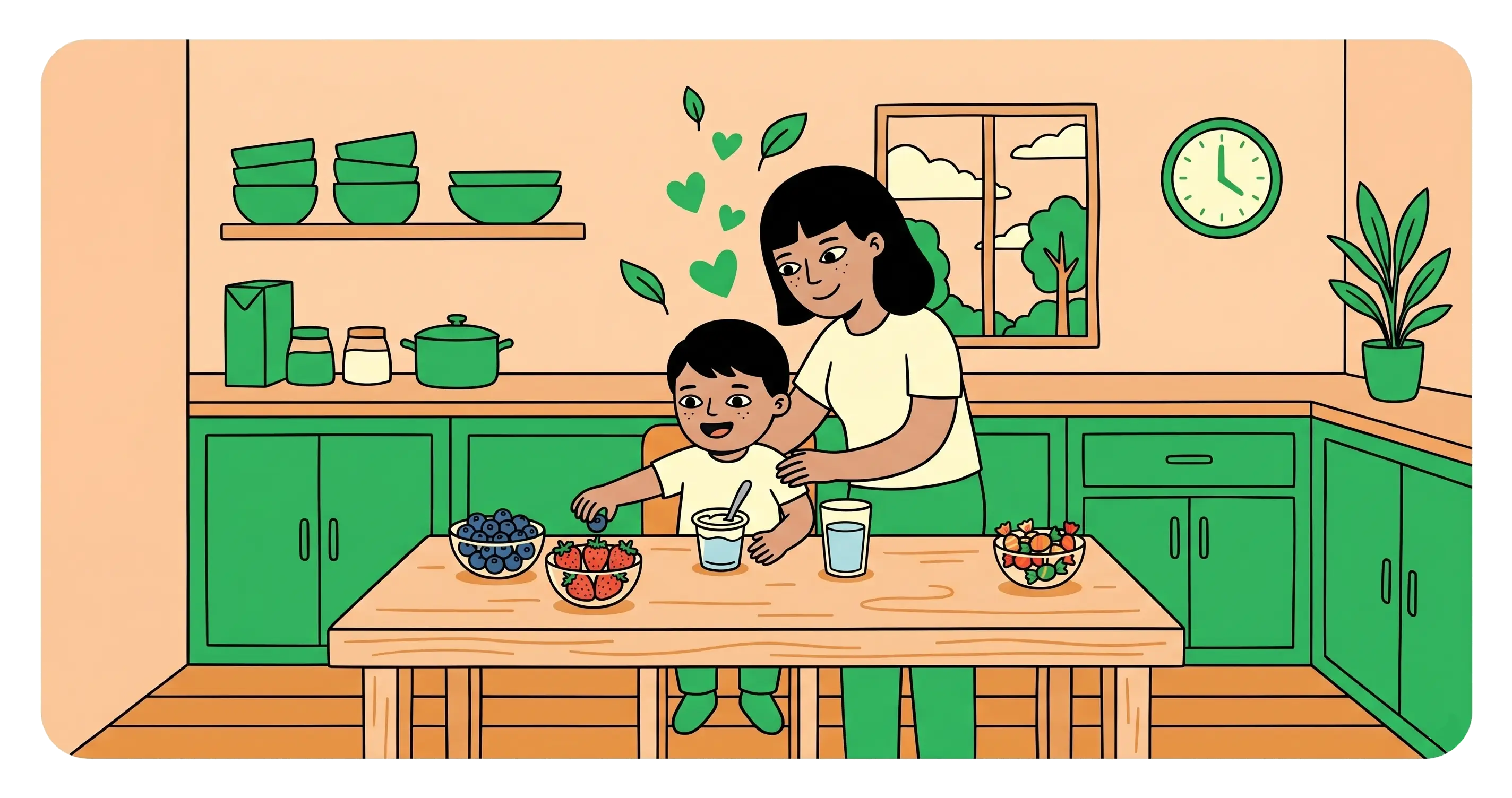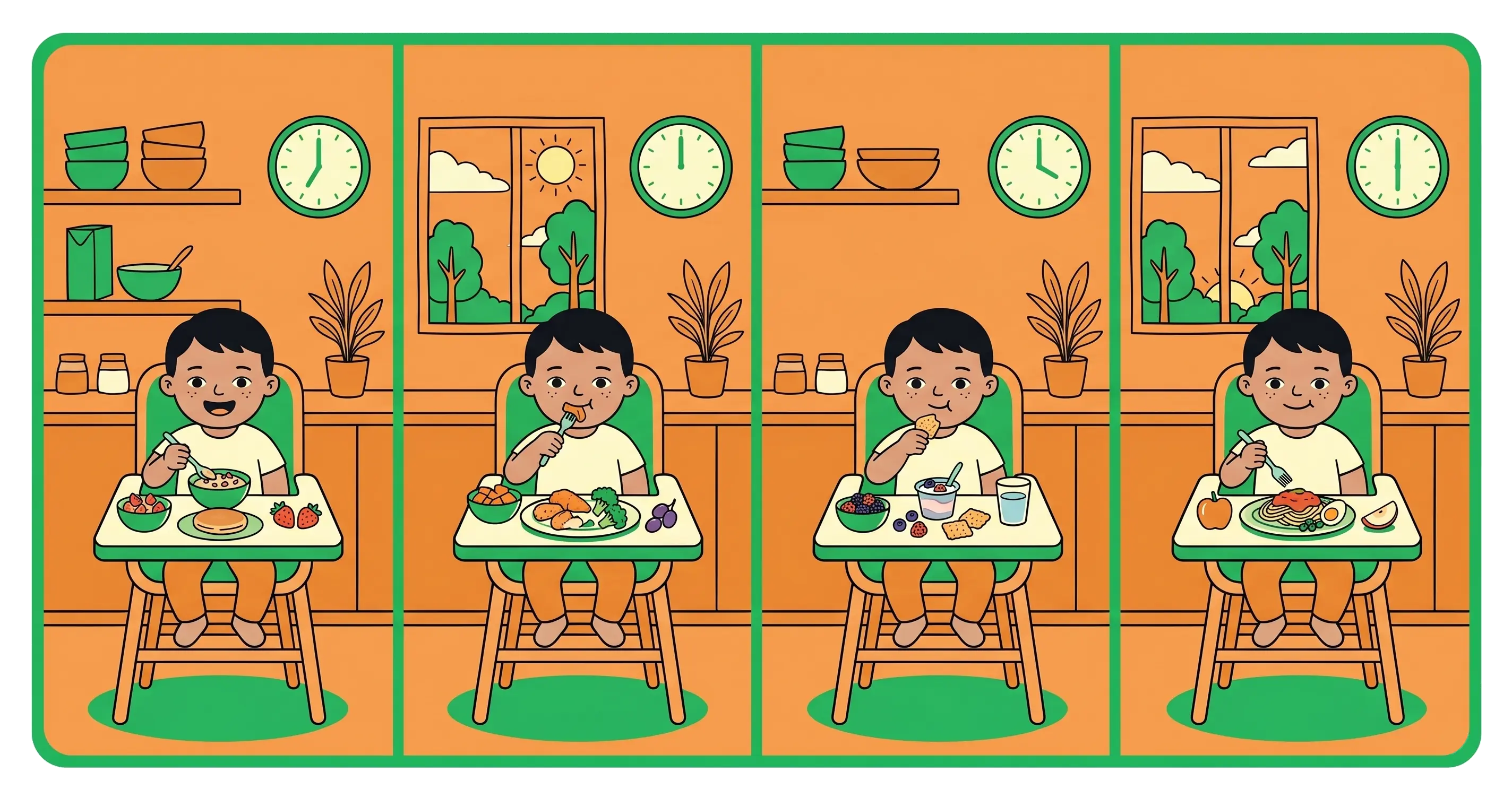
A snack can supplement a child's diet, provide energy between main meals, and facilitate functioning during an active day. However, its purpose is not to replace an uneaten lunch or fill every short break. The most important aspects are a regular rhythm of 4–5 meals and the quality of the entire daily menu, not a single product.
If a child refuses lunch but soon after asks for a banana, yogurt, or bread, it's worth calmly reviewing the entire day's plan. Even small portions eaten frequently can weaken hunger before the next meal. This doesn't mean the child is doing something wrong — they often just need clearer boundaries.
The 4–5 Meal Rhythm Helps Regulate Appetite
For most children beyond infancy, a good starting point is 3 main meals and 1–2 planned snacks. This scheme aligns with recommendations for composing a preschooler's diet, where regularity, variety, and the presence of products from different groups are important [1].
Meals can be spaced approximately every 2.5–4 hours, depending on age, wake-up time, activity, preschool, school, and training. Younger children usually need shorter intervals, while older ones may function well with longer breaks. It's not necessary to stick to the clock minute by minute — what's more important is limiting eating throughout the day "bit by bit".
Practical Interval Rules
- It's best to plan a snack roughly halfway between two main meals.
- Before lunch or dinner, it's usually advisable to leave about 1.5–2 hours without eating.
- If less than an hour remains until the main meal, you can usually offer water and wait, as long as the child feels well.
- After a poorly eaten meal, there's no need to immediately provide a substitute. You can return to the next planned eating opportunity or exceptionally speed it up a bit.
- Between meals, the primary drink should be water.
These are frameworks, not rigid rules. Increased demand can be expected after intense activity, during a growth spurt, or on a day when the main meal occurs later than usual.
How to Recognize When There Are Too Many Snacks?
A one-time refusal of lunch is natural and doesn't indicate an appetite problem. However, it's worth analyzing the day's rhythm if several of the following situations regularly occur:
- the child eats only a few bites at the table and asks for another product after a few minutes,
- they have access to snacks, bread, fruits, or purees for most of the day,
- they often eat in the car, on a walk, during play, or in front of a screen,
- they drink juices, milk drinks, or sweetened beverages between meals,
- it's hard to determine when one snack ends and another begins.
In such a situation, it can be helpful to record all meals, drinks, and small portions for 2–3 days. This observation is not for judging the child or parent. It simply allows checking whether there is indeed space for hunger between meals.
What Should a Good Snack Include?
A healthy snack doesn't have to be complicated or made from exceptional products. Most often, 2–3 simple elements are sufficient. It's worth combining an energy source with an addition of protein or fat and a vegetable or fruit.
Simple Composition Scheme
- Grain or Starchy Product: bread, oatmeal, tortilla, groats, potato, sweet potato, or homemade pancake.
- Source of Protein or Fat: natural yogurt, kefir, cottage cheese, egg, hummus, bean paste, fish, meat, or thinly spread age-appropriate peanut butter.
- Vegetable or Fruit: for example, cucumber, tomato, pepper, cooked carrot, pear, apple, blueberries, or soft seasonal fruit.
Not every snack has to include all three elements. The balance of the entire day and week matters. If breakfast was small, the second breakfast can be more filling. When lunch is planned in two hours, a smaller portion is usually enough.
Example Sets
- small sandwich with cottage cheese and cucumber,
- natural yogurt with oatmeal and fruit,
- tortilla with hummus and soft vegetables,
- egg with bread and tomato,
- oatmeal with yogurt and pear,
- oat pancake with natural cheese,
- baked sweet potato with bean paste,
- kefir and a small sandwich.
The portion should be adjusted to the child's age and appetite. The parent decides what, when, and where will be served, while the child can decide whether and how much to eat. Encouraging trying is fine, but pressure, bribing, and forcing usually increase tension at the table.
Second Breakfast for Preschool and School
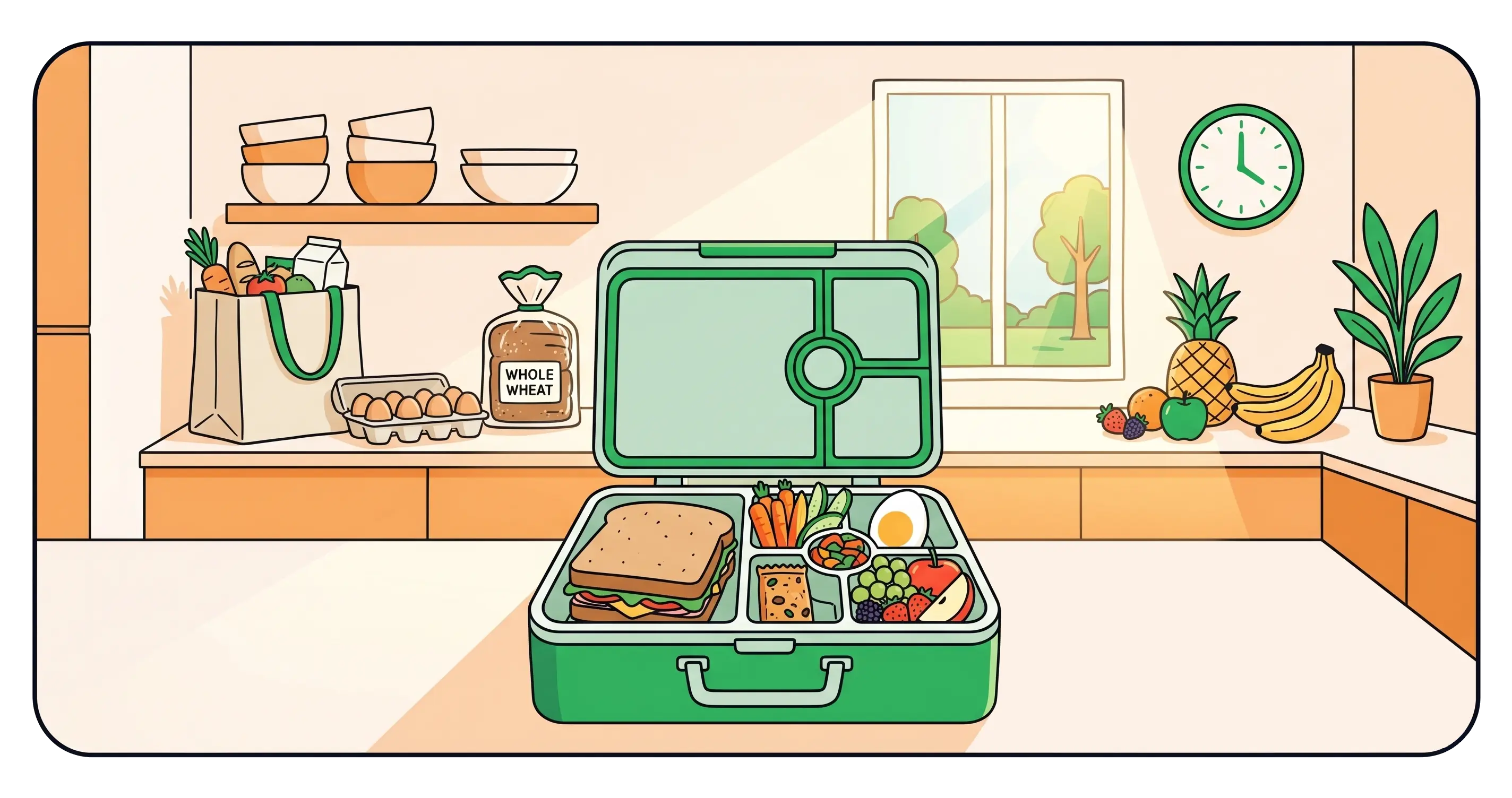
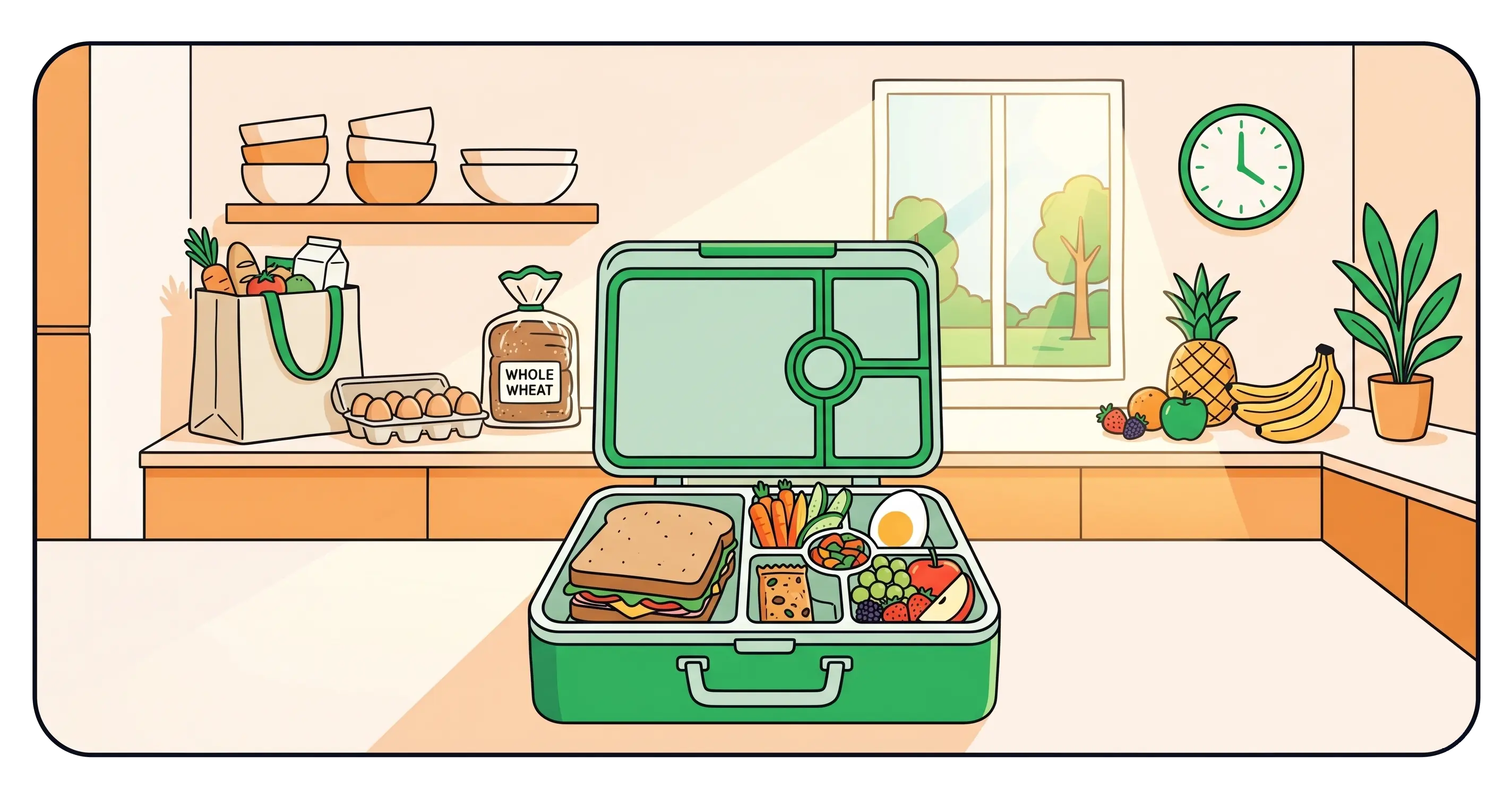
A packed meal should be familiar, convenient, and possible to eat during the available break. It doesn't have to look impressive. Much more important are the appropriate storage temperature, easy opening of the packaging, and portion size adjustment to lunch time.
You can pack, for example:
- a small sandwich with egg paste, cottage cheese, or hummus and a vegetable,
- tortilla cut into smaller pieces,
- oatmeal prepared the night before and stored in a cool place,
- natural yogurt with fruit and cereal, if the temperature can be maintained,
- pancakes, vegetables, and natural cheese,
- pasta salad with vegetables and egg or legumes.
If the child eats lunch shortly after returning home, the second breakfast doesn't have to be large. However, if many hours pass between breakfast and lunch, it's worth planning a more complete set.
Age-Appropriate Snacks
Infant During Diet Expansion
In the first year of life, the basis of nutrition remains breast milk or formula, and the number and size of complementary meals gradually increase with age and the child's skills. There's no need to introduce snacks solely to occupy the child with eating. Follow hunger and fullness signals and offer safe textures [3].
You can offer, among other things, soft vegetables, soft fruits, sugar-free porridge, natural yogurt, egg, or a soft omelette — according to the stage of diet expansion and product tolerance. Diverse flavors and gradual transition to more complex textures support the development of eating skills [4].
The infant should eat in a sitting position and under constant adult supervision. Do not offer whole nuts, popcorn, hard raw vegetable pieces, whole grapes, or other products with shapes and textures that increase the risk of choking. Honey should not be given before the 12th month of life [5].
Child Aged 1–3 Years
For a young child, 4–5 regular meals, served in small portions, usually work well. An example snack is half a sandwich with paste, natural yogurt with soft fruit, a small pancake with cheese, or cooked vegetables with hummus.
Products should be adapted to chewing skills. Grapes and cherry tomatoes should be cut lengthwise into quarters, hard fruits should be crushed or softened, and nuts should be served ground or as a smooth paste thinly spread on bread.
Preschooler
A preschooler can eat similar products as other household members, but in smaller portions. A good choice would be a sandwich with paste and vegetable, yogurt with cereal, tortilla with hummus, egg with bread, or fruit combined with a natural dairy product.
New products can be served alongside already known dishes. The child doesn't have to like them immediately — getting used to the taste, smell, and appearance often requires many calm exposures.
School-Aged Child
For an older child, a snack should consider the length of the day, extracurricular activities, and physical activity. Before training, a sandwich, oatmeal, yogurt with fruit, or tortilla might work well. After intense effort, it's worth planning a meal containing carbohydrates and a protein source, rather than relying solely on sweet snacks.
Sugar and Drinks Between Meals
Fruit purees, crisps, rice cakes, or sweetened yogurts don't have to be presented as forbidden products. However, they shouldn't form the basis of daily snacks, especially when they displace more diverse meals.
It's worth limiting products containing free sugars, which include sugars added to food and sugars present in juices and fruit concentrates. Their excess worsens diet quality and promotes tooth decay [2]. Whole fruit is generally a better daily choice than juice because it also provides fiber and requires chewing.
Between meals, it's best to serve water. Juice, cocoa, sweetened tea, milk drink, or drinking yogurt provide energy and can reduce appetite, even if the parent doesn't consider them as food.
Example Daily Rhythm
The following schedules are just examples. They can be adjusted according to wake-up time, nap, preschool or school schedule, and individual appetite.
Child Aged 2 Years
- 7:30 — breakfast
- 10:00 — second breakfast
- 12:30 — lunch
- 15:30 — afternoon snack
- 18:00 — dinner
Preschooler
- 7:00 — breakfast
- 10:00 — second breakfast
- 13:00 — lunch
- 16:00 — afternoon snack
- 18:30 — dinner
School-Aged Child
- 6:45 — breakfast
- 10:00 — second breakfast
- 14:30 — lunch
- 17:00 — snack, especially on training days
- 19:30 — dinner
When to Consult a Doctor or Specialist?
Occasional fussiness with eating usually doesn't indicate illness. However, consultation with a pediatrician is required in situations where the following occur:
- weight loss, lack of expected gain, or significant growth stunting,
- frequent choking, coughing during meals, difficulty swallowing, or recurring choking,
- vomiting, chronic diarrhea, constipation, abdominal pain, or blood in the stool,
- signs of dehydration, significant weakness, or noticeably reduced activity,
- very limited product repertoire that continues to narrow,
- strong fear of eating, prolonged meals, or regular conflicts at the table,
- suspected allergy, such as hives, swelling, wheezing, or recurring symptoms after a specific product.
Issues with chewing and swallowing should also be discussed with a feeding specialist or speech therapist, and a diet requiring many eliminations should be reviewed with a pediatric dietitian. Sudden breathlessness, tongue or throat swelling, and consciousness disturbances require urgent medical attention.
Frequently Asked Questions
Should a child receive a snack after not eating lunch?
There's no need to immediately prepare another meal. It's worth calmly ending lunch and returning to the next planned eating opportunity. If the break would be exceptionally long or the child clearly feels unwell from hunger, you can offer a snack earlier, without presenting it as a reward or lunch substitute.
Is a fruit alone a good snack?
It can be, especially when the next meal will occur soon. With a longer break, it's worth combining the fruit with, for example, natural yogurt, cottage cheese, bread, or age-appropriate peanut paste.
How many snacks does a child need per day?
Usually, 1–2 snacks within 4–5 meals a day are sufficient. The number depends on age, the size of main meals, activity, and the day's schedule. More important than a fixed number is ensuring that eating doesn't continue without breaks.
What should a child drink between meals?
The best basic drink is water. Milk and dairy products can be part of a meal, while juices and sweetened drinks should be limited.
Is fruit puree in a tube unhealthy?
It can be a convenient solution during travel, but it shouldn't regularly replace whole fruits and balanced snacks. Eating directly from the tube limits contact with the appearance and texture of the product, and frequent sipping of puree can negatively affect teeth.
Key Principles in Brief
- Plan usually 4–5 meals, including 1–2 snacks.
- Maintain approximate intervals and avoid all-day nibbling.
- Compose snacks from simple, minimally processed products.
- Adjust portion size and presentation to the child's age and skills.
- Don't pressure eating a specific amount — the child can respond to their own fullness signals.
- Serve primarily water between meals.
Organizing snacks doesn't require a revolution. You can start by setting clear eating times, replacing random tidbits with one planned snack, and observing the child's appetite for a few weeks. The goal isn't a perfect menu, but a calm, predictable rhythm and a varied diet.
Sources
- National Center for Nutrition Education (NCEZ), materials and menus for preschool children.
- National Center for Nutrition Education (NCEZ), "Free Sugars", 2025.
- Polish Society of Gastroenterology, Hepatology, and Nutrition for Children (PTGHiŻD), principles of feeding healthy infants and young children.
- European Society for Paediatric Gastroenterology, Hepatology and Nutrition (ESPGHAN), guidelines on complementary feeding.
- American Academy of Pediatrics (AAP), "Infant Food and Feeding".