Is Your Child Refusing Solid Foods? How to Introduce Textures Without Stress
When Refusal of Solid Foods is Normal and When to Take a Closer Look
“My child spits out anything that isn't smooth. Am I doing something wrong?” — this question comes up very often. From our experience, this scenario is quite common at the start of introducing solid foods. A child might grimace, push food out with their tongue, or even react very theatrically — and this doesn't necessarily indicate a problem. 🙂
In practice, we find that the most stress arises not from the spitting itself, but from the moment a gag reflex occurs. Parents watch and think: “Maybe it's too early.” Meanwhile, many little ones are just learning to handle new textures in their mouths. It's usually a process, not a single “successful” meal.
Initially, a child knows mostly milk, so the transition to solids can be quite a change. That's why most families find it best to gradually move from simpler to more complex textures. For some children, this takes a few days, for others 2–4 weeks, and that's also within the normal range.
We pay attention to situations where around 9–10 months a child still only accepts perfectly smooth purees and hasn't made even a small step forward for a while. We don't panic, but suggest taking a calm look at the situation. The earlier parents get a clear plan, the less tension there is at the table. 👶
Why Some Children Struggle with Solid Foods
Not every child who dislikes textures has a serious problem. In our work with families, we often see a cautious temperament: the child wants to try but needs more time. They take it in their mouth, spit it out, look at it, and return to it the next day. This can still be part of normal learning.
Sometimes, however, the difficulty is more than just caution. A child might dislike the sensation of food in their mouth, react poorly to texture changes, or not yet know how to move food with their tongue and gums. In practice, we also observe that after one unpleasant episode, some children approach textures with noticeable tension.
Parents often ask us what to observe at home. It's not a single meal that helps the most, but the picture over 2–3 weeks. It's worth checking:
- whether the child returns to trying, even if they spat it out before,
- whether they show more curiosity or clear fear when eating,
- whether they tolerate the touch of food in their mouth,
- whether they accept even the softest forms, like a ripe banana or soft vegetable,
- whether there's even a small progress from week to week.
From our experience, the direction of changes is what speaks the most. If a child isn't eating perfectly but is slowly getting used to the idea, you're usually on the right track. If, however, everything looks exactly the same for several weeks and every attempt ends with strong protest, it's worth acting sooner rather than waiting without a plan.
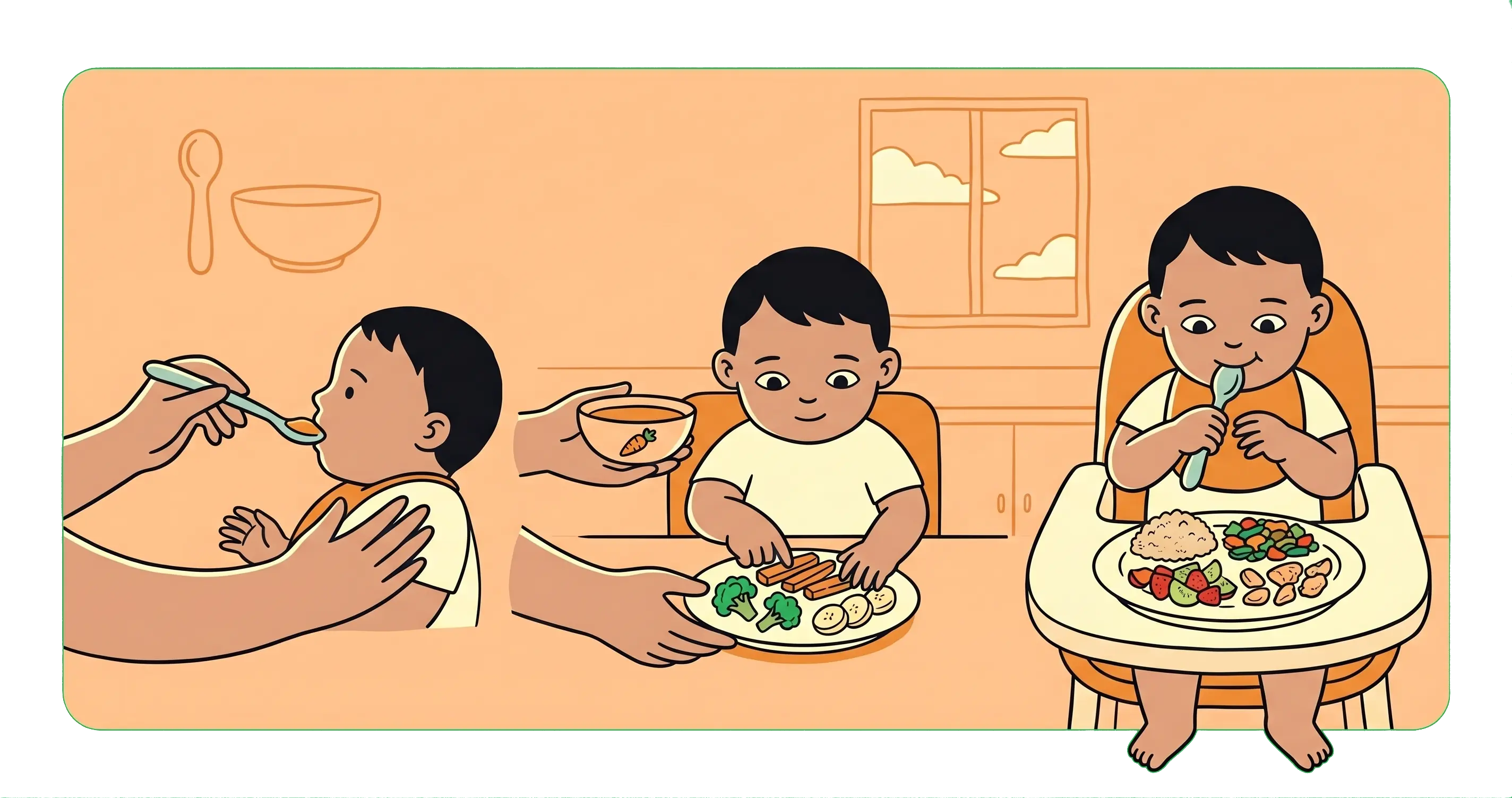
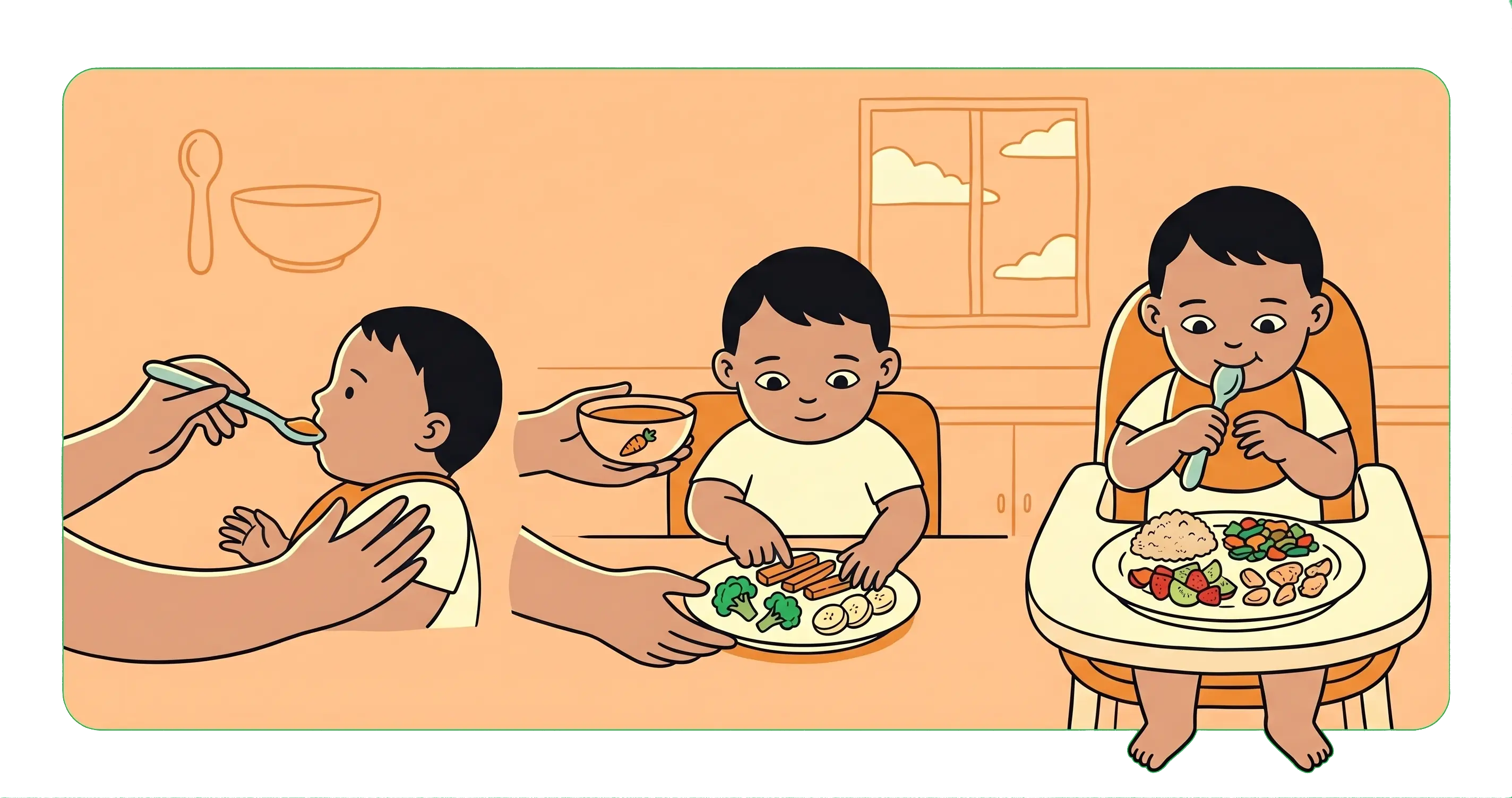
How to Transition from Purees to Solids Step by Step
Parents often hear extreme advice: either “give solids as soon as possible” or “wait until they're ready.” From our experience, the middle ground works best. Not rushing and not staying at one stage for months, but calmly moving textures forward. 😊
Initially, smooth, uniform, and fairly predictable foods work best. Especially for children who react strongly to new stimuli, too thick or uneven textures immediately increase tension. That's why starting with a simpler form really makes sense.
Then, it's worth moving forward in small steps:
- Smooth puree for a few days or 1–2 weeks.
- Less perfect puree, slightly mashed with a fork.
- Gentle lumps added in small amounts.
- Very soft pieces that can be easily mashed with fingers.
In practice, we see that children learn best when the novelty is small but regular. It's not about eating half a portion with lumps right away. It's enough to have contact with the new texture, a moment of getting used to it, and then returning to something familiar.
We remember a mom who was afraid to move from smooth soups for a month because her daughter gagged on one lump. When we broke the change into really small steps, after about 2 weeks, the little one started to tolerate mashed vegetables without much protest. This shows that often you don't need to “push,” just choose the right level of difficulty.
A 2–4 Week Plan That Usually Works Best
From our experience with hundreds of families, the most helpful is a simple scheme: small, calm, daily. Instead of having a “breakthrough day,” it's better to give the child brief exposure to the new texture every day. This setup is less stressful for both the child and the parent. 🍽️
Week 1
At the beginning, offer 1/4–1/2 teaspoon of slightly less smooth texture at the start of the meal. Then return to the texture the child already knows. This way, the novelty isn't overwhelming.
Week 2
In the second week, usually move to more mashed meals. Still talking about a small amount of novelty, not an entire meal in a new form. In practice, this greatly relieves the parent's mind.
Weeks 3–4
If the previous stages go relatively smoothly, add 2–3 very soft pieces on the tray or plate. These can be foods that almost fall apart when pressed with a finger. The simpler the texture, the easier the good start.
In our work, we often see that the first success isn't eating a piece, but that the child stops immediately clamping their mouth shut at the sight of it. And that's progress too. Sometimes this moment comes after a few days, and sometimes only after 3 weeks of regular attempts.
What to Do When Your Child Spits Out, Grimaces, or Gags
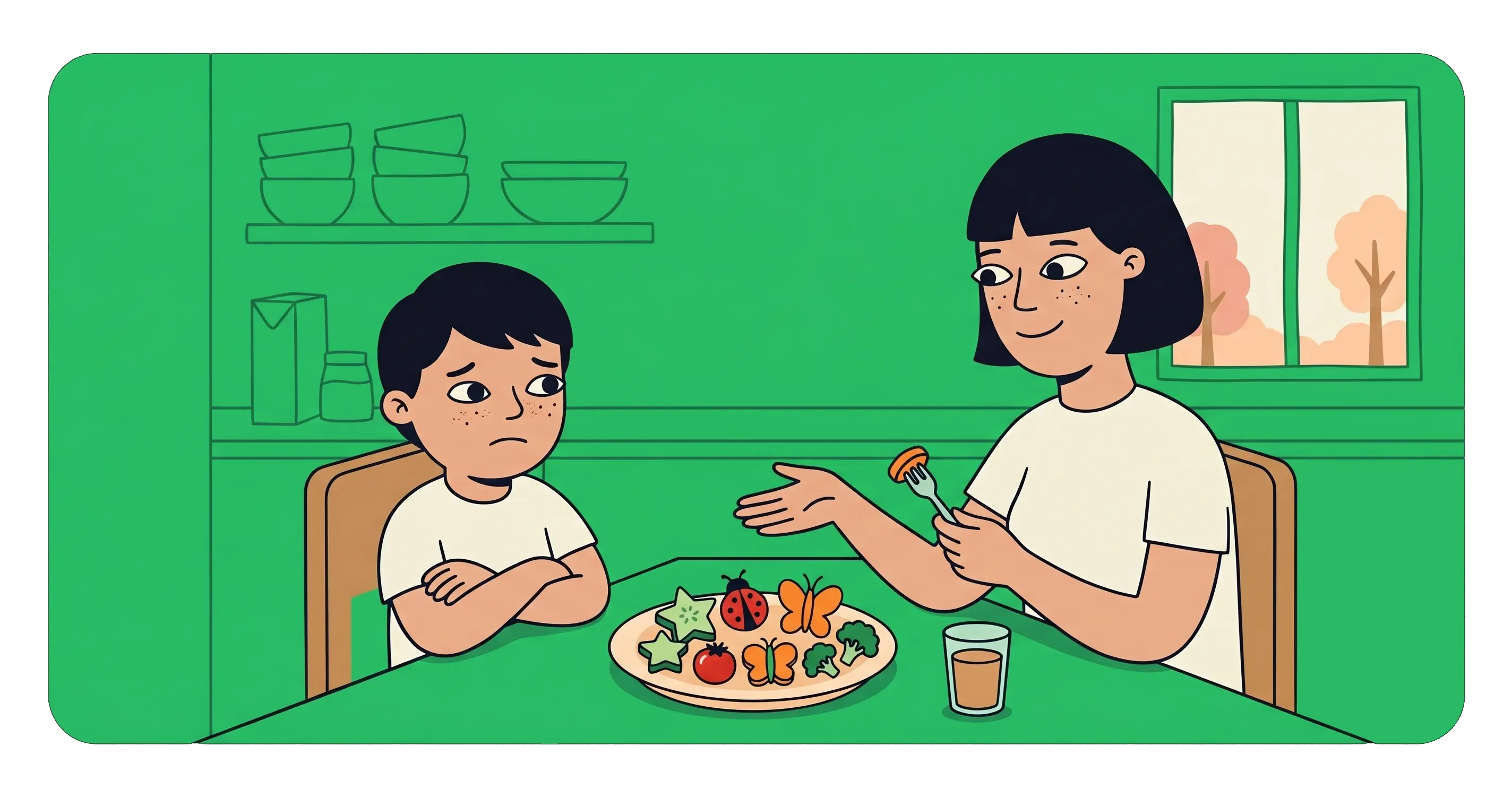
This is one of those moments that raises parents' heart rates the most. Yet, from our experience, spitting and grimacing are very much part of learning. The child is testing what's in their mouth, trying to handle it, and doesn't always do it gracefully. 😌
In such moments, a calm, neutral reaction helps the most. Without “try again,” without quickly adding the next spoonful, without making big eyes. The less tension from us, the more likely the child won't associate the whole situation with stress.
In practice, we recommend:
- pausing for a moment,
- allowing the child to spit out if needed,
- not immediately inserting another portion,
- returning to an easier texture if it was too difficult,
- trying again at the next meal or the next day.
We also remember a boy who pushed out every lump with his tongue for a week. Parents were convinced that “he can't do it.” After several calm exposures, he suddenly started leaving food in his mouth a little longer. For us, that was an important signal: the body started getting used to the new task.
Gagging vs. Choking — How to Tell the Difference
This topic stirs the most emotions. Parents often tell us: “I know I should stay calm, but when I see it, I freeze.” And honestly — that's a very human reaction. That's why it's worth knowing what to look for in the first seconds. 😟
With gagging, the child is usually loud. They cough, splutter, their eyes water, they stick out their tongue, sometimes it looks like they're about to bring up the whole meal. It looks intense, but often it means the body is trying to handle the bite on its own.
With choking or aspiration, it's the opposite — there's silence or a very weak sound, the child can't effectively cough, has trouble breathing. This is an emergency. In that case, don't wait.
The simplest way to remember:
- gagging — loud reaction, air flows,
- choking — no sound or very weak cough,
- gagging — the child usually regains control on their own,
- choking — quick adult intervention is needed.
In practice, with gagging, our calmness and not blindly interfering in the child's mouth help the most. Putting fingers in “to help” often only makes things worse. However, if you see signs of choking, immediately implement first aid.
Which Foods Usually Work Best to Start With
Parents often ask: “What exactly should I start with?” From our experience, it's best to choose foods that are soft, moist, and predictable. The fewer surprises in the mouth, the easier it is for the child to focus on learning.
Initially, the following usually work well:
- smooth vegetable purees,
- fruit purees,
- porridges and gruels,
- well-blended cream soups.
The next stage is food that is still easy but not completely smooth:
- vegetables mashed with a fork,
- puree with small lumps,
- soft rice,
- well-cooked groats.
Then you can move on to the first soft pieces, such as:
- banana,
- avocado,
- very ripe pear,
- soft carrot or potato after cooking.
In practice, we advise against starting with dry, hard, fibrous foods or those with skins. This isn't the time for ambitious textures. First, we want to build the child's sense of: “I can handle this.”
Small Things at the Table That Make a Big Difference
Sometimes the problem isn't just with the food itself, but with how it's presented. In our work with families, we often see that after small technical changes, meals become calmer. Not because the child suddenly “starts cooperating,” but because they have easier conditions for learning.
It's worth paying attention to the spoon. Most often, a small and shallow one works best, with a small amount of food. A large portion on the spoon often immediately overwhelms, especially with lumps.
Position matters too. The child should sit stably, with good head and torso control. If they slide down in the chair, are reclined, or are fed “on the go,” eating usually becomes much more difficult.
On a daily basis, we recommend a simple rule:
- serve small portions,
- give time to swallow,
- don't rush the next spoonful,
- place only 2–3 pieces at a time on the plate,
- pause when the child needs a moment.
From our experience, these little things often reduce the number of difficult reactions within a few days.
Common Mistakes That Hinder Learning to Eat Solids
The first common mistake is staying too long with perfectly smooth purees. We understand where this comes from — the parent sees that smooth “works,” so they want to stick to what's safe. The problem is that the child then has no opportunity to practice new movements in their mouth.
The second mistake is too big a leap at once. In practice, we see this very often: after weeks of purees, suddenly a meal with lumps, skin, and larger pieces appears. For many children, it's simply too much at once. 😬
The third issue is pressure. When tension, coaxing, rushing, or trying to “sneak in one more bite” appear at the table, the child usually stiffens even more. Eating should be learning, not a test.
If you feel something went wrong, it usually helps to:
- go back half a step to an easier texture,
- simplify the meal to one consistency,
- offer the novelty daily, but in small amounts,
- ensure a calm meal rhythm for 2–4 weeks.
When to Consult About Difficulties with Eating Solids
From our experience, the main concern should be lack of progress, not a single difficult day. If a child has a rough week but then returns to trying, there's usually still room for calm work at home. However, if they've been stuck for a while, it's worth checking.
We especially encourage consultation when around 9–10 months a child still only eats smooth purees and can't handle even very soft pieces. This doesn't mean something serious is happening. It's just a good time not to guess on your own.
There are also situations where it's not worth waiting. Seek support sooner if there are:
- regular vomiting during eating attempts,
- wet or gurgling breath after meals,
- episodes of turning blue,
- difficulty not only with solids but also with drinking or saliva,
- very strong protest at every feeding,
- poor weight gain or weight loss.
In practice, we also see that sometimes difficulty with eating is due to discomfort in the body. If a child arches after meals, spits up a lot, has recurring constipation, rashes, or looks like eating is painful, it's worth looking more broadly. We then help the parent organize what the next step should be.
Summary: Calmly, in Small Steps, and Without Pressure
If your child isn't eating solids, it doesn't necessarily mean something went wrong. From our experience, most little ones just need a well-chosen transition path: from easier to more difficult textures, without rushing and without nerves. What helps the most is regularity, small portions, and a calm atmosphere at the table. 🌿
In practice, we see that progress rarely looks spectacular. First, the child grimaces less. Then they hold the food in their mouth longer. Later, they start accepting another texture. And it's these small steps that make up real change.
If you feel stuck, you don't have to guess on your own what to do next. You can use the consultation form — we'll calmly look at the situation and help you create a sensible, safe plan.