When a Child Pushes Away Vegetables, Parents Start to Worry
Did your child recently eat cucumber, but now doesn't want it on their plate? Such a change doesn't necessarily mean a mistake by the parent or that the child is a 'picky eater.' In infancy and early childhood, taste preferences and appetite can change very dynamically.
A dislike for a vegetable isn't always about its taste. The child might be bothered by the skin, smell, seeds, moist surface, temperature, or an unfamiliar way of cutting. Cucumber sticks might be accepted, while the same cucumber in a salad might not. Roasted carrots can be easier to accept than soft, boiled ones.
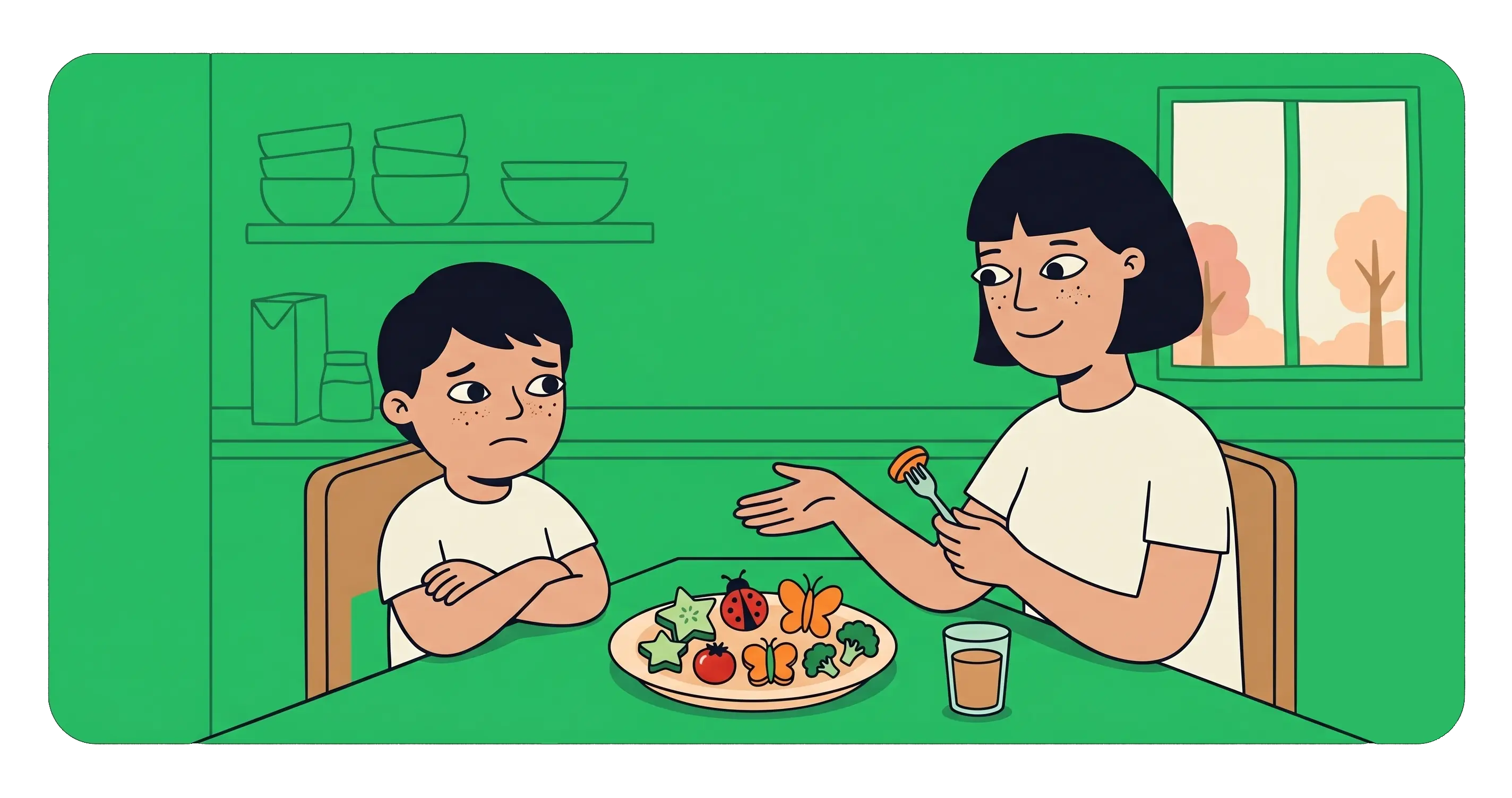
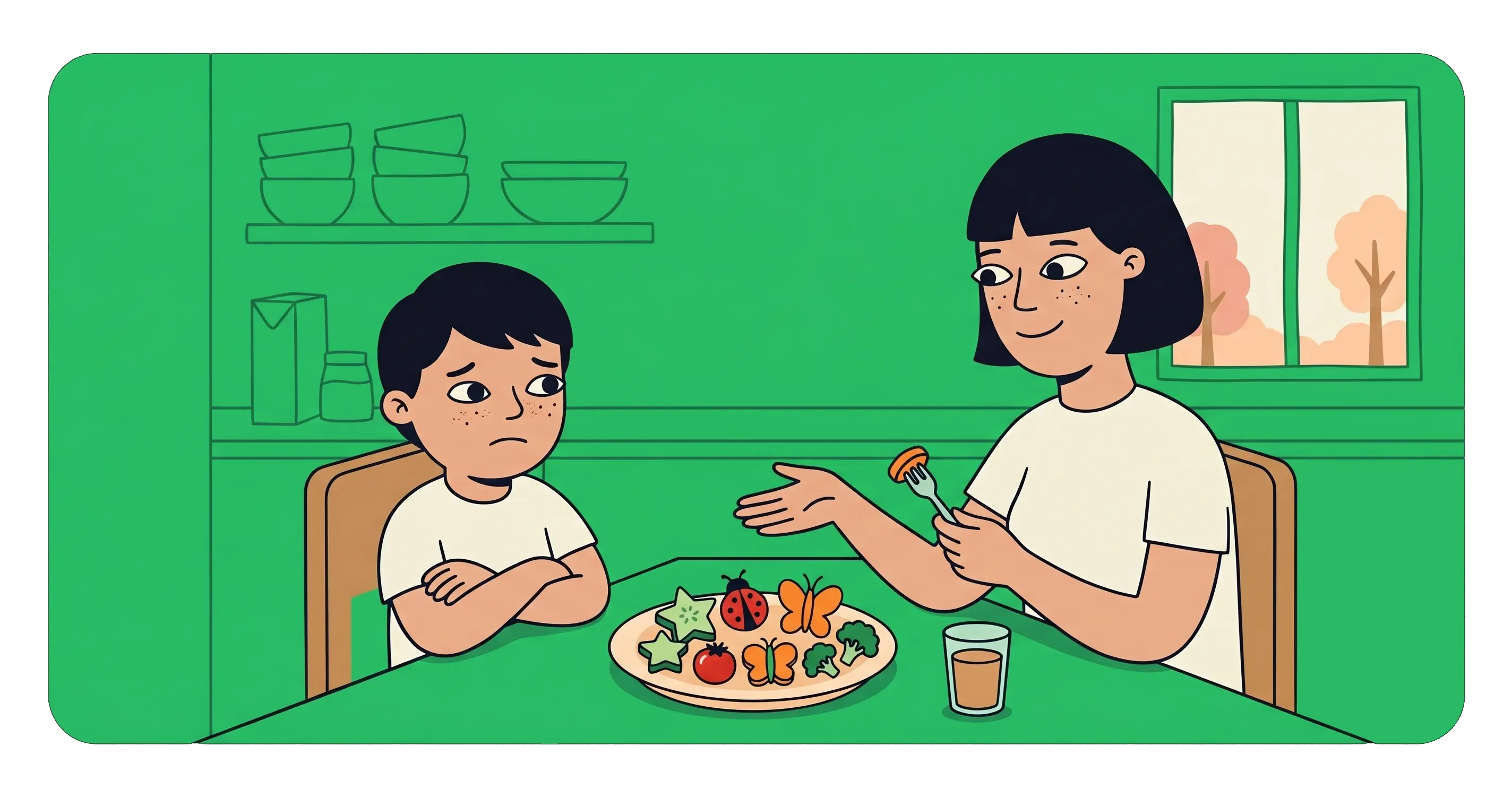
The atmosphere at the table also matters. Encouragement, counting bites, and rewarding for eating vegetables can increase tension. A better approach is responsive feeding: the adult provides regular, varied meals and a safe environment, while the child decides whether and how much to eat.
Why Might a Child Refuse to Eat Vegetables?
One possible reason is food neophobia, which is caution towards new or unfamiliar foods. This phenomenon often intensifies in the toddler and preschool years and can be a typical part of development [2]. Some children need more time and many calm encounters with a food before deciding to try it.
Acceptance of vegetables is influenced by factors such as:
- taste and smell, especially after cooking;
- texture, skin, fibers, and seeds;
- temperature and degree of fineness;
- predictability of the product's appearance;
- past experiences with eating;
- fatigue, hunger, mood, and developmental stage;
- pressure or tension during meals.
Research on neophobia indicates that it is a complex phenomenon. Both individual child characteristics and the family environment, as well as the way food is presented, are important [3]. Rejecting broccoli or tomatoes doesn't necessarily mean stubbornness. It may mean the product is currently too intense, unpredictable, or unfamiliar.
When Is It a Typical Stage, and When Is Broader Consultation Needed?
What Can Be Considered Typical Variability?
It's considered a typical stage when the child is developing normally, has energy for daily activities, eats foods from several food groups, and doesn't experience strong anxiety around meals. They may reject some vegetables, choose similar dishes for a while, or change their mind about a previously liked product.
Remember that a single meal doesn't show the entire eating pattern. A better picture comes from observing several days or weeks, considering all consumed products. If there are concerns about dietary balance, the assessment should be discussed with a pediatrician or child dietitian.
When Might the Difficulty Extend Beyond a Dislike for Vegetables?
More attention is needed when the list of accepted products is constantly shrinking, the child rejects entire food groups, or meals cause strong anxiety. The difficulty may be related not only to preferences but also to pain, reflux, constipation, allergies, problems with chewing and swallowing, or sensory sensitivity.
When to Consult a Doctor or Specialist?
Contact a pediatrician if one or more of the following signals occur:
- lack of expected weight gain, weight loss, or growth stagnation;
- signs of deficiencies, weakness, noticeable paleness, or chronic fatigue;
- frequent choking, coughing while eating, pain when swallowing, or difficulty chewing;
- repeated vomiting, diarrhea, severe constipation, stomach pain, or suspected allergic reaction;
- a very limited and still shrinking list of accepted products;
- strong anxiety, panic, or gag reflex triggered by the sight, smell, or touch of many products;
- refusal of most meals or fluids;
- daily conflicts at the table that significantly burden the child and family.
Depending on the symptoms, the pediatrician may recommend consultation with a child dietitian, gastroenterologist, allergist, speech therapist, psychologist, or feeding therapist. Sudden refusal of fluids, symptoms of dehydration, breathing problems, or a severe allergic reaction require urgent medical attention.
What Not to Do at the Table?
Parents usually push out of concern, but pressure can make it difficult for the child to recognize hunger and fullness and create unpleasant associations with eating. The American Academy of Pediatrics recommends calmly offering a variety of products without forcing and fighting over every bite [1].
It's better to avoid:
- feeding despite clear resistance;
- setting a minimum number of bites;
- encouraging throughout the meal;
- shaming, comparing with siblings, or threatening with illness;
- rewarding with dessert for eating vegetables;
- labeling the child as a 'picky eater';
- making trying vegetables the main topic of the meal.
Neutral presentation of vegetables doesn't mean giving up on offering them. It's about combining regular exposure with respecting the child's signals.
10 Ways to Encourage Vegetables Without Forcing
Interventions supporting the acceptance of new products often use repeated exposure, modeling, and positive food experiences. However, there is no single method or specific number of attempts that will work for every child [4].
- Offer vegetables regularly and neutrally. A small piece can appear alongside a known meal. The child doesn't have to eat it for the contact to be valuable.
- Start with very small portions. One slice or a small stick usually looks less overwhelming than a large portion. If the child wants more, they can ask for seconds.
- Add a known product to the meal. The presence of bread, rice, pasta, or another accepted ingredient increases predictability. This doesn't mean preparing a completely separate meal.
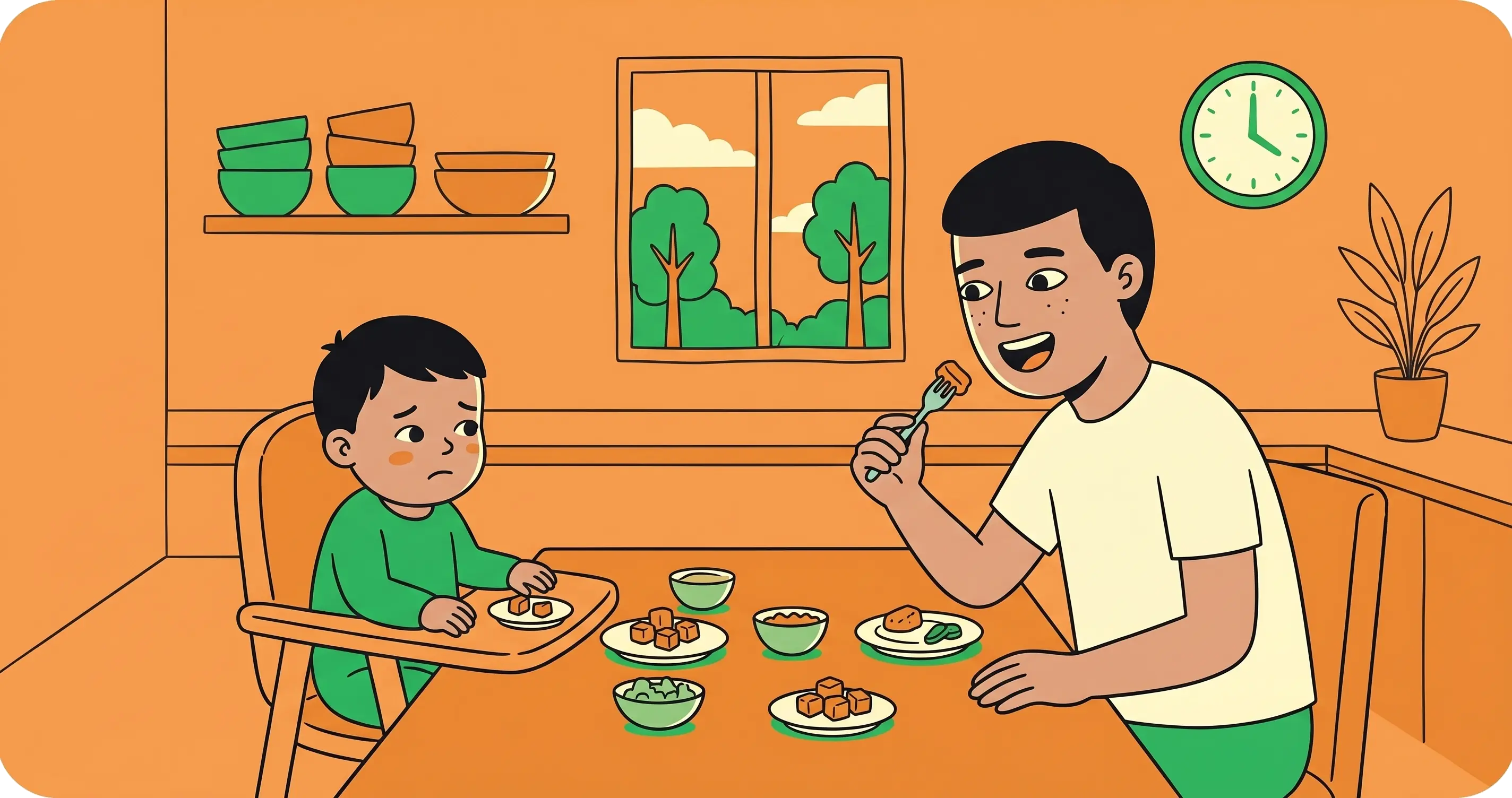
- Lead by example. Eat vegetables during a shared meal without commenting on every bite the child takes. Modeling works best when it's natural, not demonstrative.
- Organize shared meals when possible. The child observes how others serve themselves, try the food, and finish the meal according to their own appetite.
- Offer limited choices. You can ask, "Do you prefer cucumber or tomato today?" or "Should I slice the carrot into rounds or sticks?" The adult sets safe options, and the child gets a sense of control.
- Involve the child in food preparation. Washing, mixing, choosing vegetables at the store, or arranging them on a platter helps familiarize the child with the product. Participation in preparation shouldn't come with the obligation to eat.
- Accept sensory contact without eating. Looking at, touching, smelling, or licking can be a stage of getting to know the product. There's no need to encourage the child to take further steps if they feel uncomfortable.
- Test different forms, changing one feature at a time. Try the vegetable raw, roasted, cooked, or served with a mild dip. This makes it easier to notice whether taste, temperature, hardness, or cutting style matters.
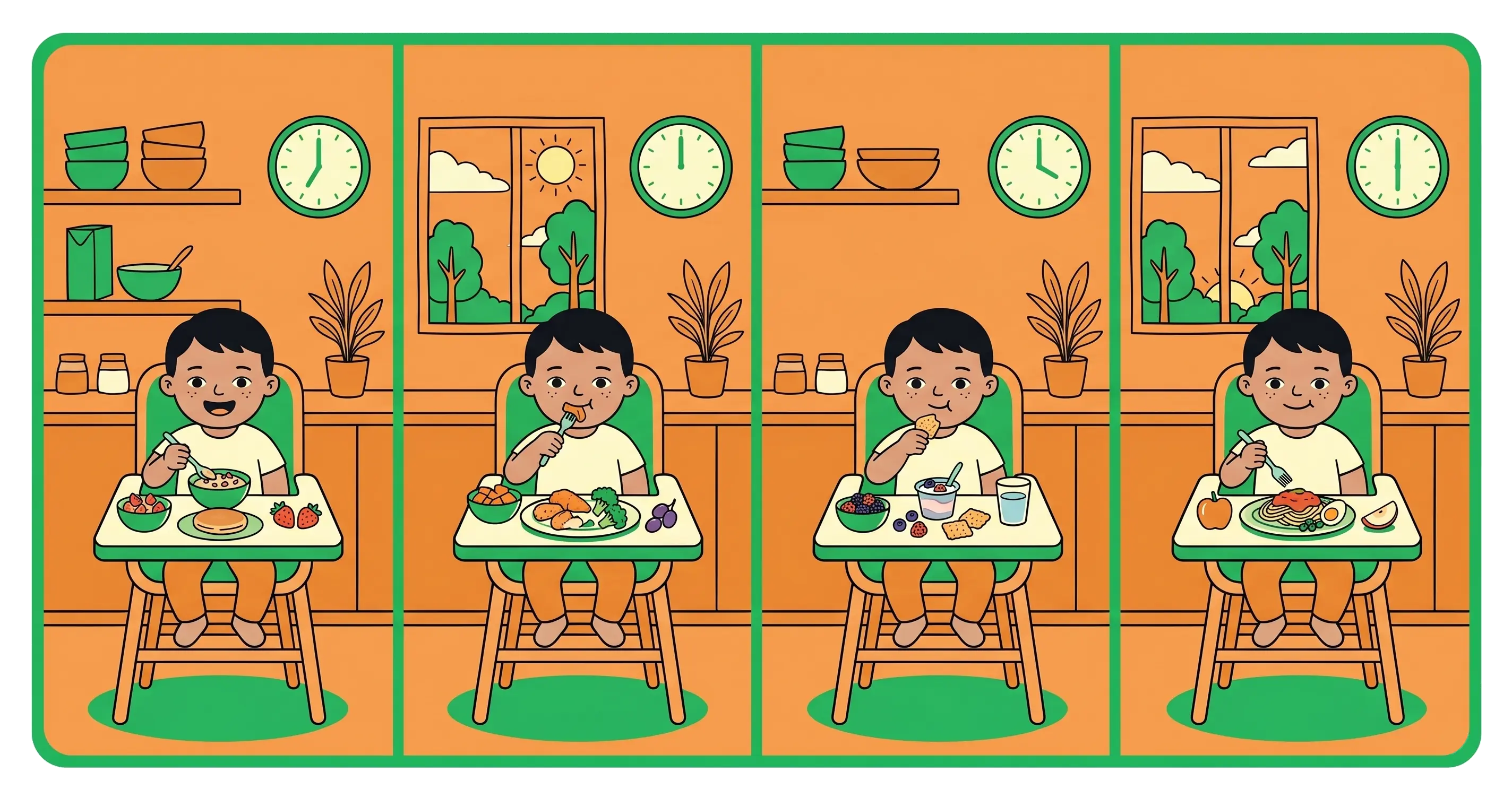
- Apply responsive feeding principles. The parent is responsible for what, when, and where food is offered, while the child decides whether to eat and how much. For young children, it's also important to adjust the texture and size of pieces to their developmental stage and ensure a safe eating position [5].
How to Talk to Your Child During Meals?
Short, calm messages that don't contain judgment or hidden pressure work best:
- "The vegetables are on the table. You can serve yourself."
- "I'll place a small piece next to the pasta."
- "You don't have to try it."
- "I see you're not in the mood for it today."
- "You can ask for more if you want."
If the child tries a vegetable, there's no need to react with excessive enthusiasm. A neutral response, like "You tried it and checked how it is," helps leave the decision to the child.
How to Serve Vegetables to Increase Their Predictability?
The same vegetable can taste and look completely different depending on the preparation method. It's worth observing whether the child prefers crunchy, soft, cold, warm, smooth, or separately served products.
You can try:
- roasted carrot, sweet potato, or zucchini sticks;
- vegetables cooked until soft but not mushy;
- small pieces served separately instead of mixed with the whole dish;
- smooth cream soup or mild vegetable sauce;
- vegetables with a dip if the child likes this form;
- vegetable pancakes with a predictable texture.
The form should always be safe and appropriate for the child's age and chewing skills. Hard, round, or large pieces can increase the risk of choking, especially in young children.
Is It Worth Hiding Vegetables?
Adding vegetables to sauces, soups, or pancakes can enrich the diet. However, it shouldn't be the only way of serving them or involve deliberately misleading the child. The child also needs opportunities to learn the appearance, smell, and texture of vegetables in a recognizable form.
Therefore, you can serve a sauce with vegetables and place a small, visible piece of one of the ingredients next to it. Trying it remains the child's choice.
How to Plan Calm Familiarization with One Vegetable?
There's no need to offer a new product every day. You can return to one vegetable in different, simple forms for a while:
- Choose a vegetable similar to already accepted products.
- Serve a small amount during a meal containing at least one known ingredient.
- Don't repeatedly ask if the child will try it.
- Change only one element at the next exposure, such as the cutting style.
- Observe the reaction without judging or comparing.
Progress doesn't always mean eating a portion. Initially, it might be calmly leaving the vegetable on the plate, touching it, or tolerating its smell. The pace of familiarization is individual, and it's not worth promising results by a specific date.
Frequently Asked Questions
How Many Times Do You Need to Offer a Vegetable Before a Child Accepts It?
There is no universal number of exposures. Some children try quickly, others need many calm encounters, and some may not accept certain vegetables for a long time. More important than counting attempts is regularity and lack of pressure.
Does a Child Have to Have the Vegetable on Their Plate?
Not always. If the presence of the product on the plate causes strong discomfort, the vegetable can initially be placed on a shared platter or on a separate small plate. It's important to respect the child's boundaries while allowing them to observe the product.
Is Rewarding with Dessert for Eating Vegetables a Good Idea?
It's not recommended as a regular method. Such an arrangement may present the vegetable as an unpleasant task and dessert as a more valuable reward. It's better to serve meals at predictable times and not make one product dependent on eating another.
What to Do If a Child Eats Fruits but Not Vegetables?
Fruits provide many valuable nutrients and can remain part of a varied diet. However, they are not an exact substitute for all vegetables. It's worth continuing to offer vegetables without pressure and discussing any concerns about the nutritional value of the entire diet with a pediatrician or dietitian.
Should You Prepare a Separate Dish When a Child Refuses Vegetables?
Usually, there's no need to prepare a second full meal. It's helpful to plan at least one product within the shared dish that the child usually accepts. This way, they can fill up without having to try the vegetable under pressure.
Summary
Reluctance towards vegetables is often related to developmental stages, food neophobia, or sensitivity to specific textures, smells, and presentation methods. The most supportive approach is based on regular exposure, modeling during shared meals, and responsive reactions to hunger and fullness signals.
Parents can decide what products appear on the table, ensure regularity, and maintain a calm atmosphere. The child should retain the ability to refuse and choose the amount. If difficulties involve many food groups, affect development, or cause strong anxiety, it's worth consulting a specialist.
Sources
- American Academy of Pediatrics, Tips for Picky Eaters.
- National Center for Nutrition Education, materials on food neophobia.
- Review: Neophobia in Children – a review of studies on food neophobia in childhood.
- Scoping Review: Interventions for Neophobia – a review of interventions supporting food acceptance.
- American Academy of Pediatrics, Infant Food and Feeding.