Refusing to try a new dish can be a natural part of development. For some children, caution gradually decreases when food is offered regularly and without pressure. However, concerns should arise if there is a progressive narrowing of the diet, strong fear of eating, difficulties with chewing or swallowing, nutritional deficiencies, or if the problem affects growth and daily functioning.
In assessing the situation, more important than a single refusal is answering several questions: how is the list of accepted foods changing, can the child calmly participate in meals, are they growing properly, and does eating cause pain or other discomforts.
What is Food Neophobia in Children?
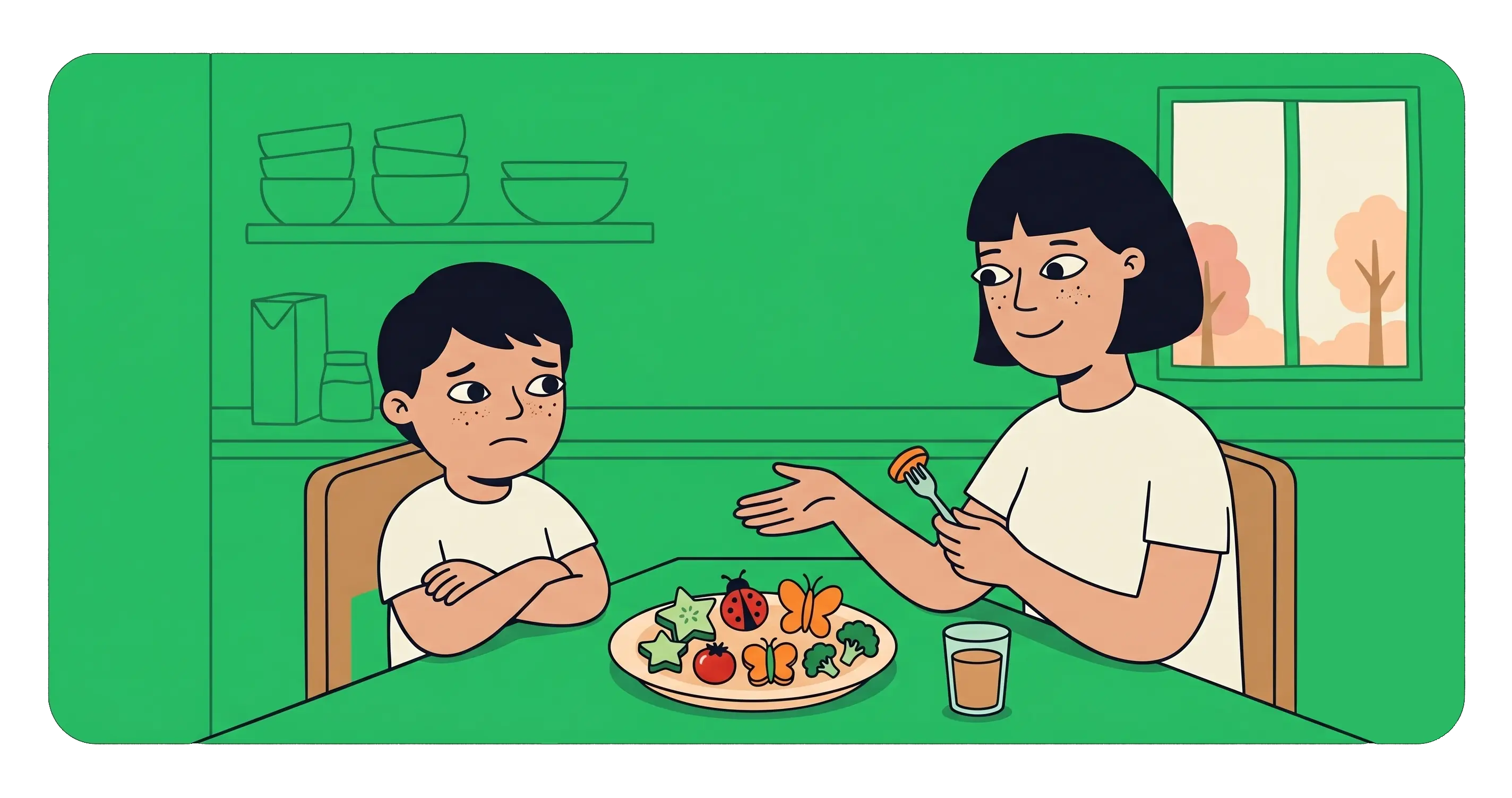
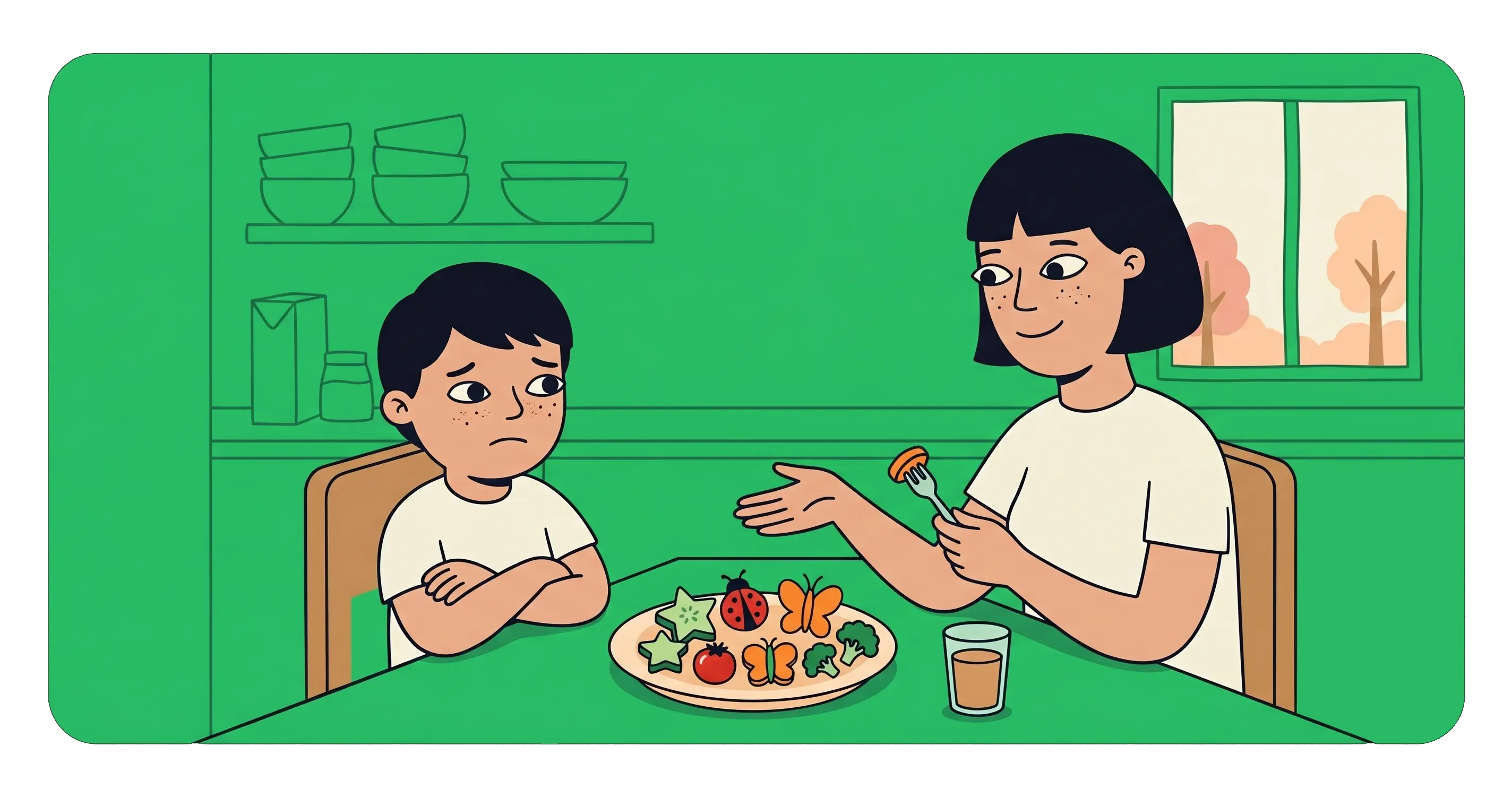
Food neophobia refers to reluctance or fear of trying unfamiliar foods. A child may push away a dish because it looks, smells, or has a texture they don't recognize. They may also reject a familiar product presented in a new form, such as being cut differently than usual.
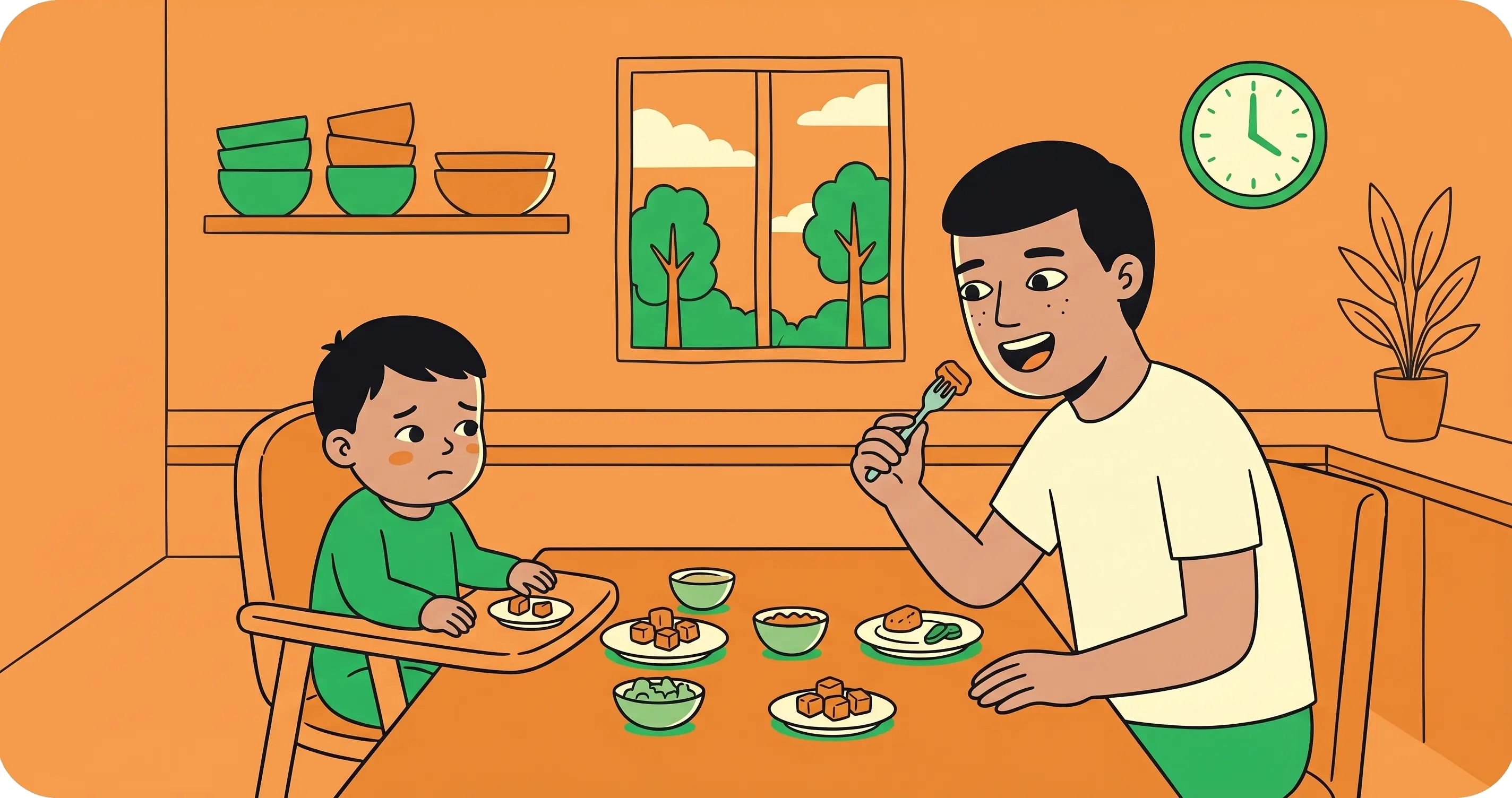
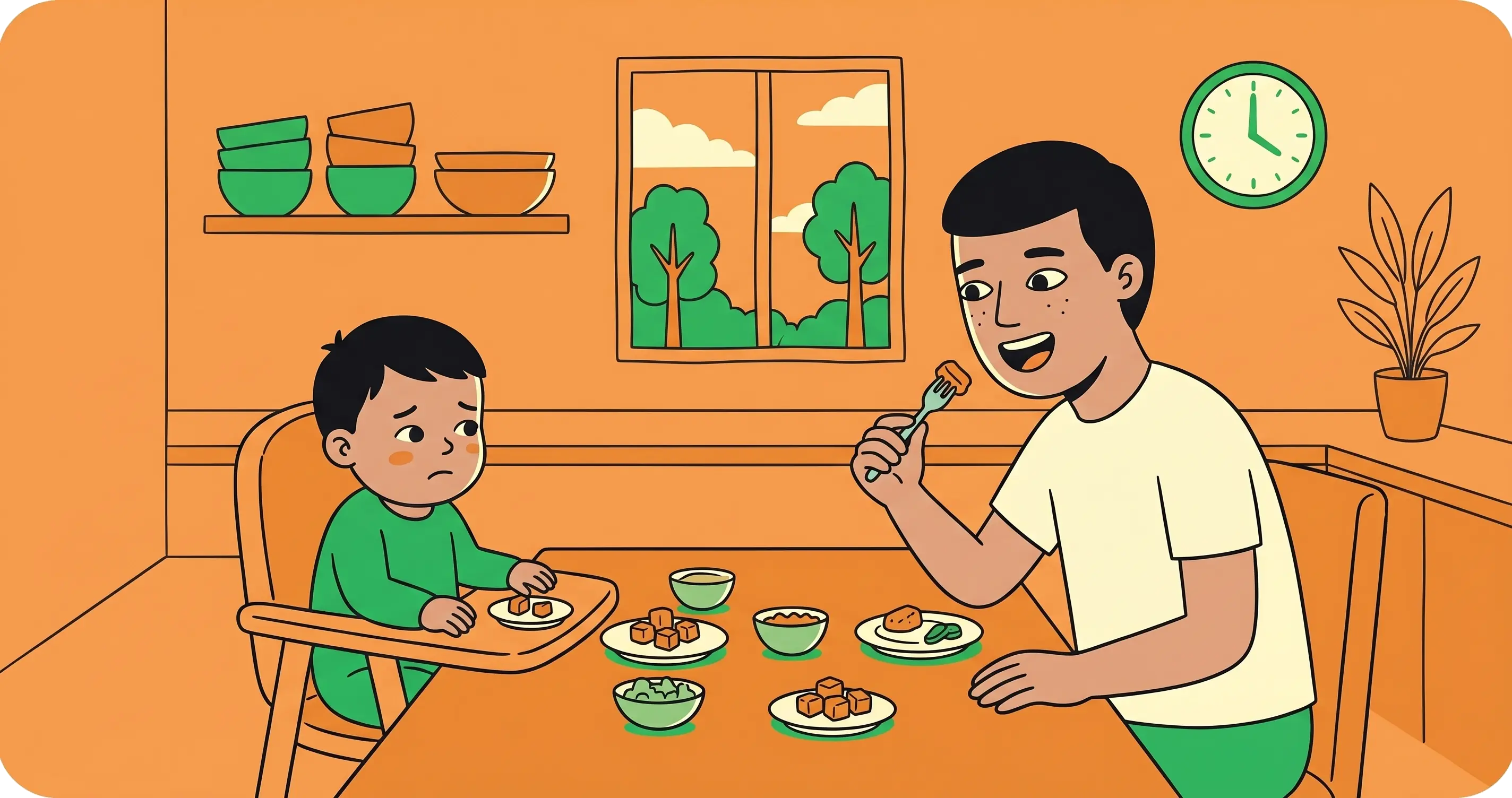
Neophobia often intensifies in early childhood when a child becomes more independent and cautious of new things. It is considered a common developmental stage, although its intensity and duration can vary greatly [1]. Thus, refusal of unfamiliar food alone does not indicate a disorder. What matters is the overall eating pattern, health status, and whether the range of foods remains stable, expands, or gradually decreases.
Natural caution towards new foods can have a protective function, but this does not mean that every difficulty should be waited out. Reviews of studies indicate that neophobia is a typical developmental phenomenon influenced by both the child's characteristics and their experiences and meal environment [2].
Neophobia, Food Selectivity, and ARFID – How Do They Differ?
Typical Developmental Neophobia
In typical neophobia, a child primarily refuses new products or those presented in an unfamiliar form. At the same time, they usually:
- have a set of accepted products from several food groups,
- eat amounts that meet their body's needs,
- grow according to their developmental trajectory,
- do not experience pain while eating,
- can sit at the table next to new foods, even if they don't try them,
- gradually take small steps, such as touching, smelling, or licking the product.
There is no single number of accepted products that distinguishes normal from disordered eating. More important are the variety of the diet, its nutritional value, the rate of changes, and the impact of difficulties on health and family life.
More Serious Food Selectivity
Selectivity goes beyond ordinary caution when it includes well-known foods and leads to increasing rigidity. A child may only accept a specific brand, temperature, color, shape, or method of serving. A slight change in packaging or texture then triggers strong protest, sometimes fear or a gag reflex.
The risk of entrenched difficulties may be higher in children with high sensory sensitivity, previous feeding problems, unpleasant eating experiences, or high tension at the table. Family and environmental factors may also play a role [3]. This does not imply parental fault—difficulties usually have more than one cause.
When to Suspect ARFID?
ARFID, or Avoidant/Restrictive Food Intake Disorder, is not simply being “picky.” Food restriction may result from sensitivity to food characteristics, low interest in eating, or fear of unpleasant consequences, such as choking or vomiting.
ARFID should be considered when food restriction leads to at least one serious consequence, such as:
- weight loss or lack of expected weight and growth gain,
- nutrient deficiencies,
- dependence on oral nutritional supplements or medical feeding,
- significant functional limitations, such as inability to eat in preschool, school, restaurants, or during family gatherings.
In ARFID, food restriction is not related to a desire to change body weight or shape. Diagnosis cannot be made based on an online symptom list or the number of foods consumed alone. Specialist evaluation and exclusion of diseases that may cause pain, nausea, swallowing difficulties, or lack of appetite are needed.
Norm, Warning Signs, and When to Seek Help
What Usually Falls Within the Bounds of Developmental Caution?
- The child mainly refuses new products but still eats known foods.
- The food repertoire does not shrink rapidly.
- Meals do not cause strong anxiety or regular conflicts.
- The child has energy, develops, and grows according to their trajectory.
- They can gradually get used to food without the need to try it immediately.
What Signals Require Greater Vigilance?
- The list of accepted products is constantly shortening.
- The child rejects entire food groups, such as all vegetables, protein products, or foods of a certain texture.
- They accept only one brand, form, temperature, or method of serving.
- They react with panic, crying, gag reflex, or escape at the sight, smell, or touch of food.
- Meals take a very long time or require constant distraction with a screen.
- The child avoids eating outside the home, and the difficulty limits participation in preschool, school, or family life.
- There are symptoms like constipation, weakness, paleness, sleepiness, or other possible deficiency signs.
When to Schedule a Consultation?
It is worth seeking advice if the difficulty worsens, the food repertoire significantly shrinks, the parent is concerned about the nutritional value of the diet, or meals have become a source of constant tension. There is no need to wait for underweight to appear. A child can have a normal body weight and still have deficiencies or significant psychosocial limitations.
Why Might a Child Refuse to Eat?
Refusal does not have to stem from stubbornness. Causes may include:
- natural caution towards new things—common at certain developmental stages,
- sensory sensitivity—intense perception of smell, taste, temperature, or texture,
- difficulties with chewing and swallowing—the child may choose foods they can handle more easily,
- pain or discomfort—such as constipation, reflux, oral discomfort, or swallowing problems,
- fear after an unpleasant event—such as choking, vomiting, or an allergic reaction,
- low interest in food or weak hunger sensation,
- tension during meals—pressure and negotiations can intensify avoidance.
If eating has been difficult from the start, it is worth providing a specialist with information about infant feeding, diet expansion, tolerance of lumps, chewing, swallowing, and past illnesses. Such a history helps determine whether medical, nutritional, sensory, or eating skills assessment is needed.
How to Support a Child Without Pressure?
Offer New Foods Alongside Familiar Ones
There should be at least one element on the plate that the child usually accepts. A new product can be placed next to it, in a very small amount, without mixing it with the safe food. This way, the child has the opportunity to encounter something new without losing their sense of security.
Treat Familiarization as a Process
Contact with food does not have to mean eating a portion. Subsequent steps may include tolerating the product on the table, placing it on the plate, touching, smelling, licking, taking it into the mouth and spitting it out, and only then swallowing.
There is no universal number of exposures after which every child will accept a product. Research on interventions highlights the importance of repeated, calm contact, modeling by adults, and limiting pressure, but the effectiveness of individual methods depends on the child and the cause of the difficulty [4].
Use Neutral Language
Instead of encouraging “just one more bite,” you can say:
- “You don't have to eat it.”
- “You can check how it smells.”
- “This is crunchy, and this is soft.”
- “You don't want it today. We'll offer it again another time.”
Lack of pressure does not mean giving up on offering a variety of foods. The adult's role is to choose what, when, and where it will be served. The child decides whether and how much to eat from the available products. A similar approach, along with regular meals and calm modeling of eating, is also recommended in materials for parents prepared by the American Academy of Pediatrics [5].
Involve the Child in Exploring Food
The child can choose vegetables while shopping, wash products, mix ingredients, or arrange them on a platter. The goal should not be to force tasting. Safe contact alone can reduce tension associated with unfamiliar food.
How to Organize Meal Rhythm?
A predictable plan helps the child recognize hunger and fullness. In many families, a rhythm of three main meals and two or three planned snacks works well, tailored to the child's age, activity, and needs.
- Serve meals at similar times.
- Limit constant snacking between them.
- Offer water instead of filling drinks daily.
- Start with small portions and allow asking for seconds.
- Whenever possible, eat together and avoid commenting on the amount of food eaten.
- Avoid screens, bribing with dessert, and punishing for refusal.
Reducing tension does not always quickly increase diet variety. However, it can make it easier for the child to stay at the table and begin to tolerate the presence of new products. This is an important foundation for further familiarization.
When to Consult a Doctor or Specialist?
Contact a pediatrician if any of the following symptoms occur:
- weight loss, growth stunting, or lack of expected weight gain,
- pain during eating, frequent vomiting, diarrhea, severe constipation, or swallowing difficulties,
- coughing, wet voice, or recurring choking during meals,
- holding food in the mouth, significant difficulty chewing, or regular gag reflex with pieces,
- weakness, paleness, excessive sleepiness, or suspected deficiencies,
- very limited diet, dependence on nutritional supplements, or increasing social functioning limitations,
- sudden refusal to eat or drink.
If the child cannot breathe, turns blue, or there is a complete airway obstruction, appropriate age-specific first aid should be initiated, and emergency services should be called immediately at 112 or 999.
The first point of contact is usually a pediatrician. Depending on the difficulty's presentation, consultation with a pediatric dietitian, gastroenterologist, allergist, psychologist, or child psychiatrist, as well as a specialist assessing chewing and swallowing, may be needed. In suspected ARFID, a multidisciplinary assessment is helpful.
Frequently Asked Questions
Does every child who doesn't want to try new foods have neophobia?
No. Single refusals can result from lack of appetite, fatigue, illness, unpleasant texture, or the need for independence. We mainly talk about neophobia when a child regularly avoids foods perceived as new.
How many times should a product be offered before a child accepts it?
There is no single correct number. One child may try after a few calm encounters, while another may need much more time. More important than counting attempts are regularity, small portions, lack of coercion, and the ability to explore the product with different senses.
Is the rule “if they're hungry, they'll eat” safe?
It should not be used as a method to overcome strong selectivity. A child with anxiety, sensitivity, pain, or ARFID may still not eat despite hunger. Deliberately withholding safe food can increase tension and limit intake. It's worth maintaining a regular meal rhythm and ensuring a familiar element is available on the table.
Does a healthy body weight rule out a serious problem?
No. A child can grow properly while having deficiencies, a very limited diet, or significant social difficulties related to eating. Assessment should consider not only body weight but also growth trajectory, diet, test results, behavior at the table, and daily functioning.
Does spitting out new food indicate failure?
Not necessarily. If it happens calmly and without choking risk, it can be a stage of exploring taste and texture. However, do not encourage putting food in the mouth of a child who lacks appropriate chewing skills or regularly chokes while eating.
Summary
Typical neophobia mainly concerns new products, does not disrupt growth, and may gradually ease with calm, repeated familiarization. More serious selectivity involves greater rigidity, shrinking repertoire, and strong reactions to food characteristics. ARFID, on the other hand, is associated with significant health, nutritional, or psychosocial consequences and requires professional evaluation.
At home, it's important to ensure regular meals, availability of familiar products, small portions of new items, and a neutral atmosphere. If a child has difficulty swallowing, experiences pain, does not grow according to their trajectory, shows deficiency symptoms, or eating significantly limits their life, do not wait for spontaneous improvement.
Sources
- National Center for Nutritional Education (NCEZ), materials on food neophobia in children.
- Scientific review: Neophobia — a natural developmental stage.
- Systematic review on risk factors for food neophobia and its consequences.
- Scoping review on interventions used for food neophobia.
- American Academy of Pediatrics, Tips for Picky Eaters.