Elimination Diet for Children: A Balanced Menu and Practical Alternatives
Introduction: When Something Happens After Eating, It's Easy to Fall into the "Remove Everything" Mode
Parents often reach out to us at a similar point: a rash appears after one product, stomach pain after another, and suddenly half of the kitchen disappears from the menu. We truly understand this — when you're worried about your child, the instinct to "remove everything" seems safest. From our experience, this is when chaos, stress at every meal, and a diet that becomes too poor are most likely to occur.
In practice, we see that an elimination diet for a child should be as small as possible, not as broad as possible. The goal is to alleviate symptoms without removing half of the child's products "just in case." The fewer random restrictions, the easier it is to assess what really harms.
In our work with families, the starting point is simple: first, we organize the facts. We check what the child ate, how long after the reaction appeared, what it looked like, and whether the situation repeats. Only then do we determine whether it makes sense to temporarily exclude something.
In this article, we'll show you how to approach elimination calmly and practically. We'll discuss when it makes sense, how to avoid deficiencies, what to replace milk and eggs with, and how to navigate this stage without daily meal planning stress. 💛
When Elimination Makes Sense and When It's Better Not to Act Alone
Parents often ask us if one bad day after eating is enough to immediately remove something. From our experience — no. What tells us the most is repetition: the same product, similar reaction, several times in a row, or a very clear pattern.
We usually look at three things: what was eaten, how quickly symptoms appeared, and whether they return after the same ingredient. The amount also matters. Sometimes a child functions well after a small portion, and the problem only appears after a larger one — and that already gives us an important clue.
Parents most often notice signals such as:
- rash or hives after a specific product,
- stomach pain after eating,
- diarrhea returning after the same food,
- vomiting after a specific ingredient,
- cough, wheezing, or noticeable discomfort after a meal.
At the same time, in practice, we see that not every reaction after eating immediately means an allergy. Sometimes an infection overlaps, a bad gut day, teething, overeating, or simply a coincidence. That's why we usually advise against removing several products from the menu at once, as it creates even more of a puzzle instead of clarity.
There are also situations where we don't play with home tests. If there is shortness of breath, wheezing, blood or mucus in the stool, very severe vomiting, or a sudden deterioration in well-being, a quick consultation is needed. Here, safety is more important than independently checking "if it's really that." 🚨
For milder symptoms, a simple note for a few days helps a lot. It doesn't have to be a beautiful table. Just write down: what the child ate, how much, when the reaction appeared, and how long it lasted. Such a simple diary often organizes more than a memory from the whole week.
How to Start an Elimination Diet Without Chaos
From our experience, the best start is not a revolution, but a pause. Before removing something, check what exactly you want to verify. It sounds trivial, but in practice, it makes a huge difference.
In our work with families, we often see this moment: a parent says "something seems to harm," but it's not yet clear what, how much, and in what situation. Then we go back to basics and write down:
- which product raises suspicion,
- after what amount the problem appears,
- how quickly symptoms occur,
- whether the reaction looks similar each time,
- whether the child eats normally, grows, and has energy.
Then comes the rule that really saves a lot of nerves: change as little as possible, but specifically. If dairy is suspected, we start with dairy. We don't immediately add eggs, gluten, soy, and half the fruits just because "maybe also."
In practice, we observe that such a small, targeted change gives the clearest picture. When there are too many restrictions, the parent no longer knows what worked, the child eats less and less varied, and meals start to revolve around a few safe options. This tires the whole family.
A food and symptom diary is worth keeping for 7–14 days. The first signs of improvement are often visible after about a week, but with the skin or digestive tract, a fuller picture may be visible after 2–4 weeks. From our experience, this is a reasonable moment to assess whether the plan makes sense or needs to be corrected. 🧩
How to Arrange a Menu So the Child Eats Well, Not Just "Without the Allergen"
This is one of the most common problems we see. A product disappears, but nothing sensible takes its place. Suddenly, the child is formally on an elimination diet, but in practice, eats less, gets hungry faster, or conversely — snacks on anything because meals no longer satisfy.
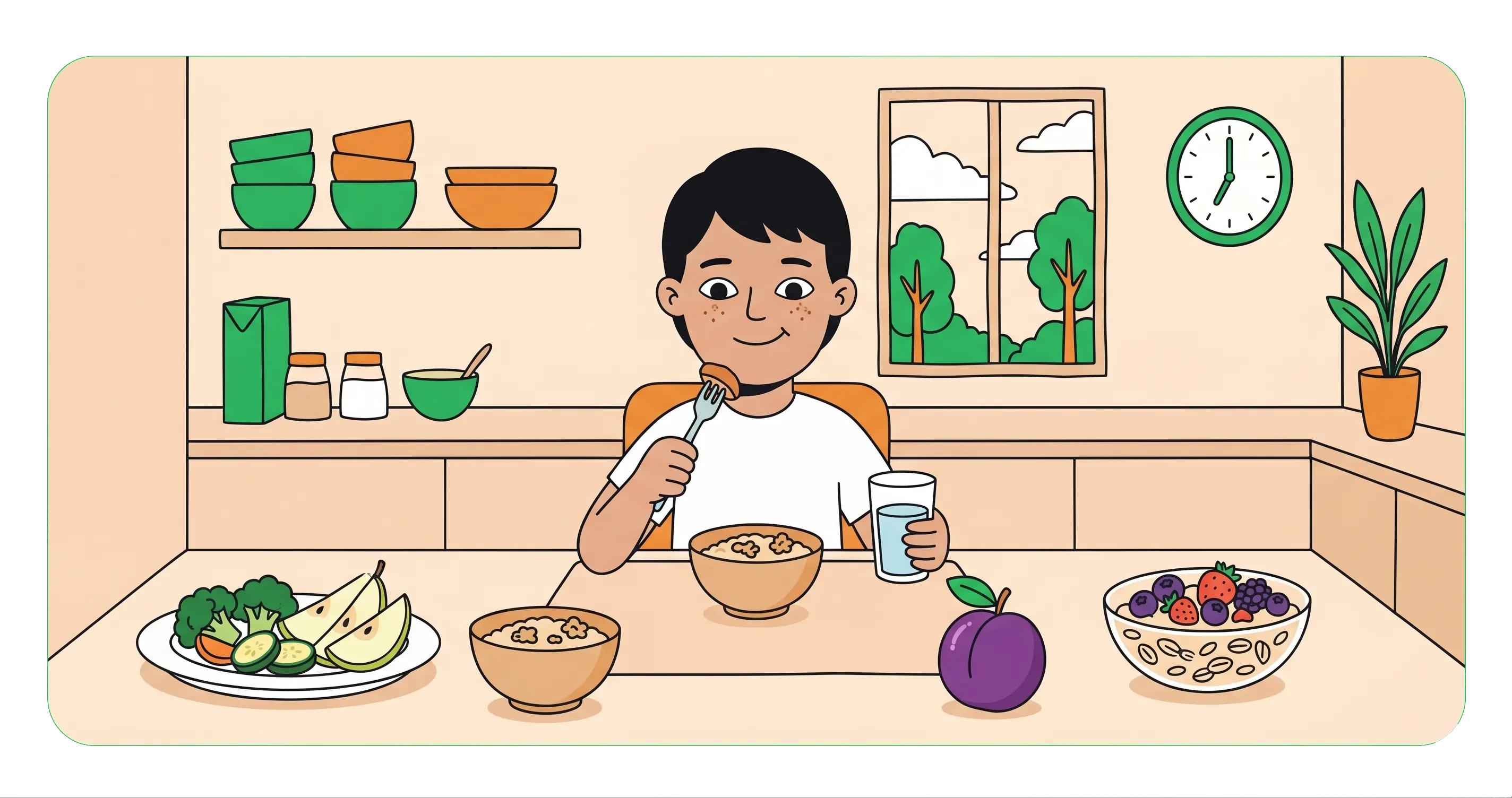
That's why we don't start with the question "what's not allowed," but with the question: what will now build this meal. Is there energy? Is there protein? Will the child really be full after this? 🍽️
First, Satiety and Energy
If meals become too light after elimination, the child often starts eating poorly after just a few days. In practice, simple things help:
- rice, groats, pasta, bread, potatoes,
- olive oil, rapeseed oil, avocado, sandwich spreads,
- warm, more substantial additions to lunch and dinner.
We see this very often: just add a teaspoon of fat to the soup, a spread to the sandwich, or a more substantial addition to dinner, and the child closes the day much better. These are not big changes, but they make a real difference.
Then Protein — Regularly, Not "From Time to Time"
The second pillar is protein in main meals. Depending on the child's age and tolerance, these can be:
- meat,
- fish,
- legumes,
- tofu,
- bean, lentil, or chickpea spreads.
From our experience, a flexible approach works best. It's not about a perfect menu on paper, but one that the child will actually eat. If legumes are new, we usually introduce them calmly, in small portions over 1–2 weeks, instead of immediately building half the menu on them. 🌱
A Simple Filter for Every Meal
In practice, one short check before serving food helps a lot:
- What here provides energy?
- What here provides protein?
- What will make the child full for more than 20 minutes?
It's a simple method, but it really organizes thinking. Parents often tell us later that it helps them assess a meal without counting everything in their heads.
Diet Without Milk and Eggs: What to Pay Attention to Avoid Deficiencies
When milk and eggs are removed from the diet, parents immediately ask: "So where will the child get what was previously in these products?" And that's a very valid question. In practice, we see that most problems don't come from the elimination itself, but from the lack of a plan for what should replace it.
With such a change, we particularly look at where in the diet will come: calcium, iron, vitamin D, iodine, and omega-3. It doesn't have to be a complicated project. Just check step by step what has been removed from the menu and what can sensibly replace it.
Calcium and Iron — Usually Require First Attention
After removing dairy, calcium often "escapes" the fastest. That's why in practice, we recommend checking whether the chosen substitutes are fortified, not just similar in appearance to milk or yogurt. Helpful can also be calcium-enriched tofu, sesame paste, selected green vegetables, and well-planned snacks.
Iron can be challenging, especially when the child eats little, selectively, or has several eliminations at once. In the daily menu, meat, fish, legumes, and sensibly composed sandwiches or dinners usually help. In practice, we also see that it's easier to meet this requirement when meals are regular, not "somehow during the day."
About Ingredients That Are Easy to Overlook
When eliminating milk and eggs, it's also worth stopping at vitamin D, iodine, and omega-3. These are the elements that often take a back seat because the parent focuses mainly on whether the child ate anything without the allergen. And then, after a few weeks, it turns out that the menu is safe but not very nutritious.
In our work with families, a simple checklist helps:
- is the substitute fortified,
- does the child eat it regularly,
- does this product really contribute something, or just "pretends" to be an equivalent,
- does the whole week look consistent, not just good for two days.
This may sound mundane, but it's precisely such practical checking that most often saves the diet from deficiencies. Not the label on the front of the package, but what's really inside.
Everyday Substitutes: What to Replace Milk, Eggs, Wheat, Soy, and Nuts With
Parents most often want specifics: what to buy, what to serve, what to put in the lunchbox. And rightly so, because with an elimination diet, theory without practice quickly ends. From our experience, the best substitutes are those that are simple, available, and realistic to use in a regular week, not just in an ideal menu.
What to Replace Milk and Dairy With
With plant-based products, we primarily look at whether they are:
- without a large amount of added sugar,
- fortified with calcium,
- reasonable in composition,
- appropriate for the child's age.
In practice, we often see parents buying the first plant-based drink they find and then treating it as a full milk substitute. Unfortunately, not every one is suitable for this. Sometimes it works better as an addition to oatmeal or pancakes than as the main drink of the day. 🥛➡️🌱
What Instead of Eggs
Here, everything depends on the role the egg played in the meal. For breakfast, the following work well:
- legume spreads,
- tofu, if soy is tolerated,
- fish, meat,
- sandwiches with avocado and a protein addition.
If the egg was meant to bind patties or meatballs, often it's enough to use:
- cooked groats,
- potato,
- vegetable puree,
- a bit of flour or flaxseed.
For pancakes and baked goods, banana puree, applesauce, flaxseed with water, pumpkin puree, or plant-based yogurt usually work well. In practice, we recommend choosing a substitute based on the recipe, rather than using one solution for everything. 🥚
Wheat, Soy, and Nuts
If wheat is removed, rice, buckwheat, millet, corn, potatoes, or gluten-free oats often help — of course, when well tolerated. When soy needs to be excluded, we more often base protein on other legumes, meat, or fish. And if nuts disappear from the menu, practical support can be seeds, tahini, or seed butters, as long as they are safe for your child.
One of the moms we worked with once told us: "The hardest part wasn't removing milk, but coming up with breakfasts day after day." And that well illustrates real life. That's why instead of looking for perfect substitutes, we usually arrange 5–7 reliable options for families that can be rotated without daily thinking from scratch.
Labels Really Matter
With allergies or sensitivities, reading the ingredients is not an exaggeration, but a daily practice. It's worth checking not only for the presence of allergens but also:
- whether the composition has changed,
- whether the product has unnecessary additives,
- whether it is fortified if it is to play an important role in the diet,
- whether it fits the child's age and entire menu.
In practice, it's often ordinary bread, coatings, sauces, desserts, or "fit" snacks that can surprise the most.
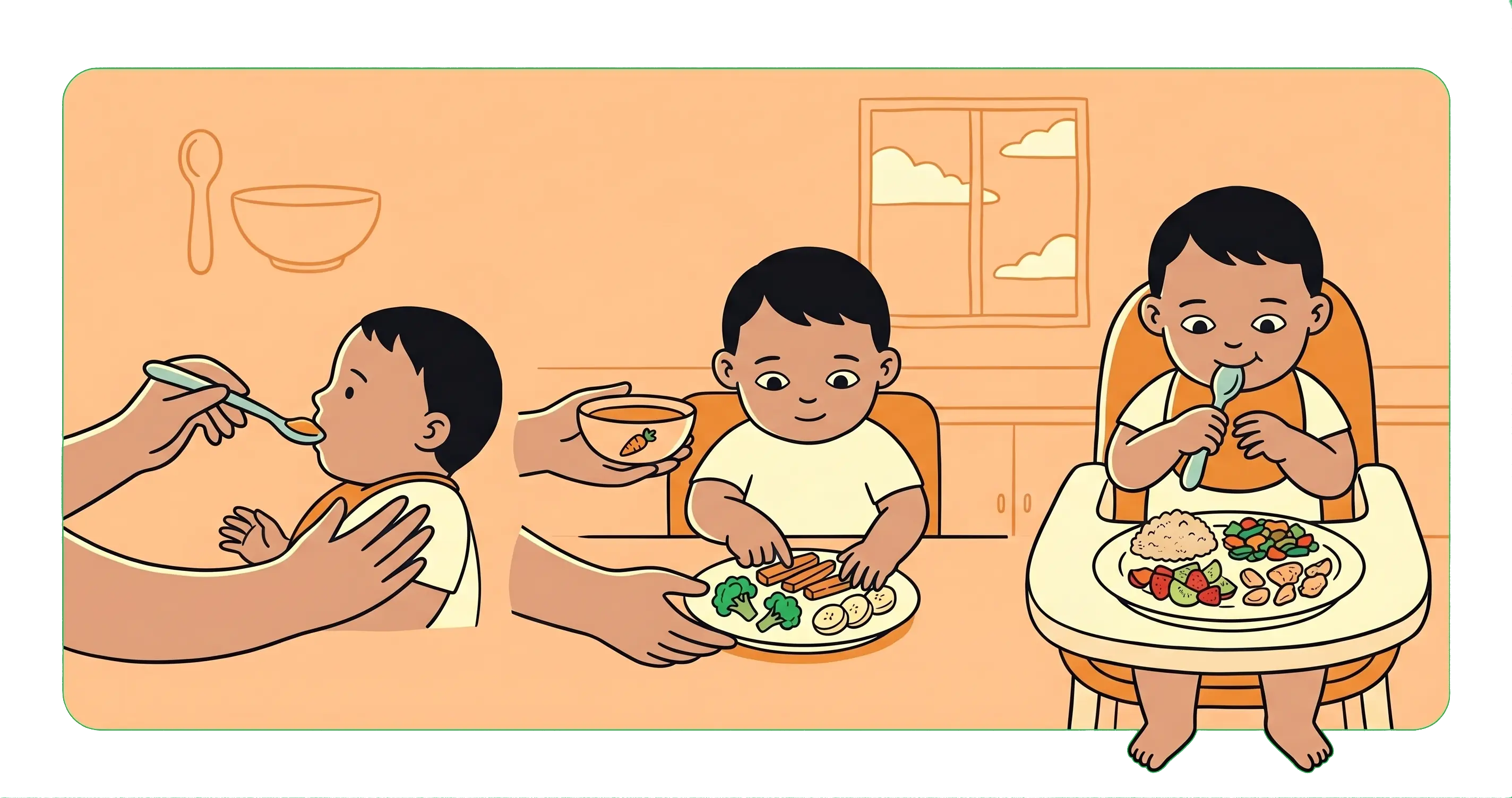
Elimination Diet and Child's Age: Different Needs for Infants, Different for Preschoolers
What works for an older child won't always be a good solution for an infant. From our experience, an elimination diet works best when it is tailored not only to symptoms but also to the age, developmental stage, and daily life of the family.
Infant
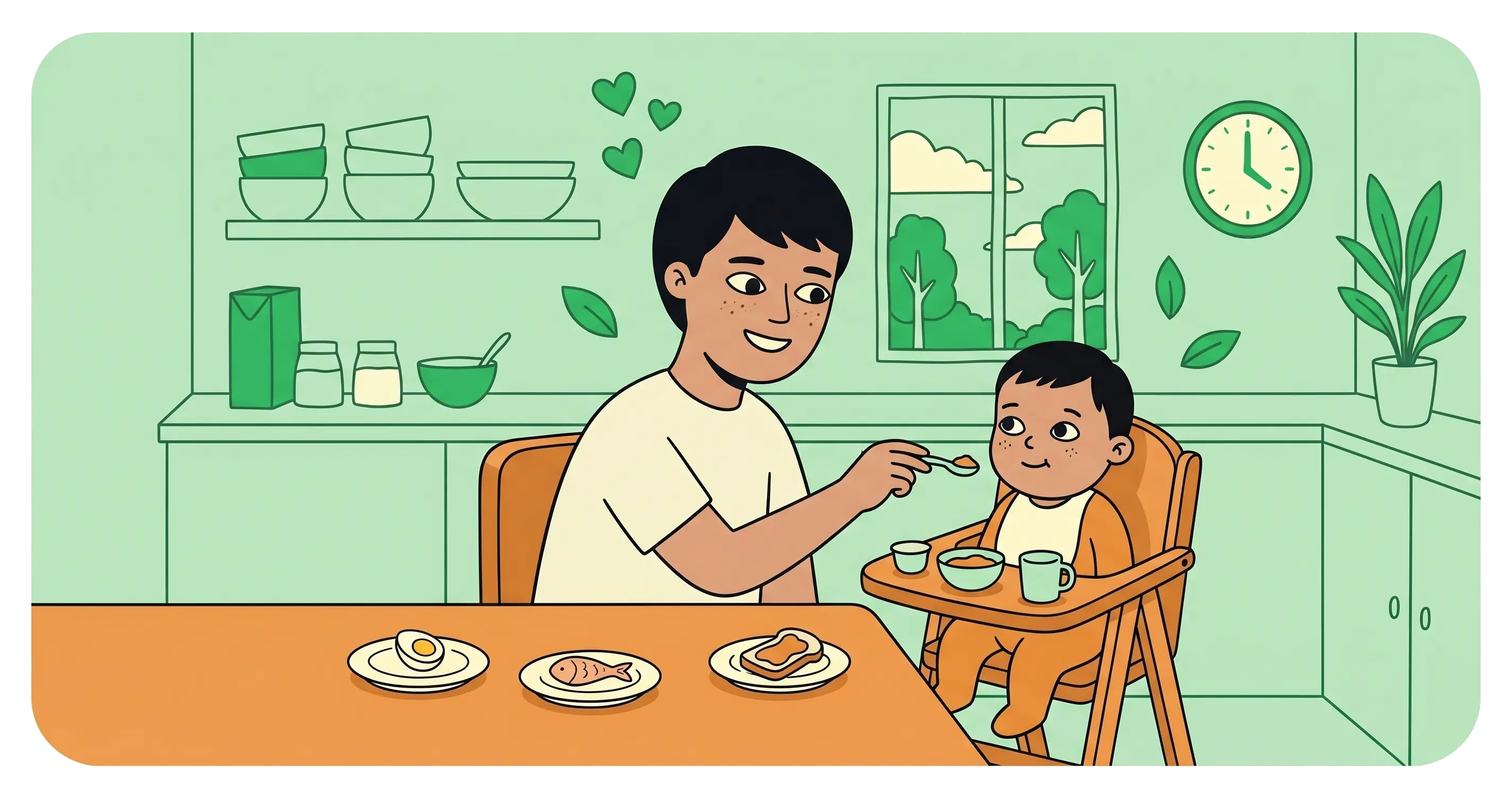
For the youngest children, the most important thing is not to delay everything "just in case," but also not to act chaotically. If clear symptoms appear after a specific product, then elimination may make sense. If there is no clear pattern, we don't add restrictions prophylactically. 👶
For infants, we particularly look at:
- growth,
- feeding comfort,
- stools,
- skin,
- overall well-being and energy.
Toddler
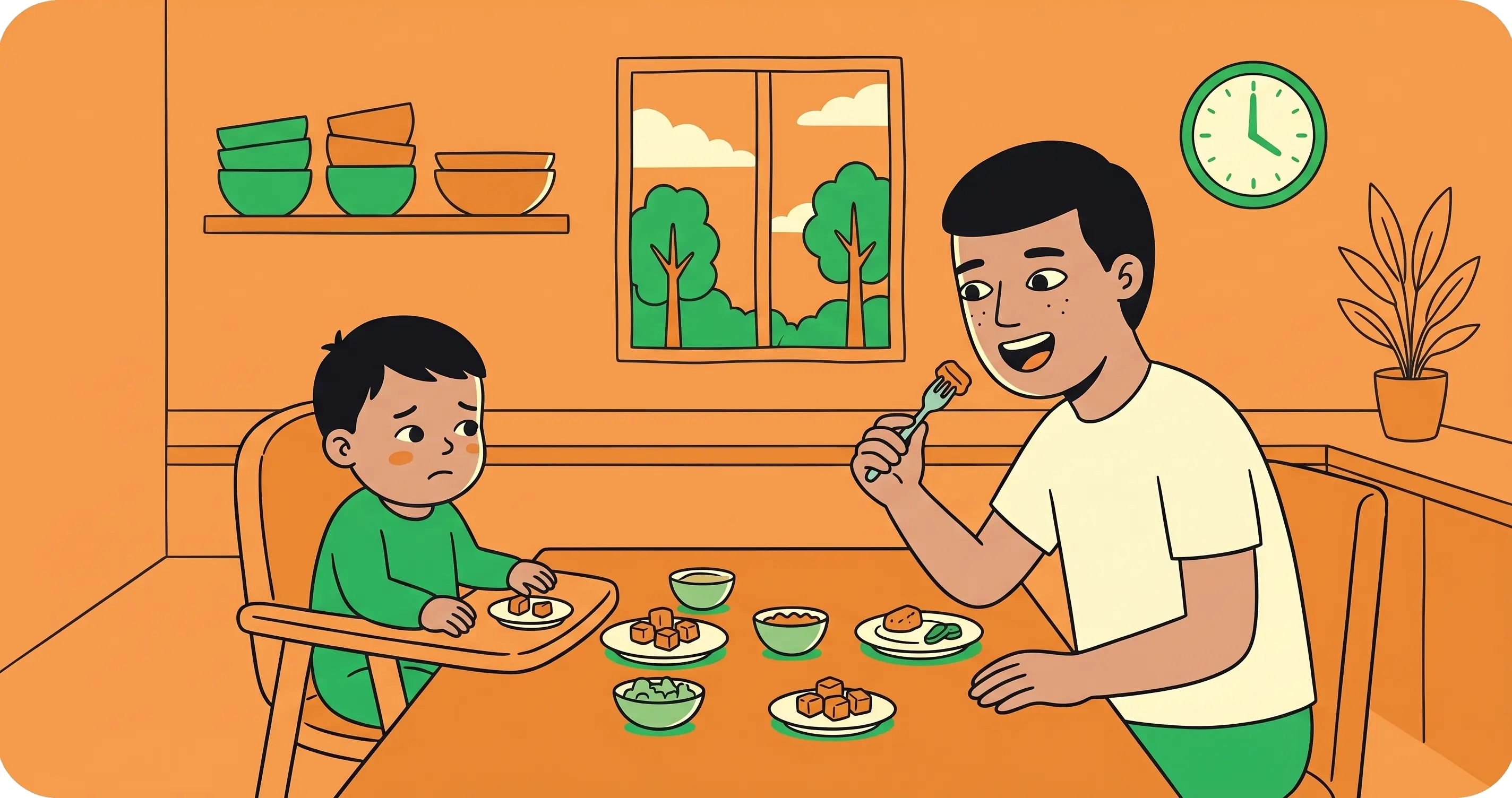
For toddlers, the biggest challenge is often monotony. It's very easy to fall into a few "safe" dishes and revolve around them for weeks. In practice, we recommend simple, repeatable formats but with different ingredients: pancakes, cream soups, pastas, sandwiches, patties, savory muffins. 🍽️
We also see that toddlers accept an elimination diet much better when the food looks familiar. You don't always have to invent something new — sometimes it's enough to adapt a favorite dish to a safe version.
Preschooler and School-Aged Child
Here, most of the work usually happens outside the kitchen. A plan for the facility is needed, a clear list of safe products, and an agreement on what to do at birthdays, trips, or shared meals. In practice, a simple system works well: a safe snack in reserve, a few tried options for the lunchbox, and a short note for caregivers.
One family we worked with had enormous stress before every preschool treat. Only when we prepared two emergency "party" sets together did the topic stop hanging over them every day. Sometimes it's these small organizational things that bring the most relief.
Most Common Mistakes We See with Elimination Diets
The most common mistake? Too broad an elimination at the start. The child stops eating milk, eggs, wheat, soy, and nuts simultaneously, even though the suspicion concerned one product. From our experience, this very quickly affects variety, satiety, and eating comfort.
The second common problem is the lack of a plan for substitutes. The parent focuses on what to avoid but doesn't check what should replace the excluded product. After 2–3 weeks, fatigue sets in, the child eats less willingly, and meals become random.
In practice, we also see the myth that every plant product automatically replaces milk. Unfortunately, no. Some drinks are very light, not very nutritious, and work only as an addition, not the basis of the daily balance. 🥣
To avoid the most common pitfalls, it's worth sticking to a few simple rules:
- Don't remove several products at once without a clear reason.
- Note symptoms and amounts, not just the general impression.
- Immediately plan substitutes for energy and protein.
- Check if the child still eats varied and satisfying meals.
- Re-evaluate after 7–10 days, and more fully after 2–4 weeks.
It doesn't have to be perfect. It should be manageable in everyday life.
When to Evaluate Effects and How to Approach Reintroducing Products
This question comes up very often: after how long do you know if the elimination is working? From our experience, the first sensible review is worth doing after 7–10 days. Then it's often visible whether discomfort after eating has decreased, stool, appetite, or meal calmness has improved.
If the problem concerns the skin, intestines, or the child previously gained weight poorly, a fuller picture usually appears after 2–4 weeks. In practice, we don't recommend assessing this "by feel," because memory can be unreliable. It's better to write down for a few days:
- how often symptoms were before,
- what changed after elimination,
- how the skin, stool, appetite, and sleep look,
- whether the child eats more calmly and has more energy.
If the improvement is clear, the next question arises: whether and when to try returning to the product. And here an important thing — not every attempt is made independently at home. If there were previously hives, wheezing, shortness of breath, severe vomiting, or violent reactions, a safe, established plan is needed.
For milder symptoms, a calm approach usually works best:
- start with a small, specific amount,
- don't increase the portion the same day,
- observe the child and note the reaction,
- stop the attempt if symptoms return.
In practice, we see that most misunderstandings come from haste. A parent gives a little product in the morning, then again at noon and evening, and in the end, it's unclear what exactly caused the problem. Calmer really means smarter here.
Summary: Less Chaos, More Plan
If we were to leave you with one most important thought, it would be: eliminate only what truly raises justified suspicion, and immediately ensure sensible substitutes. A good elimination diet doesn't have to be "the most restrictive." It should be safe, nutritious, and feasible for everyday life. 💛
To start, you can make a simple checklist:
- note what symptoms appear,
- check after which product and how much,
- keep notes for 7–10 days,
- eliminate one thing at a time,
- ensure energy, protein, calcium, iron, vitamin D, iodine, and omega-3,
- evaluate effects after 1–2 weeks, and more fully after 2–4 weeks.
In our work with families, it's precisely a calm, organized plan that gives the best results. If you want, we can help you arrange a menu without milk, eggs, or other allergens so that it's safe and simply convenient in everyday life. Check out the NutritionHelper consultation form — if you think it's a good time, we'll go through it together.