When a challenging situation happens again
Do you ever find yourself thinking: “Why does this end in shouting again?”? Resistance when getting dressed, tears after being told you cannot buy something, or throwing a toy before bath time can be exhausting—especially when the day has already been intense.
In practice, a single behavior rarely tells you everything about a child. It is often a sign of overwhelm, frustration, tiredness, or difficulty moving on to the next part of the day. Boundaries are still needed, but they are easier to maintain when you can see the bigger picture.
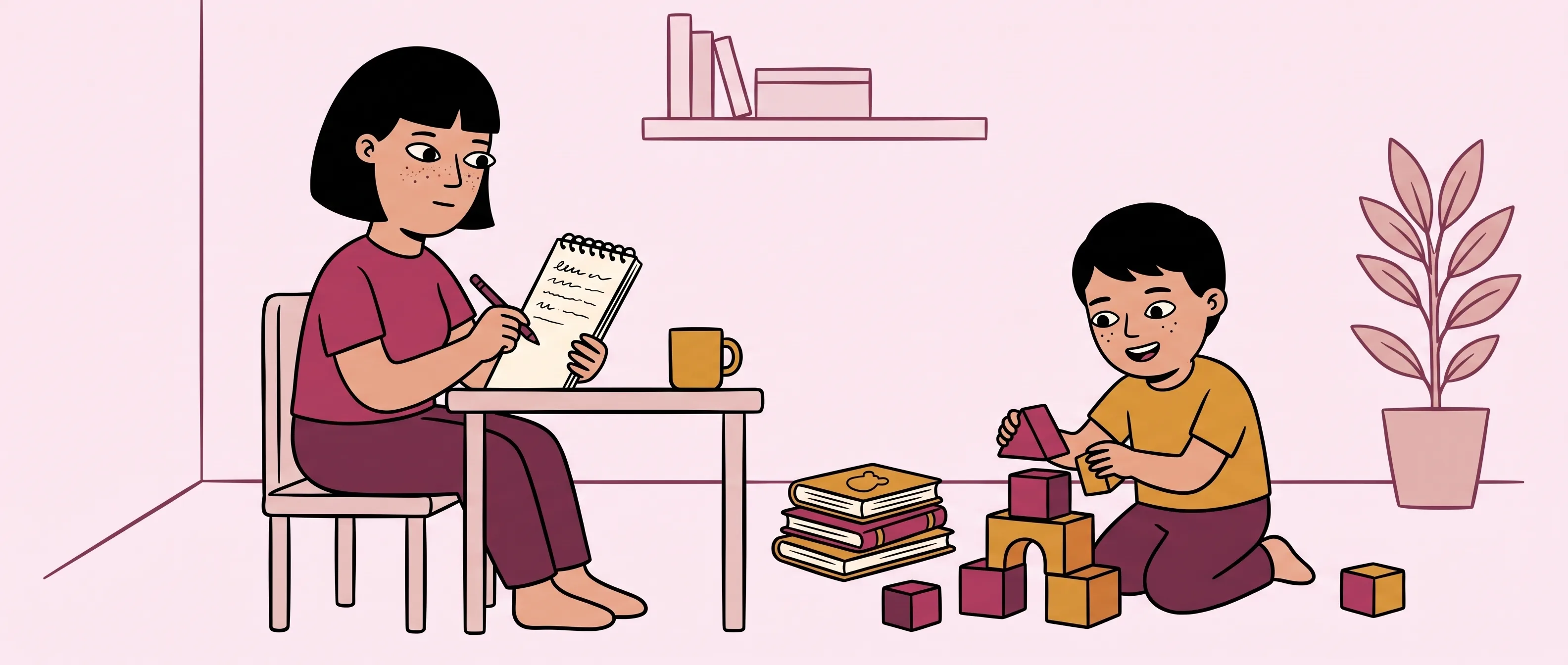
A simple ABC record can help. It is not meant to find fault or decide who was right. Its purpose is to organise what happened before the child’s reaction, during it, and immediately afterwards.
What is the ABC method?
The ABC abbreviation helps break down a difficult moment into three clear parts:
- A - before the behavior: what was happening just before;
- B - behavior: what the child did or said;
- C - after the behavior: what happened next, including the response of others and how the situation continued.
C does not automatically mean a consequence or punishment. It may include help with calming down, moving to a different place, returning to a task, or ending an activity. An ABC journal organises the facts; it is not intended to diagnose a child or assign them a fixed trait.
Don’t just ask “why?”—look at what came before
Parents often focus on the emotional outburst itself because it is the most visible part. Yet important details may have appeared much earlier: no nap, a long shopping trip, noise, hunger, rushing, or a sudden change of plan.
This does not mean every difficult reaction can be avoided. A child may still protest when they hear “no” or have to stop a favourite activity. However, it is worth noticing when similar situations are clearly more difficult.
A trigger and the wider context are not the same thing
A trigger is usually a specific event immediately before the reaction. It might be being asked to wash their hands, the end of a cartoon, having a toy taken by a sibling, or being told it is time to leave.
The wider context includes everything that may have lowered your child’s patience that day. It does not have to cause the protest itself, but it may make an ordinary request feel too hard to accept.
In the context section, you can briefly note:
- a late time of day;
- hunger or thirst;
- tiredness after a busy day;
- illness, pain, or feeling unwell;
- noise, crowds, or lots of new people;
- rushing;
- a change to a familiar routine;
- not having had a chance to rest during the day.
You can also include factors on the adult’s side. A note such as “we were all in a rush” or “the morning started later than usual” is not a judgement. It is simply an important piece of the puzzle.
When do challenging behaviors appear most often?
Morning: lots of instructions and little time
In the morning, children often hear several directions one after another: get up, get dressed, eat, brush your teeth, put on your shoes. Even when each activity is familiar, the build-up can create resistance.
Notice whether the protest appears during a particular part of the morning. Sometimes the challenge is stopping play, sometimes it is a specific item of clothing, and sometimes it is simply the pace. If you see this pattern often, you may be able to lay out clothes in advance or reduce the number of instructions given at once.
Shopping, meals, and waiting
Shops can be demanding: bright lights, sounds, queues, lots of appealing products, and the need to wait. Being told they cannot buy sweets may be only the final moment when emotions spill over.
At mealtimes, stopping play, waiting for food, or being told they cannot have another snack can have a similar effect. In your note, record whether your child had eaten earlier, how long you had been out, and whether the situation happened towards the end of the day.
Changes between activities
For many children, the hardest part is not the task itself but moving from one activity to another. The end of playtime, going into the bathroom, leaving the playground, or turning off a screen can bring strong resistance.
You can check whether a simple warning helps. A few minutes before the change, remind your child what will happen next, then return to the same message. This is not about negotiating the boundary, but about giving your child a moment to prepare for the change.
Evening: less energy for cooperation
At the end of the day, even a small problem can grow into big emotions. A child may protest for longer during bath time, getting into pyjamas, or settling to sleep, especially if they have had a lot of stimulation earlier.
It can help to slow things down and avoid adding unnecessary expectations. If the evening was especially difficult, note whether your child had a nap, came home late, or followed a different routine than usual.
How can you describe behavior without labels?
Words such as “naughty”, “spiteful”, or “manipulative” are usually not helpful when observing behavior. They tell you how the situation felt, but not what actually happened.
A better description is one that someone can picture without knowing your child. Instead of assigning intentions, record specific words, movements, timing, and the number of times something happened.
Examples:
- instead of: “he was aggressive”
write: “he hit his brother on the shoulder with an open hand”;
- instead of: “she was whining terribly”
write: “she cried by the door for around three minutes”;
- instead of: “he would not cooperate”
write: “he sat on the floor and refused to put on his shoes three times”;
- instead of: “he was trying to force us”
write: “after being told there would be no extra cartoon, he cuddled up and asked for one more”.
These kinds of notes are more useful because they allow you to compare similar situations after a few days. They make it easier to notice whether your child most often reacts by shouting when plans change, when they lack attention, when they have to wait, or when they are overwhelmed.
It is also worth recording small successes. If your child puts away a toy after a reminder, names their anger, or asks for help instead of throwing an object, note it down. This shows which skills are already beginning to work.
How can you keep an ABC journal without creating extra pressure?
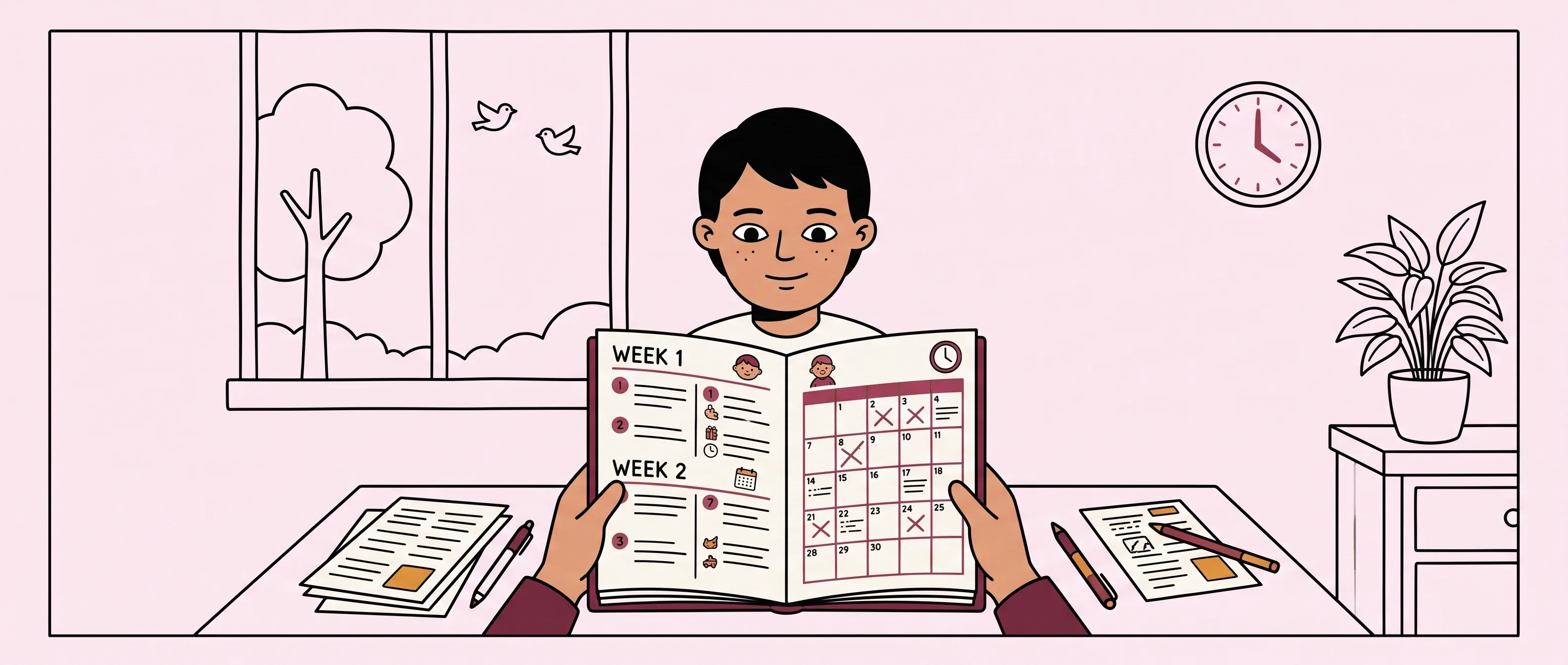
Your journal does not need to be a detailed table or another task to tick off. A phone, notebook, or simple sheet of paper with a few regular sections is enough.
A good record should be brief and possible to write once emotions have settled a little. If you have little energy, a few key words are better than giving up on taking notes altogether.
What is worth including?
Three ABC record examples
1. Leaving the playground
A: After around an hour of play, the parent said: “It’s time to go home now.” The child was busy going down the slide.
B: The child shouted, cried, and lay down on the ground. They said: “I’m not going!”
C: The parent calmly repeated that it was time to leave, helped the child stand up, and walked away from the play equipment with them. After a moment, the child cuddled up, and they went home together.
2. The end of a cartoon
A: When the agreed cartoon had ended, the parent turned off the screen and reminded the child that it was time for the evening routine.
B: The child cried, tried to turn the cartoon back on, and loudly asked for another episode.
C: The parent acknowledged that the child felt disappointed, did not turn on another cartoon, and suggested going to the bathroom together. After a few minutes, the child went to brush their teeth.
3. An argument over a toy
A: Siblings were playing with one toy car. The second child reached for the car the first child was playing with.
B: The child shouted, snatched the toy away, and pushed their sibling.
C: The adult separated the children, put the car aside, and checked that nobody was hurt. Once emotions had settled a little, they helped the children work out who would play first and who would wait for their turn.
A blank ABC form to copy
| Section | Notes |
|---|---|
| Date and approximate time | |
| Place and context | |
| A - what happened immediately before the behavior? | |
| B - what did the child do or say? | |
| C - what happened after the behavior, including other people’s responses? | |
| What is worth checking or preparing next time? |
In every note, you can include:
- the date and approximate time;
- the place;
- the wider context;
- A: what happened shortly beforehand;
- B: what the child did or said;
- C: what happened afterwards;
- the approximate duration of the situation;
- an idea for the next similar situation.
An example note could look like this:
5:40 p.m., shop. Context: late in the day, no snack. A: told they could not buy a lollipop. B: crying and shouting for around four minutes. C: moved to a quieter part of the shop, had a brief conversation, and did not buy the lollipop. Next time: have a snack before going out and agree on shopping rules before going in.
This kind of note does not label the child as the problem. It simply shows how the event unfolded and provides a starting point for a small change next time.
Don’t record everything
You do not need to document the entire day. To begin with, choose one, two, or three situations that were the most demanding for your family.
On an exceptionally difficult day, a short note is enough: morning - rushing - protest while getting dressed - no breakfast. The journal should give you more clarity, not leave you feeling that you need to keep perfect records.
What does part C tell you—that is, what happens afterwards?
Part C is often overlooked, but it can explain a great deal. It is not about judging the adult’s response, but about noticing what happened after the child’s behavior.
Record whether the task was postponed, whether the child received more connection, whether the location changed, or whether they gained access to a toy, screen, or snack. Each of these details may matter when similar situations keep repeating.
Does the difficult moment delay an unwanted task?
Sometimes, after shouting or crying, an obligation is paused for a while. This may involve brushing teeth, getting dressed, tidying up, or leaving the house.
You do not need to assume that the child is doing this deliberately. When highly distressed, they may simply react in a way that temporarily stops a difficult situation. If you notice this pattern, consider using shorter messages, giving earlier warnings, and calmly returning to the task after a brief pause to breathe.
Does intense attention follow the behavior?
Children need connection and attention—it is natural. However, it is worth checking whether lengthy conversations, cuddles, or negotiations happen mainly after shouting, or also when your child calmly asks for help.
You can reinforce simple communication as soon as it appears. If your child comes to you and says they want to be close, respond before the tension builds. This gives them more opportunities to experience that calm signals are noticed too.
Did your child need less stimulation?
Sometimes, after crying, a child moves to a quieter place, leaves a crowded shop, or receives fewer instructions. If this pattern repeats especially in noisy environments or after a long day, it is worth taking overwhelm into account in your next plan.
Do not look for one answer after a single event. It is better to compare several similar records and ask yourself: what could be simplified, anticipated, or communicated earlier?
How can you use ABC notes in everyday planning?
If a similar pattern appears in several notes, the next step may be to carefully explore a possible reason for the behavior—without giving your child a label based on one event.
After a few days, review your notes. Look for similarities: the same time of day, type of instruction, location, noise level, or point of transition between activities.
Do not change everything at once. Choose one repeating moment and try one small, realistic adjustment over the next few opportunities.
Prepare your child for a change
If the difficulty appears when playtime is ending, try reminding your child earlier about what will happen next. You can use a clock, a picture, or the same sequence of words each time.
Limited choices can also help. Instead of asking whether your child wants to put on a coat, offer a choice between two coats. The boundary remains clear, while your child has a small amount of control over how the task is completed.
Take care of the basics of the day
If your notes suggest that tension is greatest when your child is hungry, tired, or out for long periods, adapt your plan to that information. You might bring a snack, shorten the shopping trip, or move a less urgent task to a calmer time.
This is not spoiling your child or giving up boundaries. It is a sensible way to create conditions in which it is easier for your child to use the skills they are already learning.
Practise simple phrases outside a crisis
When your child is calm, you can suggest short phrases for difficult moments. Keep them easy to remember and appropriate for their age.
Useful phrases include:
- help me;
- a little longer;
- I don’t want to;
- it’s too loud;
- I’m angry;
- I want a cuddle.
When they are very upset, your child may not use these words straight away. Even so, practising them calmly in everyday situations gives them more options than simply repeating what they are not allowed to do.
When is it worth seeking additional support?
An ABC journal can help you better understand everyday challenges, but it does not replace medical or psychological support. If something worries you, you do not need to wait until the situation becomes very difficult.
Talk to your paediatrician if you notice pain, a clear and sudden change in how your child is functioning, major difficulties with sleep or eating, or other physical symptoms. In these situations, it is worth first checking whether your child is experiencing physical discomfort.
Speaking with a psychologist may be a good step when behaviors are very frequent, intense, or make everyday life difficult. It is also worth seeking support if your child regularly hurts themselves or others, you are worried about safety, or you feel you no longer know how to respond.
If you feel that tension is building on your side too, pause and seek help without blaming yourself. The safety of the child and the adult is always more important than finishing a conversation or sticking to the plan.
Summary: small notes, greater clarity
ABC does not provide a ready-made answer for every difficult situation. However, it can help you see that behind a protest there is often a specific combination of factors: change, tiredness, refusal, rushing, or a need for support.
Keep your notes brief, describe the facts, and look for repeating patterns. Then choose one small change: a warning, a snack, a shorter outing, fewer instructions, or a calmer response.
If you would like to organise recurring situations in your home, you can complete the BehaviorComplainer consultation form. Briefly describe what is happening, and it will be easier to identify possible next steps.
Sources
- Kent Community Health NHS Foundation Trust, “My behaviour”.
- Cambridgeshire and Peterborough NHS Foundation Trust, “ABC Chart”.
- Centers for Disease Control and Prevention (CDC), “Tips for Responding to Behavior”.