Is it worth keeping notes before a consultation?
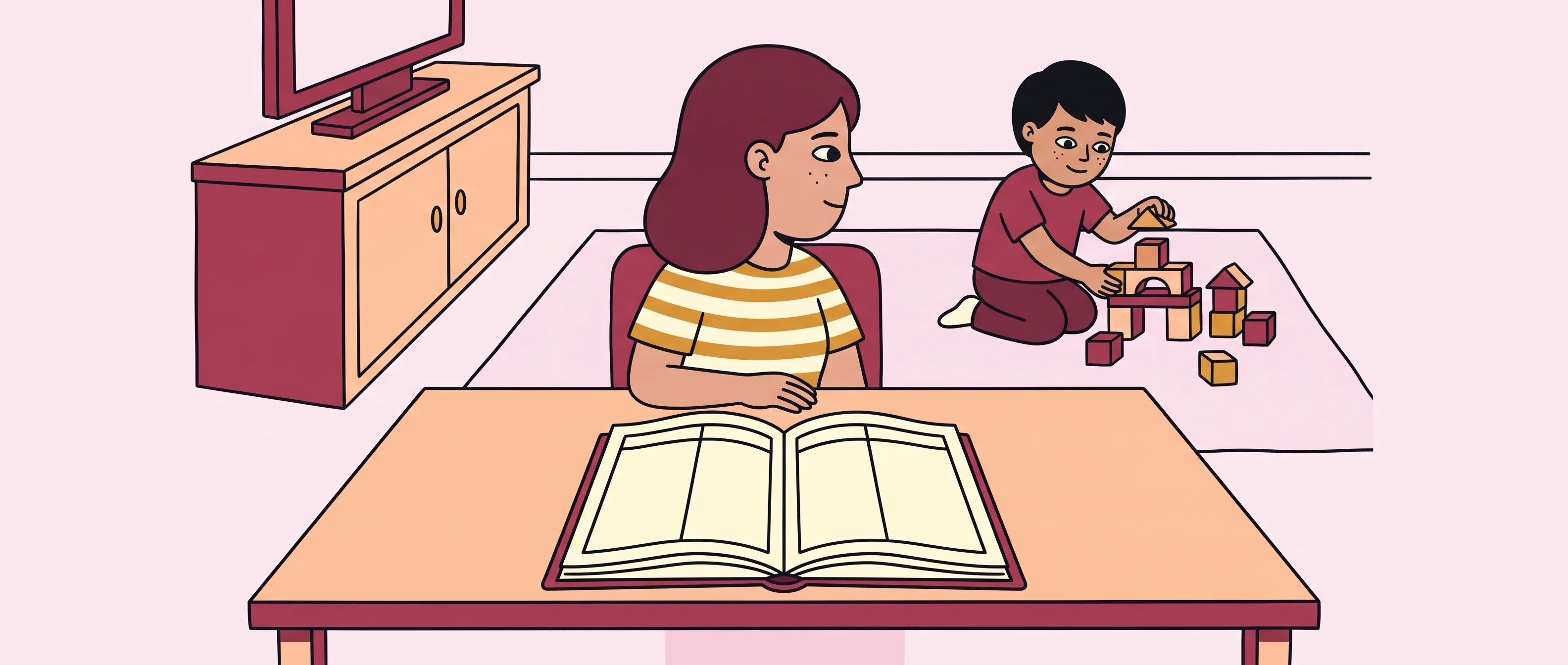
After another difficult morning, do you wonder why your child reacts so strongly to seemingly ordinary situations? Getting dressed, leaving the house, the end of a cartoon or coming home from preschool can sometimes bring up big emotions. One such moment does not tell us much on its own, because a child’s behaviour is influenced by their whole day: sleep, hunger, noise, rushing or a change of plans.
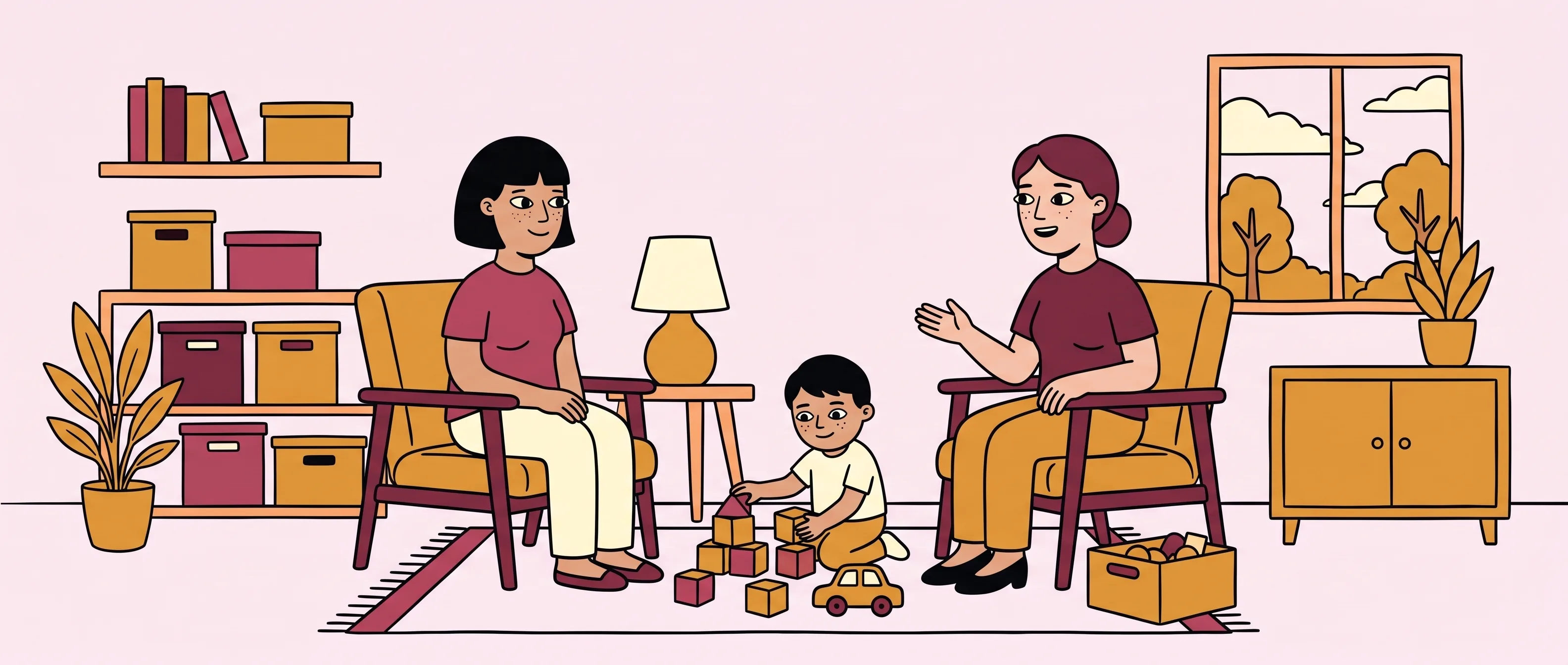
In practice, calmly observing everyday life for two weeks can be helpful. Not to look for a label for your child’s behaviour on your own, but to see what repeats. Brief notes can also make it easier to talk with a paediatrician or psychologist if you decide to seek a consultation.
It is worth recording not only difficult moments. Situations in which your child cooperates more easily, regains calm more quickly or copes well with change can be just as informative. This fuller picture can help you notice what may support your family during an ordinary day.
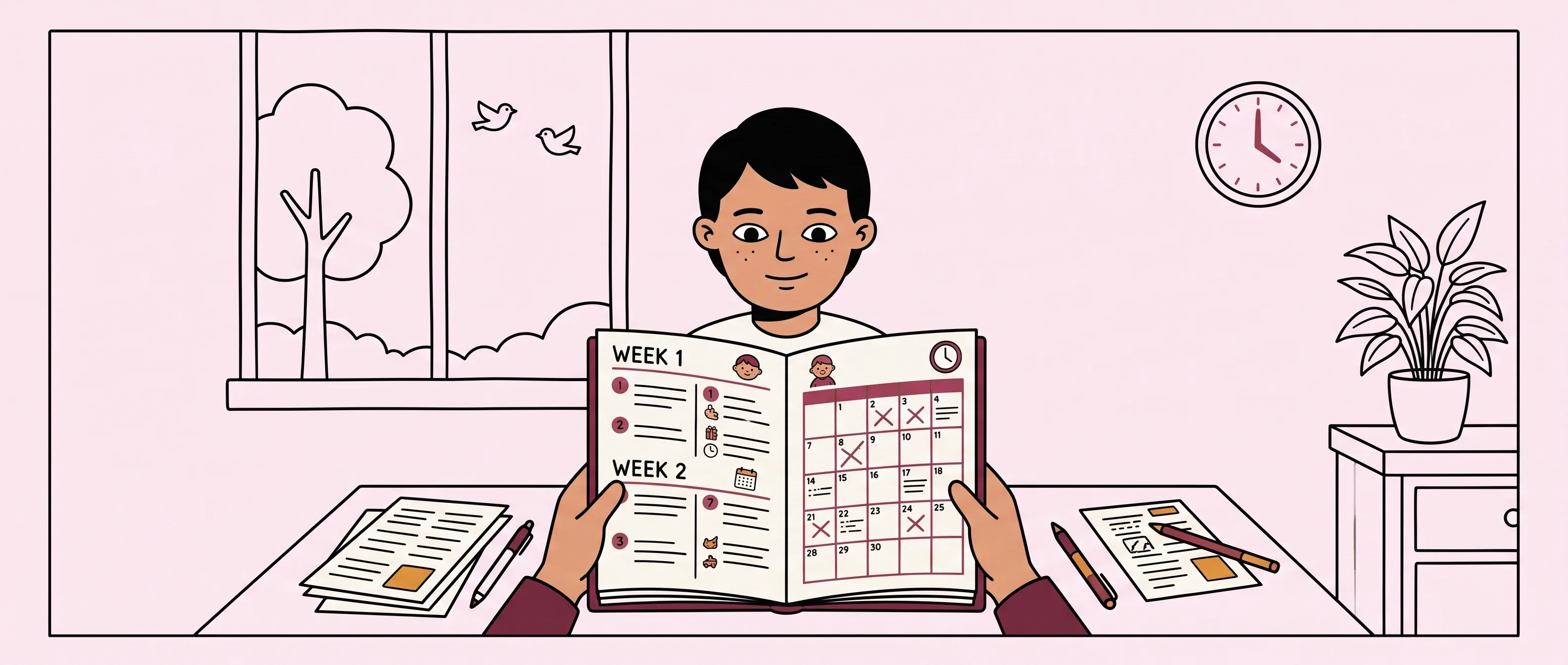
A 14-day observation plan
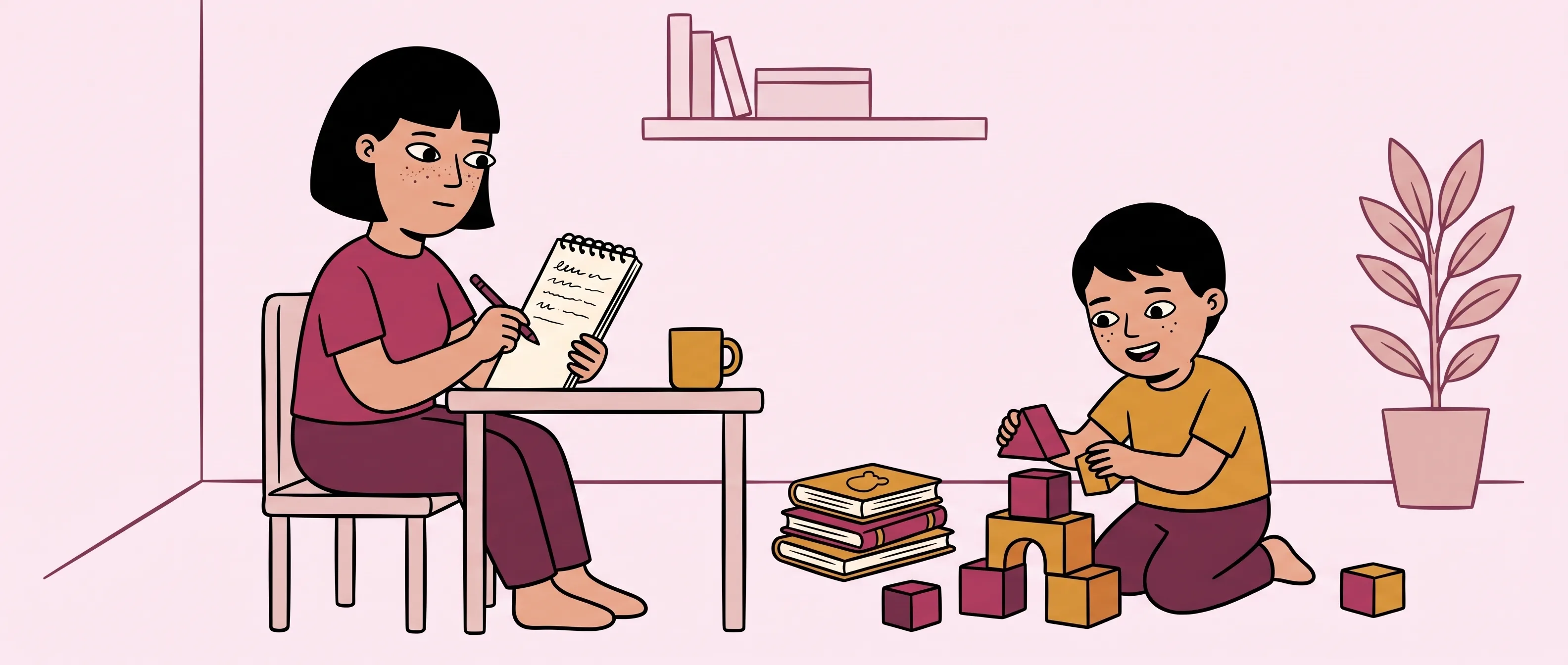
You do not need a detailed spreadsheet or hours to complete your notes. A few sentences after an important situation or a short evening summary is enough. The most important thing is to record similar information in a simple, consistent way over the following days.
Days 1–3: look at the daily rhythm
For the first three days, do not try to draw conclusions yet. Treat this time as gathering basic information about what your child’s day looks like. Write down wake-up times, naps, meals, coming home and falling asleep.
Pay particular attention to everyday flashpoints. These may include putting on shoes, brushing teeth, ending playtime or waiting for a meal. Also note whether there was rushing, visitors, travel, illness or a change of plans that day.
You might record, among other things:
- what time of day your child is more likely to become upset;
- when they are calmest and most engaged;
- how they respond to requests and being told no;
- whether they move easily from one activity to another;
- what happens after returning from nursery, preschool or school.
Days 4–10: choose situations that keep coming up
Over the next few days, focus on one or two areas that stand out most to you. This might be protesting when getting dressed, becoming very distressed after a screen is turned off, difficulty eating or a strong reaction to noise. You do not need to describe every small emotion throughout the day.
For each situation you record, include what happened beforehand, what your child did and what happened next. This makes it easier to see the whole situation, rather than only its most intense part. It is also worth noting your own response and whether anything reduced the tension, even a little.
This format may be useful for an entry:
- What happened beforehand?
For example: your child came home from preschool hungry, was finishing playtime or was waiting in line.
- How did your child respond?
Describe it specifically: they cried, raised their voice, moved away, threw a toy or did not respond.
- What happened afterwards?
Write down how the adult responded, roughly how long the distress lasted and what followed.
Days 11–14: look for recurring elements
At the end of the observation period, do not try to find one answer to every question. Sometimes difficulties appear only when several things overlap: tiredness, hunger and the need to leave quickly. It is therefore worth looking at recurring conditions rather than assigning one definite cause to one situation.
Check whether more difficult moments occur more often in the morning, after preschool, before bedtime or in crowded places. Also consider whether things are easier for your child when they know the plan in advance, have time to transition between activities or can rest in quiet. These may be valuable clues for the days ahead.
Finally, mark the calmer situations too. Perhaps your child manages leaving more easily when they are given a simple message beforehand, or ends playtime more easily after a brief warning. This information is just as important as descriptions of difficult episodes.
What is worth observing in children aged 18–72 months?
Between around 18 months and 6 years of age, children can respond very differently, even within the same day. This is not about comparing your child with others or checking whether they behave well enough. Instead, it can be helpful to notice the conditions in which it is easier for them to take part, communicate their needs and regain balance.
Attention, movement and stopping
Look at how your child manages during a short play activity, a shared task or while waiting for their turn. Do not judge whether they can sit still for a long time. Instead, note when they easily move away from an activity, quickly switch interests or need a lot of movement.
These observations may be helpful:
- the child often interrupts an activity they have started;
- it is hard for them to return to a task after distraction;
- they act very quickly before hearing the whole instruction;
- they react strongly when they have to wait;
- after exciting play, they need a long time to settle down.
It is worth adding the conditions in which this happens. The situation may look different after a full day in a group than it does in the morning after a restful night. Specific circumstances can help you understand whether the difficulty is ongoing or appears only at certain times.
Emotions, separations and contact with others
Crying, anger, protest or withdrawal may be your child’s way of showing that something feels overwhelming or that they need support. The intensity of the emotion alone does not explain the situation. That is why it is helpful to write down what happened immediately before the reaction and how your child returned to calm.
Pay attention to separations, meeting new people and playing with peers. You might note whether your child seeks closeness, moves away, needs time, protests or finds things easier with a familiar adult nearby. Some children prefer a cuddle; others need quiet or a moment without questions.
It can also be useful to record how long the reaction lasted and what helped it end. Sometimes calmly naming the situation helps; at other times, a break, water, movement or reducing the number of stimuli may help. There is no need to assume that the same approach will work every time.
Everyday routines
Much of the most useful information often appears during ordinary routines. Waking up, breakfast, using the toilet, putting on a coat, leaving the house and settling to sleep in the evening create a repeating rhythm. These are often the moments where it is easier to notice what regularly makes the day harder for your child.
It is especially worth observing transitions. The end of playtime, tidying up, getting into the car or leaving the playground all require a change in direction. It may be easier for your child when they receive a clear warning, a simple choice or a few minutes to finish what they are doing.
Responses to the environment
Children experience noise, crowds, light, smells and the feel of materials in different ways. One child may become tired quickly in a shop, while another may become very excited there. It is worth describing these responses without adding assumptions about exactly what they mean.
Make your notes as specific as possible. Instead of generally saying that your child does not like noise, you could write that they covered their ears when loud music was playing and wanted to leave the room. This type of note is clearer and easier to compare later.
How should you keep a child behaviour journal?
The journal should be useful, not perfect. If keeping it becomes too time-consuming, it will be difficult to stay consistent. It is better to write three specific sentences than to postpone making a note because there is no time for a long description.
In practice, you can use a notes app on your phone, a paper calendar or a simple table. Choose a format you can easily return to after a difficult moment. It helps if every entry includes similar elements.
Include the following in your notes:
- the date and approximate time;
- the place and the people who were nearby;
- what was happening before your child’s response;
- what exactly your child did or said;
- roughly how long the situation lasted;
- how the adult responded;
- what helped and what did not bring relief.
Describe behaviour without assigning intentions to your child. Instead of writing that your child was being spiteful or trying to force something, record the visible facts. For example: after being told the cartoon was over, they cried for about seven minutes, lay on the floor and pushed the tablet away.
It is also worth recording the number of similar events during the day. Not every episode needs its own detailed description. You could note that between 4:00 pm and 6:00 pm, there were three similar protests when changing activities.
At the end of each entry, leave space for three short questions:
- What might have made this situation easier for my child?
- What did not work this time?
- What went well for my child today?
This final part helps keep things in perspective. Your child may struggle with one part of the day while also managing very well during play, a meal or a separation. It is worth including these calmer moments too.
What does one completed day of observation look like?
The 14-day plan is a practical suggestion that can help organise your notes. You can observe for a shorter or longer period, depending on what is possible in your everyday life. Not every day needs many entries: it is enough to record situations you would like to compare later.
This type of record resembles a simple ABC child behaviour journal: it includes what happened before the response, the behaviour itself and what happened afterwards.
Example 1
Time and situation: 7:40 am, leaving for preschool.
What happened beforehand: There was little time in the morning, and the child did not want to stop building with blocks.
Child’s behaviour: They cried, sat on the floor and pushed their shoes away.
Adult’s response: The adult acknowledged the difficulty, helped put the blocks into a box and offered a choice between two pairs of shoes.
What happened afterwards: The child chose shoes, put them on with help and left the house.
Example 2
Time and situation: 5:15 pm, the end of playtime at the playground.
What happened beforehand: The child was playing with other children, and the adult reminded them that it would soon be time to go home.
Child’s behaviour: They raised their voice, said, “I’m not going,” and ran towards the slide.
Adult’s response: The adult moved close, calmly repeated that it was time to leave and offered one last turn on the slide.
What happened afterwards: After the final turn, the child went towards the exit. They were still unhappy but allowed themselves to be dressed.
Blank template to copy
You can copy the table into a notebook and complete it with short, specific sentences.
| Time and situation | What happened beforehand? | Child’s behaviour | Adult’s response | What happened afterwards? |
|---|---|---|---|---|
How should you record possible causes of difficult situations?
After a challenging moment, it is easy to think you already know the reason for it. However, a similar response may occur for different reasons depending on how the day has gone. That is why it is better to describe the circumstances in your notes than to draw final conclusions.
Instead of writing that your child became upset because playtime ended, you can record the full picture. Perhaps they had not eaten their afternoon snack, had spent a long time in a noisy place and only then heard that it was time to leave. Several factors together may matter more than any one of them.
It is worth checking these areas:
- sleep quality and waking during the night;
- a nap, or the lack of one;
- a delayed meal, thirst or refusing food;
- an illness, runny nose, pain or tiredness;
- travel, visitors, a new place or a changed plan;
- noise, crowds, bright light and lots of conversation;
- separation from a parent, conflict with another child or having to wait.
Short, factual notes are helpful. You might note that there were many people in the shop and loud announcements, and that your child began to cry at the checkout. At another time, you may record that they were given a meal straight after returning from preschool and calmly moved on to bath time.
Also add situations where similar conditions occurred but the difficulty did not appear. This is important because it helps avoid drawing conclusions too quickly. Sometimes it is not noise itself that matters, but noise after a tiring day without time to rest.
When might you notice a recurring pattern?
One strong protest does not necessarily mean there is an ongoing difficulty. A child may respond more poorly after a restless night, illness, travel or an especially intense day. It is more helpful to check whether similar situations return in a similar pattern.
After a few days, compare your entries. See whether distress appears more often during a particular activity, at a similar time or in a specific place. Also check whether the responses are similar or whether they change depending on the circumstances.
To keep things simple, you can rate more difficult situations on a scale from 0 to 3:
- 0 - the difficulty did not occur;
- 1 - the response was brief and the child returned to the activity fairly quickly;
- 2 - the situation clearly disrupted the day’s plans and adult support was needed;
- 3 - the response was very strong or lasted a long time and made it difficult to continue with daily activities.
This scale is not intended to judge your child. It simply helps you see whether distress is less, similar or greater over the following days. You may also notice that the difficulty does not disappear but occurs less often or ends more quickly.
After 14 days, it is helpful to look at the first and last entries. Notice whether anything has changed in the number of episodes, how long they last or the situations that come before them. If your child attends a setting, brief, specific information from their caregivers may also be helpful.
What should you prepare for a consultation with a paediatrician or psychologist?
For a consultation, it is worth bringing more than a description of the most difficult moments. A picture of your child’s typical day will also be useful: sleep, eating, play, communicating needs and relationships with others. This means the conversation will not be based on only one intense event.
Write down whether you have noticed any significant changes recently. Perhaps your child wakes more often at night, responds differently to meals, no longer wants to do activities they previously enjoyed or finds separations harder. Give specific examples and say how long you have been noticing this.
Communication and everyday needs
Note how your child shows what they need. They may use words, gestures, eye contact, leading an adult by the hand or behaviour. It is also worth describing how they respond to simple requests and to being told no.
Prepare brief information about:
- how your child asks for help, food or a break;
- how they show anger, pain, fear or tiredness;
- whether they communicate differently at home and elsewhere;
- how they respond to the presence of children and adults;
- what usually helps them feel safer.
Play, group settings and strengths
Describe what your child enjoys doing and what happens when play is interrupted or someone changes the rules. You can include waiting for a turn, sharing, responding to losing and taking part in shared activities. This information shows what everyday life looks like across different situations.
Do not leave out your child’s strengths. Record their favourite activities, the people they feel comfortable with and the approaches that help them regain calm. This is an important part of the picture because it shows what future everyday support can build on.
What should you avoid during observation?
The most common pitfall is recording only crisis moments. After a difficult situation, it is easy to remember mainly the crying, shouting or tension. Yet leaving the house calmly or ending playtime successfully also deserve a brief note.
It is also worth avoiding labels that do not describe how the situation unfolded. Terms such as lazy, naughty or manipulative may come from tiredness, but they do not help show what actually happened. A description of the behaviour, timing and circumstances is far more useful.
Do not judge your own response based on one situation either. In a difficult moment, every parent may respond differently than they had planned. In the journal, it is enough to honestly note what was said or done and what happened next.
If difficulties are clearly becoming more intense, last a long time or affect sleep, eating, play, relationships or participation in preschool, it is worth speaking to a paediatrician or psychologist without waiting. A journal does not replace a consultation, but it can make it easier to explain the situation calmly and specifically.
Summary: 14 days to help organise everyday life
A two-week observation period does not have to provide one answer to the question of where a particular behaviour comes from. However, it may reveal important details: when things are harder for your child, what increases distress and what brings at least some relief. That is already a great deal when everyday situations start to feel tiring or confusing.
The most useful notes are brief, specific and free from judgement. Record what happened before the situation, how your child responded, what the adult did and how the moment ended. Also remember sleep, meals, health, changes of plan and environmental conditions.
Before a consultation, prepare a short summary from your journal:
- the most difficult situations and how often they occur;
- times of day and places where distress appears more often;
- conditions that may make everyday functioning easier for your child;
- supportive approaches that were at least somewhat helpful;
- questions you would like to discuss.
If you need help organising your observations or are wondering whether it is worth seeking advice about your child’s behaviour, complete the consultation form. You can use your notes as a calm starting point for a further conversation.
Sources
- American Academy of Pediatrics (AAP), “How to Prepare for a Visit with a Developmental and Behavioral Pediatrician”.
- Centers for Disease Control and Prevention (CDC), “Concerned About Your Child’s Development?”.
- Kent Community Health NHS Foundation Trust, “My behaviour”.