Strong emotions in children: when is observation enough, and when is it worth taking action?
Does your child scream in the shop, become angry when you turn off a cartoon, or cry when you say goodbye at preschool? Moments like these can be exhausting, especially when they happen several times a day. Many children are still learning how to cope with frustration, tiredness and changes of plan.
However, it is worth pausing for a moment if you notice that your child is behaving differently than before or that difficult situations are clearly becoming more intense. This is not about judging a single tantrum. What matters is the bigger picture: how long the tension lasts, what happens between difficult moments, and whether your child can regain calm with your support.
In everyday life, check whether your child can still:
- enjoy play or focus, even briefly, on something they like;
- seek contact with loved ones;
- rest and eat in their usual rhythm;
- accept comfort, presence or simple help from an adult;
- return to everyday activities after strong emotions.
A psychological consultation is not a label or a judgement of you as a parent. It can simply help you make sense of what you are seeing and choose calmer ways of responding.
What may be typical for a child’s age?
Parents often ask whether defiance, shouting and refusing everything are still part of development. Young children often have intense reactions because emotions arise faster than they can name or manage them. Moments of refusal, rushing, ending play or having to share something with another person can be particularly difficult.
A child may also react strongly when they are hungry, overtired or overwhelmed by sensory input. Noise, crowds, a new place, separation from a parent or a sudden change of plans may be enough for tension to rise quickly. This does not mean every reaction should be ignored — it simply helps to look at it in context.
Instead of judging, look at what happened beforehand
When a child pushes, throws objects or pushes you away in anger, it is easy to focus only on the behaviour itself. A more helpful question may be: what happened just before? Perhaps your child had to suddenly stop a favourite activity, did not feel understood or had too much sensory input.
For a few days, make brief notes about:
- when the difficulty appeared most often;
- what happened beforehand;
- how long your child needed to calm down;
- what reduced the tension;
- whether similar situations happen at home, outside the home and in childcare or school.
After intense anger, a child may need quiet, a hug or a little space. If they choose a moment of calm themselves and know that you are available, such a break can be helpful. This is different from sending a child away alone as a punishment when they are finding it very hard to regulate themselves.
One difficult day does not tell the whole story
Even an especially intense outburst of anger does not necessarily mean there is a serious difficulty. Every child has harder days, particularly during changes at home, illness, tiredness or when starting at a new childcare setting. What tells you more about the situation is whether the tension is beginning to take over an increasing part of everyday life.
It is worth taking a closer look if, alongside irritability, you also notice:
- less interest in play;
- avoiding close family members;
- clear changes in sleep or eating;
- frequent fear in everyday situations;
- stomach aches, headaches or other physical complaints;
- difficulties at home, in relationships and in childcare or school at the same time.
Red flags in a child’s behaviour
Concern may arise when a child does not return to their usual way of functioning for a longer period. Take notice if difficulties are not only recurring, but are also beginning to affect play, sleep, relationships or everyday outings. You do not have to wait until the situation becomes very severe.
Reasons to seek a consultation may include:
- clear withdrawal from contact with a parent, siblings or peers;
- frequent crying, tension, irritability or agitation;
- losing interest in things that previously brought the child joy;
- difficulty accepting support from a loved one;
- increasing avoidance of ordinary activities;
- a feeling that the approaches you use at home are no longer helping.
The need to spend a little time alone is not alarming in itself. A child may want to sit somewhere quiet, play without talking or rest after a difficult day. A situation needs closer attention when, for a longer period, they cut themselves off from people and nothing brings them relief.
Sleep, eating and physical signs
A child cannot always say that something feels overwhelming. Sometimes tension shows up as difficulty falling asleep, frequent waking, changes in appetite or increased tiredness. If these changes are new and persist, it is worth making a note of them.
Discuss recurring stomach aches, headaches or other complaints with your paediatrician first. They can help check whether there is a medical cause that needs treatment. If everything is medically fine, a psychological consultation may be the next step.
Not every poorer night’s sleep after moving house or starting preschool means there is a problem. Your child may need time, routine and more closeness. What matters, though, is whether things become at least a little easier over time.
Aggression, self-harm and very intense agitation
Hitting, biting, throwing things or kicking should not be dismissed, but they do not necessarily mean a child has bad intentions. They are often a sign that the child’s tension has exceeded their current ability to cope. First, make sure everyone is safe and set a clear boundary.
You can say briefly:
- I won’t let you hit.
- I’m going to hold your hands so everyone stays safe.
- I’m here with you, and I’ll help you calm down.
Deliberately hurting themselves requires a particular response — for example, banging their head, biting themselves or scratching their skin until it becomes sore. Do not leave your child alone when they are highly agitated, and reduce the risk of injury. Then contact a paediatrician or psychologist to discuss the situation.
If your child may seriously harm themselves or another person, an injury has occurred, or you are unable to keep everyone safe, seek urgent medical help or contact emergency services.
Anxiety that limits everyday life
Shyness, difficult separations and worries about new places are common for children of different ages. It is worth taking action, however, when anxiety begins to prevent a child from taking part in ordinary life. This may involve increasing difficulty leaving the house, attending childcare or school, falling asleep or meeting with loved ones.
If your child is avoiding more and more situations and feels worse from week to week, you do not need to wait for a bigger crisis. A consultation can help identify what is weighing on them most right now.
When should you book a consultation with a child psychologist?
Who should you contact first?
| Person or source of help | When is it worth starting with this step? |
|---|---|
| Paediatrician | When behavioural changes occur alongside pain, difficulties sleeping or eating, increased tiredness, an injury or other physical symptoms. A paediatrician can assess whether further medical care is needed. |
| Child psychologist | When the difficulty persists, worsens or clearly affects play, relationships, time in childcare or school, rest, or the everyday activities of the child and family. |
| Urgent help | When there is an immediate threat to life or health, you cannot ensure safety, or an injury has occurred that requires urgent assessment. In this situation, seek urgent medical help; if there is an immediate danger, contact emergency services. |
There is no single number of tantrums or a specific time after which every difficulty becomes concerning. Instead, consider whether the situation is gradually settling or, on the contrary, worsening and affecting more areas of life. It also matters how much it is affecting your child and the whole family.
Consider a consultation if:
- the difficulty continues for many weeks without visible improvement;
- your child’s reactions are frequent, very intense or long-lasting;
- your child finds it especially hard to return to connection and calm;
- the problem appears at home, in childcare or school, and in relationships;
- your child plays, rests, eats or sleeps less;
- intense anxiety, withdrawal or persistent sadness appears;
- you feel helpless and do not know how to respond.
The arrival of a sibling, moving home, parental separation or starting at a new childcare setting can strongly affect a child’s everyday life. During these periods, children often need more predictability and the calm presence of a parent. However, the fact that a situation is linked to a change does not mean you have to handle it without support.
Speech, relationships and play — what is worth noticing?
Not every child communicates in the same way. One child talks a lot, while another more often points, takes an adult by the hand, uses gestures or facial expressions. What matters most is whether the child has a way to communicate their basic needs and whether adults can usually understand them.
When communication is difficult
A consultation may be helpful if your child regularly cannot signal pain, hunger, tiredness, disagreement or a need for help. Growing frustration may then come out through shouting, crying, hitting or withdrawing from contact. This does not point to any particular diagnosis — it simply shows that it may be worth looking at how communication is working.
For a few days, write down:
- what your child probably needed;
- how they tried to communicate it;
- whether you were able to understand them;
- how they reacted when their message was not understood.
Connection is about more than eye contact
Do not assess your connection with your child based only on eye contact. For some children, looking directly into someone’s eyes can be difficult, especially when they feel shy, tired or upset. It is far more telling whether your child seeks you out, responds to your presence and can return to contact after some time.
It is worth arranging a consultation if, over a longer period, your child does not want closeness even with people who are important to them, does not accept comfort and at the same time loses interest in play. This combination of changes is worth discussing calmly. You do not need to work out on your own what may be behind it.
Changes, noise and lots of sensory input
Some children strongly dislike ending play, leaving the playground or changing plans. Protest itself is a normal part of children’s everyday lives. However, it is worth looking more closely when almost every change leads to prolonged, very intense tension.
Also notice reactions to sounds, crowds, touch, clothing, smells or movement. A child may avoid these sensations or, on the contrary, constantly seek intense sensations and movement. Rather than seeing this as stubbornness, look at what helps your child feel calmer.
How can you prepare for a consultation?
Add to your notes how the difficulty affects your child’s everyday life: play, relationships, sleep, eating, time in childcare or school, or leaving the house. Note whether an injury occurred before the behavioural change or whether there was a sudden, clear change in how your child was functioning.
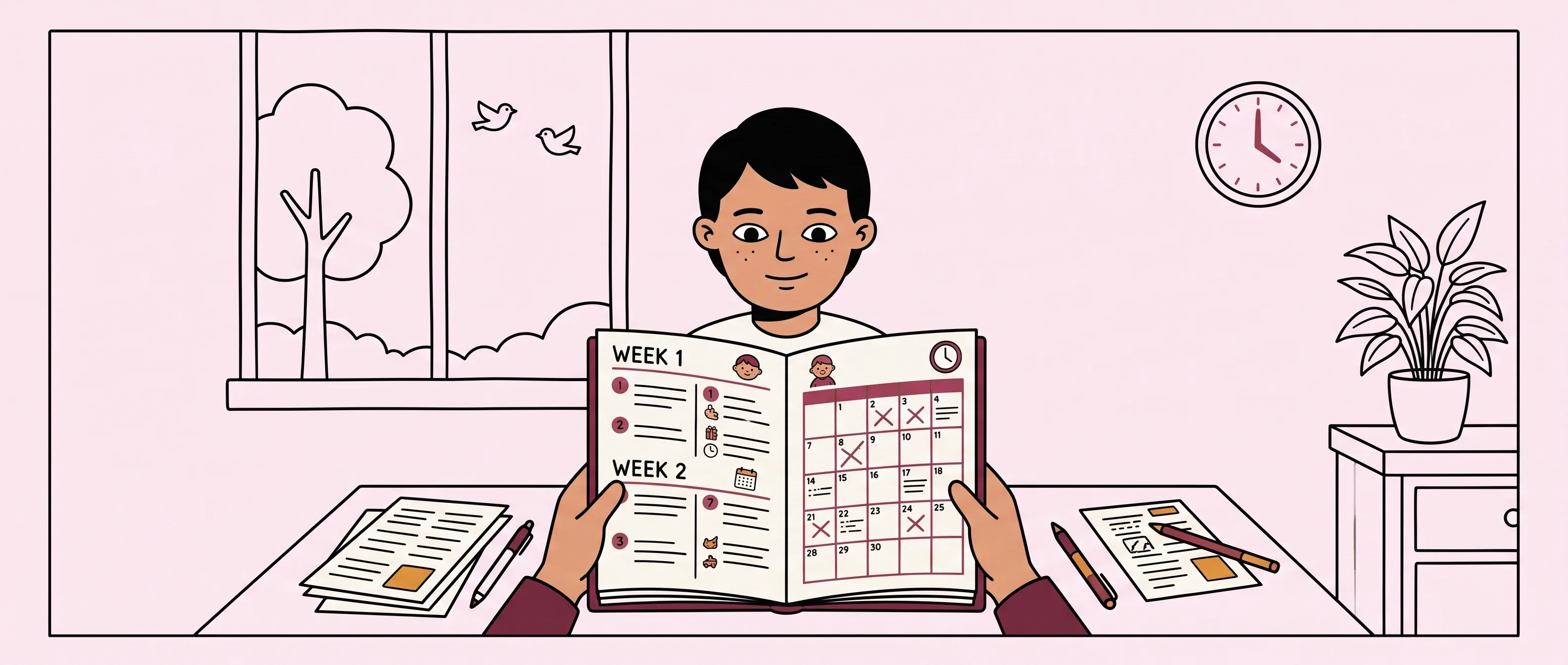
Before the appointment, you may find it helpful to keep a simple diary for one or two weeks. This is not meant to be a list of your child’s or your parenting mistakes. The aim is to gather specific information that will make the conversation easier.
After a more difficult situation, note:
- the date, time and place;
- what happened;
- how long the reaction lasted;
- what was happening just beforehand;
- how the adults responded;
- what helped and what increased the tension.
Also add information about sleep, eating, time at preschool or school, major changes at home and things your child enjoys. These notes can help you notice details that are easy to miss in the rush of everyday life. They can also make it easier to explain the situation during a consultation.
What can you do at home and in childcare or school?
When a child is very upset, long explanations usually make little difference. At that moment, short sentences, a calm tone and clear boundaries are more helpful. You do not have to convince your child that they should not feel angry — you can help them move through that anger more safely.
During strong emotions, try to:
- reduce noise and additional sensory input;
- speak briefly and calmly;
- stay close if your child needs this;
- stop behaviour that could hurt someone;
- return to the conversation only after your child has calmed down.
In your daily routine, predictable times for rest, free play and movement, as well as advance notice of changes, can work well. If you know you need to leave in five minutes, tell your child beforehand and remind them again just before the activity ends. This small warning will not solve everything, but it may help your child move on to the next step.
If your child attends nursery, preschool or school, share specific guidance with their caregivers. Explain what usually comes before difficult reactions and what your child finds helpful. Discuss difficulties without your child present, so they do not hear themselves being described as a problem.
What might the first consultation look like?
The first appointment is not a test for your child or an assessment of your parenting. It is an opportunity to talk about everyday life: sleep, eating, play, relationships, time in childcare or school, and the situations that feel most difficult. The psychologist may speak mainly with the parent, observe the child during free activity or invite an older child to talk.
Prepare brief notes and information about important changes in family life. Observations from a teacher, educator or caregiver may also be useful. You do not need to have ready answers to every question — it is enough to describe what you genuinely see.
You can tell your child in simple words that you are going to see someone who helps adults understand children better when things feel difficult. Do not present the visit as a punishment for their behaviour. Emphasise that you can stay close and that they do not have to talk about everything straight away.
Summary: when should you take your child to a psychologist?
A single episode of shouting, crying at separation or protesting against a change of plans does not in itself mean there is a problem. It is worth seeking support when the difficulty lasts, becomes increasingly burdensome or prevents your child from enjoying play, rest, relationships and ordinary activities. Your feeling that the situation is too difficult to manage alone matters too.
You do not have to wait until everything becomes very intense. A calm consultation can help organise your observations and choose the next step that suits your child’s situation. If you would like to do this, complete the consultation form.
Sources
- Centers for Disease Control and Prevention (CDC), “Concerned About Your Child’s Development?”.
- National Health Service (NHS), “Supporting a child or young person with mental health needs”.
- National Institute for Health and Care Excellence (NICE), “Antisocial behaviour and conduct disorders in children and young people: recognition and management”.