What is the so-called 4-Month Sleep Regression?
The term "4-month sleep regression" is a colloquial name for changes that some parents observe roughly between the 3rd and 5th month of a child's life. It is not a medical diagnosis nor a stage that every infant must experience. Some babies start waking up more frequently at night, others have shorter naps or find it harder to fall asleep, while for some families, the change is almost unnoticeable.
During this period, an infant's sleep matures intensively. Its organization changes, and the sleep phases become more varied. Between cycles, a baby may briefly move, make sounds, or open their eyes. Such partial awakenings are a natural part of sleep, though they sometimes lead to full waking and the need for parental assistance [1].
Worsening sleep does not mean that the baby has "forgotten how to sleep" or that the parent has made a mistake. At the same time, not every difficult night should be attributed to development. Similar symptoms can accompany hunger, infection, pain, discomfort after feeding, or a change in sleep needs.
How Can an Infant's Sleep Change?
Parents most often notice several changes occurring simultaneously or separately:
- more frequent night awakenings,
- naps lasting about one sleep cycle, often 30–50 minutes,
- increased difficulty calming down before sleep,
- greater sensitivity to light, sounds, and being put down in the crib,
- more restless sleep in the second half of the night or early morning,
- changes in the number or timing of naps.
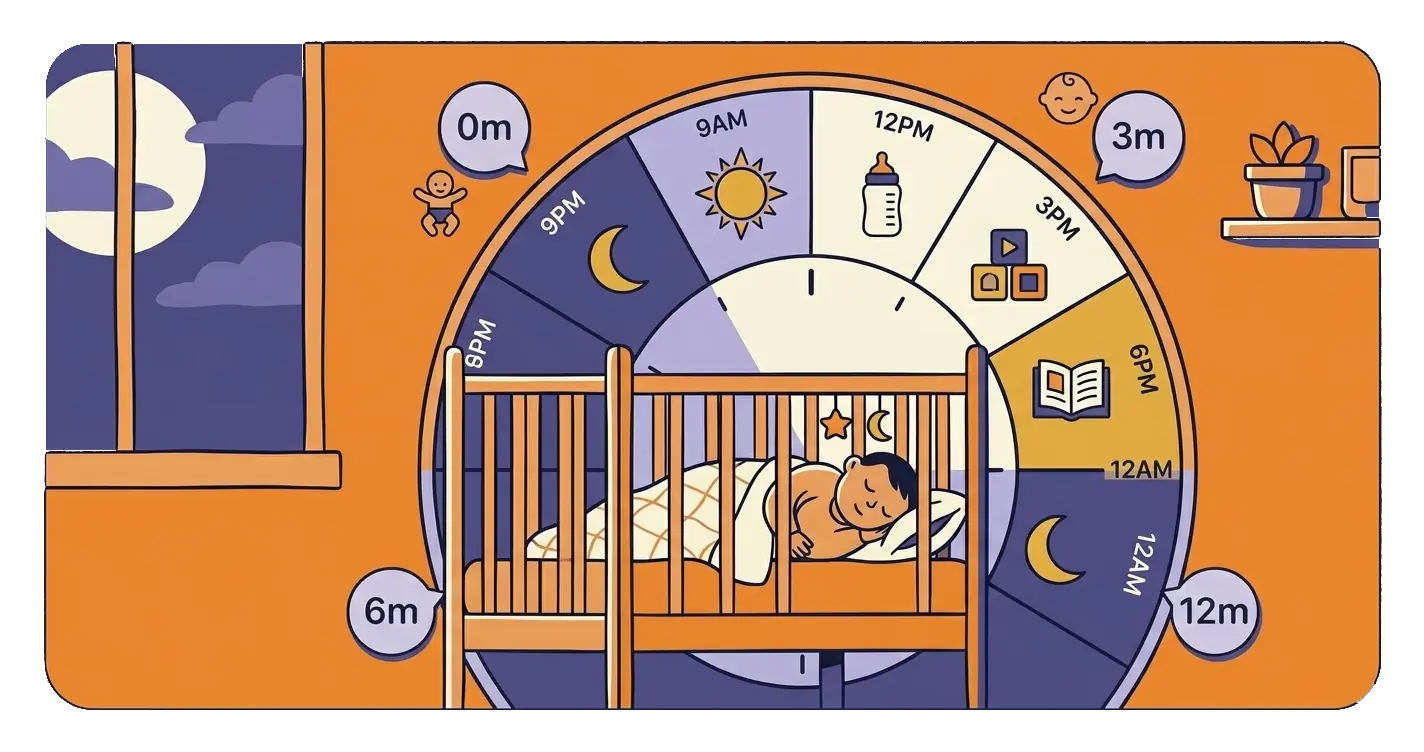
There is no single correct number of awakenings. A four-month-old baby may still need nighttime feedings, and the length and distribution of sleep throughout the day vary among children. According to the American Academy of Sleep Medicine consensus, infants aged 4–12 months typically need a total of 12–16 hours of sleep per day, including naps [2]. This is a guideline range, not a target to be achieved every day.
Are Short Naps Abnormal?
Not necessarily. Short naps are common in the first six months of life because the ability to smoothly transition between sleep cycles is still developing. If a baby is calm upon waking, eats well, develops, and gains weight, the length of the nap alone usually does not indicate illness.
It's worth looking at the whole day. If after each short nap the infant quickly becomes irritable, falling asleep causes prolonged protest, and there is noticeable fatigue in the evening, you can cautiously adjust the timing of the next sleep.
When is the Change Normal, and When to Look for Another Cause?
What Might Indicate a Typical Developmental Change?
The picture more often fits sleep maturation when:
- the change appeared during a period of intense development, usually around 3–5 months of age,
- the baby behaves as usual outside of sleep,
- has a normal appetite and an appropriate number of wet diapers,
- there is no fever, difficulty breathing, or clear signs of pain,
- the difficulties mainly concern falling asleep, short naps, or more frequent awakenings,
- there are both easier and more challenging periods in the following days.
There is no set time after which such a stage must end. For some infants, changes are short-lived, while for others, sleep stabilizes gradually over several weeks. It's worth assessing the trend over at least a few days instead of drawing conclusions after one night.
What Could Give a Similar Picture?
- Hunger or increased need for food – the baby demands feeding more often during the day as well.
- Infection – fever, runny nose, cough, lethargy, or a noticeable change in behavior may occur.
- Discomfort during or after feeding – anxiety, choking, increased spitting up, arching the body, or refusal to eat require discussion with a pediatrician.
- Overtiredness – too long periods of wakefulness can make falling asleep difficult, though not every child will show it the same way.
- Too little need for sleep at the moment – putting down a child who is not yet sleepy can also lead to protest.
- Environmental conditions – light, noise, overheating, or a sudden change in routine can disrupt sleep.
Teething is often cited as a cause of restless nights, but drooling and putting hands in the mouth are common at this age even without a tooth erupting. If the child seems to be in pain, it's worth consulting on how to alleviate the discomfort rather than self-administering pain relievers or gum gels.
How to Gently Organize the Day?
In the first months of life, the circadian rhythm is still forming. Regular signals distinguishing day from night can be helpful: access to natural light in the morning, usual household activity during the day, and a calmer, dimmed environment in the evening. Repetitive bedtime activities support calming down but do not guarantee uninterrupted nights [3].
Observation Instead of a Rigid Plan
Around 4 months, many babies have 3–5 naps, but this number depends on their length and individual sleep needs. Instead of sticking to a plan to the minute, it's worth combining an approximate assessment of wake time with observing the child's behavior.
Signs of needing rest may include:
- turning away and less interest in play,
- yawning or "zoning out",
- increasing irritability,
- nestling the head into the caregiver,
- difficulty maintaining calm contact.
Sucking hands does not always indicate sleepiness — it can also be a way of exploring their own body or a sign of hunger. It's best to interpret several signs together.
What to Do When Naps Are Short?
- After a short nap, observe the child and, if necessary, offer another sleep a bit earlier.
- Do not extend wakefulness solely to make the child "more tired." Overtiredness can make calming down difficult.
- If the child woke up calm, not every nap needs to be extended.
- If fatigue increases towards the end of the day, consider starting the evening routine earlier.
- Introduce one small change at a time and observe its impact over a few days.
How to Respond to Night Awakenings?
There is no one method suitable for every family. At this age, the need for closeness, feeding, and help in calming down is natural. The goal should not be to ignore crying or eliminate all awakenings, but to calmly assess the child's needs.
If the baby is only murmuring, moving, or briefly opening their eyes, you can watch for a moment to see if they are still asleep. When crying escalates, the child is hungry, or needs a diaper change, you should respond to their needs. Assistance can be graduated: start with a calm voice and touch, then pick up the child or feed them if needed.
The way a child falls asleep can affect what kind of help they expect upon waking, but feeding, rocking, or carrying are not "bad habits" in themselves. Behavioral interventions regarding sleep should be adapted to the child's age, health status, and family capabilities; they do not replace diagnostics when concerning symptoms occur [4].
Simple Evening Routine
The routine can last a few minutes or up to an hour and may include:
- dim lighting and limiting intense play,
- feeding according to the child's needs,
- changing the diaper and dressing for sleep,
- a short lullaby, cuddle, or calm talking,
- placing the child in a safe sleep space.
It's not necessary to put the infant down drowsy but fully awake if it causes significant stress. You can try this gradually, without pressure and without expecting immediate results.
Safe Infant Sleep
Regardless of the number of awakenings, safe sleep principles remain paramount. Infants should be placed on their backs, on a firm and flat mattress, in a separate crib or co-sleeper designed for sleep. The sleep area should not have pillows, quilts, bumpers, loose blankets, wedges, or stuffed toys. The American Academy of Pediatrics recommends room-sharing with the infant, but not bed-sharing, preferably for at least the first 6 months [5].
If the child starts attempting to roll over, swaddling that restricts arm movement should be discontinued. Positioners or devices marketed as preventing sudden infant death should not be used. Falling asleep with an infant on a couch or armchair is particularly dangerous. When the caregiver is extremely tired, it's best to place the child in a safe crib and ask another person to take over care.
When to Consult a Doctor or Specialist?
Contact a pediatrician if sleep changes are accompanied by:
- fever or noticeably worse well-being,
- significant loss of appetite or refusal to feed,
- fewer wet diapers, dry mouth, or other signs of dehydration,
- recurrent vomiting, blood in stool or vomit,
- clear pain, unusually piercing cry, or difficulty calming the child,
- frequent choking, increased spitting up with distress, or difficulty breathing during feeding,
- lack of proper weight gain,
- loud snoring, regular breathing pauses, or cyanosis,
- unusual drowsiness, limpness, or difficulty waking up.
In case of difficulty breathing, cyanosis, prolonged breathing pause, loss of consciousness, or significant difficulty waking the child, urgent medical help should be sought.
Consultation is also advisable if problems persist, significantly affect feeding and the child's functioning, or if caregiver exhaustion becomes difficult to bear. A sleep, feeding, and concerning symptoms diary from a few days can facilitate discussion with the pediatrician.
What to Avoid?
- Rigidly fitting the child into a chart. Guideline ranges are helpful but do not replace observation.
- Forcing extended wakefulness. More fatigue does not always mean longer sleep.
- Introducing many changes at once. It's hard to assess what helps and what increases tension.
- Automatically attributing every cry to regression. First, check for hunger, diaper, room temperature, pain, and illness symptoms.
- Using weighted blankets, cocoons, pillows, and positioners. These products do not ensure safe infant sleep.
- Comparing the child with others. The pace of sleep maturation and the need for nighttime feedings are individual.
Frequently Asked Questions
How Long Does the 4-Month Sleep Regression Last?
There is no set duration. The change in sleep organization is part of development, and its visible effects can last from a few days to several weeks. If difficulties increase, do not resolve, or are accompanied by other symptoms, it's worth discussing the situation with a pediatrician.
Does Every Baby Experience Sleep Regression?
No. Sleep maturation affects all babies, but not all experience noticeable deterioration. One infant may have more frequent awakenings, another only shorter naps, and some parents may not observe any significant change.
Is It Normal for a Four-Month-Old to Still Need Night Feedings?
Yes. Night feedings are common at this age and can be normal. The decision to limit them should be tailored to the feeding method, weight gain, health status, and pediatrician's recommendations. Do not independently extend feeding intervals for a child who is not gaining weight well.
Is It Necessary to Teach an Infant to Fall Asleep Independently?
There is no obligation. Families can gradually introduce more predictable calming methods if the current situation is challenging, but the child still has the right to need closeness and assistance. Any changes should be gentle, age-appropriate, and preceded by ruling out health issues.
Should Corrected Age Be Considered for a Premature Baby?
Yes. When assessing the development of a premature baby, corrected age is often taken into account, so sleep changes may occur at a different time than indicated by chronological age. In case of doubt, it's best to discuss the child's development and sleep with the attending pediatrician.
How to Navigate This Period More Calmly?
The so-called 4-month sleep regression often describes a natural, though sometimes demanding period of sleep maturation. Helpful are predictable day and night signals, a calm routine, flexible responses to signs of fatigue, and safe sleep conditions. There is no need to strive for a perfect plan or expect all awakenings to disappear quickly.
It's also important to ensure caregivers get rest. If possible, share nighttime duties, ask a close person for help during the day, and limit tasks that can wait. If you need to organize observations about the daily rhythm, you can use the SleepComplainer consultation form. The guidelines prepared based on your answers do not replace medical consultation or diagnostics.
Sources
- Scientific review on infant sleep development: Infant sleep development.
- Paruthi S. et al., Recommended Amount of Sleep for Pediatric Populations: A Consensus Recommendation of the American Academy of Sleep Medicine, Journal of Clinical Sleep Medicine, 2016.
- American Academy of Pediatrics, Healthy Sleep Habits: How Many Hours Does Your Child Need?, educational materials from HealthyChildren.org.
- Scientific review on behavioral sleep difficulties in infants and toddlers: Behavioral insomnia.
- American Academy of Pediatrics, Sleep-Related Infant Deaths: Updated 2022 Recommendations for Reducing Infant Deaths in the Sleep Environment, Pediatrics, 2022.