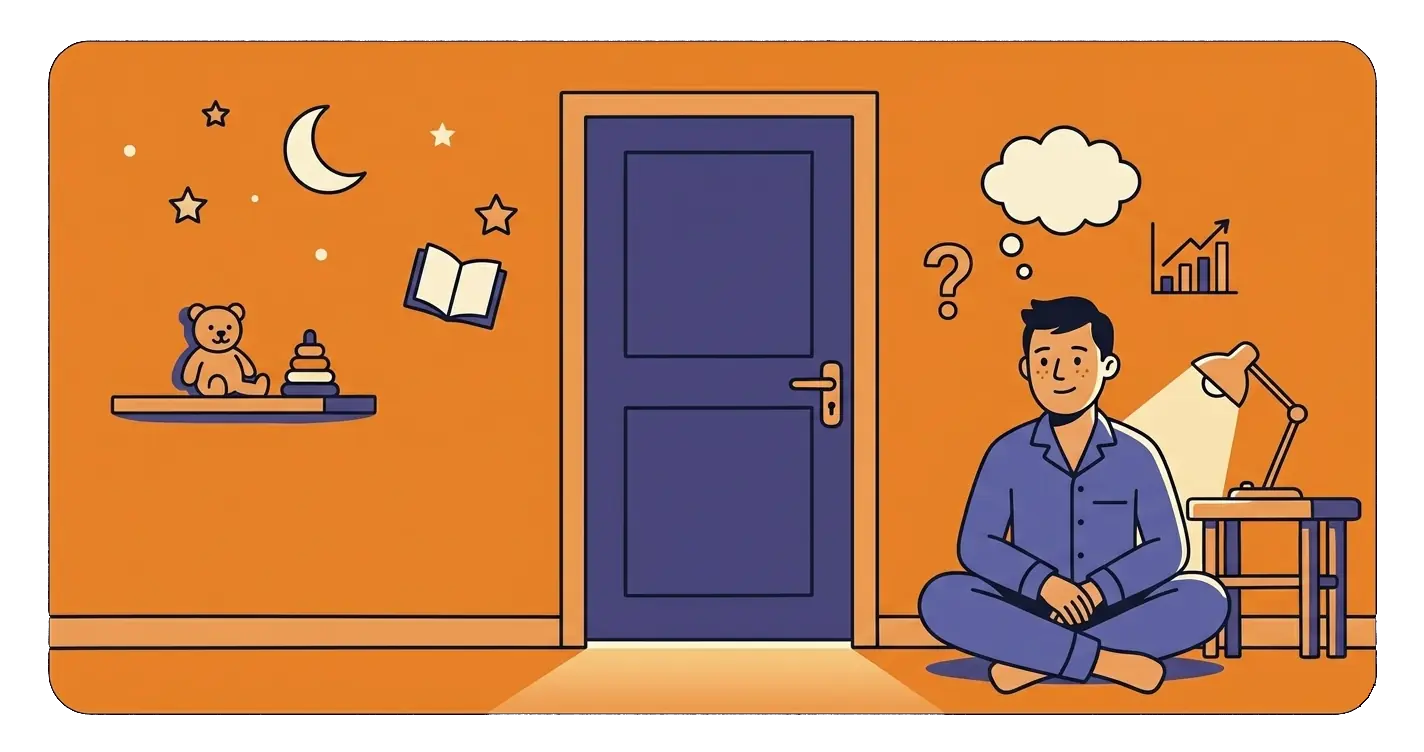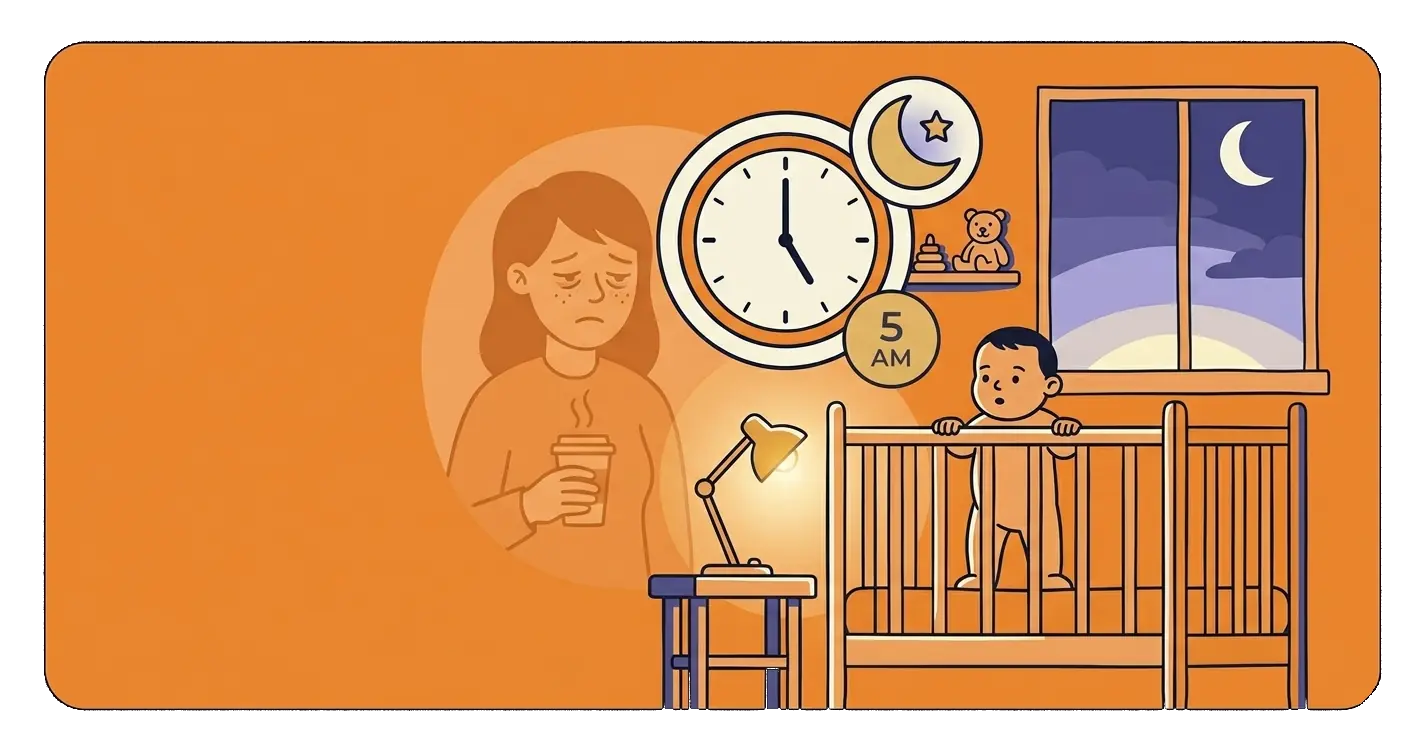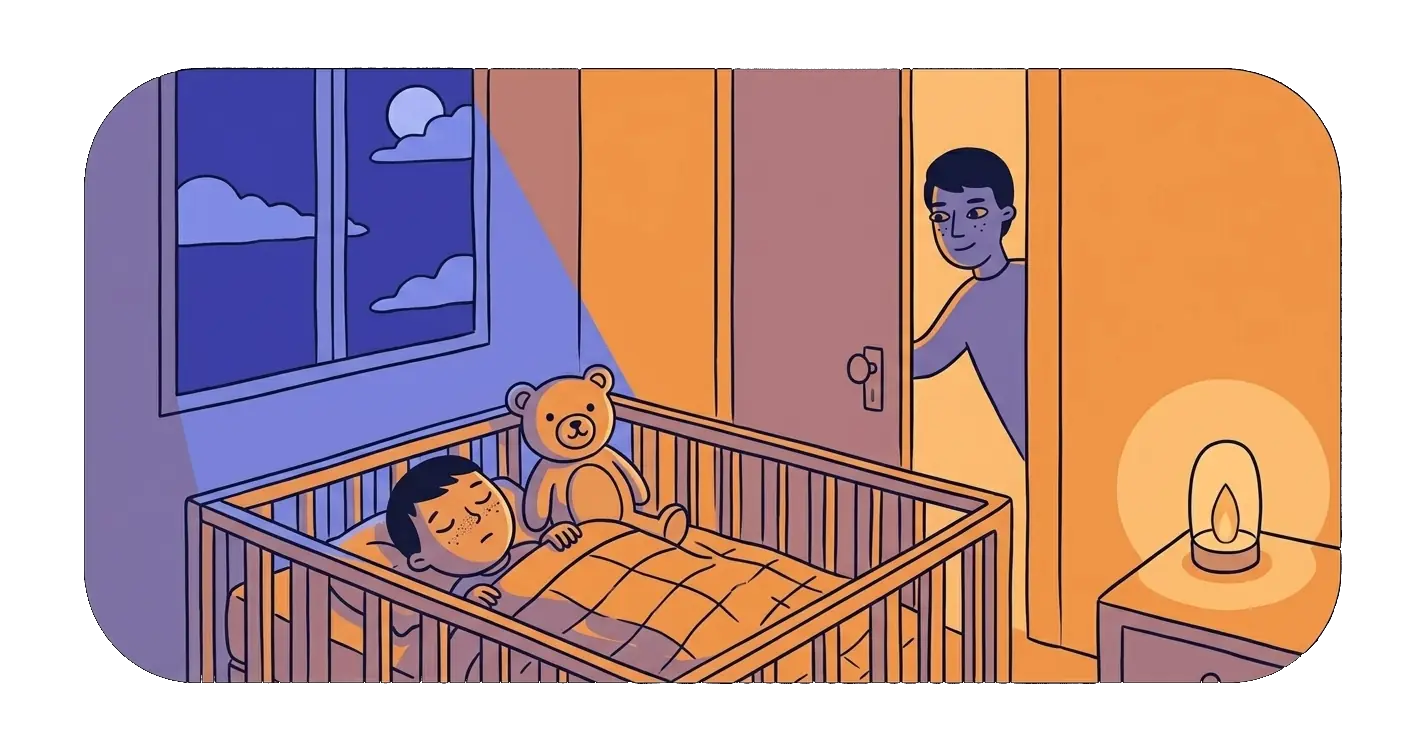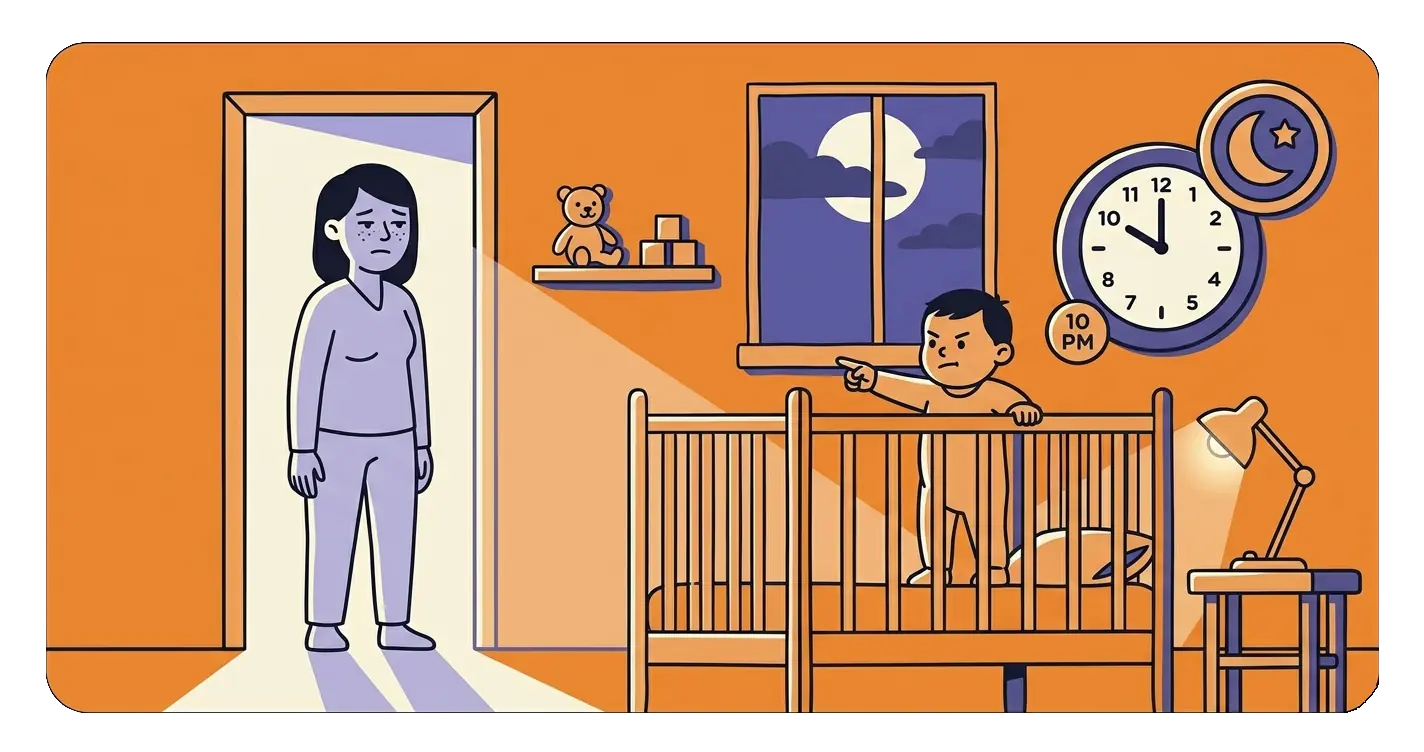
A sudden decline in sleep quality around the age of 2 can be surprising, even if your child previously fell asleep without much trouble. A two-year-old might refuse naps, prolong the bedtime routine, get out of bed, or wake up more frequently at night. The term 'sleep regression' is a colloquial way to describe temporary sleep difficulties, not a medical diagnosis. Before assuming it's just a developmental phase, it's worth examining the daily routine, nap times, the child's emotions, how boundaries are set, and potential health issues.
What Does Sleep Regression Look Like in a 2-Year-Old?
The most common challenges include:
- prolonged falling asleep and repeated requests for water, a book, or a parent's presence,
- protests during the bedtime routine and getting out of bed,
- refusing naps or falling asleep for them much later than before,
- more frequent or longer night awakenings,
- starting the day very early,
- increased irritability, excitement, or tearfulness by the end of the day.
Children aged 1–2 years typically need about 11–14 hours of sleep in a 24-hour period, including naps [4]. Individual needs can vary within this range. Therefore, protesting sleep doesn't mean a child no longer needs rest.
Boundaries, Emotions, Nap, or Disrupted Daily Rhythm?
In the second year of life, speech, independence, and the need to influence the environment develop intensely. At the same time, the ability to regulate emotions is still immature. Ending playtime, transitioning to quieter activities, and separating from a parent can provoke strong opposition, especially after a day full of experiences.
Boundaries and Established Ways of Responding
If a child receives another book, snack, or extra playtime after every protest, they may learn that delaying sleep extends the evening. This isn't intentional manipulation but a natural learning process based on repeated environmental responses. Difficulties with setting boundaries and falling asleep dependent on specific parental help are common behavioral sleep problems in young children [2].
Emotions and the Need for Closeness
An increased need for a parent's presence may arise after starting daycare, traveling, illness, the birth of a sibling, or other family changes. The child may then need more calm contact before sleep. Closeness can be combined with predictable rules: the parent acknowledges the child's emotions but does not restart play or endlessly extend the routine.
Nap and Circadian Rhythm
A nap that's too late or too long can reduce evening sleepiness. Conversely, a lack of a nap in a child who still needs one can lead to overtiredness, increased excitement, and more difficult falling asleep. Problems with going to bed and night awakenings are often interconnected, so it's essential to assess the entire day's schedule, not just the evening [3].
Discomfort or Illness
A sudden decline in sleep can also accompany an infection, ear pain, skin flare-ups, coughing, nasal congestion, reflux, or sleep-related breathing disorders. A health issue is more likely if the child behaves unusually during the day, doesn't want to lie down, has a fever, shows signs of pain, has breathing difficulties, or noticeably less energy.
Symptom → What to Check First?
| Symptom | What to Check First? |
|---|---|
| The child takes a long time to fall asleep but remains calm | Check if the nap ends too late, lasts too long, or if bedtime is too early for the current needs. |
| In the evening, the child is excited, tearful, and easily upset | Assess if they are overtired, if the day was exceptionally intense, and if bedtime wasn't excessively delayed. |
| Repeatedly asks for water, a book, or a hug | Ensure basic needs are met before bedtime. Then respond briefly, calmly, and consistently. |
| Regularly gets out of bed | Check if the boundary is clear and if returning to bed occurs without additional play, snacks, and long conversations. |
| Refuses naps but functions poorly late in the afternoon | Check the timing and conditions of the nap. A few days of protest doesn't necessarily mean readiness to give up daytime sleep entirely. |
| Wakes up at night and needs the same help as when falling asleep | Assess if the child falls asleep only when being held, rocked, or with a parent's constant presence. If the family wants to change this, help can be gradually reduced. |
| Wakes up crying, doesn't want to lie down, or is restless during the day | Look for signs of pain, infection, itching, coughing, nasal congestion, breathing problems, or other discomforts. |
| Snores, breathes with effort, or has breathing pauses | Consult a doctor. Such symptoms should not be explained solely by 'sleep regression.' |
What Can Help a 2-Year-Old Fall Asleep?
1. Record the Sleep Rhythm for a Few Days
Note the wake-up times, naps, start of the routine, falling asleep, and night awakenings. This record can help identify if difficulties occur more often after a late or long nap, an irregular morning, or an intense day.
2. Organize the Day's Framework
Try to maintain a similar wake-up, nap, and bedtime. Precision to the minute isn't necessary, but significant differences between days can hinder sleep rhythm regulation. A regular daily schedule and a calm bedtime routine are foundational to healthy sleep habits [1].
3. Introduce a Short, Predictable Routine
The routine can last about 20–30 minutes and include washing, putting on pajamas, reading one or two short books, hugging, and going to bed. It should follow a similar order each day and have a clear ending.
Before bedtime, it's advisable to limit intense play and bright light. Screens can hinder winding down, so it's best to turn them off at least an hour before putting the child to bed [5].
4. Offer Limited Choices, but Don't Negotiate the End of the Routine
A two-year-old can choose pajamas, a stuffed animal, or one of two books. The parent still decides when the routine ends. Short messages can be helpful:
- "I see you want to keep playing. Now it's time to sleep."
- "You can choose the blue or green pajamas."
- "The books are read. I'm here, now we rest."
5. Respond Calmly and Consistently Each Time
If the child gets out of bed, calmly guide them back without starting another conversation or play. You can briefly remind them: "Now we sleep." The goal is not to ignore the child's emotions but to limit additional activities that might unintentionally extend the evening.
If the child has been falling asleep only when held, rocked, or with a parent's constant presence, help can be gradually reduced. A sudden change isn't necessary. It's worth choosing a safe method that can be regularly applied and is acceptable to the whole family.
Should a 2-Year-Old Give Up Naps?
Refusing a few naps doesn't yet indicate readiness to completely give up daytime sleep. For many two-year-olds, naps are still necessary. First, check if the nap isn't offered too early or too late and if the conditions are conducive to winding down.
If the child doesn't fall asleep, you can suggest 30–45 minutes of quiet rest without a screen. Gradual readiness to give up naps may be indicated by regular refusal over a longer period, while still functioning well in the afternoon and falling asleep calmly in the evening. If skipping naps leads to strong irritability, accidental dozing in the car, or very difficult evenings, the child probably still needs sleep or rest during the day.
When Can Improvement Be Expected?
There is no specific time when every child's sleep will return to its previous rhythm. If difficulties are related to the daily schedule, boundaries, or falling asleep methods, improvement usually appears gradually after introducing consistent rules. It's worth assessing the trend over several days or weeks, not just a single evening.
If problems persist for more than 2–3 weeks despite organizing the schedule, are very severe, or affect the child's and family's functioning, it's worth discussing them with a pediatrician or a specialist in children's sleep.
When to Consult a Doctor or Specialist?
Sleep deterioration requires medical evaluation if accompanied by symptoms that may indicate pain, illness, or breathing disorders. Contact a doctor if the child:
- loudly snores most nights, has breathing pauses, gasps for air, or breathes with noticeable effort,
- has a fever, intense or unusual crying, pulls at the ear, or behaves as if in pain,
- coughs, has severe nasal congestion, persistent skin itching, vomiting, or significant discomfort when lying down,
- is unusually sleepy, weak, or noticeably less functional during the day,
- is not gaining weight properly, loses previously acquired skills, or their behavior worries the parent,
- has frequent, very intense awakenings, or sleep problems persist despite a regular daily schedule.
If the child turns blue, is limp, has severe breathing difficulties, or doesn't respond appropriately, call for urgent medical help at 112 or 999.
It's also worth seeking support if lack of sleep leads to extreme parental exhaustion and hinders safe childcare.
Frequently Asked Questions
How Much Should a 2-Year-Old Sleep?
The approximate sleep requirement for a child aged 1–2 years is 11–14 hours per day, including naps. Besides the number of hours, it's important to observe the child's mood, behavior, and functioning during the day.
Will Putting My Child to Bed Later Make Them Sleep Longer in the Morning?
Not always. A bedtime that's too late can lead to overtiredness, increased excitement, and earlier waking. If a child lies calmly for a long time without falling asleep, you can cautiously adjust bedtime while also evaluating nap timing and duration.
Should I Stay with My Child During a Protest?
You can stay in the room if it helps calm the child and the parent can consistently apply this solution. It's advisable to limit conversation and additional activities. If the goal is for the child to fall asleep without a parent's presence, the time or extent of this presence can be gradually reduced.
Do Night Awakenings Always Indicate a Problem?
Short awakenings are a natural part of sleep. Frequent, long, or very intense awakenings may require consultation, especially if accompanied by pain, loud snoring, breathing pauses, or daytime functioning deterioration.
Can 'Sleep Regression' Be a Symptom of Illness?
A sudden change in sleep can coincide with an infection, ear pain, teething, worsening skin issues, or breathing disorders. If the child is restless during the day, shows signs of pain, has a fever, or breathes unusually, a medical evaluation is necessary.
Summary
Sleep deterioration in a 2-year-old is often linked to developing independence, strong emotions, an irregular daily rhythm, inappropriate nap timing, or an established way of falling asleep. Predictable daily frameworks, a short routine, calmly set boundaries, and a consistent way of responding can be helpful.
Not every sleep deterioration should be treated as a temporary phase. Pain, infection symptoms, loud snoring, breathing pauses, and noticeable daytime functioning deterioration require consultation. If you want to organize observations about your child's sleep, you can describe the situation in the consultation form.
Sources
- American Academy of Pediatrics, Healthy Sleep Habits.
- Behavioral insomnia in infants and young children — a review of behavioral sleep difficulties.
- Bedtime problems and night wakings in young children — a review of falling asleep and night waking issues.
- American Thoracic Society, Healthy Sleep in Children.
- American Academy of Pediatrics, recommendations on children's media and screen use.