Separation Anxiety and Your Child's Sleep: Why More Frequent Wake-Ups?
A child who previously fell asleep quite peacefully may suddenly start protesting when being put to bed, waking more often at night, and demanding the presence of a specific person. This change can be exhausting, but it doesn't necessarily mean parents have made a mistake or that the child has become too accustomed to closeness.
Separation anxiety is part of emotional development. It most commonly appears in the second half of the first year of life, and its intensity can vary in the following months and years. The child increasingly understands that the parent exists even when out of sight, but they are not yet able to handle separation comfortably. In the evening, when they are tired and have fewer resources to regulate emotions, the protest can be particularly strong [1].
Symptoms may temporarily intensify after starting daycare or preschool, a parent's return to work, illness, moving, or the arrival of a sibling. For many children, the need for closeness becomes more apparent both during the day and at night.
Typical Separation Anxiety vs. Symptoms Requiring Attention
What Usually Falls Within Developmental Norms?
Typical separation anxiety most often appears between about 6 months and 3 years of age, though its course is individual. A child may cry during separation, be reluctant to stay with a less familiar person, protest at bedtime, or call for a parent after waking at night. Usually, however, they calm down after receiving support, and outside of more challenging situations, they continue to play, develop, and function appropriately for their age [3].
Signs of a typical need for closeness may include:
- quick calming after hearing the parent's voice or seeing them,
- greater need for cuddling during the day as well,
- protest intensifying mainly during separations and before sleep,
- temporary worsening of sleep after a significant change or illness,
- gradual easing of symptoms with calm, predictable support.
When Might Anxiety Exceed the Norm?
Concern requires closer evaluation if it is significantly stronger than expected at a given stage of development, persists for at least several weeks, and significantly limits daily functioning. Separation anxiety disorder may involve persistent refusal to leave the house, attend preschool or school, intense fear of being without a parent, recurring nightmares about separation, or physical symptoms appearing before separation [2].
Mere reluctance to fall asleep without a parent is not a basis for diagnosing a disorder. Factors such as the child's age, duration of symptoms, their intensity, and impact on sleep, learning, play, and family life are important. Only a qualified specialist can make a diagnosis.
Is Every Nighttime Call Due to Separation Anxiety?
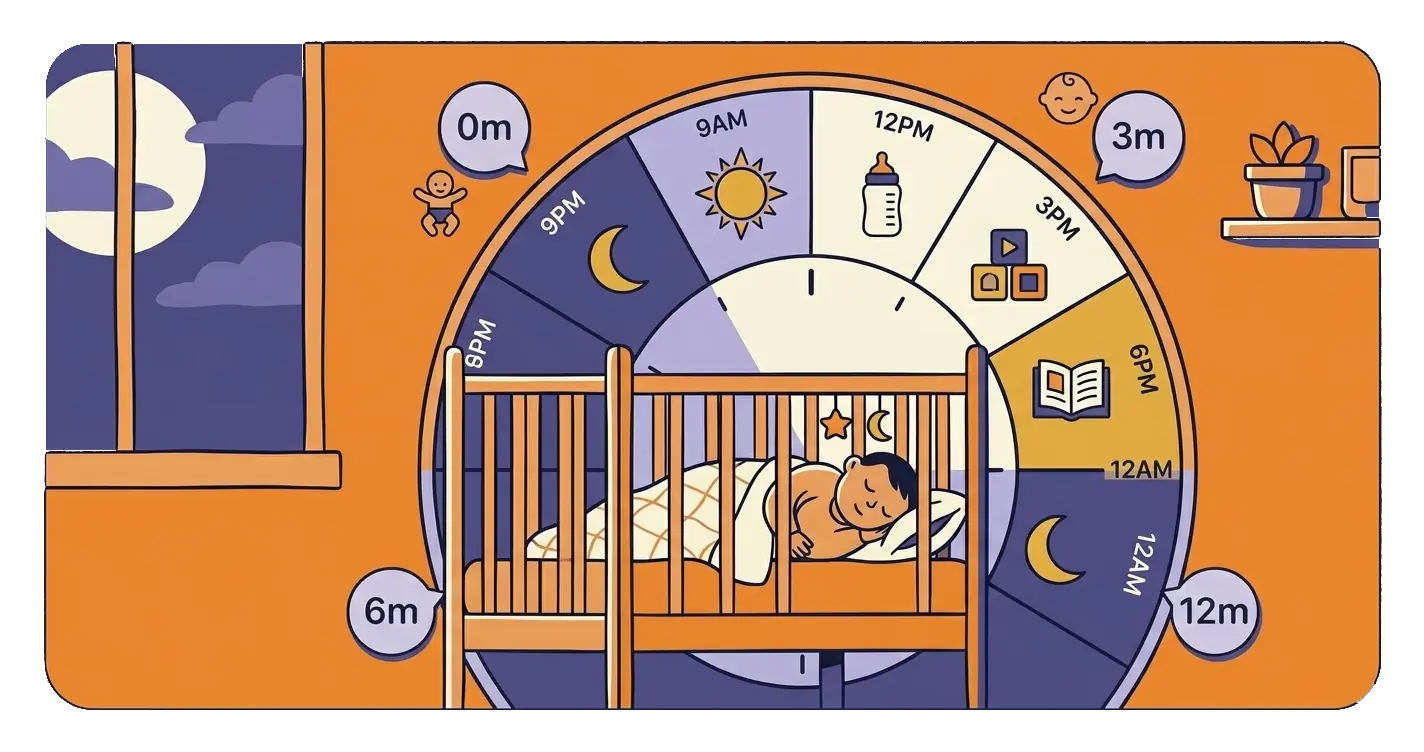
No. Nighttime awakenings are a natural part of sleep development, especially in infants. They change with the maturation of the circadian rhythm, length of sleep cycles, feedings, and acquisition of new skills [5]. Before assuming separation anxiety is the cause, it's worth looking at the whole picture.
Check if the child:
- is not hungry, especially if they are an infant and still need nighttime feedings,
- does not have a fever, runny nose, cough, earache, or other symptoms of infection,
- is not experiencing pain, for example, from teething,
- has a dry diaper and appropriate clothing for the room temperature,
- is not overly tired or, conversely, put to bed too early,
- has not started snoring, breathing through the mouth, or pausing in breathing.
If the child calms down quickly after the parent's appearance but protests again when they try to leave, the need for closeness likely plays an important role. However, this does not exclude simultaneous fatigue, hunger, or discomfort.
Evening Strategies: How to Ease Separation Before Sleep?
Establish a Predictable Routine
A consistent order of evening activities helps the child anticipate what will happen next. The routine doesn't have to be long or identical to the minute. More important is that it is calm, repeatable, and age-appropriate.
It may include:
- calming activities and limiting screens before bed,
- washing or bathing,
- putting on pajamas and feeding if needed,
- one or two short books,
- a hug and a repetitive goodnight phrase,
- placing the child in their designated sleep spot.
Regular sleep and wake times support the circadian rhythm, but the plan should consider the child's age, naps, and individual sleep needs [4].
Announce Separation Calmly and Clearly
Instead of sneaking out, it's worth briefly stating what will happen: “Now it's sleep time. I'm nearby and will check on you”. Disappearing without a goodbye can increase the child's alertness because they don't know when the parent will leave.
For an older child, a simple plan can be established during the day: one nightlight, slightly open door, or a short check-in after an agreed time. Don't promise to return if you don't intend to do so.
Practice Short Separations During the Day
Short, predictable separations in safe conditions can be helpful. A parent can say they are going to another room and will be back shortly, then keep their word. Games of hiding and reappearing, like “peek-a-boo,” support understanding that a person still exists despite temporary absence.
Adjust Support to Temperament and Age
Not every child is ready for the same level of independence. One may be comforted by the parent's voice, another needs touch or gradual moving of the chair away from the bed. The goal is not to leave the child without support but to find a calm and sustainable way of responding.
How to Respond During Nighttime Wake-Ups?
First, Assess the Situation
Before applying a set routine, ensure the child doesn't need feeding, a diaper change, help due to pain, or medical intervention. An infant's needs should not be ignored in the name of reducing wake-ups. The frequency of nighttime feedings should be individually determined with a pediatrician or lactation consultant, especially in the first months of life, with weight gain issues, or for a premature baby.
Respond Calmly and Consistently
At night, it's best to limit light, conversation, and additional activities. Short phrases can be used, such as:
- “I'm here”.
- “You're safe, now let's go back to sleep”.
- “I'll help you calm down”.
Consistency doesn't mean rigidity. If the child is sick, scared, or exceptionally agitated, they may need more contact. Comforting a child doesn't cause separation anxiety disorder. A predictable parental response helps build a sense of security.
Start with the Least Intensive Effective Help
If the child is healthy and their physical needs are met, you can gradually try:
- a calm voice without turning on bright lights,
- placing a hand on their back or holding their hand,
- a short hug,
- staying by the bed until they calm down.
There's no need to stop a method that currently allows the family to function safely. If parents want to reduce carrying, rocking, or long sitting by the bed, it's best to do so gradually, at a pace acceptable to the child and caregivers.
Remember Safe Sleep for Infants
An infant should be placed on their back on a firm, flat mattress in a crib or bedside sleeper designed for them. The sleep space should not contain pillows, loose blankets, bumpers, stuffed animals, or positioners. After feeding or soothing, it's safest to place the child back in their own sleep space [4].
How to Tailor Help to Age?
Infant
For an infant, priority is given to feeding, comfort, safety, and responsive care. A short routine can be introduced, and day and night can be distinguished using light and calmer nighttime interactions. It's not expected that every infant will sleep through the night without waking.
One-Year-Old
A one-year-old may strongly protest when being put down, even though they are clearly sleepy. A consistent order of activities and a simple sequence of nighttime support help: voice, touch, brief presence, and then more help if still needed.
Child Aged 2–4 Years
At this age, a child may get out of bed, ask for another book, or repeatedly call for a parent. It's worth setting boundaries for the routine in advance, and at night calmly returning the child to bed without shaming or lengthy negotiations.
Preschooler and Older Child
It's best to discuss fears during the day. Small steps can be agreed upon together: first, the parent sits by the bed, then a bit further away, and finally just checks in at an agreed time. If the child talks about a specific fear, listen without mocking or confirming catastrophic concerns.
What to Avoid?
- Shaming and comparing, such as saying big kids aren't afraid.
- Sneaking out, which can increase alertness during future separations.
- Changing the response method every night, unless it arises from the child's current needs.
- Long conversations and intense play at night, as they may further wake the child.
- Ignoring symptoms of illness or hunger and attributing every cry to emotions.
- Expecting immediate improvement. Adapting to a new way of falling asleep can be uneven.
When to Consult a Doctor or Specialist?
Contact a pediatrician if sleep deterioration is accompanied by symptoms suggesting pain or illness, such as fever, breathing difficulties, persistent cough, vomiting, diarrhea, significantly reduced appetite, fewer wet diapers, or unusual drowsiness.
Consultation is also required for:
- loud, regular snoring, pauses in breathing, cyanosis, or gasping for air during sleep,
- sudden and significant behavior change, developmental regression, or loss of previously acquired skills,
- anxiety persisting for at least several weeks and significantly hindering attendance at daycare, preschool, or school,
- frequent stomachaches, headaches, or nausea appearing before separation,
- persistent fears that something will happen to the parent, separation-related nightmares, or refusal to stay without a caregiver,
- sleep difficulties that persist despite organizing the daily routine and significantly burden the child or family.
Initially, you can talk to a pediatrician. If strong anxiety symptoms dominate, a child psychologist or child and adolescent psychiatrist will be helpful. Urgent medical help is needed for a child with apnea, cyanosis, significant breathing difficulties, altered consciousness, or signs of severe dehydration.
Frequently Asked Questions
Does Nighttime Cuddling Intensify Separation Anxiety?
No. A warm, appropriate parental response does not cause separation anxiety disorder. If the family wants to shorten nighttime interactions, they can gradually reduce the intensity of help while still providing the child with a sense of security.
How Long Does Separation Anxiety Affect Sleep?
There is no single timeline. Intensity may decrease after a few days, but for some children, a challenging period lasts longer or returns with subsequent developmental changes. More important than a specific number of nights is the direction of changes and the child's daytime functioning.
Should a Child Fall Asleep Alone During Separation Anxiety?
There is no one-size-fits-all solution for every family. Independent falling asleep can be supported gradually, but age, temperament, health status, and the child's needs should not be overlooked. Safety and a sustainable care approach are more important than quickly achieving a specific goal.
Do Frequent Wake-Ups Always Mean Sleep Regression?
No. They may be related to sleep maturation, hunger, infection, teething, a change in nap numbers, a new skill, or a greater need for closeness. The term “sleep regression” describes a change but does not indicate its cause.
Is It Worth Making Changes When the Child Is Sick?
During illness, priority is given to comfort, hydration, treatment, and closeness. It's usually better to return to planned changes in falling asleep methods after the child's condition improves.
Summary
Separation anxiety is a common developmental stage and can temporarily make falling asleep difficult and increase nighttime wake-ups. A predictable routine, calm goodbyes, age-appropriate support, and consistent nighttime responses help. At the same time, don't assume every cry is solely due to emotions — always consider hunger, pain, illness, and natural sleep development changes.
If anxiety is prolonged, inappropriate for the age, or limits daily functioning, it's worth seeking a professional assessment. Asking for help doesn't mean a parent isn't coping. It's a way to care for the child and the whole family.
Sources
- HealthyChildren.org, American Academy of Pediatrics, materials on separation anxiety and sleep difficulties in children.
- StatPearls, Separation Anxiety Disorder.
- NHS, materials for parents on separation anxiety in children.
- American Academy of Pediatrics, HealthyChildren.org, recommendations for healthy habits and child sleep safety.
- Scientific review on infant sleep development.