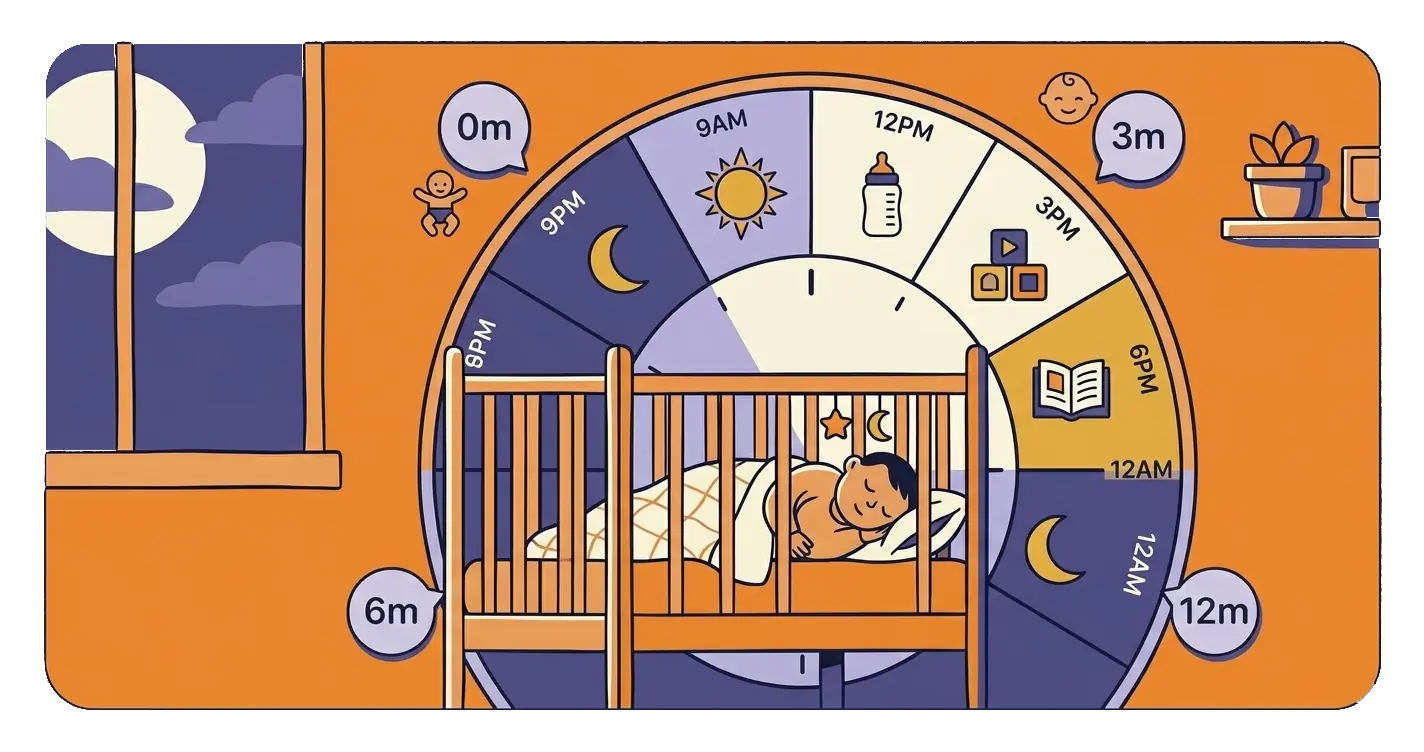
A child's sleep diary helps transform the general impression that your child "barely sleeps" into organized information. It shows sleep hours, naps, awakenings, and circumstances that may affect rest. However, it is not meant for judging parents or independently diagnosing sleep disorders.
Why Keep a Child's Sleep Diary?
After a few tough nights, details can easily blur together. You might remember the longest awakening, overlooking calmer parts of the night. Regular notes allow you to check whether difficulties occur daily or were related to an infection, travel, or a change in routine.
Sleep diaries are used to record bedtime, approximate sleep onset, awakenings, and morning wake-up times [1]. For children, it's helpful to include naps, feedings, and the type of support needed to fall back asleep.
The key is consistency, not perfect accuracy. A simple record kept for several days usually provides more useful information than a very detailed table filled out only twice.
What to Record in a Sleep Diary?
Notes should cover the entire day. Recording only night awakenings can lead to incorrect conclusions, as evening sleep onset and night sleep can be influenced by naps, the start of the day, and events in the hours before bedtime.
Basic Sleep Information
- Start of the Day – the moment when the child actually gets up, not every short awakening in the early morning.
- Naps – time of falling asleep and waking up, and optionally, the place of sleep.
- Start of Evening Routine – such as a bath, feeding, or reading.
- Bedtime – not synonymous with falling asleep.
- Approximate Sleep Onset – no need to check it to the minute.
- Night Awakenings – their time and approximate duration.
- Final Morning Awakening – along with information about the child's mood.
Circumstances of Falling Asleep and Awakenings
For each sleep, briefly note how the child fell asleep and what support was needed after waking. Terms like feeding, rocking, holding, stroking, pacifier, parental presence, or self-soothing are sufficient.
It's also worth noting if there were crying, coughing, spitting up, itching, pain, breathing difficulties, or other unusual symptoms during awakenings. Such information may be more important than the time of awakening itself.
Day Background
There's no need to describe every activity in detail. Just note events that might have altered the usual rhythm:
- infection, fever, pain, or teething,
- vaccination or medications,
- travel, night away from home, or guest visits,
- an exceptionally active or stressful day,
- screen time before bed in older children,
- changes in nap, meal, or evening routine times.
Sleep hygiene recommendations emphasize the importance of regular times, a calm routine, and conditions conducive to relaxation [4]. A diary helps check how consistent these elements are in the family's daily life.
Simple Template for a Child's Sleep Diary
The template can be copied into a notebook, spreadsheet, or app. One line should correspond to one day.
| Date | Morning Wake-up | Naps | Start of Routine | Sleep Onset | Night Awakenings | Support | Important Circumstances |
|---|---|---|---|---|---|---|---|
| Example | 6:40 | 9:20–10:00; 13:30–14:40 | 19:10 | 19:45 | 1:40, about 10 min; 4:15, about 20 min | Carrying; feeding | Cold, nap in stroller |
| Day 1 | … | … | … | … | … | … | … |
| Day 2 | … | … | … | … | … | … | … |
At night, you can use abbreviations, for example: "1:40 – crying – carrying – sleep after about 10 min." In the morning, you can complete the record before details fade from memory. The NHS also recommends systematically noting sleep times and factors that may affect it, rather than relying solely on later recollection [2].
How to Keep Notes Without Feeling Overwhelmed?
Morning
Record approximate times of night awakenings, the start of the day, and mood upon waking. You don't need to time every awakening with a stopwatch at night.
During the Day
Note the start and end of naps immediately after they finish. If the sleep occurred in unusual conditions, such as in a car, add a brief note.
Evening
Distinguish between the start of the routine, bedtime, and approximate sleep onset. This way, you can assess not only the sleep time but also the time needed to fall asleep.
If recording exact times increases tension or leads to constant monitoring of the child, you can reduce the level of detail. The diary should facilitate observation, not hinder family rest.
How Many Days to Keep the Diary?
Seven days is a reasonable starting point as the record then includes both weekdays and the weekend. A fuller picture is usually provided by observing for 10–14 consecutive days. This period helps distinguish a recurring pattern from a single bad night.
It's worth extending the observation if an infection, travel, vaccination, intense teething, or a significant change in family life occurs during it. Unusual days don't need to be removed from the diary – they should be clearly marked.
Sleep Diary and Child's Age
Newborn and Infant Up to About 3 Months
The sleep of the youngest children is spread over many segments throughout the day. At this stage, the diary should primarily show the total rhythm of sleep, wakefulness, and feedings. A rigid, predictable daily schedule should not be expected.
Infant Aged 4–12 Months
You can more closely observe nap times, lengths of wakefulness periods, evening sleep onset, and night awakenings. Infant sleep difficulties can have various causes, so sleep-related behaviors should be assessed in the context of age, development, health, and family situation [3].
Child Aged 1–3 Years
The timing and length of naps and the interval between their end and night sleep may be particularly significant. It's also worth noting bedtime protests, getting out of bed, and changes in the evening routine.
Preschooler and School-Aged Child
In addition to sleep times, consider screen use, physical activity, school responsibilities, and differences between weekdays and weekends. In older children, a significant and regular shift in sleep onset may require assessing the circadian rhythm. A delayed sleep phase means difficulty falling asleep and waking at expected times, not just reluctance to go to bed [5].
How to Interpret the Diary Without Overreacting?
First, look at the entire week, then at individual days. One short nap, long sleep onset, or extra awakening doesn't necessarily indicate a problem. The significance lies in a pattern that repeats under similar conditions.
Compare Similar Days
Don't directly compare a calm day at home with a day of travel or infection. Mark exceptions and check what happens under typical conditions.
Look for Connections, Not a Single Cause
If your child takes a long time to fall asleep, compare the end time of the last nap, the length of the routine, pre-sleep activity, and the start of the day. The diary can show the coexistence of these elements but doesn't prove that one is the direct cause of difficulties.
Consider Natural Variability
A child's sleep may temporarily change during illness, developmental leaps, teething, travel, or stress. Not every rough period requires adjusting the daily schedule.
Don't Assess Sleep Solely by the Number of Awakenings
The length of awakenings, the child's behavior, ease of falling back asleep, and daytime functioning also matter. Short awakenings can be hard to notice and are part of physiological sleep.
How to Recognize Common Patterns?
Short Naps
Check if they occur daily at similar times and how the child functions after waking. A single short nap doesn't determine an incorrect schedule. For some children, nap length changes with age.
Long Evening Sleep Onset
Compare the actual sleep onset time with bedtime, the end of the last nap, and morning wake-up time. If, after consultation or calm analysis, you decide to make adjustments, change one element at a time and observe it for several days.
Awakenings at Similar Times
A regular awakening time is a clue but not a definitive diagnosis. It's worth checking what happened earlier, how the child fell asleep, and if there are signs of physical discomfort during awakenings.
Very Early Mornings
Analyze night sleep time, naps, room conditions, and differences between weekdays and weekends. In young children, don't automatically assume that a later bedtime will result in a later wake-up.
Common Mistakes in Keeping a Sleep Diary
- Recording Only Difficult Moments – omitting calm nights and naps distorts the picture.
- Confusing Bedtime with Sleep Onset – both moments should be noted separately.
- Changing Multiple Elements at Once – makes it difficult to assess what led to improvement or deterioration.
- Drawing Conclusions After One or Two Days – such a short record may only reflect a temporary change.
- Ignoring Illness and Other Exceptions – an unusual day should be described, not treated as ordinary.
- Excessive Accuracy – trying to measure every minute can increase stress without improving observation quality.
How to Safely Implement Changes?
First, observe for a few days without intentionally modifying the schedule. Then choose one element you can change, such as a consistent start time for the evening routine or limiting stimulating activities before bed.
After making a change, continue recording for several more days. Don't expect every adjustment to bring immediate results. If the child becomes noticeably more tired, irritable, or shows health symptoms, don't continue changes just to maintain the planned schedule.
When to Consult a Doctor or Specialist?
A diary doesn't replace a medical examination. Contact a pediatrician if sleep problems persist, affect the child's or family's functioning, or cause concern. Consultation is especially needed for:
- loud, frequent snoring, breathing pauses, choking, or gasping for air during sleep,
- blueness, significant breathing difficulties, or limpness – urgent medical help is needed in such cases,
- severe pain, unusual and hard-to-soothe crying, or frequent awakenings with screaming,
- wheezing, persistent cough, severe spitting up, or vomiting,
- poor weight gain, feeding difficulties, or fewer wet diapers,
- excessive daytime sleepiness, difficulty waking, or noticeable behavior change,
- suspected seizures, unusual movements, or loss of previously acquired skills,
- long-term sleep problems despite a consistent routine and age-appropriate conditions.
Bring a 7–14 day record to the appointment. It helps accurately present sleep times, symptoms, and frequency of difficulties, but its interpretation should consider the child's health and developmental stage.
Frequently Asked Questions
Do I Need to Record Sleep to the Minute?
No. Approximate times are usually sufficient. Regularly noting the same information is more important than minute-by-minute accuracy.
Is Seven Days of Keeping a Diary Enough?
Seven days can reveal a basic pattern. If days differ significantly or illness or travel occurred during observation, it's better to keep the diary for 10–14 days.
Does One Bad Night Mean the Schedule is Wrong?
No. A single night can be related to discomfort, development, emotions, or a random change in conditions. Conclusions should be drawn based on a repeatable pattern.
Should I Wake My Child to Maintain the Schedule?
There's no one-size-fits-all answer. It depends on age, health, feeding, and pediatrician recommendations. A newborn or a child with weight gain difficulties shouldn't be on a rigid schedule without medical consultation.
Is an App Better Than a Paper Diary?
No. The best method is the one you can use regularly. A notebook, printed table, and app can be equally useful if they record the same basic information.
Summary
A good sleep diary is simple, regular, and covers the entire day. It should include morning wake-up, naps, start of the evening routine, actual sleep time, night awakenings, needed support, and unusual circumstances.
The key is to look for patterns repeating over several days, not to judge a single night. A diary can help organize observations and prepare for a conversation with a pediatrician or specialist, but it's not for independently identifying the causes of sleep problems.
Sources
- American Academy of Sleep Medicine, Sleep Diary – official sleep diary template.
- NHS, Creating and maintaining a sleep diary.
- Review of literature on behavioral insomnia in infants and young children.
- American Academy of Pediatrics, materials for parents on healthy sleep habits.
- American Academy of Sleep Medicine, materials on delayed sleep phase and wakefulness.