Meal Plan for a 2-Year-Old: A Week of Meals and How Many Portions Daily
A Toddler Eats a Lot One Day, Almost Nothing the Next — What Then?
Parents often write to us with the same question: “Is my child eating too little?” One day, a 2-year-old eats almost the entire meal, and the next, they stop after two bites, seeming uninterested in food. In practice, we see that this variability is what exhausts parents the most — not the meal plan itself, but the daily uncertainty.
From our experience, such a fluctuating appetite in a 2-year-old is very common. It's much calmer to look at eating when you assess the entire week, not just one lunch or dinner. We often see in our practice that a child who “eats nothing” doesn't fare as badly as parents think when the week is laid out.
A simple daily routine often helps: a few predictable meals without constant snacking in between. It's not about a military schedule, but a rhythm that gives the child a chance to truly feel hungry. Usually, this makes a big difference at the table after just a few days 🍽️.
In this article, we'll show you how to create a realistic 7-day meal plan for a 2-year-old, how to think about portions without stress, and what to do when lunch regularly ends in fussiness. It will be specific, simple, and homey.
How Often to Feed a 2-Year-Old?
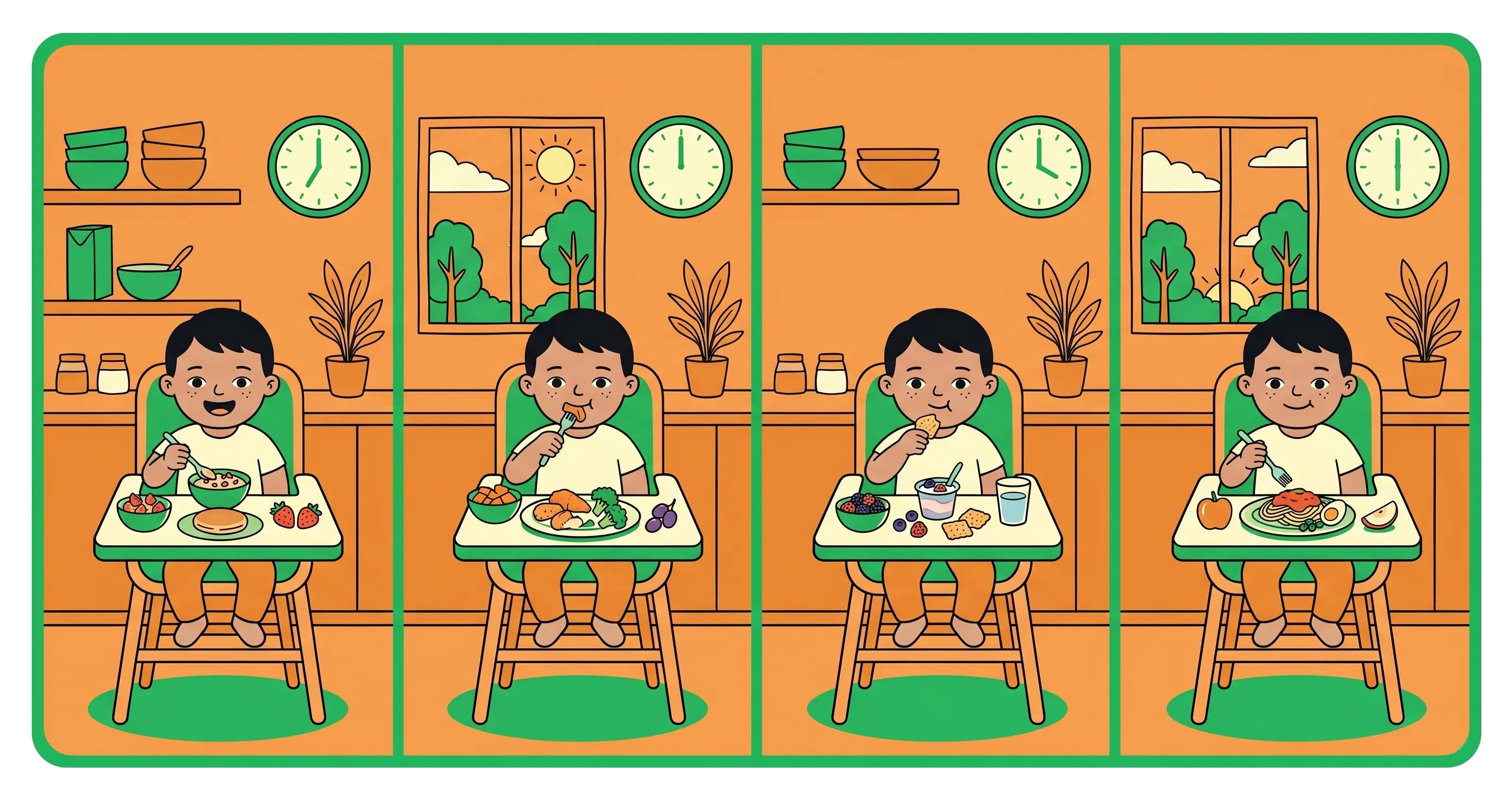
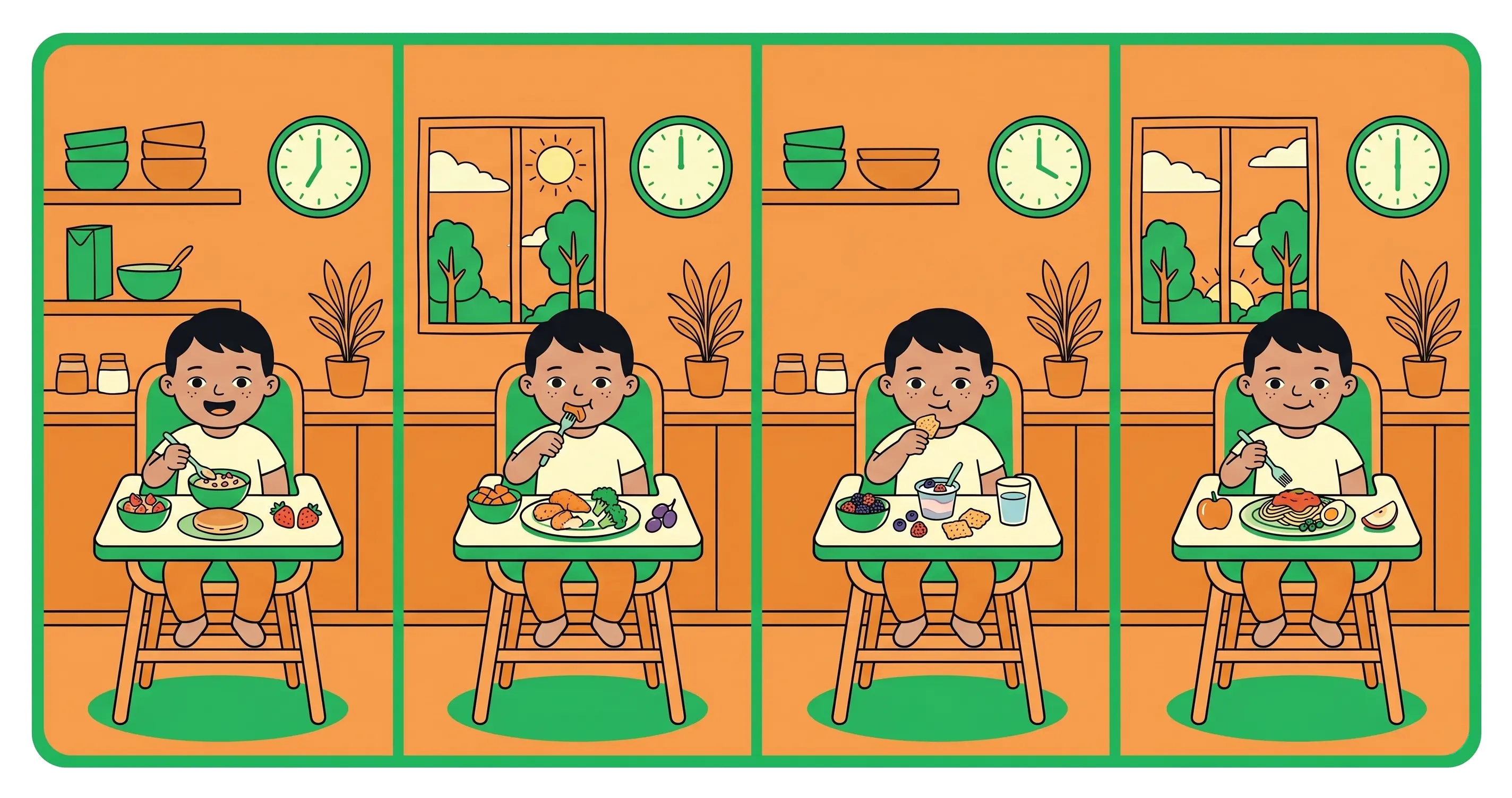
In our work with families, a schedule of 4–5 meals a day usually works best. For many children, a convenient pattern is: breakfast, second breakfast, lunch, afternoon snack, and dinner. This plan gives the child predictability and you less guessing whether it's “time to give something” or wait a bit longer.
A gap of about 3–4 hours usually works well. Of course, it doesn't have to be to the minute. If there's a longer nap, a walk, or a rough night, the day might look a bit different, and that's okay.
The biggest disruption often comes from snacks given “on the go.” In practice, we see this very often: a piece of banana on the way, a few crisps in the stroller, a sip of juice, a biscuit “to stop whining” — and suddenly lunch doesn't make sense because the child simply isn't hungry.
Between meals, it's best to leave mainly water. This is one of those small steps that make a big difference. In many families, after just a week, you can see that the child sits at the table with more readiness, not just a craving for something quick and sweet.
Dinner is best served about 1–2 hours before bedtime. We don't stick rigidly to the clock — we look more at your household's rhythm. The goal is for the child not to fall asleep either very hungry or too full.
What Should Appear in a Toddler's Menu?
Parents often ask us if every meal needs to be “perfectly balanced.” Fortunately, it doesn't. In practice, simple thinking works much better: throughout the day, it's good to include grains, protein sources, vegetables or fruits, and some healthy fats.
It sounds serious, but in everyday life, it looks simple. A sandwich with cottage cheese and cucumber, oatmeal with fruit, rice with meatballs and vegetables, yogurt with toppings — these are already sensible, homemade options. There's no need to make complicated plates or count every gram.
In our work with hundreds of families, looking at the whole day rather than scrutinizing one meal works well. If breakfast was more dairy and fruit-based, that's okay — lunch or dinner can easily “complete” the rest.
What We Pay the Most Attention To
From our experience, it's worth regularly remembering a few things: iron, calcium, healthy fats, fiber, and vitamin D. In practice, this simply means it's good to occasionally return to eggs, fish, meat, legumes, grains, vegetables, fruits, and dairy products.
As for dairy, for many children, about 2 servings a day works well. For example, yogurt and a cup of milk or cottage cheese and kefir. When there are too many dairy products, some toddlers lose interest in more substantial foods — and we see this quite often.
Regarding vitamin D, the simplest advice is: if you're unsure about your child's intake, it's worth discussing it with a pediatrician. It's hard to base an entire plan on it in a daily menu, so it's good to have this topic simply covered.
Healthy fats also make a big difference. A little olive oil in soup, avocado spread, 100% peanut butter, or a fattier fish not only contribute to nutritional value but also to satiety. And this often means less asking for something “quick” an hour later.
You Don't Have to Cook Separately
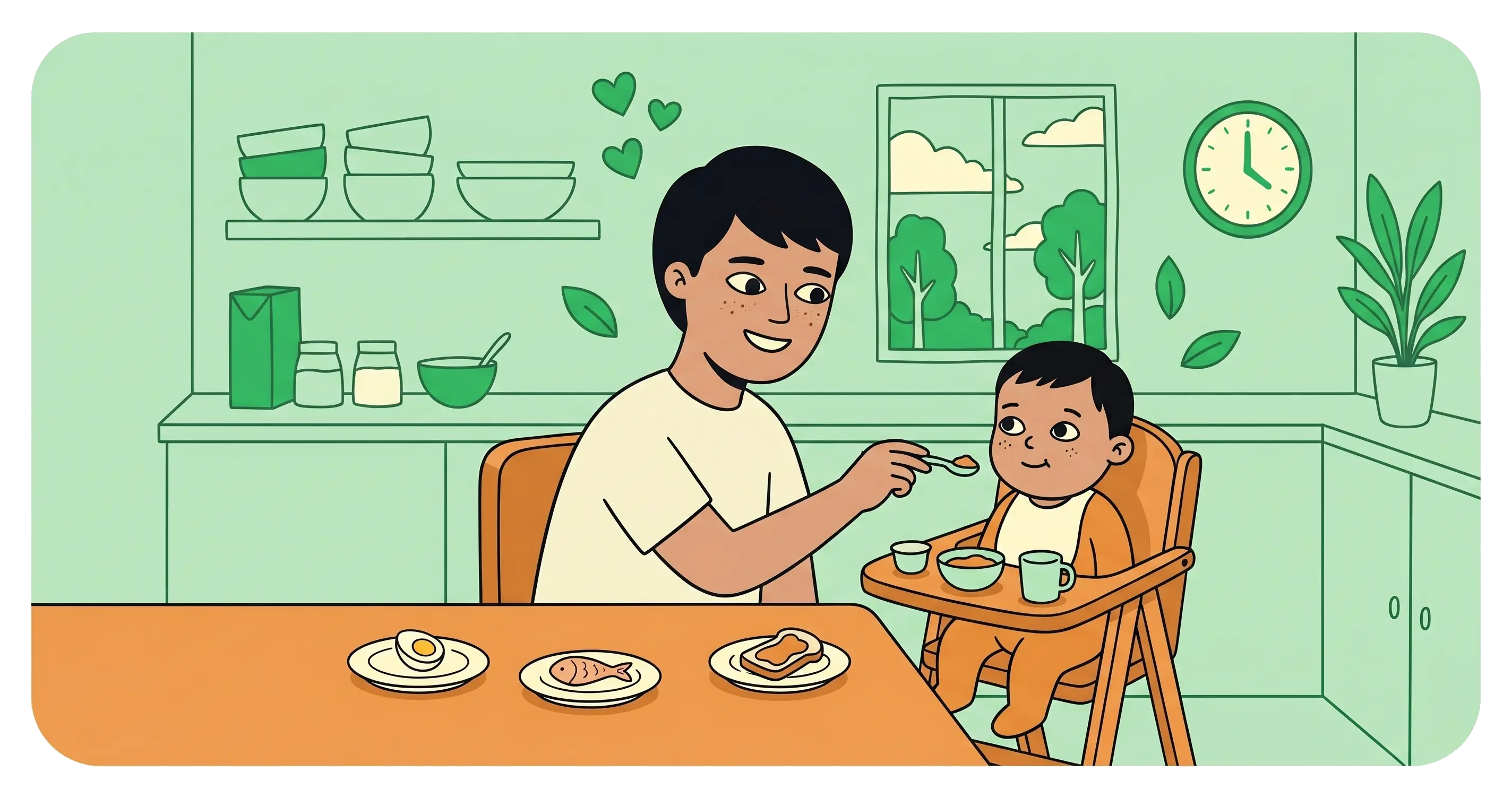
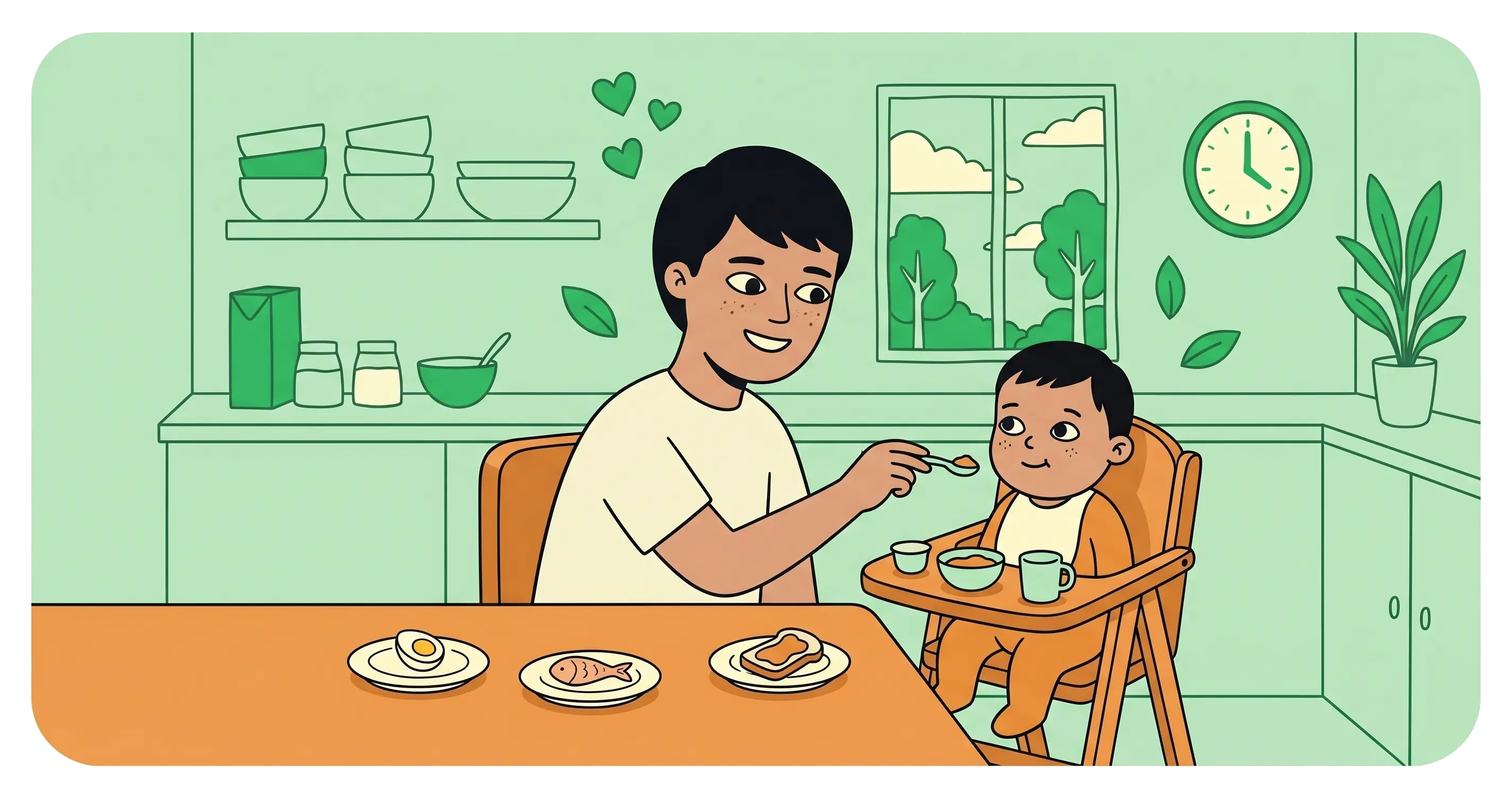
This is one of the things that most relieves parents: a toddler doesn't need a separate kitchen. In practice, it usually suffices to slightly simplify the family meal — less salt, milder sauce, softer texture, ingredients served separately.
We remember a mom who, during her first consultation, said she made two dinners every day: a “normal” one for the rest of the family and a “kids'” one. After a few simple changes, it turned out that one pot of soup and gently seasoned sides were enough. For her, it was a huge relief in the first week.
What is a Portion for a 2-Year-Old?
This is a topic that comes up repeatedly. Parents look at the plate and think: “That's almost nothing”. And in practice, we often respond: for a toddler, it might be completely sufficient.
A small portion can really be small. Sometimes it's: - 2–3 tablespoons of cooked vegetables, - a few pieces of fruit, - half a slice of bread, - a few tablespoons of grains or pasta, - half an egg, - a few small pieces of meat or fish.
We usually recommend a simple rule: start small, then add more. This works better than serving a large portion “just in case,” which immediately overwhelms the child. A smaller start usually reduces tension on both sides of the table.
In our practice, we also see that parents often try to assess appetite based on one meal. And that can be misleading. It's much more important whether the child has energy, is developing, growing, and over the week eats something, even if one day they eat noticeably less.
More attention is needed when, for a longer time, eating is really very sparse, the repertoire narrows significantly, or the child is not gaining well. Then it's good to look at the situation more broadly, not just at the portions.
How to Plan a Week Without Spending Your Life in the Kitchen?
From our experience, the best meal plan isn't the “healthiest on paper,” but the one that can actually be done. A parent doesn't need another plan that looks great but falls apart by Wednesday afternoon. That's why we focus on simplicity, repeatability, and using what you already have at home 😊
A week based on familiar bases works well: - oatmeal, semolina, millet, - sandwiches and spreads, - vegetable soups, - rice, grains, pasta, - eggs, cottage cheese, yogurt, - soft vegetables and fruits.
Not every day has to be different. In practice, children often like repetition more than adults. It's the parents who worry that “it was pasta again,” while a toddler is usually quite happy with it.
What to Prepare in Advance
To make the week lighter, it's good to prepare 2–3 things in advance in the evening: - cook rice, grains, or pasta, - chop vegetables into a container, - make a simple spread for sandwiches, - bake pancakes or meatballs for the next day.
It doesn't have to be a big meal plan for half the week. In practice, small things that save 20–30 minutes in the morning or after work and a lot of nerves are enough.
7-Day Meal Plan for a 2-Year-Old
Below you'll find a plan that you can treat as a base. It's not about copying it 1:1, but about getting an idea of the day's rhythm and simple product combinations.
Day 1
- Breakfast: oatmeal with milk and banana
- Second breakfast: natural yogurt with raspberries
- Lunch: vegetable soup, potato, and boiled carrot served separately
- Afternoon snack: bread with avocado spread
- Dinner: sandwich with cottage cheese and cucumber
This is a good day for mild, familiar flavors. If vegetables are challenging, a really small amount is enough. In practice, a few pieces on the plate are already a good start.
Day 2
- Breakfast: semolina with grated apple
- Second breakfast: pear and a few tablespoons of yogurt
- Lunch: pumpkin cream soup, turkey meatballs, and rice
- Afternoon snack: yogurt-banana smoothie
- Dinner: scrambled eggs with bread and tomato
This setup often works for children who prefer to see ingredients separately. Soup provides predictability, and the sides leave the child some control over the meal.
Day 3
- Breakfast: omelet with banana
- Second breakfast: natural cheese and tangerine
- Lunch: millet, chicken in a mild sauce, broccoli on the side
- Afternoon snack: banana-egg pancakes
- Dinner: sandwich with hummus and soft pepper
This is a day when legumes and eggs appear. In practice, it's good to return to such products calmly, without pressure. Sometimes a child just looks and touches a few times — and that's also a stage.
Day 4
- Breakfast: sandwich with 100% peanut butter and banana
- Second breakfast: natural yogurt with blueberries
- Lunch: pasta with mild tomato sauce and turkey, grated carrot on the side
- Afternoon snack: baked apple
- Dinner: couscous with natural yogurt and cucumber
If your child prefers pasta, there's no reason to panic. In our work, we often see that the same favorite product can simply be a convenient base for various additions.
Day 5
- Breakfast: millet with pear
- Second breakfast: banana and boiled carrot
- Lunch: rice, baked fish or bean patties, with cucumber and tomato
- Afternoon snack: cottage cheese with fruits
- Dinner: pancake with natural cheese
Here, the rule works well: something familiar + one less obvious element. This way, lunch isn't too challenging for the child, and you still expand the menu.
Day 6
- Breakfast: oatmeal with leftover fruits from the week
- Second breakfast: natural yogurt and a few pieces of cucumber or tomato
- Lunch: soup with vegetables from previous days, with rice or pasta
- Afternoon snack: sandwich with egg spread
- Dinner: pancakes made from leftover grains or rice
This is a “rescue” day that we love to recommend to families. Not everything has to be freshly invented from scratch. In practice, using leftovers greatly helps keep the plan without additional fatigue.
Day 7
- Breakfast: soft-boiled egg, bread, and cucumber
- Second breakfast: smoothie with yogurt and fruits
- Lunch: light soup, potatoes, and soft vegetables
- Afternoon snack: fruits and a piece of homemade pancake
- Dinner: sandwiches with cottage cheese, hummus, or fish spread
At the end of the week, it's usually best to rely on simple, familiar solutions. When appetite is weaker, we don't add pressure — we just maintain the day's rhythm.
How to Use This Plan So It Makes Sense?
You don't need to have exactly the same products. If there are no raspberries, a banana will do. If the rice runs out, you can easily swap it for grains or pasta. For the child, the predictability of meals is more important than perfectly replicating the menu.
In practice, we recommend sticking to a few simple rules: - second breakfast and afternoon snack should complement the day, not replace lunch, - it's best to leave water between meals, - vegetables can be on the side, they don't have to be mixed, - a small portion is really enough to start, - a weaker day doesn't immediately mean a problem.
One mom we worked with once said: “What helped me the most was that I stopped trying to invent everything new every day.” And honestly — very often, that's what brings the greatest relief.
What to Do When a Child Refuses Lunch?
This is one of the most common challenges at this age. Parents tell us: “Breakfast somehow goes, yogurt is eaten, banana too, but lunch is a battle.” In practice, it's often not about lunch itself, but about the whole day's setup.
First, it's worth checking: 1. if snacks aren't sneaking in between meals, 2. if the child isn't drinking calories, 3. if lunch isn't served too late, 4. if the portion isn't simply too large, 5. if there's at least one safe, familiar element on the plate.
For many children, a so-called safe plate works well. That is: something familiar, something filling, a vegetable on the side, and a tiny piece of novelty. Without forcing everything together and without coaxing “just one bite.”
In practice, we recommend: - serving a new product next to a familiar one, - separating ingredients, - giving very small amounts, - allowing the child to look, touch, smell, - not making trying the main goal of the meal.
We remember a boy who didn't want to even look at broccoli for several weeks. His parents were convinced he would “never accept it.” First, he tolerated it on the table, then touched it, later licked it, and after a few weeks, he ate a small piece without much ceremony. Such small steps really count.
Common Mistakes That Ruin Appetite
In practice, the problem is rarely a “bad meal plan,” but most often — chaos between meals. A child who constantly receives something usually doesn't have a chance to feel real hunger. And without hunger, even the best lunch won't be appealing.
We most often see such traps: - constant snacking, - juices and other sweet drinks, - too much milk during the day, - very monotonous menu, - meals too low in fat, causing satiety to quickly fade.
If a child drinks juice every day, there's no need for a revolution overnight. In practice, gradual reduction works much better: diluting, reducing the amount, and gradually returning to water. Such a process over 1–2 weeks is usually easier for the whole family.
Parents also often assume that a request for food half an hour after a meal always means hunger. And sometimes it's boredom, fatigue, a desire for contact, or a habit of snacking. It's worth just observing this without automatically reaching for a snack.
When Is It Still Normal, and When Is It Worth Seeking Support?
Many things that worry parents fit into the typical picture of a toddler. Variable appetite, choosing familiar products, reluctance to try new things, or eating less well outside the home — we see this very often. These behaviors alone don't necessarily indicate anything concerning.
More attention should be paid to the situation when: - the child almost doesn't expand their repertoire for a long time, - clearly loses weight or doesn't gain, - eating is accompanied by pain, choking, or strong fear, - every meal ends with significant stress for the whole family.
In our work, we usually start by calmly organizing the day and looking at what's happening at the table. Sometimes that's enough. And sometimes it's worth adding extra support so that difficulties don't drag on for months.
Summary: Where to Start Today?
If after all this you're thinking: “Okay, but what should I do first?”, our answer is simple: start with the rhythm of the day. Not with perfect recipes, not with buying new products, and not with the pressure that everything has to be textbook-perfect from tomorrow.
To start, it's enough to: - introduce 4–5 meals a day, - make breaks between them, - leave mainly water, - serve small portions, - look at eating over the week, not just one day.
From our experience, these basics bring the most peace. And when there's less tension at the table, children much more often start eating better on their own 💛
If you want, we can help you tailor the meal plan to your child's appetite, selectivity, or your day's rhythm. Check out the consultation form — we'll calmly see where it's best to start.