When might challenging behaviour mean that your child has simply had enough?
“Why are they reacting so strongly to a simple request?” This question often comes up when a child cries while getting dressed, screams in a shop or refuses to leave the playground. In that moment, it is easy to focus only on the behaviour. However, it is worth pausing for a moment and considering what happened beforehand.
Your child may be protesting because they do not want to stop playing, but they may also be hungry, overtired or tired of the noise. These things often overlap. When tension has been building for several hours, even a small disappointment can trigger a very big reaction.
This does not mean that you should give up on rules. Boundaries are necessary, including when your child is experiencing strong emotions. However, it is easier to set them when you see not only the shouting or refusal, but also the circumstances your child has faced that day.
What should you check before judging the behaviour?
- Sleep - whether your child has had a restful night or the rest they need.
- Time since their last meal - when they last ate and whether earlier activity may have made them hungrier.
- Thirst - whether they have had a chance to drink, especially after being active, in warm weather or during a long outing.
- Pain or illness - whether something may be causing physical discomfort or whether any worrying symptoms have appeared.
- Stimuli - whether there has been a lot of noise, crowds, conversation or other intense sensory experiences around them.
- Rushing - whether your child has had to move quickly from one activity to another.
- A change of plan - whether something happened differently from what your child expected.
The same refusal may be received differently depending on the time of day and how the day has unfolded. In the morning, after sleep and breakfast, hearing “We are not buying a toy today” may cause disappointment and a brief protest. At the end of a day full of rushing, noise, changes of plan and no chance to rest, a child may react to the same words with crying, shouting or a strong refusal to cooperate. The answer is still no, but your child may have fewer resources to cope with it.
Why look for the cause instead of simply stopping the behaviour?
A difficult reaction rarely happens without any context. A child may have waited for a long time, been in a crowded place, had no say in the plans for the day or heard “no” at a point when their patience is already at its limit. This does not mean that every reaction is acceptable. It simply means that the request or limit itself is not always the only cause of an outburst.
Younger children are still learning to notice signals from their bodies and talk about them before crying or anger appears. They will not always say, “I’m tired” or “It’s too loud here.” Instead, they may whine, refuse to cooperate, run away, throw things or demand attention.
In practice, it can help to ask: “What might have made it harder for my child to cope with this situation today?” This is not about finding an excuse for hitting, kicking or damaging things. It is about choosing a response that both protects boundaries and does not add more tension for your child.
You can look at the situation from three angles:
- physical needs - food, drink, sleep, temperature, pain, illness;
- emotions - disappointment, jealousy, missing someone, anger, difficulty with separation;
- the surrounding conditions - noise, crowds, screens, travel, long waits, rapid changes of plan.
Hunger and thirst: how can they affect a child’s behaviour?
Children do not always communicate hunger directly. Sometimes, instead of asking for food, they cry over something small, argue about a cup, resist getting dressed or show noticeably less patience. In older children, this may look different: silence, a sharp tone of voice or becoming irritated quickly by everyday things.
There is no single point after which every child will definitely become hungry or irritable. A lot depends on how the day has gone, their activity level, the temperature, their last meal and their individual rhythm. That is why it is better to observe recurring situations than stick rigidly to a set number of hours.
If your child has been playing outside for a long time, travelling or walking around shops with you, a small snack may not be enough to last the whole time. The same applies to drinking, especially on a warmer day or during physical activity. Thirst can increase discomfort even if your child has not yet asked for water.
It is worth having a simple plan for longer outings:
- offer a meal or a substantial snack before leaving;
- bring water with you;
- allow time for eating during travel or shopping trips;
- after intense activity, check whether your child needs something more filling;
- do not treat food as a reward for “good behaviour”, but as everyday support throughout the day.
Food will not solve every difficult situation. If your child is tired, angry and overstimulated at the same time, offering a snack alone may not be enough. Even so, removing one source of strain often makes it easier to get through the rest of the day more calmly.
Tiredness does not always look like sleepiness
Some children become quiet and cuddle up to an adult when they are tired. Others start running around, shouting, being silly or resisting every request. This can be confusing, because from the outside it may look like they have too much energy, when in fact they may no longer have the energy to regulate their emotions.
Tiredness is not caused only by a short night’s sleep. A long family gathering, travel, shopping, lots of conversations, several activities in one day or no time for quiet play can also be demanding for a child. Even enjoyable events can be tiring when there are too many of them.
Notice whether difficult moments happen more often after situations such as:
- a missed or shortened nap;
- a long day away from home;
- noise, crowds and lots of people around;
- frequent transitions from one activity to another;
- extended screen time;
- too little movement or no quieter time.
When you can see that your child is at the end of their tether, you do not have to solve the whole problem through conversation straight away. Sometimes it is better to use fewer words, dim the lights, leave a noisy place or give your child a few minutes without further instructions. A simple message such as, “First we put on our shoes, then we will rest,” may be easier to accept than a long explanation.
Hunger, tiredness or frustration? Often, it is several things at once
A child does not have to be “just tired” or “just angry”. They may be coming back from the playground hungry, have had a noisy day and also not want to stop an enjoyable game. In that situation, being asked to put on their shoes becomes the final thing they find hard to manage.
It is worth remembering that physical needs and emotions do not work separately. When a child is overtired or overheated, they may feel anger, sadness or helplessness more quickly. When they are disappointed, it can be harder for them to calmly accept another demand.
Common sources of frustration include:
- having play interrupted without warning;
- being told they cannot buy something;
- having to wait;
- not having a choice;
- conflict with a sibling;
- a change of plan;
- limited attention from an adult.
You can acknowledge the emotion while also stopping unsafe behaviour. For example: “I can see you do not want to stop playing. You can be angry, but I will not let you hit.” This message is short, clear and does not require your child to calm down immediately.
If irritability appears suddenly and is accompanied by symptoms such as fever, pain, weakness, a clear reluctance to eat or drink, or unusual crying, it is worth contacting your paediatrician. Everyday overload and illness can look similar, so it is best not to assume there is only one cause.
A challenging-situations diary: a simple way to notice patterns
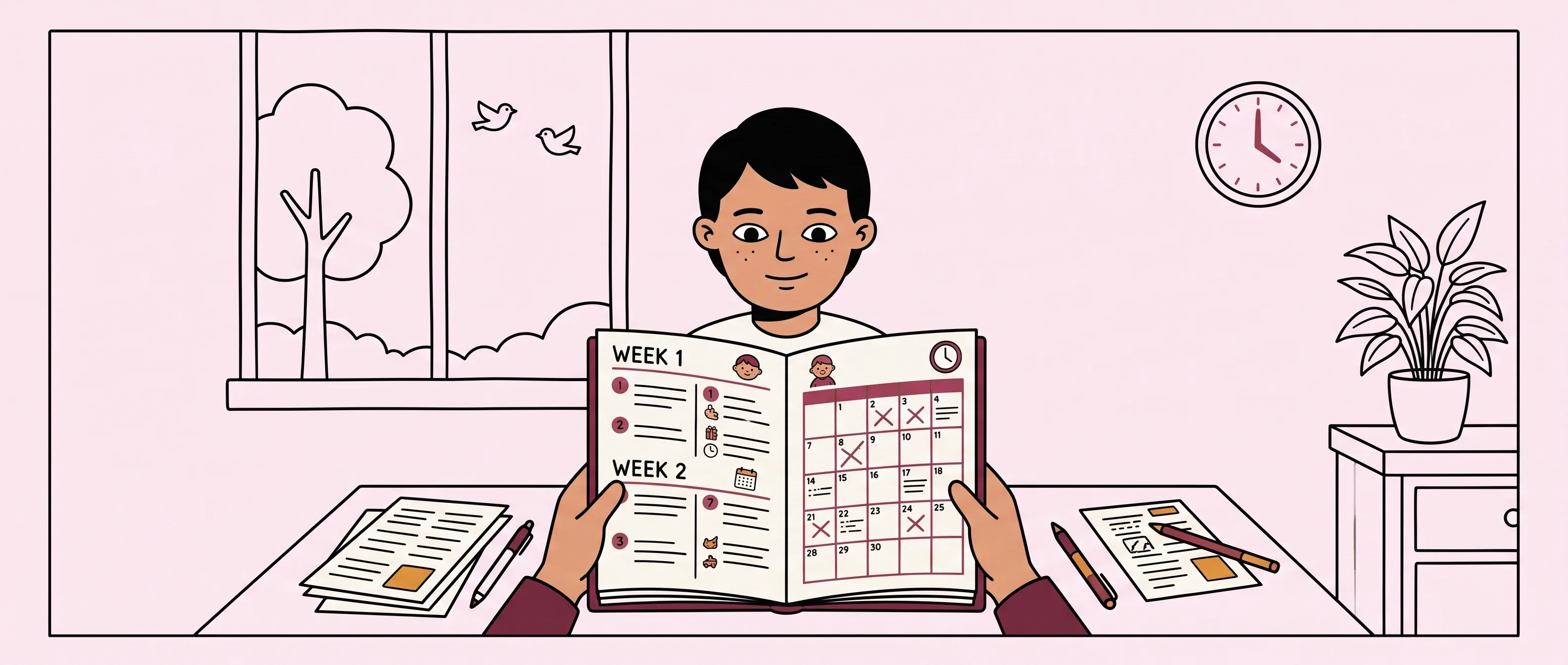
If difficult reactions occur several times a week, you can make brief notes for 7–14 days. You do not need to record the entire day or analyse every tear. Information about the more important moments and situations that particularly surprised you is enough.
The aim is not to judge your child or check whether you are doing everything perfectly as a parent. The notes are meant to help you see what most often comes before tension builds. After a few days, it may be easier to notice whether the problem usually arises before lunch, after a poor night’s sleep or during trips to crowded places.
What should you write down?
Keep your notes as brief as possible:
- the time your child woke up, napped and went to bed;
- meal, snack and drink times;
- longer outings, travel and shopping trips;
- screen time;
- noise, crowds or lots of activities;
- important changes of plan;
- conflicts with siblings or difficult separations;
- moments when your child could not move around freely for a long time.
You can also note an unusual day: visitors, a trip away, hot weather, an infection or a big celebration. Sometimes one difficult evening does not tell you much. Repeated patterns are usually more helpful than a single note.
How can you describe behaviour without labels?
Instead of writing “they were naughty”, record what actually happened. For example: “After being told that we were leaving the playground, they cried, kicked the ground and refused to put on their shoes for several minutes.” This type of description allows you to return to the situation without judging your child.
For each incident, you can note:
- What was happening just before the reaction?
- How did your child react?
- How long did the tension last, roughly?
- Could anyone have been hurt?
- What did you do?
- What brought even a little relief?
Also record what worked
Do not focus only on the problem. It is worth noting whether water, food, movement, a cuddle, quiet, leaving the place, a simple choice or advance warning about a change helped. This makes it easier to build a plan for similar situations in the future.
After a week, review your notes without trying to find one perfect answer. You may notice that your child finds shopping after nursery particularly difficult, or struggles with evenings after a day full of activities. This knowledge can help you make small, realistic changes.
How can you structure the day to reduce difficult moments?
A predictable daily rhythm does not mean a schedule planned down to the minute. Rather, it means that your child knows what to expect and has regular opportunities to eat, rest, move and have quieter time. For many children, this kind of consistency creates a greater sense of security.
At the same time, it is worth staying flexible. After a poor night’s sleep, your child may need a slower afternoon. After an intense outing, they may respond better to a simple dinner and a quiet evening than to more activities.
Prepare for outings
Before leaving, pack water, a snack and anything your child needs to feel comfortable away from home. If you have a choice, avoid planning your longest shopping trips just before their usual meal or sleep time. This is not always possible, but even a little preparation can make the situation easier.
During longer errands, allow for a break. Your child may need a chance to move, use the toilet, have a drink or simply sit somewhere quieter. This is not “ruining the plan” - it is adapting it to your child’s real abilities.
Allow time for transitions
For a child, moving from play to getting dressed, from a screen to dinner, or from the playground to home may be harder than the activity itself. A warning can help: “Three more goes down the slide, then we are leaving.” You can also remind them of the next step: “When we get home, we will have dinner and you can choose a book.”
Small choices can also reduce resistance. Your child does not need to decide whether you leave the shop if it is already necessary. However, they can choose whether to hold your hand or walk beside you, or which cup they will use when you get home.
Introduce changes one at a time. If you notice difficulties before lunch, begin with an earlier snack or a shorter outing. If you change everything at once, it will be harder to tell what is actually helping.
What can you do during a strong protest?
When your child is very upset, it is usually not a good time for a long conversation about rules. First, focus on safety and reducing tension. You can return to what happened later.
1. Pause before you react
If you can, take one calm breath and speak more slowly. Your child does not necessarily mean to make life difficult for you just because they are shouting or refusing. At that moment, they may simply be struggling to cope with their emotions and the demands being placed on them.
2. Make the situation safe
When your child is hitting, kicking, throwing things or could hurt themselves or someone nearby, act calmly and clearly. Move dangerous objects away, separate children or move to a safer place. You do not need to raise your voice for the boundary to be clear.
You can say:
- “I will not let you hit.”
- “I’m moving this away so no one gets hurt.”
- “I’m here when you are ready.”
- “You can be angry, but you cannot throw that at people.”
3. Reduce stimulation and the number of words
If you are in a shop, at a party or somewhere noisy, try moving to a quieter corner or ending the outing. Do not ask many questions at once. When emotions are intense, sentences such as “Why did you do that?” or “How many times do I have to tell you?” do not usually help.
Sometimes a simple message is enough: “We are taking a break now.” One child may need closeness, while another may need a few minutes of space. If the situation is safe, you can give them that opportunity.
4. Offer basic support
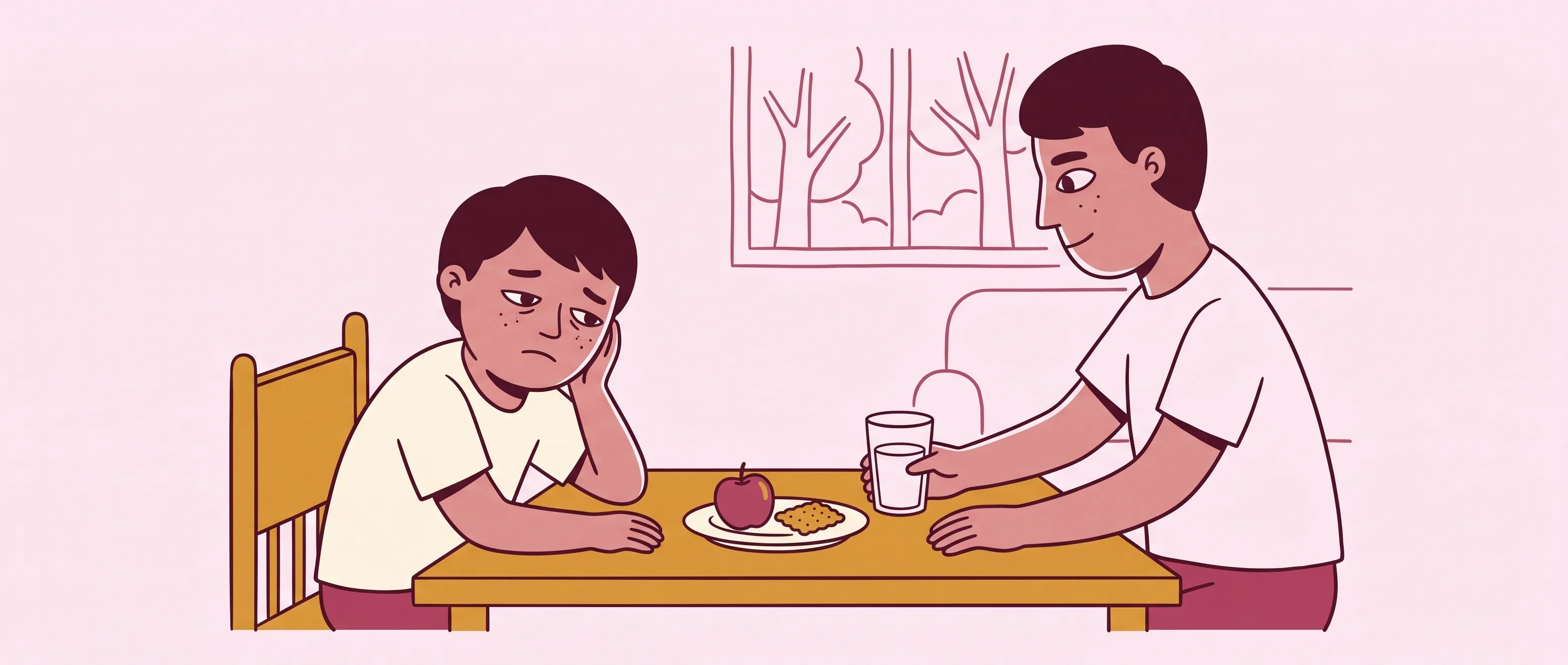
If you suspect hunger or thirst, offer water or food without making it conditional on “First, stop crying.” You could say, “I can see this is hard for you. I have water and a snack; we can sit down for a moment.” This does not remove the boundary around hurting others.
Once it is over, return to the situation briefly when your child is calmer. There is no need for a lecture. It is enough to name what happened, remind them of the boundary and remember or write down what might make a similar moment easier next time.
Myths that make calm responses more difficult
One common shortcut is to see every difficult reaction as manipulation. A child may sometimes be trying to get something, but that does not rule out genuine anger, tiredness or frustration. Rather than immediately assuming bad intentions, it is better to consider what is happening in the whole situation.
It is also worth being careful about jumping to conclusions about one product, such as sweets. If you notice more difficult behaviour after a particular food, also look at the time of day, earlier hunger, how much sleep your child has had, where you are and what has happened in the previous hours. A single incident rarely provides the full picture.
Simply naming an emotion does not always work either. Saying, “I can see you are angry,” may help your child feel seen, but it will not automatically make the tension disappear. Sometimes they will need less stimulation, water, movement, rest or simply your calm presence.
Routines do not have to be rigid either. They should support everyday life, not force you to follow a plan at all costs. If your child is clearly exhausted, going home earlier or having a quieter evening may be a sensible choice.
Summary: first, look at what is behind the reaction
A child’s challenging behaviour may be a signal that they are struggling in that moment—physically, emotionally or because of what is happening around them. Hunger, tiredness and overload do not mean that hitting or damaging things is acceptable, but they can help you better understand why your child was unable to cope in another way. This can help you respond more calmly and more clearly.
Do not force yourself to find one trigger. Often, several things are at work at once: too little sleep, rushing, noise, no snack and an abrupt end to play. The better you understand these combinations, the easier it is to prevent some difficult moments.
Over the next week, you can make a note of:
- sleep, food and drink;
- important events and changes of plan;
- noise, travel, screens and long waits;
- what happened before a difficult reaction;
- what helped your child regain calm.
If these situations are frequent, very intense or worrying to you, complete the consultation form. You can calmly describe what you are observing and organise the possible triggers and everyday support steps.
Sources
- National Health Service (NHS), “Temper tantrums”.
- American Academy of Pediatrics (AAP), “What’s the Best Way to Discipline My Child?”.
- Centers for Disease Control and Prevention (CDC), “Tips for Building Structure”.