If the outburst is happening right now
- Pause and lower your voice.
- Remove hazards and move other people away.
- Briefly state what is not allowed.
- Stay close in a way your child can accept.
- Return to the conversation only once they have calmed down.
“Everything was fine, and suddenly there is screaming” – where does it come from?
“Why do they react like that to an ordinary ‘no’?” This question comes up often, especially when an outburst begins in a shop, when it is time to leave the playground or while getting dressed. In these moments, it is easy to feel tense, helpless and sometimes angry yourself.
For children between around 18 months and 6 years old, strong emotions can arise faster than they are able to name or stop them. This does not have to be deliberate “defiance”. Often, a young child simply cannot cope in that moment with being told no, a change of plan or growing tiredness.
An outburst can look very different from one child to another. One child may scream, throw themselves on the floor and protest loudly, while another may withdraw, move away or stop responding. It is worth looking not only at the tantrum itself, but also at what happened just beforehand.
In this article, you will find a simple approach: what to do during an outburst, how to keep everyone safe and how to reconnect when emotions have eased a little.
What can trigger a tantrum in a child?
If a strong reaction happens after you say no, also see how to set a boundary when your child hears “no”.
Parents often expect a simple request to receive a simple response. Yet for a young child, even putting on shoes, turning off a cartoon or leaving a favourite activity can feel very difficult in that moment. This is especially true when a lot of tension has already built up.
A child’s reaction can be affected by, among other things:
- hunger or thirst;
- lack of sleep and end-of-day tiredness;
- noise, crowds, shopping, travel or lots of new experiences;
- an enjoyable activity ending suddenly;
- being told no or having a limit set;
- being rushed and given several instructions at once;
- a need for independence that the child cannot yet express clearly.
Sometimes the issue is not the situation itself, but the timing. A child may calmly accept being told no in the morning, then react very intensely in the evening. This does not mean the rules should disappear – rather, it is worth taking their current state into account.
Keeping brief notes for a few days can be helpful. Write down when tension comes up most often, what happened beforehand and what made the situation even slightly easier. Over time, you may notice a recurring pattern, such as more difficult transitions home from nursery, outbursts before dinner or protests after spending a long time away from home.
How can you spot tension before an outburst happens?
In practice, a tantrum often has an earlier stage. Your child may not yet say, “I’m tired” or “This is too much for me,” but they will show it through their behaviour. The earlier you notice these signs, the better the chance of getting through a difficult moment more calmly.
Before an outburst, you may notice, for example:
- more activity than usual;
- throwing small objects or provoking others nervously;
- crying or getting angry over a minor change;
- a sharp tone of voice and frequent protests;
- clenched hands, a stiff body or a tense face;
- difficulty stopping play or following a simple instruction.
Not every overwhelmed child becomes loud. Some children go quiet, look away, hide behind a parent or seem as though they “cannot hear”. At that point, rather than repeating your request more and more loudly, try moving closer, using fewer words and giving your child a moment to respond.
You might say: “I can see it is hard for you to listen right now. We’ll do it together” or “First, we’ll take a short break, then we’ll get back to getting dressed”. Not every situation will end without protest, but a gentler pace often reduces tension.
What should you do during a child’s tantrum?
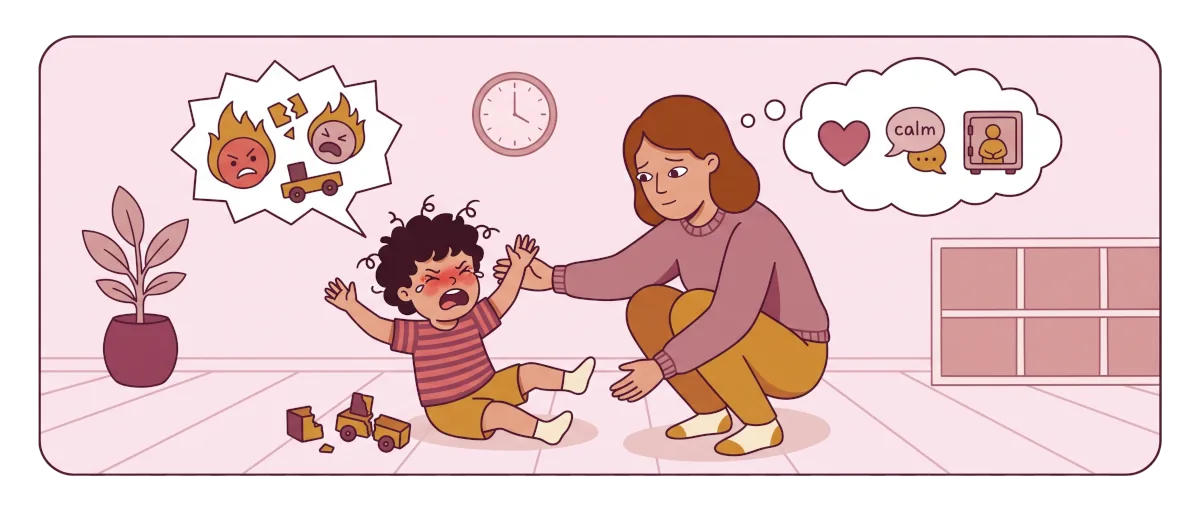
When your child is already screaming, crying or throwing things, you do not need to find the perfect solution straight away. First, focus on what matters most: safety and preventing the situation from escalating.
1. Take a brief pause for yourself
Before you say anything, slow down for a moment. Take a calm breath, lower your shoulders and try to speak more quietly than usual. This does not mean you have to be perfectly calm – it simply means not adding more shouting to the situation.
You can use one simple sentence: “I can see you are very angry. I’m here.” Do not try to convince your child right now that their reaction is “unnecessary”. At the height of emotion, long explanations usually do not get through.
2. Create a safe space
If this happens while shopping, a separate plan for responding to your child’s protest in a shop may be helpful.
Look around for things that could be thrown or cause an injury. Move away glass, hard toys, scissors, hot drinks or other objects that are best put out of reach for the moment. If siblings are nearby, calmly guide them aside.
In a shop, at the playground or during a family outing, try to move with your child to a quieter place. This will not always be possible, but even taking a few steps away from the crowd can help. If another adult is with you, ask for specific support, such as looking after the siblings.
3. Offer closeness, but do not force it
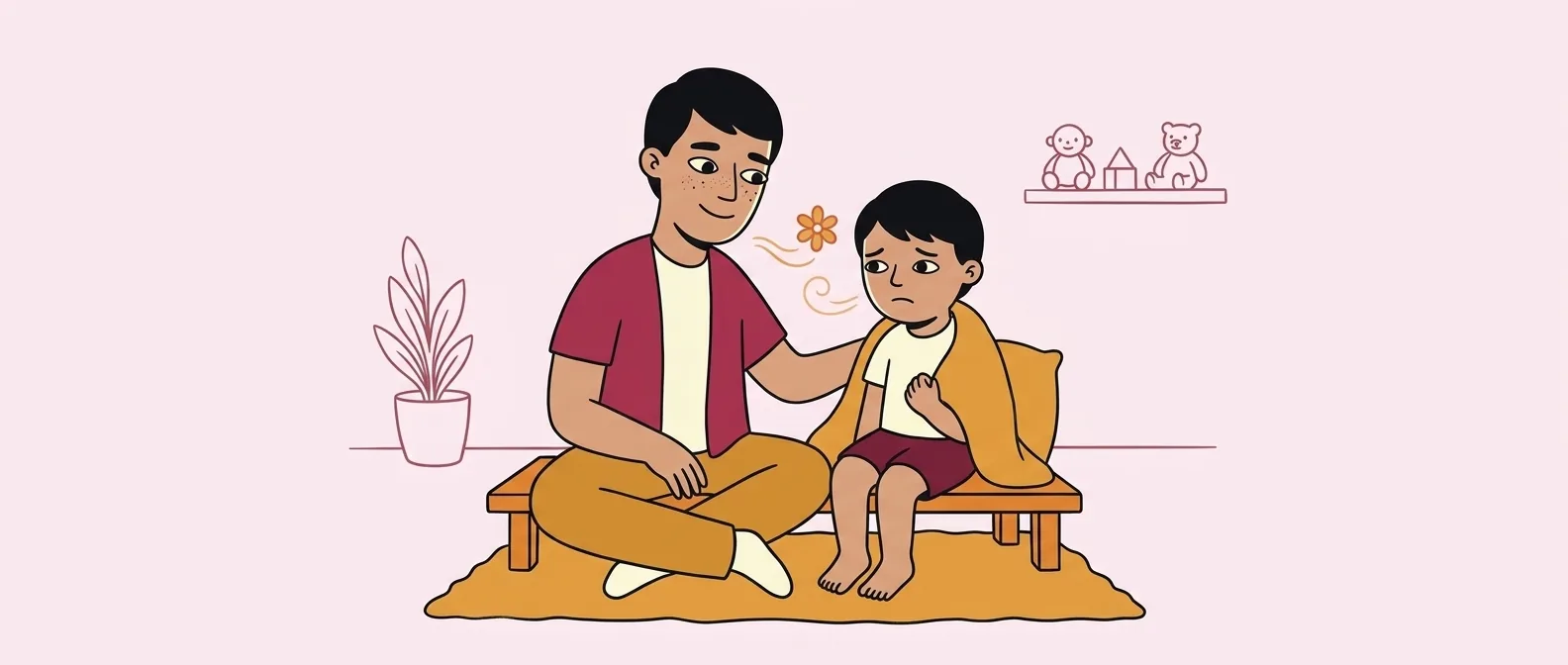
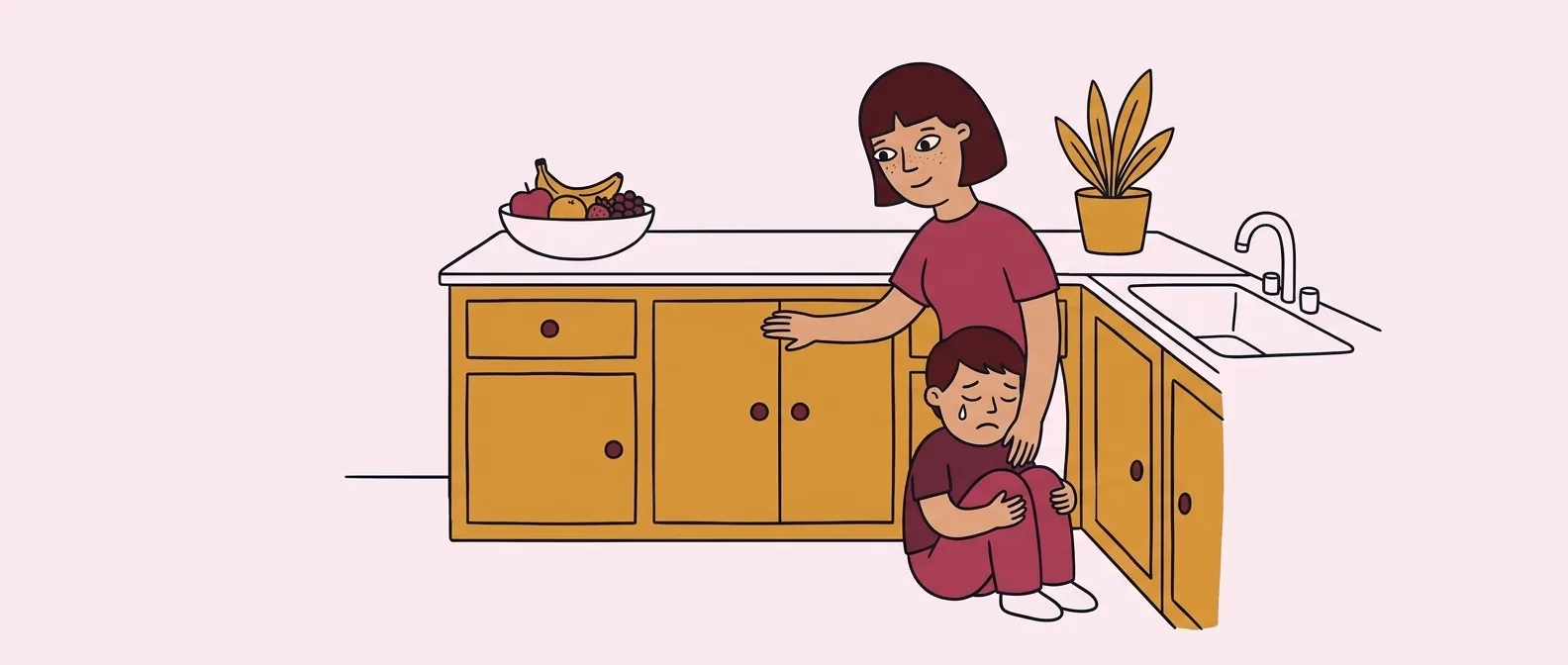
Some children want a hug, to sit on your lap or to hold hands when they are angry. Others need space and may protest even more strongly if someone tries to touch them. It is worth letting your child choose.
You might say: “Would you like a hug, or should I sit next to you?” If your child says no, do not push it. Stay nearby and use your calm presence to show that they are safe and do not have to go through this moment alone.
4. Hold the boundary in a few words
Anger is allowed, but not every behaviour that happens during anger can be allowed. If your child hits, bites, kicks or throws things, stop it briefly and calmly. There is no need at that moment to have a conversation about consequences or go over every rule.
These phrases may help:
- “I won’t let you hit.”
- “I’m moving you away so no one gets hurt.”
- “You can cry. You cannot throw the cup.”
- “We’ll talk when things are calmer.”
Do not change an important decision just to stop the screaming as quickly as possible. You can acknowledge your child’s emotions while still holding the boundary: “I know you want to stay. We are leaving now.”
What words are best avoided during an outburst?
Under stress, it is easy to say something more sharply than intended. Still, it is worth remembering that a child experiencing intense emotions does not need shame or a long lecture. Simple messages that communicate the boundary without attacking the child tend to work better.
Try to limit phrases such as:
- “Calm down right now.”
- “You’re overreacting.”
- “You’re being naughty.”
- “You should be ashamed.”
- “You’re making me angry.”
- “Look, everyone is watching.”
These words can increase tension and make it harder for your child to reconnect with you. Instead, name what you see and clearly state what you are doing: “You are angry. I won’t let you hit.”
Is it worth distracting your child?
Sometimes it is, especially with a younger child. You might offer a sip of water, look out of the window together, find something in a particular colour or move to a quieter place. This kind of change can interrupt rising tension before the outburst grows bigger.
However, do not treat distraction as a way to avoid every difficult emotion. If a boundary matters, it can still stay in place. You can say at the same time: “We are not buying that toy. Come on, let’s look for a red car on the shelf.”
When your child hits, bites, kicks or bangs their head
If behaviour that could hurt someone appears during an outburst, act practically first and foremost. Move other children away, remove objects within reach and create more distance from hard edges or stairs. You do not need to explain the entire situation to your child at that time.
If your child tries to hit another person, you can calmly stop their hand or move them away from the person, but only as much as is necessary to stop the danger. Say simply: “I won’t let you hit.” As soon as the situation is safer, reduce physical intervention.
If your child bites, protect your body and move away instead of getting into a struggle. If they throw things, limit access to more objects. If they bang their head, remove hard items from the immediate area and stay close to reduce the risk of injury.
Do not leave your child alone where they could hurt themselves. At the same time, do not try to restrain them physically if safety can be achieved by moving objects or other people away, or by going to a quieter place.
When should you seek medical help?
If your child has been injured, hit their head or anything about their behaviour after the incident worries you, it is worth seeking medical advice. Urgent help is needed if your child has lost consciousness, is having trouble breathing, is vomiting, is unusually drowsy, has sustained a serious injury or you are unable to keep them safe.
It is also worth speaking with a paediatrician or psychologist if the outbursts are very frequent, are becoming more intense, lead to injuries, involve repeated self-harm or significantly disrupt everyday life. A consultation can help make sense of the situation and identify appropriate next steps.
What should you do after a tantrum?
After an outburst, your child may be tired, irritable or need quiet. Do not rush into a conversation just because the screaming has stopped. First, check whether your child’s body has truly calmed: their breathing is slower, their tension has eased and they are noticing your presence again.
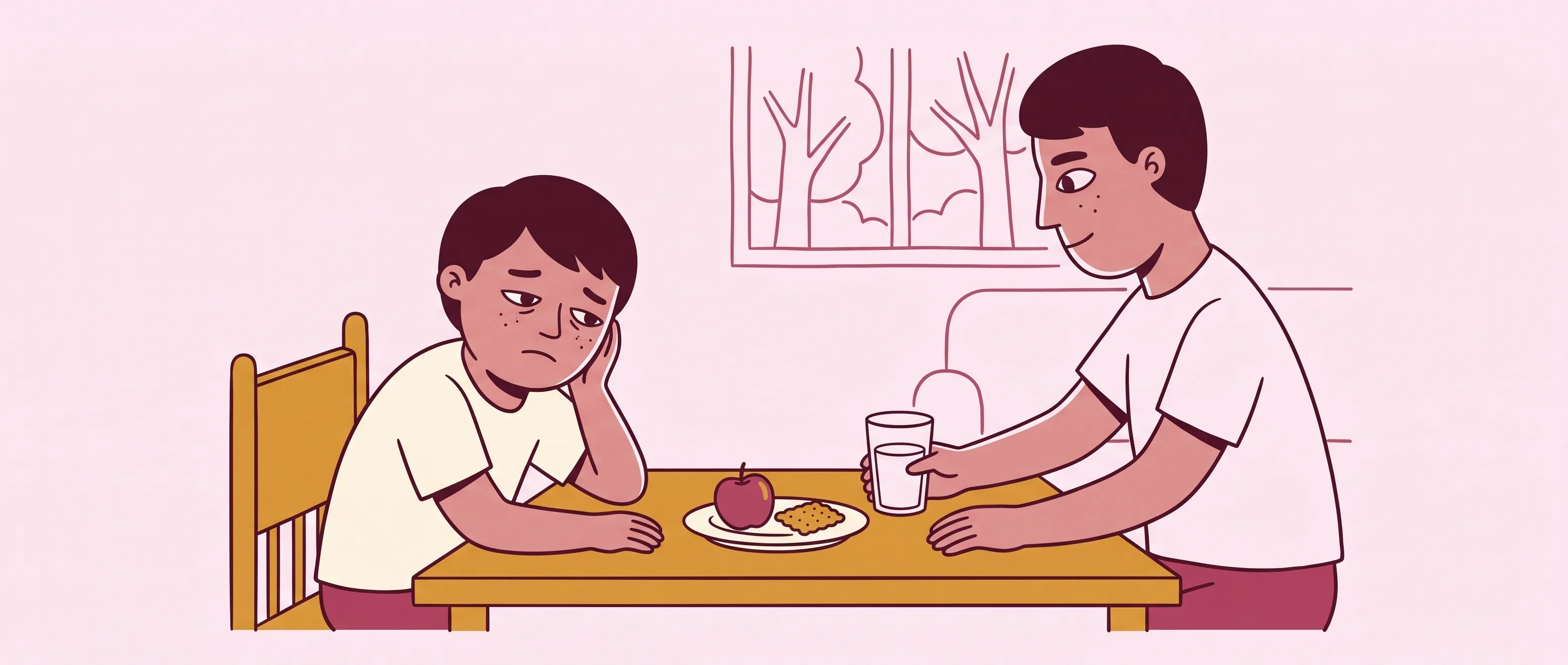
You can offer water, some time on the sofa, a hug or a simple activity such as building with blocks. If your child does not want physical contact, respect that. Closeness can also mean quietly sitting nearby.
Once things are calmer, briefly name what happened. For example, say: “It was hard for you when we finished playing” or “You got angry because you wanted that toy.” This is not about questioning your child or forcing an apology.
The emotion is okay; hurting others is not
Once you have reconnected, return to one important boundary. You might say: “You are allowed to be angry. I don’t allow hitting or biting.” This helps separate the emotion from the behaviour.
Then choose one simple thing your child can do next time. Do not create a long list, because in a difficult moment it is easier for a child to remember one short solution.
You can practise:
- saying, “Help me”;
- coming to you;
- stomping their feet in a safe place;
- squeezing a pillow;
- stepping away from play for a moment;
- naming the emotion: “I’m angry.”
How can you reduce the number of outbursts day to day?
It is not possible to eliminate tantrums completely – they are part of learning about emotions and boundaries. However, you can reduce the number of situations in which your child is already so tired or overwhelmed that it is hard for them to cooperate. Small, consistent actions usually make the biggest difference.
Support a predictable daily rhythm
Children often find it easier to manage transitions when they know what comes next. Where possible, keep mealtimes, sleep and quiet rest at similar times. Take water and a small snack with you before a longer outing.
After an intense time – for example, after nursery, shopping or a birthday party – plan a less demanding period. Some children need movement, while others need quiet and closeness. Observe what kind of rest helps your child in particular.
Give advance notice of changes
When moving from screen time to the next activity, see the step-by-step plan for ending a cartoon.
A sudden “that’s it” can be difficult even when your child knows the rules. Try preparing them for the next activity: “Two more slides, then we’re going”, “We’ll turn off the cartoon in a moment” or “First, the blocks go in the box, then it’s dinner.”
Regular rituals can also help. The same evening routine, a short song before bath time or repeated words before leaving give your child a greater sense of knowing what will happen.
Offer a small choice
You can find more examples of choices within safe limits in the article about a young child’s autonomy and adult boundaries.
Your child cannot always decide whether you are leaving, whether they need to get dressed or whether it is time to stop using a screen. But they can be offered a choice in small matters. This helps them feel some control without requiring you to give up important boundaries. ⏳
You might ask:
- “Would you like to put your shoes on yourself, or would you like me to help?”
- “Would you like the green cup or the blue one?”
- “Coat first or hat first?”
- “Would you like to walk to the car holding my hand, or walk beside me on your own?”
Summary: a calm response does not mean being permissive
During a tantrum, the most important things are safety and your calm presence, as far as possible. You do not have to solve everything in a few minutes or find perfect words. Reduce the risk, do not shame your child and hold the important boundary.
The goal is not to silence your child immediately. It is to get through a strong emotion without anyone being hurt or things being damaged. Do not expect yourself to respond perfectly every time – after a difficult moment, you can reconnect and try again.
If the tantrums are intense, worry you or you need help making sense of the situation step by step, you can use the BehaviorComplainer consultation form.
Sources
- National Health Service (NHS), “Temper tantrums”.
- American Academy of Pediatrics (AAP), “Top Tips for Surviving Tantrums”.
- National Health Service (NHS), “Help your toddler manage emotions”.
- ZERO TO THREE, “Toddler Tantrums 101: Why They Happen and What You Can Do”.