“How many times do I have to repeat myself?” — why doesn’t your child respond?
You ask your child to get dressed, but they keep playing on the floor. You say it is time to wash their hands, but they run in the other direction. When you are in a hurry, it is easy to feel angry and assume your child is doing it on purpose.
In practice, a lack of cooperation is often caused by something more ordinary than a desire to defy a parent. Your child may be tired, hungry, irritable or so absorbed in play that they are not ready to switch activities right away. Sometimes, the way an instruction is given can also be a barrier.
This does not mean you should give up on boundaries. Rather, it is about checking what is making it difficult for your child to follow your request in that moment, and then responding briefly and calmly. This means less energy goes into repeating yourself and more into taking practical action.
7 common reasons why children do not follow instructions
A child may not respond for several reasons at once. It is worth looking not only at the behaviour itself, but also at what happened just beforehand and at what point in the day the difficulty appears.
The most common barriers are:
- Too much noise and stimulation — your child is already overwhelmed by their surroundings.
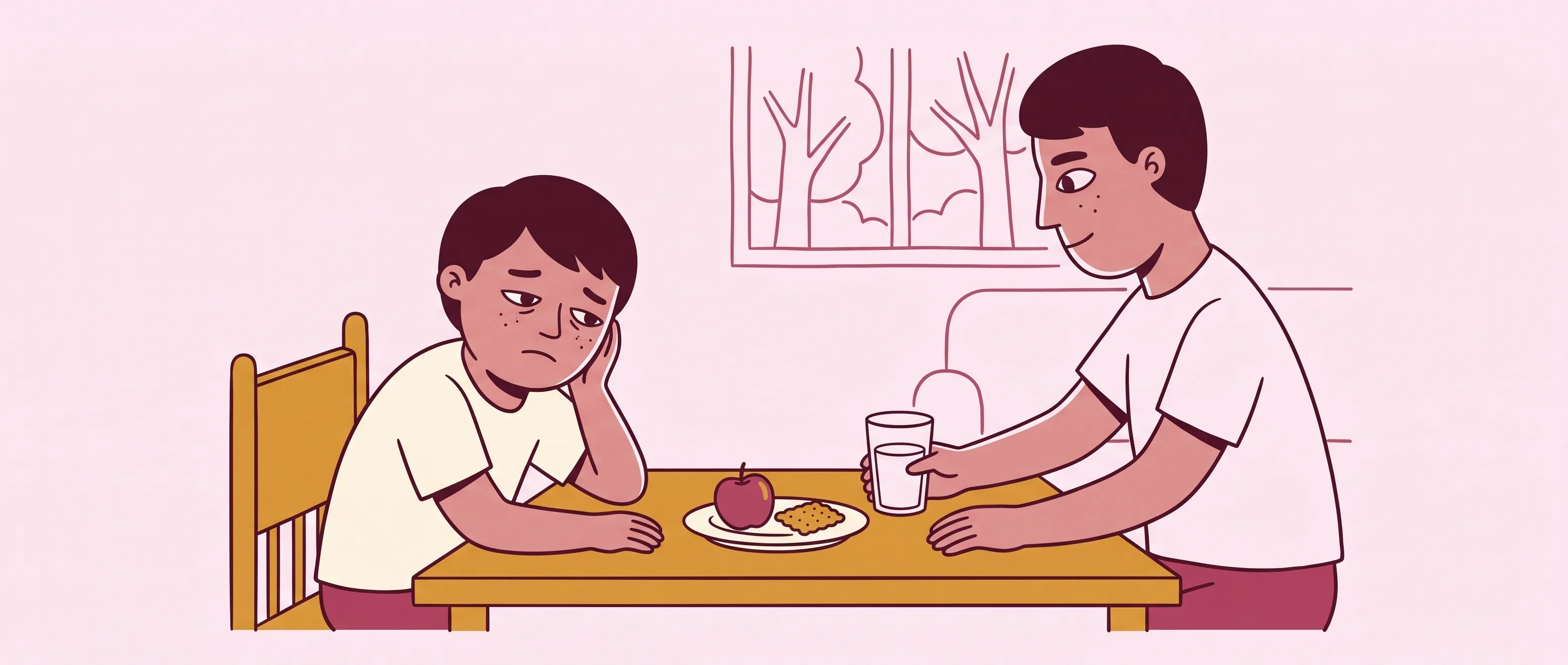
- Hunger, thirst or discomfort — their body needs attention.
- Tiredness — even easy tasks become harder then.
- Strong emotions — anger, sadness or disappointment take up all their attention.
- A need for independence — your child wants to do something their own way.
- Difficulty stopping play — moving on to the next activity does not happen immediately.
- An unclear or overly long instruction — your child does not know where to begin.
Before you respond, consider the time of day
The same child may calmly put on their shoes in the morning, then protest at every request after preschool. This does not necessarily mean that the rules have suddenly stopped working. After a busy day, children often have less patience and are less ready to cooperate.
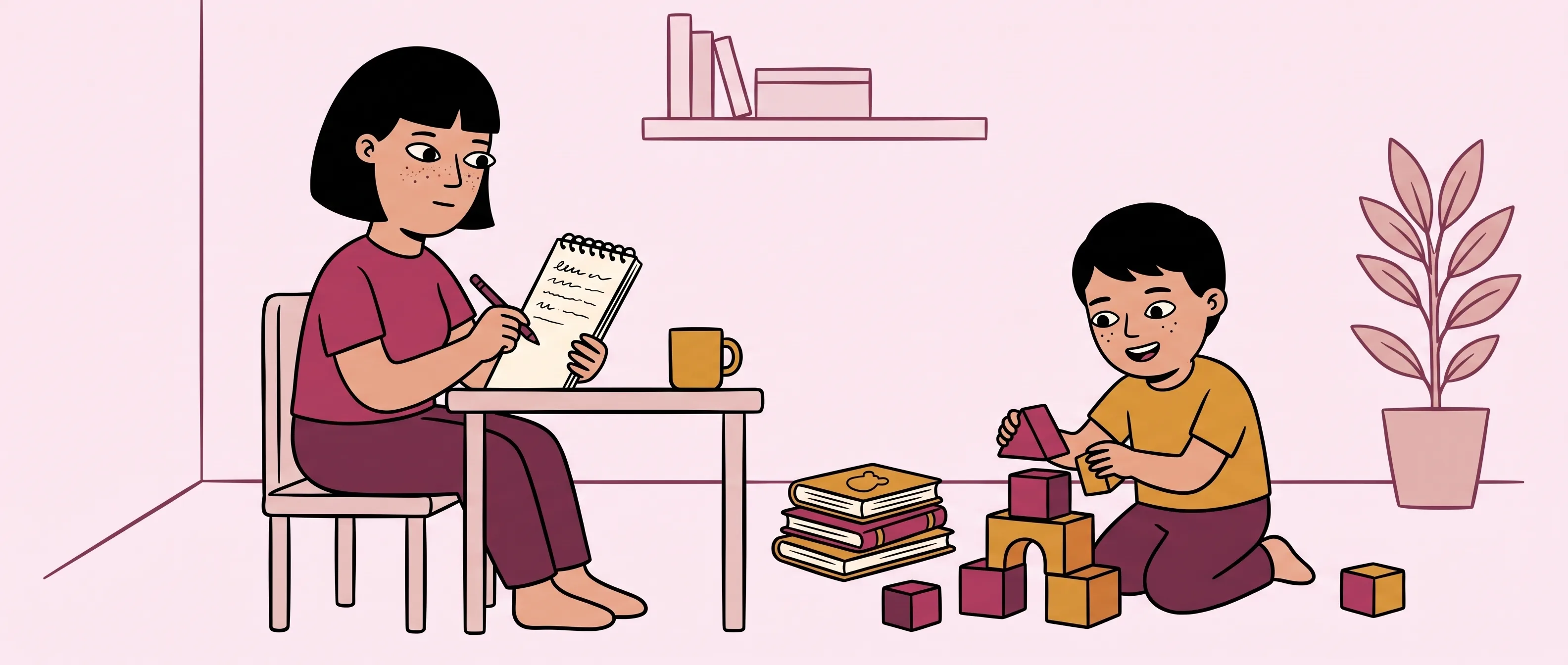
For a few days, try to notice recurring patterns. This is a simple way to see whether refusals happen more often before bedtime, after coming home, in the shop or when playtime is ending.
You may want to write down brief answers to three questions:
- What happened just before the refusal?
- Has your child eaten, had a drink and rested?
- Was the instruction short and possible to do straight away?
This kind of observation is not about judging your child or yourself. It helps you spot situations where it may be useful to simplify the plan or prepare your child for a transition.
Reason 1: your child is overstimulated
After a noisy day, even an ordinary request can trigger tears, running away or a firm “no”. For a child, a shop, a journey, a family gathering or exciting play can be genuinely exhausting. When there is a lot going on around them, another instruction may simply be too hard to take in.
Overload does not always look like quiet sadness. It often shows up as whining, increased irritability, pushing others away, throwing things or suddenly protesting about an activity that does not usually cause problems.
In that moment, reduce the number of words and expectations. Instead of explaining the whole situation, come close and say: We’re putting on our shoes now. If you can, take your child somewhere quieter, offer them some water or give them a moment without further tasks.
Reason 2: hunger, thirst or physical discomfort
Your child will not always immediately tell you that they are hungry, thirsty or bothered by a clothing tag. Instead, they may become angry more easily and refuse to cooperate. When their body is sending uncomfortable signals, it is hard to expect a calm response to more instructions.
Before going out or during a difficult afternoon, check the basics. Has your child had something to eat? Do they need the toilet? Are they too hot, too cold or uncomfortable?
Sometimes a small change is enough: a few sips of water, a snack, taking off an extra layer of clothing or having a short break. Then return to the task that needs to be done.
Reason 3: your child is very tired
In the evening, your child may know the home routine and still not move from where they are. Tiredness does not always look like sleepiness. It can be loud, tense and full of resistance.
At these times, it helps to switch to a simple plan. Do not say: tidy up, wash, get changed and prepare your things for tomorrow. Start with one step, for example: Put on your pyjamas.
If possible, spread evening tasks out earlier. Prepare clothes before dinner, limit extra activities and keep a similar order of routines. Predictability often reduces the number of arguments.
Reason 4: your child is experiencing strong emotions
A child who has just had to stop playing or has been told “no” may not be ready for the next instruction. Anger or sadness can take over all their attention. In these moments, long explanations usually only increase the tension.
You can briefly name what is happening: I can see it is hard to stop playing. We are leaving now. This tells your child that you have noticed their emotion, but it does not change the agreed direction.
Recognising emotions does not mean accepting hurtful or unsafe behaviour. If your child kicks, bites or throws objects, stop the behaviour calmly and clearly. Say what you will not allow, then help them move on to a safer activity.
Reason 5: your child wants some control
Young children often hear many decisions made by adults throughout the day: they have to leave, get dressed and stop playing. It is no surprise that they look for moments when they can choose something for themselves. The words “I don’t want to” or “I’ll do it myself” are often attempts to express their own opinion.
You do not need to hand over every decision to your child. However, you can let them choose where doing so does not compromise an important boundary.
Try questions with two genuine options:
- Would you like the green or navy-blue top?
- Will you put on your shoes or your coat first?
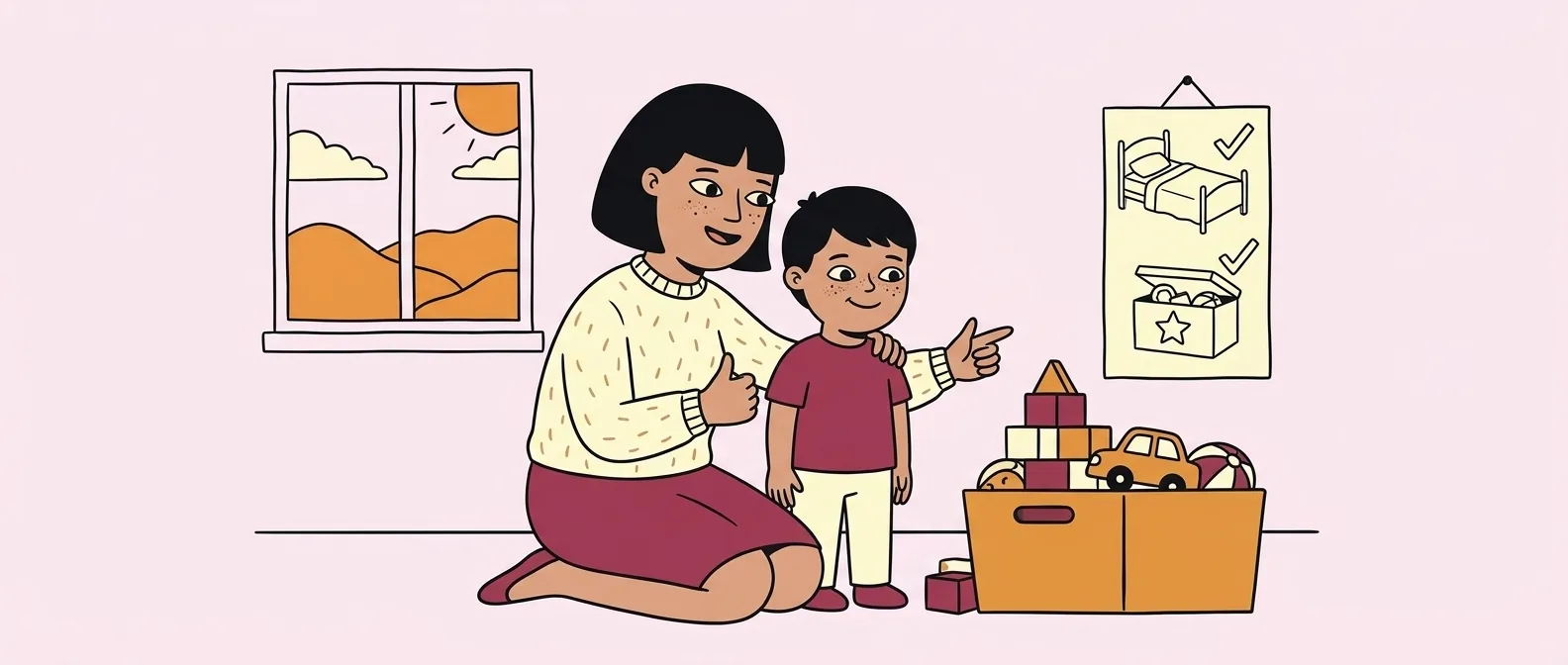
- Would you like to put the blocks in the box yourself, or shall we start together?
- Will you take the stairs or the lift?
If leaving is necessary, do not ask whether your child wants to go out. It is better to say: We’re leaving. You can choose the stairs or the lift. The boundary remains clear, while your child has a small space to make a decision.
Reason 6: stopping play is difficult
Your child may hear your words but not yet be ready to stop what they are doing. Especially when play is engaging, suddenly moving on to getting dressed, having a bath or going home can be very difficult. This does not necessarily mean they are ignoring you.
Giving advance notice of the transition helps. You can say: We’ll finish drawing in a moment, and later: This is the last picture, then we’re going to wash our hands. This is not about long negotiations, but about giving your child a moment to bring the activity to a close.
For some children, simple rituals are helpful: one last trip down the slide, putting one favourite toy back on the shelf or saying goodbye to the playground together. If you use a timer and notice that it makes your child more tense, you do not have to use it.
Reason 7: the instruction is too long or not specific enough
Try saying this instead
A lack of response does not always mean the same thing. The versions below simplify the message, but before repeating an instruction, it is also worth checking whether your child heard and understood it.
| Unclear instruction | Shorter, more specific version |
|---|---|
| Tidy up after yourself. | Put the blocks in the box. |
| Get yourself together, we’re leaving. | Put on your shoes. |
| Finally sort out that mess on your desk. | Put the notebooks on the shelf. |
| Stop being silly and get dressed. | Put on your trousers. |
| Stop whining, we’re going. | Put on your coat now. |
| Get ready for your bath. | Get your pyjamas from the bed. |
What might a lack of response mean?
- Lack of attention in that moment: your child is absorbed in an activity, does not turn around and does not show that they heard you. Go over, make contact and only then repeat the request.
- Not understanding: your child asks “what?” or starts a different activity. Show them the first step or name it in simpler words.
- Too many steps at once: your child completes the beginning but loses track of what comes next. Give one task at a time.
- Refusal: your child shows that they understand the instruction but says “no” or protests. Hold the boundary and distinguish refusal from a lack of understanding.
These are things to observe, not definite conclusions about your child’s intentions.
An instruction such as “tidy your room and get ready to leave” may be too broad for a child. An adult can immediately see the next steps, but a child may not know where to start. As a result, they stand still, change the subject or go back to playing.
Instead of giving a general instruction, name the first thing to do. Choose simple words and point to specific objects.
Examples:
- Put the toy cars in the basket.
- Bring your shoes to the hallway.
- Put your cup on the counter.
- Put on one sock.
- Give me your coat.
It is also worth speaking from nearby. Go over to your child, stop beside them and then make your request. Calling from another room can get lost in play, noise or ordinary distraction.
How should you speak to children at different ages?
A child aged around 18–36 months
Younger children usually need very short messages. One instruction at a time is much easier than several tasks combined into one sentence. Gestures can also help show what you mean.
You can use simple sentences:
- Come to the bathroom.
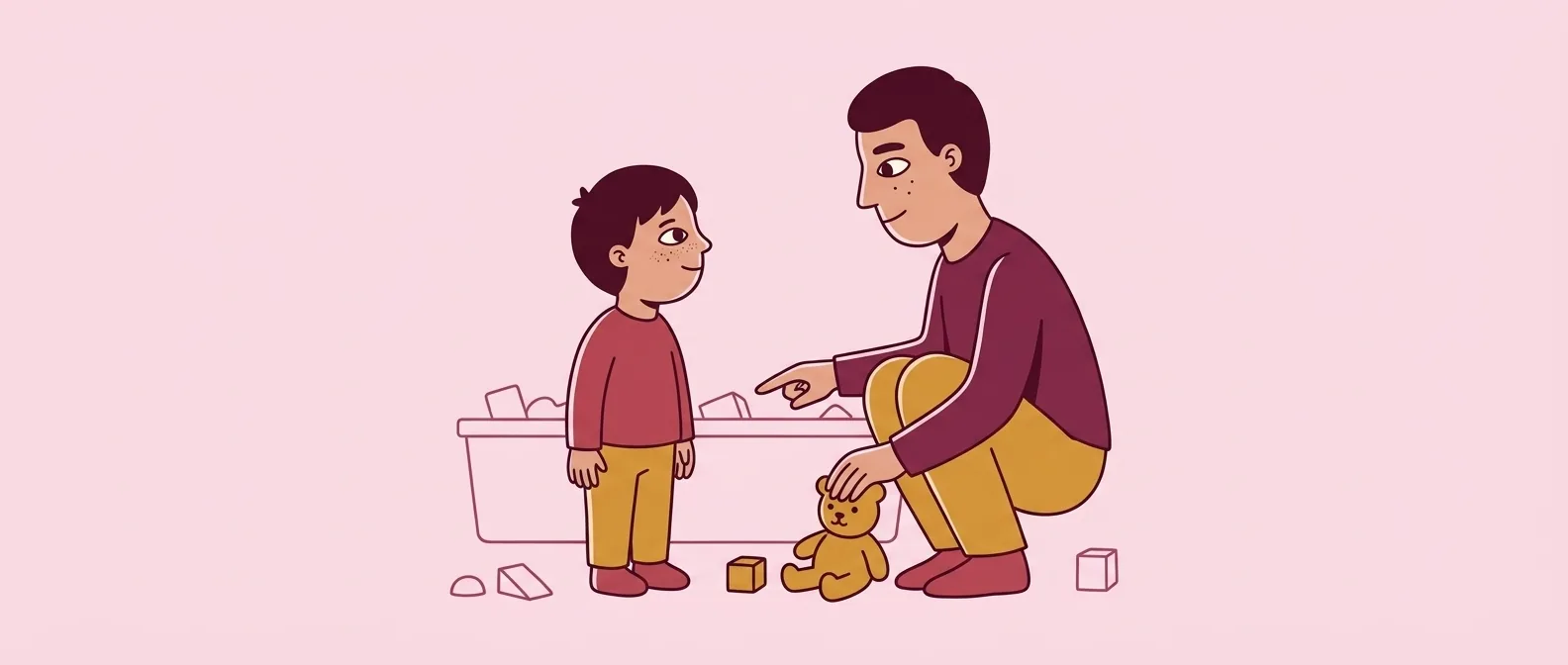
- Give me the teddy.
- Sit here.
- Put on your shoe.
- Leave your cup on the table.
After making the request, pause for a moment. If your child does not begin, show them the first step or start it together with them. There is no need to raise your voice simply because the response was not immediate.
A child aged 3–6 years
An older child may be able to complete more than one task, but a lot depends on the time of day and how they are feeling. After resting, two steps may be easy, while by evening even one request may require support.
Start with simple combinations: Put the crayons away, then wash your hands. When this works calmly, you can add another element. If your child protests, go back to one step rather than assuming they are trying to make things difficult for you.
What should you do right away when your child refuses?
In a tense situation, a simple approach can help. It does not require long conversations or many warnings, while still allowing you to keep a calm tone.
- Go over to your child. Do not make an important request from the other end of the home.
- Make contact. Sit nearby, look at your child or gently touch their shoulder if they are comfortable with that.
- Say what they need to do now. For example: Put the teddy in bed.
- Wait a moment. Your child may need time to shift their attention away from play.
- Name the difficulty. You can say: You don’t want to stop. I understand that this is hard.
- Return to the boundary. We are putting on your coat now.
- Offer a choice if there is one. Hat or gloves first?
If safety is involved, act right away. If your child is throwing gravel near other people, say: I won’t let you throw gravel and calmly stop the situation. In the car, the rule may be: We set off when your seat belt is fastened.
Consequences without threats or shaming
Children find it easier to understand a response that follows directly from their behaviour. If a toy is being used to hit someone, it can be put away for a while. If sand is being thrown towards other children’s faces, a break from the sandpit is needed.
It is important to speak calmly and not add excessive punishments. Instead of announcing that your child will never go to the playground again, refer to what is happening now: We don’t throw sand at people. We’re taking a break from playing in the sand.
A consequence is not meant to shame your child or end an argument at any cost. It is meant to show that certain boundaries protect people, belongings and shared rules. Your child may be unhappy, and you can still stand by your decision.
When is it worth speaking with a paediatrician or psychologist?
Difficult days, protests and refusals happen in many homes. However, it is worth seeking advice if your concerns persist for a longer period, occur in many settings or make your child’s everyday functioning very difficult.
Brief notes may be helpful before a consultation. Write down when the problem appears, what the instruction sounds like, what happens before the refusal and what makes the situation at least a little easier. This can make it easier to describe the specific circumstances.
In particular, it is worth discussing your concerns if you are wondering whether your child understands messages, responds to sounds or has difficulty with everyday tasks regardless of the situation. Do not try to assign behaviours to specific difficulties on your own — a calm consultation can help determine what may be worth looking into further.
If your child’s behaviour creates an immediate danger to them or to others and you cannot keep everyone safe in that moment, seek urgent help.
Summary: less repeating, more clarity
Not responding to an instruction does not have to mean bad intentions. Your child may be overstimulated, tired, hungry, upset or deeply engaged in play. Sometimes, changing a long request into one clear task is enough.
In everyday life, it can help to remember a few simple steps:
- go close;
- say briefly what needs to happen;
- give your child a moment to shift their attention;
- notice the emotion;
- hold a calm boundary;
- leave room for choice where possible.
The goal is not immediate obedience in every situation. More importantly, it is about building everyday cooperation in which your child understands the rules and you do not have to handle every request through shouting and lengthy negotiations.
If conflicts around instructions happen often and you would like to make sense of your situation, describe it in the BehaviorComplainer consultation form.
Sources
- Centers for Disease Control and Prevention (CDC), “Tips for Giving Directions”.
- Centers for Disease Control and Prevention (CDC), “Steps for Giving Good Directions”.
- American Academy of Pediatrics (AAP), “What’s the Best Way to Discipline My Child?”.