When another punishment changes nothing
After losing a cartoon, being banned from playing, or hearing your raised voice, does your child do exactly the same thing again a moment later? This can be deeply exhausting, especially when it involves hitting, shouting, throwing food, or refusing to leave the house. It is easy to conclude that you need to be even firmer.
The problem is that punishment may stop behaviour for a moment, but it often does not give a child a ready idea of what to do in the next difficult moment. If a young child hits because they do not know how else to get a toy back, simply taking away cartoons will not teach them to ask, wait, or call for help.
That does not mean you should ignore difficult behaviour. Boundaries are necessary, especially when a child could hurt themselves, someone else, or damage something. The difference lies in whether your response is only meant to hurt, or whether it helps stop the situation and shows what can be done next.
In practice, it can help to replace the question, “How should I punish my child?” with a simpler one: what do I need to stop right now, and what do I want to teach my child for the future?
In this article, you will find guidance on how to:
- respond without shouting or shaming,
- tell the difference between punishment and a consequence related to the situation,
- encourage cooperation without relying on constant rewards,
- respond when hitting, biting, or intense protests arise,
- recognise when it may be worth discussing the situation with a paediatrician or child psychologist.
Punishment and consequences: why are they not the same thing?
One situation, three different responses
Imagine that a child throws a cup in anger. The comparison below shows the difference between a punishment unrelated to the event, a consequence connected to the behaviour, and noticing a positive step on the next occasion.
| Type of response | Example when a child throws a cup | What it communicates to the child |
|---|---|---|
| Unrelated punishment | “Because you threw the cup, there will be no bedtime story tonight.” | The child loses something that does not directly result from what happened at the table. |
| Consequence related to the behaviour | “I will not let you throw the cup. I’m putting it away now, and we’ll wipe up the spilled water together.” | The throwing is stopped, and the adult helps maintain safety and order. |
| Noticing the desired behaviour | During the next difficult moment: “You put the cup on the table even though you were angry.” | The child receives specific information about a safe action they can repeat. |
Not every difficult emotion requires a consequence. Anger, tears, or disappointment can simply be named and accepted. An adult response is needed when behaviour could hurt someone, damage something, or make it impossible to continue safely.
Not every response a child dislikes is a punishment. A child may be disappointed that playtime is ending or that they cannot keep splashing water. That alone does not mean they have been punished.
Punishment is usually intended to make a child feel loss, discomfort, or shame. It is often disconnected from what happened moments before. An example might be taking away a bedtime story because the child pushed another child at the playground that morning.
Such a response may bring temporary obedience, but it can be unclear for a child. A young child may focus on having something taken away instead of understanding how to meet their needs next time without pushing.
A consequence related to the situation looks different. It is brief, calm, and concerns what is happening here and now. If a child throws blocks, the blocks are put out of reach for a while. If they spill water on the floor while playing, you wipe it up together before moving on to something else.
The point is not for the child to feel upset. The message is clear: this activity cannot continue in this way right now.
When can you let the situation speak for itself?
Sometimes everyday life brings a natural result. If a child does not want to put on their coat, they may feel cold when they go outside. If they do not put away the puzzle pieces, you first need to make space before starting another puzzle.
In these moments, there is no need to add a long comment or say, “I told you so.” It is enough to help your child notice what is happening and move towards a solution.
You can use simple sentences:
- It’s cold. Let’s put on your coat.
- There are lots of puzzle pieces on the table. Let’s put them away so we can lay out the paper.
- The water spilled onto the floor. We’ll get a towel.
- The car fell out of your hand while you were throwing it. I’m putting it on the shelf now.
However, not every situation allows you to wait for a natural outcome. Near a road, in a car park, on stairs, or when there is biting or throwing hard objects, an adult needs to act quickly. Safety is always more important than the lesson the situation might provide.
Why do children repeat behaviours you do not want?
When a child shouts, refuses to cooperate, or hits, their behaviour may look like deliberate boundary-testing. Sometimes a young child really does want to see whether a rule still applies. Very often, though, there is more in the background: tiredness, rushing, a difficult change of plans, noise, hunger, or not having the words to express frustration.
Young children cannot always stop an impulse in the way an adult would. They may know that hitting is not allowed and still hit when they really want a toy or cannot cope with mounting anger. This does not remove the boundary, but it helps you choose a response that will not add fuel to the tension.
It is worth looking at what happens before the difficult behaviour. Does the problem occur before bedtime? After a long shopping trip? During visits? When siblings are playing with the same object?
This kind of observation is not about assigning blame. It helps you notice a recurring pattern and offer support earlier.
Name the situation instead of judging
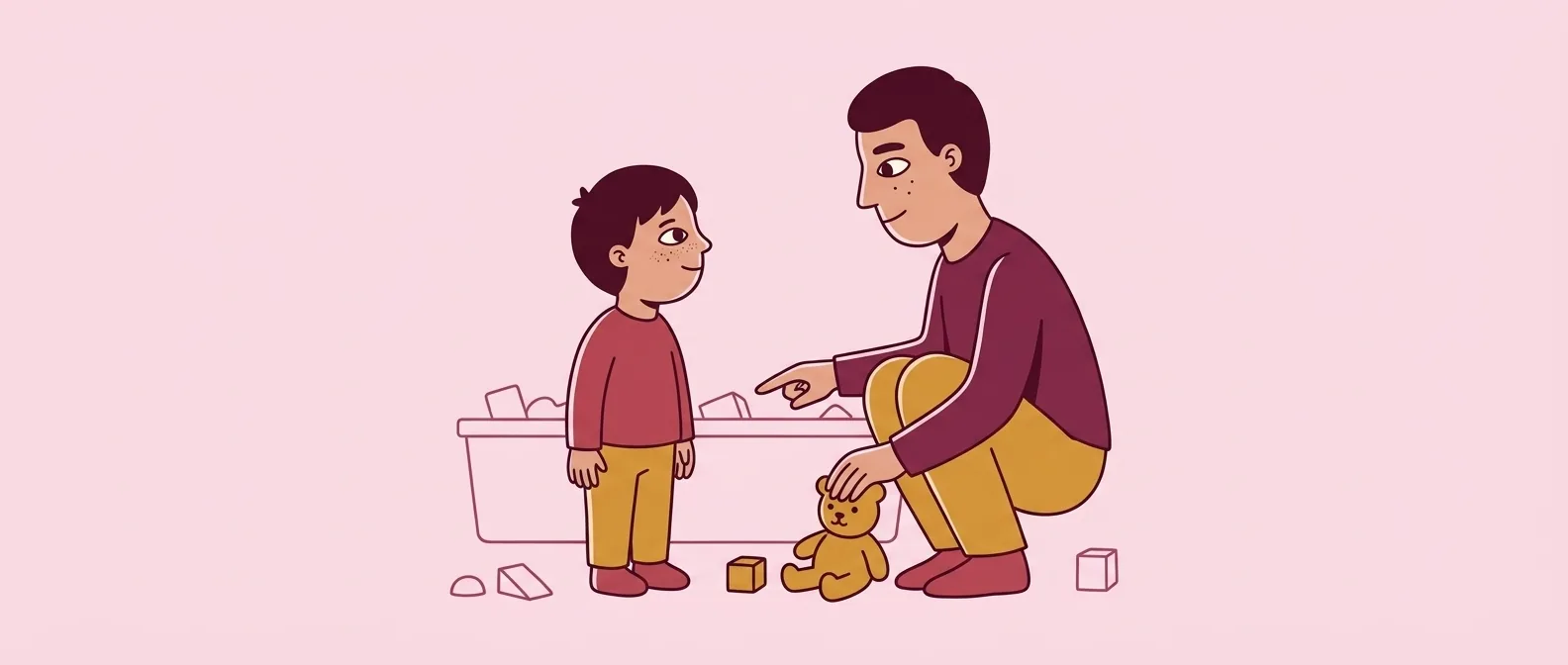
A child does not need labels such as naughty, spiteful, or aggressive. These words do not teach them what to do differently. It is much more helpful to name what you see and stop the specific action.
You can say:
- I will not let you hit.
- I can see that you really want that truck.
- You are upset because we are finishing playtime.
- I cannot let you throw the cup.
- It is hard for you to stop right now. I will help you move away from the table.
These are short messages. They do not require a child to have a long conversation when they are already distressed or crying. At the same time, they show that emotions are noticed, but not every way of expressing them is safe.
What should you do when your child hits, bites, or throws things?
In a difficult moment, it helps to have a simple plan. You do not need to have a perfect conversation or immediately find the best words. The most important things are limiting harm and calmly taking control of the situation.
1. Stop the behaviour
If your child hits, separate the children or gently hold their hand as much as the situation allows. If they throw an object, move it away. If they bite, help the children separate and first take care of the person who was bitten.
Do not wait for your child to calm down on their own if someone could be hurt. You do not need to give a speech either. Calm action and a few words are enough.
Examples of what you can say:
- Stop. I will not let you hit.
- I’m moving the cup away because you are throwing it.
- I’m stopping you. This is not safe.
- I will not let you bite.
2. Use fewer words
When a child is highly upset, long explanations usually only increase tension. A young child may not listen, may interrupt, or may shout even louder. This does not mean they are being dismissive; they are emotionally overwhelmed.
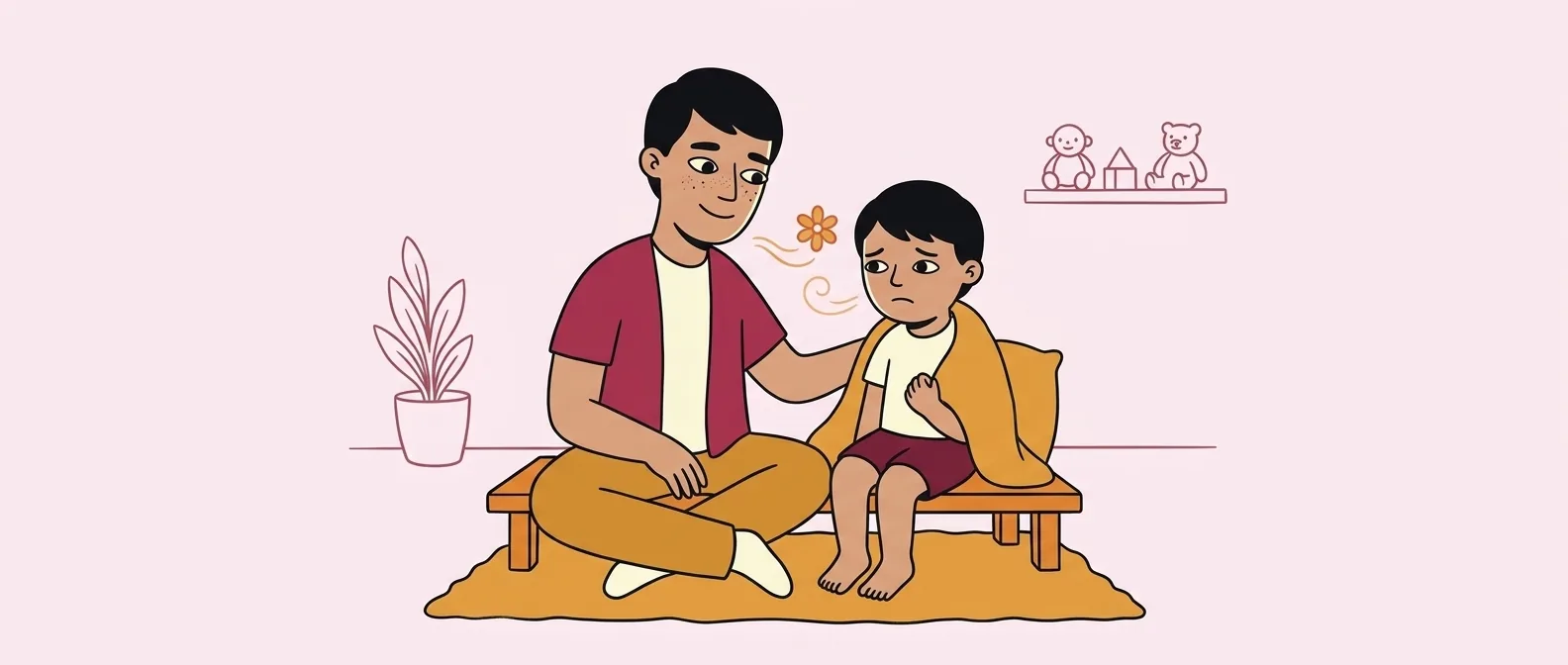
You can sit nearby if your child allows it, or give them some space. Some children are helped by a moment of quiet, while others need the calm presence of a parent. If your child wants a cuddle after difficult behaviour, closeness is not a reward for hitting—it can help them return to balance.
3. Name the emotion without accepting harm
When your child begins to breathe a little more calmly, you can briefly refer to what happened. You do not have to resolve every detail or decide straight away who started it.
You can say:
- You were very angry because your sister took your toy.
- You wanted to stay at the playground longer.
- You were upset because I said no.
- You are allowed to be angry. You cannot kick me.
These sentences separate the emotion from the behaviour. Your child receives the message that anger, disappointment, and protest are allowed, but hands, teeth, and objects cannot hurt others.
4. Return to the subject after your child has calmed down
Learning comes later, when your child is able to take in at least a little information. Choose one simple alternative instead of giving a long list of rules.
You can practise together:
- saying, “My turn,”
- calling a parent,
- handing over a toy instead of snatching it from someone’s hand,
- taking two steps away from the conflict,
- stomping a foot or squeezing a cushion tightly,
- using the words, “I’m angry.”
If harm was done, it is worth helping to repair it. Your child can help you pick up scattered items, bring a tissue, or check whether the other child needs support. There is no need to force an apology if your child is only repeating the word without understanding it.
Positive reinforcement without bribery
Positive reinforcement does not mean promising a reward for every small thing. You do not need to constantly use stickers, sweets, screens, or small gifts. In everyday situations, simply noticing your child’s effort in a specific way can make a big difference.
Instead of a general, “You’re being good,” try describing what your child has just done. This helps them know which behaviour was noticed and what they can repeat next time.
Examples:
- You put three books back on the shelf.
- You came to me instead of hitting.
- You stopped your hand even though you were angry.
- You put on your shoes when I said we were leaving.
- You waited a moment for your turn.
- You helped pick up the blocks from the carpet.
Describe the effort, not just the end result. If your child starts tidying up but becomes distracted after a minute, you can notice that first step. This does not mean the task disappears. You can continue to calmly guide them through the next stages.
Give your child some influence where possible
Children are more likely to cooperate when they know what to expect and have at least a small choice. However, choice does not mean asking whether you want to leave at all if leaving is necessary.
It is better to offer two real options:
- Will you put your hat on yourself, or would you like me to help?
- Shall we put away the cars first or the figures?
- Do you want to walk to the bathroom like a rocket or like a big bear?
- Would you like the green cup or the yellow one?
- You can choose one book for bedtime reading.
These are small decisions, but they can mean a lot to a child. They allow them to feel a sense of agency without taking responsibility for the whole situation.
Everyday situations without punishment: practical examples
Tidying up after play
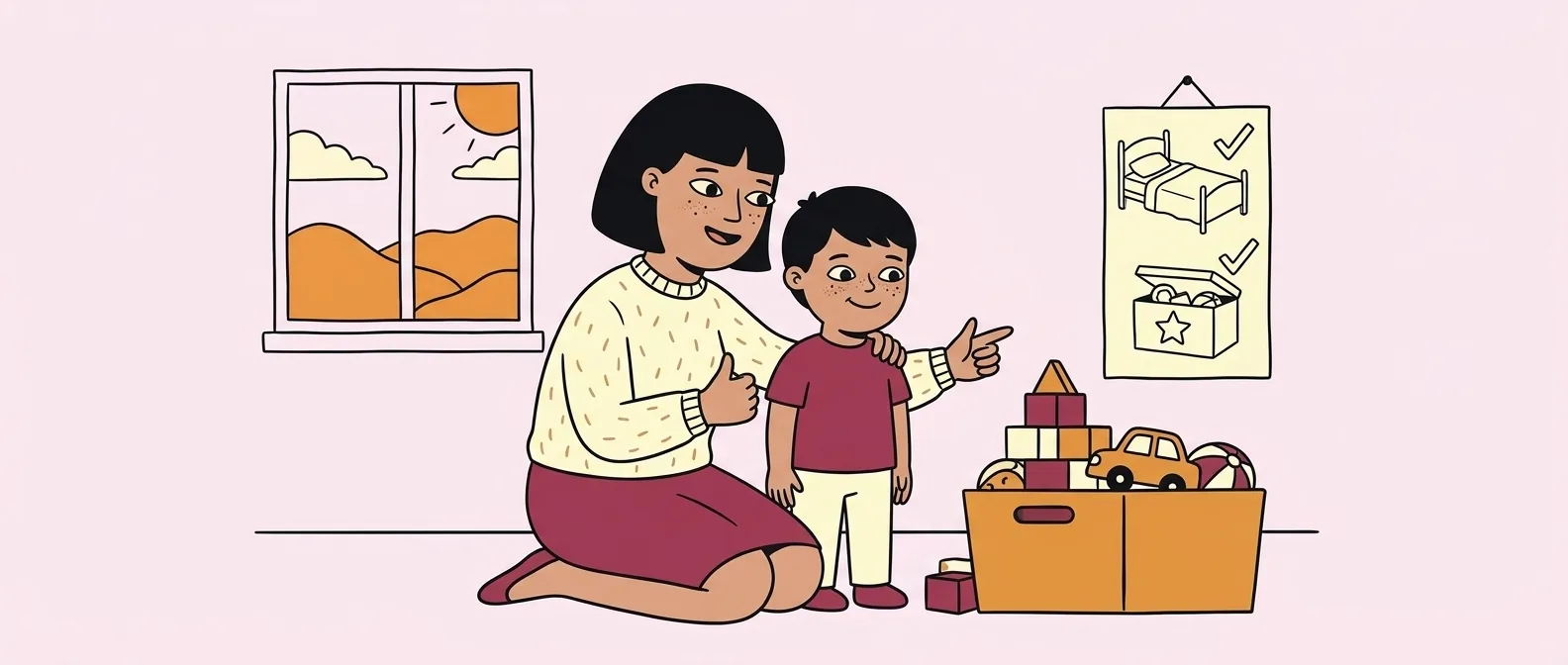
The instruction “tidy your room” can be too big and unclear for a young child. It is better to point out the first visible step. You can place a box nearby and say, “Now we’re putting the red blocks into it.”
If your child protests, begin together. Put in a few items, then encourage them to add more. When some toys have been put away, move on to the next activity.
You can also agree on a simple rule: before we take out a new game, we make space by clearing away the previous one. This is not a punishment. It is organising play in a way that makes it easier to use the space.
Getting dressed and leaving the house
Stopping play is difficult for many children. Brief advance warnings can help, especially when you do not need to leave immediately. Say, “We’ll finish building soon, then we’ll put on our shoes.”
Remind your child about the change of plan once more as it gets closer to leaving. You can also introduce a consistent sequence: toilet, shoes, coat, door. A predictable routine often reduces the number of negotiations.
If your child refuses to wear an item of clothing, check whether a label, the fabric, the temperature, or rushing is bothering them. The boundary around leaving can remain the same, but sometimes a small adjustment makes cooperation easier.
Eating at the table
Simple rules work well at mealtimes. Food stays on the table, the cup stays on the counter, and if something falls, you clean it up together to the extent your child is able to help.
If your young child deliberately throws food, you can calmly pause serving more pieces for a while. There is no need to threaten or shame. Say briefly: food is not for throwing; we are taking a break now.
It is also worth remembering that a hungry or very tired child has less patience for sitting at the table. Sometimes lowering expectations, offering a simpler meal, or starting dinner earlier can help.
Conflicts between siblings and over toys
Arguments between children happen even when there are clear rules at home. Siblings may fight over an object, a place next to a parent, attention, or the opportunity to decide. Not every conflict needs to be solved immediately, but hitting, biting, and throwing objects need to be stopped quickly.
First, separate the children and make the situation safe. You do not have to investigate straight away or decide who started it. During intense emotions, it matters more that nobody is hurt further.
After everyone has calmed down, you can name the problem neutrally: you both want the same toy. Then offer one specific solution rather than expecting the children to come up with a compromise on their own.
Possible options include:
- taking turns with a simple signal for switching,
- a second similar toy,
- swapping for another item,
- putting the disputed item away for a while,
- playing together with adult support,
- choosing another activity.
It will not always be possible to end a conflict in a way that leaves every child happy. That is normal. Your role is to maintain the safety boundary and help children get through the situation without hurting one another.
How can you tell whether your way of responding is helping?
Change does not have to look like the problem suddenly disappearing. More often, it comes in small steps. Your child may still get angry but stop hitting sooner. They may still protest before leaving, but allow you to put on their shoes with less help.
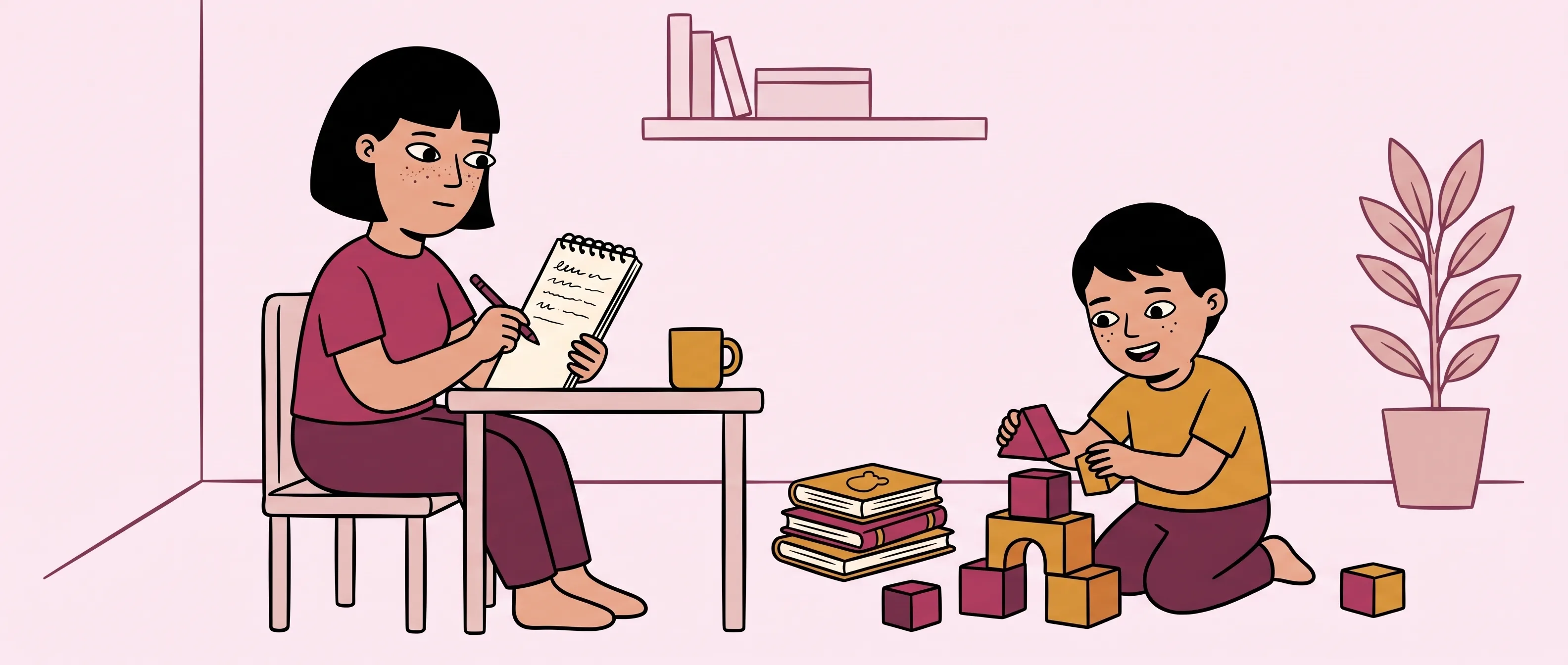
For a dozen or so days, it can be helpful to make brief notes about recurring situations. You do not need an elaborate chart. A few sentences on your phone or in a notebook are enough.
Write down:
- what happened before the difficult behaviour,
- how your child behaved,
- how you responded,
- what helped lower the tension, even a little,
- whether there was even a small step towards cooperation.
Look for patterns, not perfection. You may find that the hardest moments happen just before bedtime, after returning from preschool, or during quick changes of plans. This knowledge allows you to prepare your child earlier and reduce the number of flashpoints.
When is it worth seeking advice?
Everyday protests, tears, and arguments between children are part of development. However, it is worth seeking additional support if behaviours often lead to injuries, are difficult to stop safely, or place a very heavy strain on your everyday life.
Talking to a paediatrician or child psychologist can also be a good step if you are concerned by a sudden, noticeable change in your child’s behaviour. This is not about trying to diagnose anything on your own, but about calmly discussing the situation and finding out what support your child and the whole family need.
It is also worth asking for help if you feel that, under pressure, you are shouting or threatening more often, or you do not know how to respond. Looking for a solution does not mean you are doing something wrong. It means you want to bring clarity to a difficult part of everyday life.
Summary: what can you do instead of punishment?
Punishments may stop behaviour for a moment, but they do not always teach a child what to do in the next difficult moment. Instead, it can help to use brief boundaries, responses connected to the situation, and recognition of specific attempts at cooperation.
When your child hits, bites, or throws objects, start by ensuring safety. Stop the action, say a few simple words, and return to teaching only once the tension has eased. You can acknowledge your child’s anger without accepting harmful behaviour.
In everyday matters, focus on small steps, limited choices, and predictability. Notice when your child tries to cooperate, even if they are not yet doing everything independently. Firmness and warmth can go hand in hand.
If you would like to bring some order to a specific situation involving punishment, shouting, hitting, or everyday conflicts, complete the consultation form. You can describe what happens most often and what feels most difficult for you right now.
Sources
- Centers for Disease Control and Prevention (CDC), “Tips for Using Consequences”.
- Centers for Disease Control and Prevention (CDC), “Tips for Using Praise and Rewards”.
- American Academy of Pediatrics (AAP), “What’s the Best Way to Discipline My Child?”.
- American Academy of Pediatrics (AAP), “Where We Stand: Spanking”.