My child bit someone—what should I do first?
“My child bit another child. Does this mean something serious is going on?” This question often comes up immediately after a difficult incident. Biting can bring up strong emotions: anger, guilt, anxiety about speaking to the childcare setting, or concern about how other parents may react. The behaviour needs to be stopped, but it does not define your child.
Young children cannot always say that they are furious, tired, scared or want their toy back. When tension rises quickly, they may react physically. Biting is neither safe nor acceptable, but it is usually helpful to see it as information: your child needs help coping with a particular situation.
Two things matter most: protecting the person who was bitten and calmly showing your child what they can do instead of biting. Shouting, shaming or retaliation often only add more emotion to an already difficult moment.
In this article, you will find practical guidance on:
- what may be behind biting;
- how to respond immediately after an incident;
- how to reduce the risk of biting at home;
- how to speak with nursery or preschool staff;
- when it is a good idea to discuss the situation with a paediatrician or psychologist.
Why do children bite?
There is no single answer that applies to every child and every situation. Sometimes a bite happens during an argument over a toy, and sometimes in the middle of a very loud, exciting game. Rather than focusing only on the bite itself, it is worth looking at what happened just beforehand.
Your child did not manage to stop their emotions in time
A young child may know that biting is not allowed and still do it when they are highly upset. Anger, frustration, jealousy or intense excitement can get ahead of words and self-control. This does not mean the rule is unimportant—it means your child needs to practise it in a simple, consistent way.
Biting can also happen when play becomes too intense. Children are close together, pushing, laughing and shouting, and can quickly lose track of where enjoyable play ends and discomfort begins. In these moments, slowing things down earlier or taking a short break can help.
Your child wants to communicate something but does not know how
For a child, biting may be an intense message: “leave me alone”, “give me that”, “I don’t want to anymore” or “help me”. This does not mean that this way of expressing needs should be accepted. However, it is worth teaching your child a short, safe alternative that they can use even when upset.
You can practise simple words and gestures:
- “Stop”;
- “My turn”;
- “I don’t want to”;
- “Help me”;
- holding up a hand in a stop gesture;
- moving one or two steps away from the other child.
The aim is not for your child to use these strategies perfectly right away. First, they need to see, hear and practise them many times during calm moments.
Tiredness, hunger and sensory overload
By the end of the day, children usually have less patience for waiting, sharing and noise. Biting may be more likely before a meal, after a sleepless night, following a long journey or after a day full of stimulation. At these times, it can help to lower expectations and keep the routine simple: food, drinks, rest and less intense play.
Some children also react strongly to crowds, loud sounds, sudden changes of plan or close physical contact. If you notice that your child is becoming unsettled, they do not have to wait until they “calm down on their own”. You can suggest moving to a quieter place, having some water, a moment of cuddling if your child wants it, or doing a quiet activity.
Big changes in everyday life
A new nursery or preschool, moving home, the arrival of a sibling or a change to the morning routine can be demanding for a child. Even if a change seems positive to adults, your child may need time to adjust. During a transition period, predictability is especially important.
Brief reminders can help: “I’ll pick you up from preschool after lunch”, “First a bath, then a book” or “Today we’re going to Grandma’s, and we’ll come home in the evening”. These messages do not remove every difficult emotion, but they help your child know what to expect.
How can you find out when your child is most likely to bite?
In practice, recurring patterns offer the most useful clues. You do not need to analyse every day from beginning to end. For a few days, simply notice whether biting happens at similar times or in similar situations.
Check whether difficult moments happen more often:
- when a toy is taken away;
- while waiting for a turn;
- during transitions, such as moving from playtime to getting dressed;
- in noisy environments or large groups of children;
- after returning from nursery or preschool;
- before meals or sleep;
- while playing with a particular child;
- when your child is unwell, sleep-deprived or irritable.
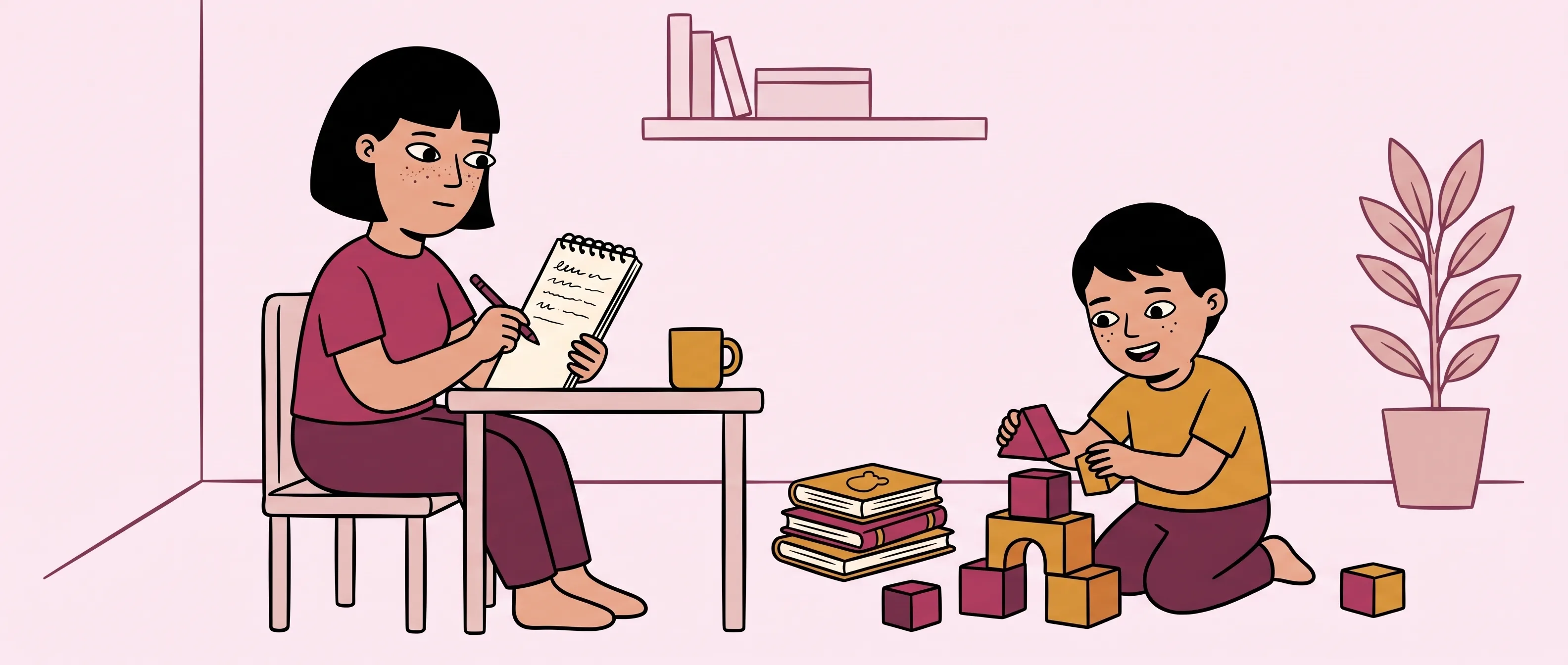
You can make a short note on your phone: the time, place, what happened beforehand and how the adult responded. This is not about judging your child or finding someone to blame. The purpose is to notice situations where it may help to step in earlier.
How should you respond immediately after a bite?
In the moment, you do not need a long conversation or perfectly chosen words. Your child may be very distressed and not ready for explanations. A short, calm and consistent response works best.
1. Stop the situation and make sure everyone is safe
Move close, separate the children or move your child away from the person they bit. Be firm but do not pull or raise your voice. If your child has bitten you, you can also end the contact and calmly create some distance.
Say one simple sentence:
“I won’t let you bite. Biting hurts.”
That is enough for the moment. There is no need to ask your child why they did it while they are still crying, shouting or very tense.
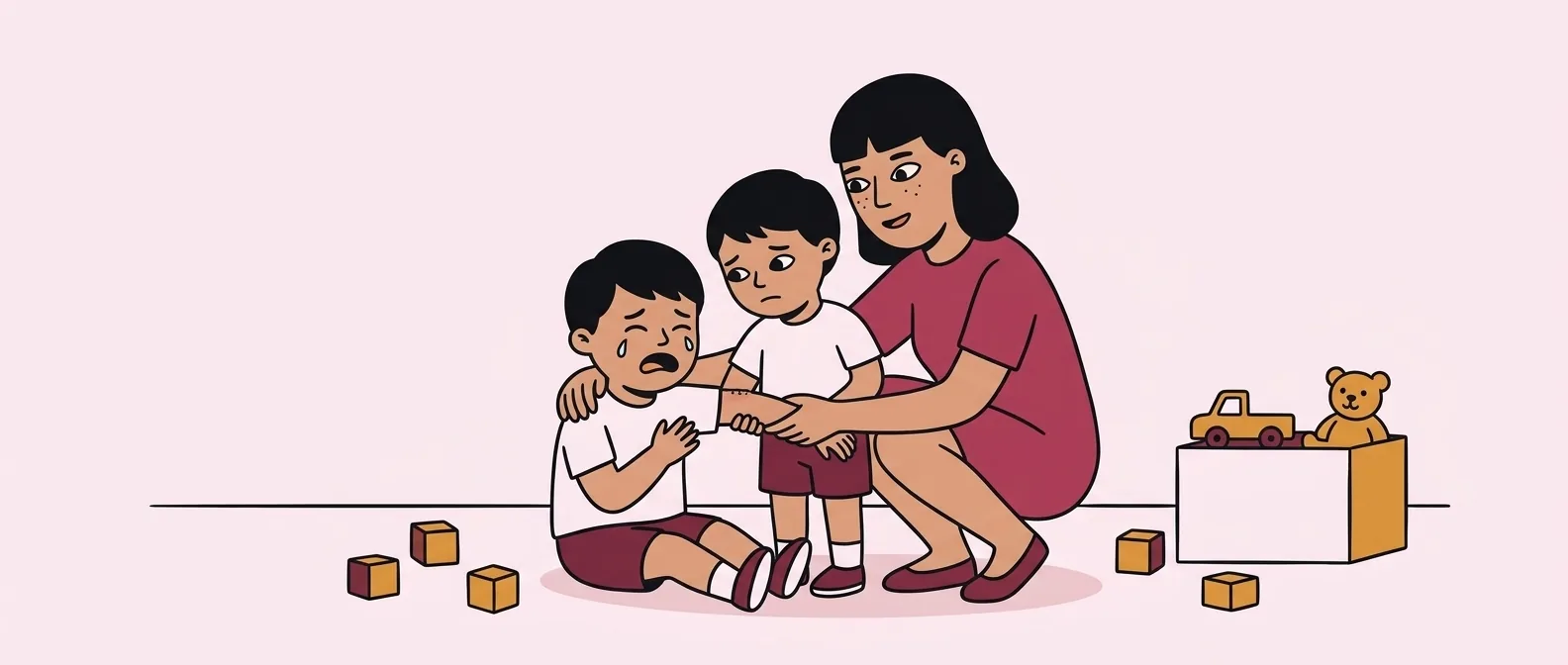
2. Attend to the person who was bitten first
Check whether the bitten child or adult needs help. You can say: “I can see that hurts. I’m going to help you.” This shows all children that safety matters.
If the skin has not been broken, wash the area with water and watch for increasing pain or swelling. If the teeth have broken the skin, the wound is bleeding heavily, is deep, or is on the face, hand or near the eye, contact a doctor or seek other appropriate medical care. It is also worth seeking advice if significant redness, swelling, discharge, fever or worsening wellbeing develops later.
Until you receive medical advice, rinse the wound under running water and cover it with a clean dressing if needed.
3. Help your child return to a calm state
The child who bit still needs an adult’s presence. The boundary has been set, but that does not have to mean isolating them for a long time or leaving them alone with overwhelming emotions. You can reduce the noise, move to one side or simply sit beside them.
A helpful phrase might be:
“I can see this is really hard for you. I won’t let you bite, and I’ll help you calm down.”
Sometimes it helps a child to have a drink of water, sit quietly for a moment, hug a cushion tightly, breathe together with an adult or leave an intense activity. Choose an option that is safe and fits the situation.
4. Return to the subject once emotions have settled
Only later, briefly name what may have happened. You do not need to be completely certain—you can make a simple guess. For example: “You wanted the car and it was hard to wait.”
Then show one specific option for next time:
- “Say: my turn.”
- “Use your hand to say: stop.”
- “Move away when someone gets too close.”
- “Come and ask for help.”
- “You can say: I don’t want to.”
One suggestion is usually more useful than a long list of rules. It is worth returning to the same words many times, including in everyday, calm situations.
What can help reduce biting at home?
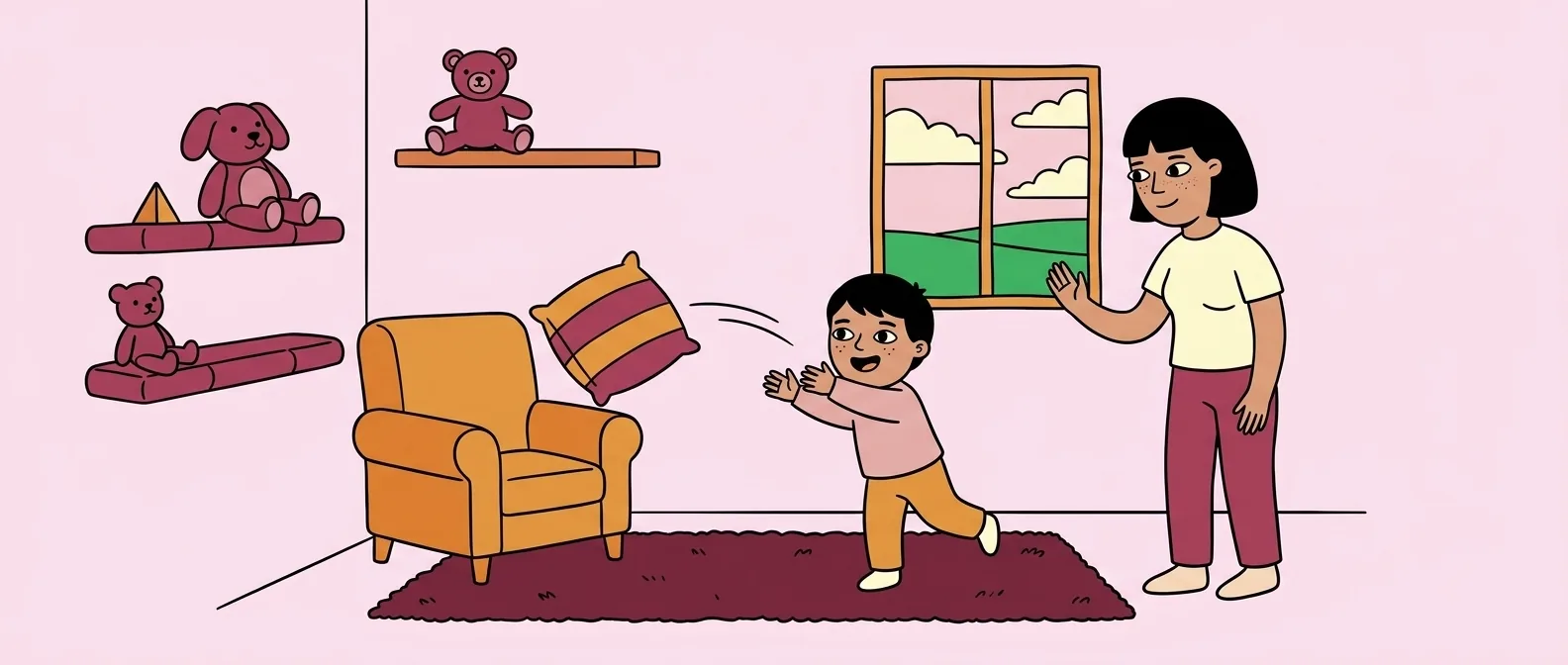
Home does not have to be a place with no conflicts at all—that is unrealistic, especially with siblings or frequent visits from other children. However, you can reduce the number of moments when tension builds too quickly. It is best to respond before teeth become involved.
Stay closer during play that can easily escalate
If children often argue over one toy or their play becomes very energetic, stay nearby. This does not mean constantly monitoring every movement. It means being able to offer quick support before someone starts pushing, grabbing an object or moving their face very close to another child.
Signs that it may be time to step in include:
- a tense body;
- gripping a toy tightly;
- a raised voice;
- repeated “no”;
- pushing and shoving;
- getting very close to another child’s face;
- crying or one person clearly withdrawing.
You can then calmly say: “I can see this is getting difficult. Let’s pause the game for a moment.” You do not have to wait until the conflict reaches its peak.
Make disputes over toys simpler
In a conflict over an object, you do not always need to work out straight away who started it. First, name the situation: “You both want the digger right now.” Then suggest one solution that the children can realistically manage.
You can choose:
- a short wait with adult support;
- swapping for another toy;
- using a timer;
- providing a similar item;
- asking: “Can I have it after you?”;
- moving away from the toy and choosing something else.
It is worth practising these scenarios during everyday play. You can use soft toys to show: “Teddy wants the toy, but he doesn’t bite. He says: my turn.” This helps your child learn the words before they need them in a tense moment.
Keep the daily routine simple
You cannot avoid every difficult moment, but you can prepare your child for more demanding situations. Before shopping, travelling or visiting friends, take water, a small snack and something quiet to keep little hands busy. If the plan is a long one, include time for a rest.
Brief warnings about changes can also help:
- “In five minutes, we’re going to finish playing with the blocks.”
- “First the shops, then the playground.”
- “Two more goes on the slide, then we’re going home.”
- “After dinner, it will be bath time.”
One clear rule works well at home for everyone: we don’t hurt others with our bodies. You can repeat it without frightening your child, but consistently—when there is biting, pushing, kicking or overly rough tickling.
Biting at nursery or preschool
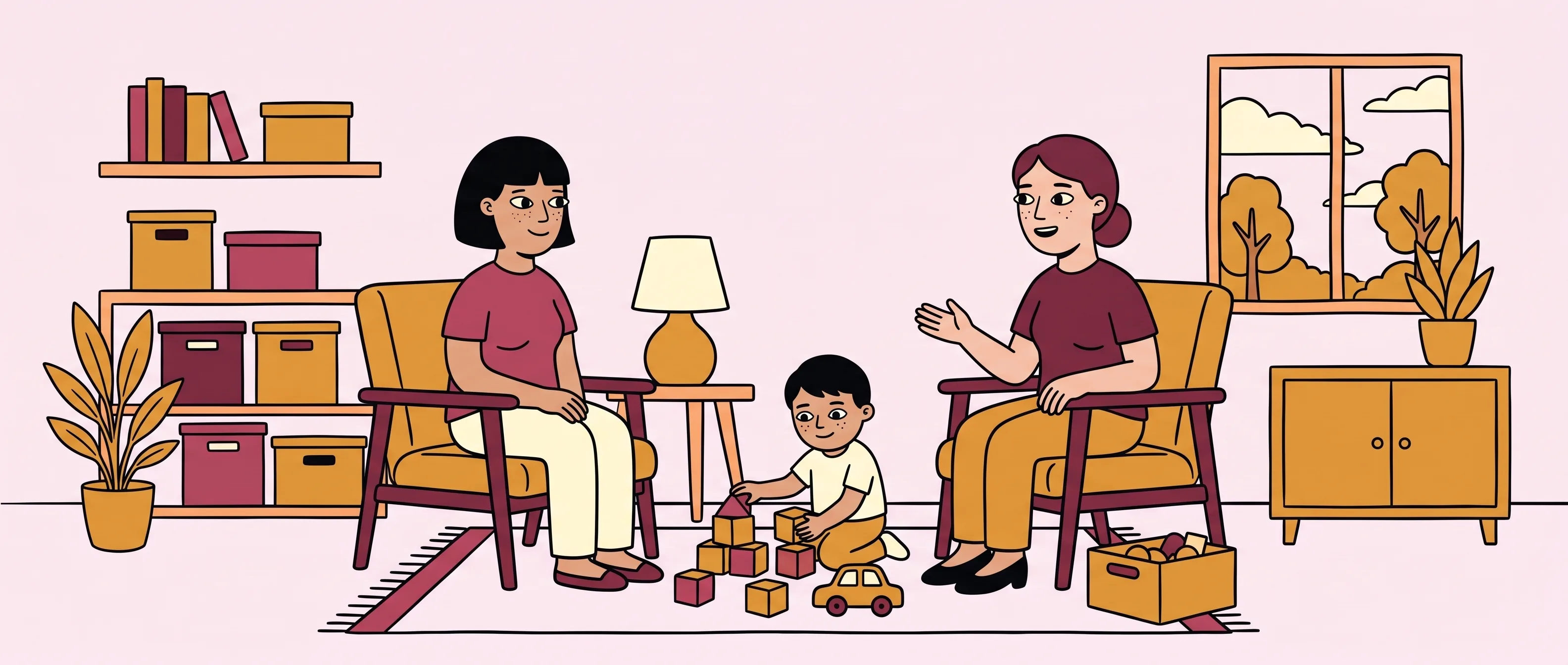
Hearing about a biting incident at your child’s setting can be hard. However, it is worth treating the conversation as an opportunity to agree on a shared, simple approach. It is easier for your child when they hear similar boundaries and practise similar words in both places.
During the conversation, you can ask:
- What happened immediately before the bite?
Was it a conflict over an object, crowding, waiting, active play or a change of activity?
- What time did the incident happen?
The time may help reveal a connection with tiredness, hunger or the end of the day.
- How did my child respond after the situation was stopped?
Did they need a quiet moment, help moving away, or was it easier for them to return to play after a short break?
- What words and gestures will adults use?
It is helpful when the message is similar, for example: “I won’t let you bite. You can say: stop.”
- What information is worth sharing after an incident?
A brief update is enough: when it happened, in what situation, and what helped your child return to calm.
In conversations, avoid labels such as “a biting child” or “an aggressive child”. It is better to talk about a specific incident: “Today there was a biting incident while waiting for a turn on the tricycle.” This approach helps people look for solutions instead of assigning a fixed trait to the child.
A simple diary: what is worth noting down?
If biting is happening repeatedly, keep brief notes for around two weeks. You do not need to create a detailed table or record everything that happened that day. A few sentences after each episode are more than enough.
Write down:
- place and time – home, playground, nursery; morning, before lunch, evening;
- the situation before the bite – a toy, noise, waiting, a change of plans, close contact;
- how your child was feeling – sleepy, hungry, unwell, highly excited, tearful;
- what happened – who your child bit and what happened just before;
- the adult’s response – what was said and what helped to ease the tension.
After a few days, look for recurring moments. If the problem usually happens before a meal, check whether your child needs an earlier snack. If it happens around one particular toy, having a second similar item available or offering adult support at the start of shared play may help.
Not every episode will have the same cause. Your child may bite out of frustration on one occasion and from emotional overload on another. Even partly recognising a pattern makes it easier to choose a calmer response.
What is best to avoid?
When you are stressed, it is easy to react impulsively. It is worth remembering, however, that the aim is not to shame your child, but to stop anyone being hurt and teach a safer way to respond. A clear boundary can be firm while still remaining calm.
Above all, avoid:
- biting back, smacking and “giving it back” – these do not show your child a safe solution;
- shouting in front of others – this may make your child even more dysregulated;
- ridiculing and labelling – comments such as “you’re naughty” do not tell your child what to do next time;
- long lectures immediately after the incident – children usually cannot take them in when emotions are running high;
- forcing an apology straight away – first, you need to ensure safety and calm the situation.
You can return to repairing the relationship later. Your child might bring a tissue, offer a cold compress, ask whether the other person needs anything or say “sorry” if they are ready to do so. What matters is that this is not an automatic obligation, but a chance to learn to notice another person’s needs.
When is it worth seeking advice about biting?
Biting is not a diagnosis and does not, by itself, indicate any particular disorder. Sometimes progress first looks like your child asking an adult for help more often, walking away from a conflict or using the “stop” gesture. It is worth noticing and reinforcing these small steps: “You said you didn’t want to. That was safe.”
It is worth speaking to a paediatrician or psychologist if:
- bites are frequent, very forceful or cause injuries;
- the behaviour clearly escalates despite calm, consistent responses from adults;
- your child has difficulties with sleep, eating or wellbeing, or other concerning symptoms appear;
- it is difficult to identify situations that happen before the biting;
- tension around the problem is strongly affecting life at home, nursery or preschool.
Seeking advice does not mean putting a label on your child. It can be a way to organise your observations and decide on practical next steps for your everyday life.
If biting is happening repeatedly or you would like to prepare a consistent plan with your child’s setting, complete the consultation form.
Sources
- ZERO TO THREE, “Toddler Biting: Finding the Right Response”.
- ZERO TO THREE, “Why do toddlers bite?”.
- American Academy of Pediatrics (AAP), “10 Tips to Prevent Aggressive Behavior in Young Children”.