When shopping suddenly turns into a battle over a toy
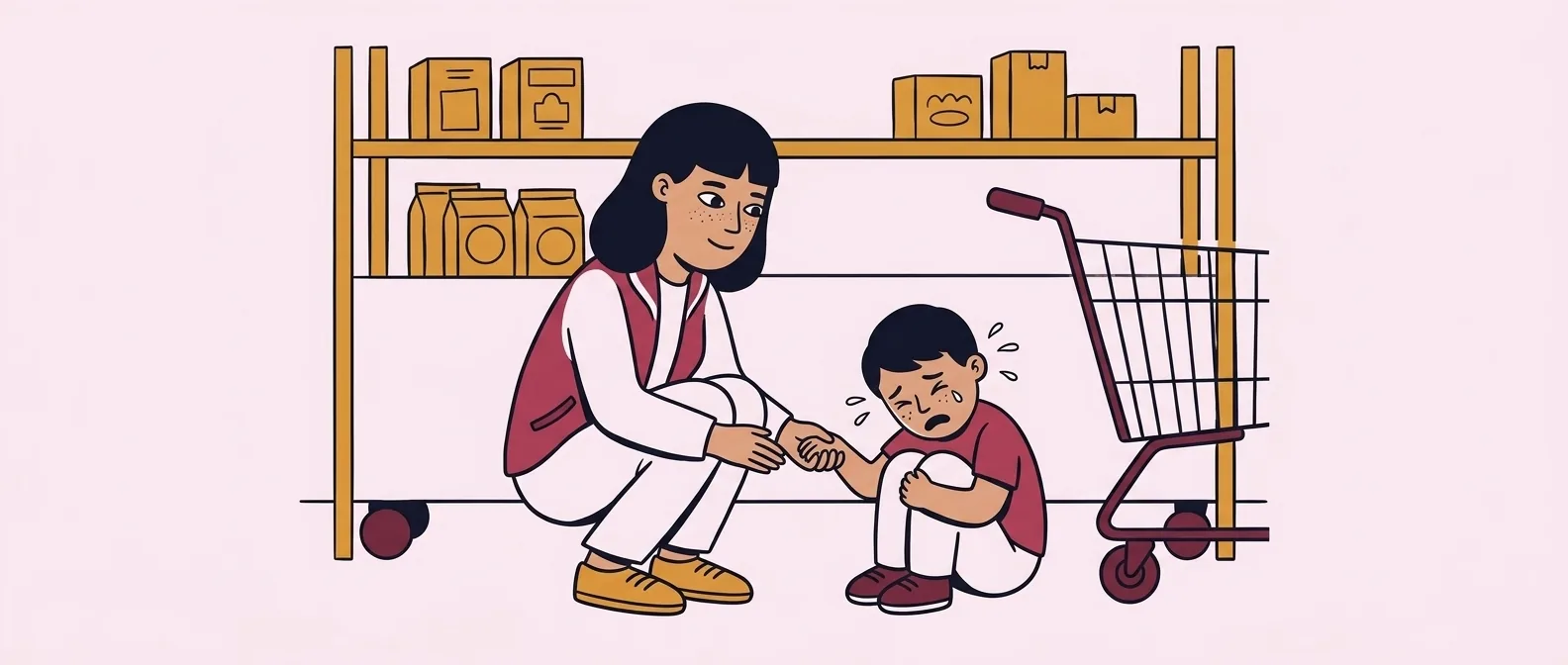
Your child stops at a shelf, wants a particular item, and after you say no, starts shouting or crying. There are people around, the line is getting longer, and you may feel pressure to end the situation as quickly as possible. The question arises: should you give in so you can leave the store, or stick to your “no”?
A strong protest in the store does not mean you have failed as a parent. For a child, this place can be more difficult than it appears from an adult’s perspective. There is a lot going on, many things compete for their attention, and they also have to wait, walk in a certain direction, and accept being told no.
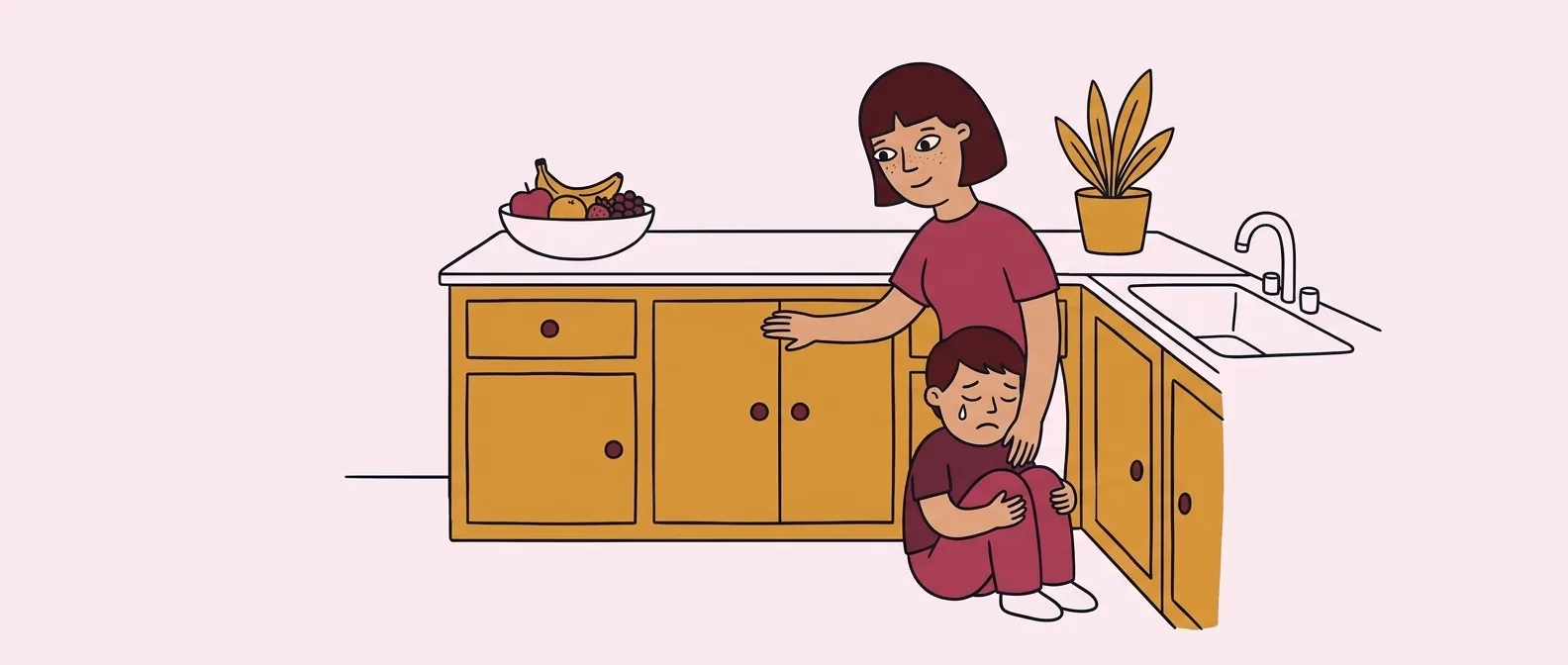
One distinction is important: your child can feel angry, and you can still hold the boundary. You do not have to choose between being calm and being consistent. You can stay close, speak gently, and at the same time not buy something simply to stop the shouting.
In this article, you will find tips on how to:
- prepare for shorter, calmer shopping trips,
- recognize what may intensify your child’s protest,
- respond without yelling or lengthy negotiations,
- know when it is better to end the store visit.
Why does a child melt down in the store?
A store is full of things that cannot be had straight away. Bright packaging, treats at the checkout, toys, music, and crowds can quickly tire a child out. Even an ordinary shopping trip can require a great deal of patience from them.
Sometimes a child protests because they truly want a particular item. At other times, a toy or treat is simply the final trigger after a long day, hunger, or waiting in line. The same shouting can have different causes, so it is worth looking at the whole situation, not just the moment at the shelf.
This does not mean you need to change every refusal. On the contrary, it helps your child when your decision is clear and predictable. It may be hard for them to accept, but over time they will find it easier to understand what to expect.
Anger itself is not a problem. It is important to set a boundary when hitting, kicking, throwing products, damaging things, or running away occurs. In those moments, take care of safety first and talk later.
What can intensify a protest between the aisles?
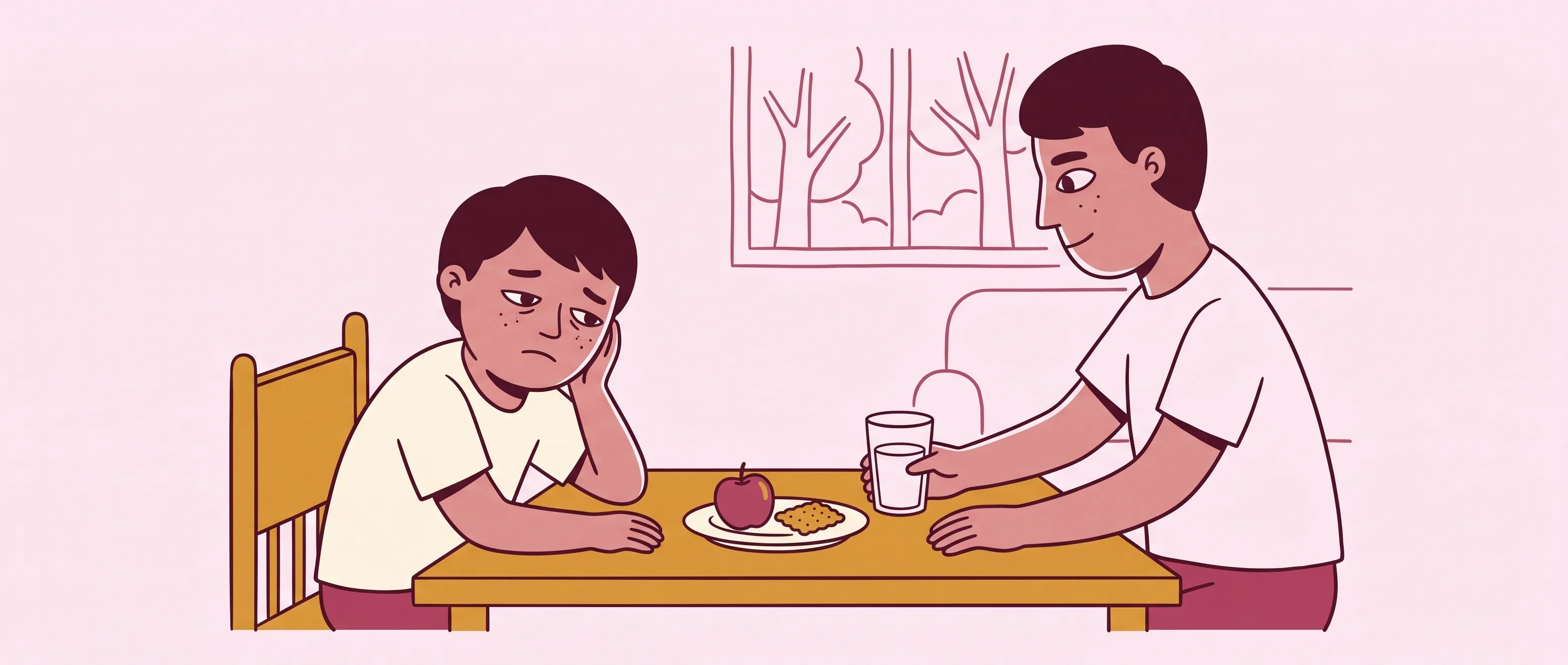
Not every difficult moment is an attempt to get you to buy something. Your child may already be tired, hungry, or simply overwhelmed by the noise and waiting. If they were cooperative earlier and then suddenly start complaining about every little thing, it is worth treating this as a sign of overload.
Notice whether these signs appear before the meltdown:
- your child says they want to go home;
- they become tearful or irritable;
- they stop responding to simple requests;
- they fidget, complain about waiting, or look for food;
- they become angry more quickly than usual.
When the protest begins right after you refuse to buy something, disappointment may be the main cause. Your child may ask again, try to negotiate, or raise their voice because they have not yet learned to accept “no” easily. This does not have to mean they have bad intentions.
Often, several things are happening at once. Your child may really want a lollipop but react especially strongly because they are hungry and tired. In that case, both holding your boundary and shortening the shopping trip can help.
Before shopping: how can you prepare for the outing?
In practice, you can make many things easier before leaving home. If you have a choice, plan shopping for a time when your child is not just coming off an intense day. Before you go out, it is also worth making sure they have had something to eat and drink and a moment to rest.
You do not need to turn shopping into a major project. A simple message is enough: “We’re buying bread and fruit, then we’re going home.” A child can follow a short plan more easily than a long explanation of everything else that needs to be done.
If you are not planning to buy toys, treats, or little extras, say so before going in. You might say: “Today we’re only buying what is on our list.” Avoid saying “we’ll see” when you know you do not want to leave that possibility open.
Limiting the time spent in the store is also a good solution. A short list usually gives your child a better chance of cooperating than a long walk through one department after another. If you see tension rising from the start, consider leaving some of the shopping for another time.
Give your child a small role
Your child does not have to just sit and wait. A simple task can help them feel involved in the shopping. The important thing is that it is brief and can be done without rushing.
You could suggest:
- putting a light item in the basket;
- finding bananas or bread;
- pointing to an item on a picture shopping list;
- choosing between two options that work for you.
Instead of asking, “What do you want to do?”, it is better to offer two specific choices. For example: “Would you like to put in the apples or the tomatoes?” Your child then has some influence over a small part of the situation, without taking over the decisions about the whole shopping trip.
In the store: how should you respond when the protest begins?
When your child is shouting, it is easy to instinctively speak faster, explain more, or raise your voice. Instead, try to slow down. You do not have to immediately end your child’s emotions—you only need to calmly guide the situation.
First, check whether the space is safe. If your child is standing near glass items, waving their arms, throwing things, or trying to run off, move with them to a quieter area of the store or step outside the entrance for a moment. This is not about punishment, but about reducing the chaos.
Then briefly name what is happening. You might say: “You really want that toy, and you’re angry that we’re not buying it.” This does not mean you agree to buy it—it simply shows that you notice the emotion.
Next, repeat your decision in one simple statement: “We’re not getting that today.” You do not need to give a long list of reasons or convince your child that they should stop crying. The fewer arguments you give at the height of the protest, the less room there is for another round of negotiation.
A simple plan for a difficult moment
- Stop and assess safety.
Move your child away from things they could knock over, damage, or hurt themselves with. If necessary, go to a less crowded place.
- Say what you see.
Use a short sentence: “I can see you’re very angry” or “You really want that item.”
- Hold your decision.
Say once: “We’re not buying that today.” Do not turn your message into more explanations, promises, or threats.
- Offer a safe way forward.
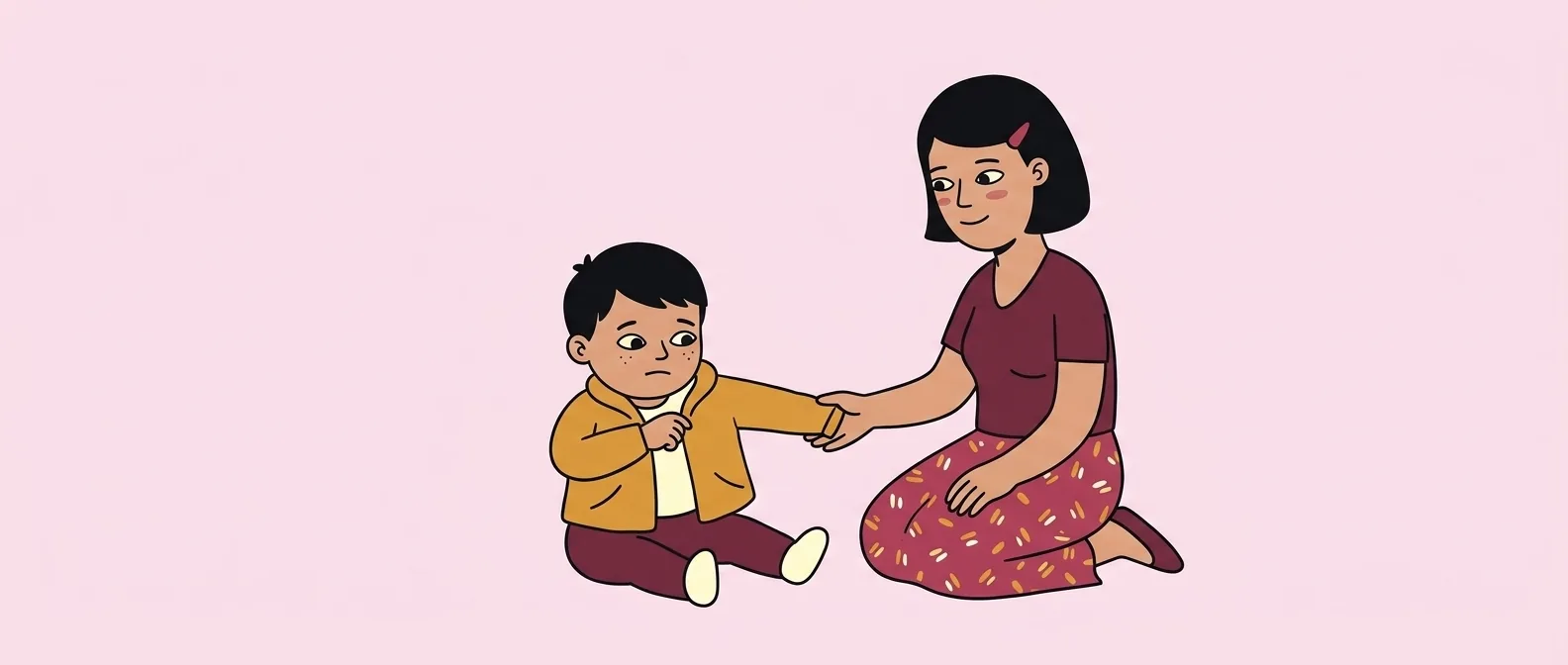
Offer your hand, a moment of quiet, a move to a calmer place, or a simple task. If your child is unable to continue safely, end the shopping trip.
What can you say without yelling or getting into an argument?
During intense emotions, long conversations usually do not help. Your child may hear your words but not have the capacity to think them through calmly at that moment. That is why short, repeatable phrases tend to work best.
You can use phrases like:
- “I can see this is hard for you.”
- “You really want it.”
- “I’m right here.”
- “We’re not buying that today.”
- “You can be angry. The decision stays the same.”
These words let your child hear that their feelings have been noticed. At the same time, they do not open up a discussion about whether the product will end up in the basket after all. This is especially important when you have already agreed on shopping rules.
If aggression occurs, the message should be even simpler. Say: “I won’t let you hit”, “I won’t let you throw things”, or “I’m going to stop you so everyone stays safe.” Speak calmly, but act straight away.
Only offer a choice when both options are genuinely possible for you. For example: “Are you walking beside me or sitting in the cart?” Do not offer a false choice, such as “Do you want to leave?”, if you need to leave anyway.
In the store: when is it better to end the shopping trip?
You do not have to leave the store every time your child cries. If they are protesting but are safe, you can stay nearby and give them a moment to feel their anger. Sometimes, after a short while, the tension eases enough to finish one or two things from the list.
However, there are situations when continuing to shop no longer makes sense. If your child is pulling away strongly, trying to run off, kicking, biting, or throwing objects, safety is the priority. In that case, it is worth moving outside the store or simply going home.
You can say: “I won’t let you kick. We’re going to a calmer place now.” You do not need to explain your decision to the people around you. At that moment, it is enough to take care of your child, yourself, and those nearby.
Leaving does not mean you have “lost” the shopping trip. Sometimes it is the most sensible decision, especially when your child is clearly overwhelmed. Once they have calmed down, you can return to the topic briefly, without reproach: “It was hard for you when we did not buy that item. Next time, we will again buy only the products on our list.”
After leaving: what if your decision changed because of the shouting?
If you occasionally buy something because you feel pressured, it does not undo all your other efforts. However, it is worth noticing that your child may link protesting with the possibility of changing your decision. If shouting sometimes ends in a purchase, the next refusal may be even more frustrating for them.
Setting rules in advance helps. If you want to buy your child a small extra item sometimes, decide on it before entering the store. You can say: “Today you can choose one yogurt” or “Today we’re only buying things from the list.”
When your child becomes interested in something you do not plan to buy, you can suggest a wish list. Simply take a photo of the item or write down its name. This is not a promise to buy it, but a way of showing: “I can see that this matters to you.”
You can say:
- “You like that car.”
- “We’re not buying it today.”
- “We’ll take a photo and put it on your wish list.”
Changing a habit is not always immediate. Your child may protest just as strongly, or even more strongly for a while, when they notice that the old approach no longer works. A calm, predictable response is the most helpful thing at that point.
What is best to avoid in the middle of a protest?
In a difficult moment, it is easy to say something you later regret. Threats, shaming, or comparing your child with others may stop the conversation for a moment, but they usually add more tension. Along with anger, your child may then feel shame or fear.
It is especially worth avoiding:
- threats you do not intend to follow through on;
- phrases such as “stop making a scene”;
- calling your child “naughty”;
- mocking their crying;
- promising treats, a phone, or a reward simply to silence the protest;
- lengthy explanations at the moment of greatest tension.
You also do not have to pretend the crying is not happening. You can stay close and still not give in. The phrase “I can see you’re angry, but we’re not buying it” is calmer than ignoring your child or getting into an argument.
When is it worth talking to a pediatrician or psychologist?
Protests in the store, crying after being told no, and difficulty waiting can all occur in children’s everyday lives. However, it is worth considering a consultation with a pediatrician or psychologist if these situations are very frequent, exceptionally intense, or if it is hard to keep everyone safe during them.
It is a good idea to seek additional support when:
- strong outbursts happen regularly in many places, not just in the store;
- your child finds it very difficult to calm down after becoming angry;
- biting, kicking, throwing objects, or running away happen often;
- you are concerned about your child’s safety or the safety of others;
- difficult situations strongly affect your family’s daily functioning;
- you want to better tailor your response to your child’s age and needs.
This kind of conversation is not a judgment of your parenting. It can help you calmly look at what most often comes before the protests and organize your next steps.
Summary: a calm “no” can be supportive too
Shopping with a child will not always be free of protests. However, you can reduce tension by choosing shorter visits, explaining the plan in advance, and responding to the first signs of tiredness. The goal is not for your child never to get angry, but for anger not to take control of the situation.
When shouting begins, follow a simple path: ensure safety, name the emotion, briefly state the decision, and do not change it under pressure. If the store becomes too difficult a place to stay, leave without guilt. There will always be another opportunity to return to calm, consistent rules.
If you would like to organize your responses and prepare a plan for similar situations, complete the BehaviorComplainer consultation form.
Sources
- ZERO TO THREE, “Public Displays of Disaster: What to Do When Your Child Loses It Outside the Home”.
- National Health Service (NHS), “Temper tantrums”.
- American Academy of Pediatrics (AAP), “Top Tips for Surviving Tantrums”.