Siblings fighting: what to do when an argument gets out of control?
Do you need to respond to every disagreement between your children? Or is it better to let them reach an agreement on their own? When there is shouting, pushing or crying at home, it can be hard to stay calm and know straight away what will help most.
The most important rule is simple: make safety your priority first, then look for a solution. You do not need to immediately work out who started it or decide which child was right. In moments of high tension, children are usually not yet ready for a calm conversation.
Disagreements between siblings may be about toys, a spot on the sofa, whose turn it is to have a parent’s attention, or the rules of a game they are playing together. Sometimes the cause seems small, but the feelings are anything but. Losing a favourite item or having play interrupted can be very difficult for a child.
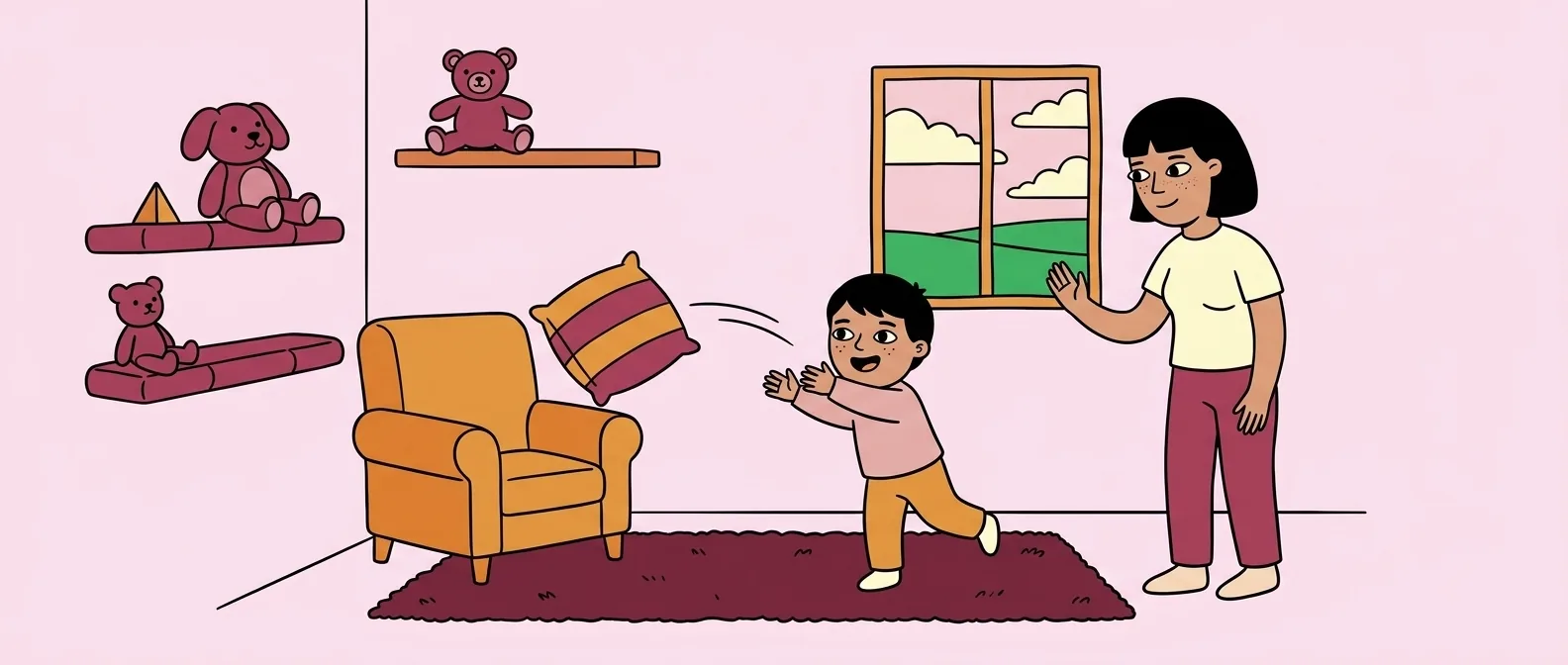
Not every argument means there is a problem. When children disagree, protest or try to set rules, they may be practising communication. But when hitting, biting, kicking, throwing objects or clear fear in one child appears, your calm response is needed.
Why do siblings hit and push each other?
Children between around 18 and 72 months old are still learning how to cope with frustration. They may want something very strongly, but still do not know how to wait, let it go or explain what they are feeling. At those times, their hands can sometimes act faster than their words.
Hitting does not mean a child is bad, ungrateful or does not love their sibling. It is behaviour that needs to be stopped, but not a label to attach to a child. You can refuse to accept hitting while also recognising difficult emotions.
Many different needs may lie behind a conflict:
- wanting to make their own decisions;
- needing to get a favourite toy back;
- anger after play has been interrupted;
- jealousy over a parent’s attention;
- tiredness, hunger or sensory overload;
- needing quiet space just for themselves.
In practice, it helps to look at the few seconds before the outburst. Did one child step into something the other had built? Did someone take an item without asking, or refuse to give back a shared toy for too long? That moment often tells you more than the hit itself.
Sometimes children argue over a toy car, but in reality they are both already tired of playing together. At other times, the reason is competition for your attention. You do not need to guess their hidden intentions—simply notice that tension is rising and that the children need support.
When should you let children argue, and when should you step in?
When to watch, and when to stop them
| Situation | You can watch closely when | Step in when |
|---|---|---|
| Verbal disagreement | the children say what they want, protest or negotiate, but do not threaten each other and are able to take a step back. | there are threats, humiliation, clear fear, or one child cannot leave the conflict. |
| Pulling a toy away | the children stop when asked, try to say “my turn now” or look for another toy. | they are tugging the object forcefully, pulling each other or the toy could hit someone. |
| Pushing | no pushing has happened yet, but the children are close together and tension is rising—you can remind them to give each other space and use words. | a child pushes, the other loses balance, is pushed off furniture or stairs, or towards hard objects. |
| Hitting | a child stops their hand, moves away or asks for help before hitting happens. | there is hitting, kicking, biting, pinching or an attempt to use a toy to hurt the other child. |
| Throwing objects | the child puts the object down after a clear instruction and no one is within throwing distance. | an object is thrown towards another child, or it is hard, heavy or could cause an injury. |
Parents often wonder whether they should separate children every time voices are raised. There is no need to do that. A verbal argument can be safe if children have a chance to say what they want and no one is being hurt.
You can watch closely when children:
- speak loudly but do not use force;
- protest the rules of a game;
- do not want to hand over an object;
- try to negotiate turns;
- are able to walk away when things become too difficult.
In these moments, you do not have to settle the argument straight away. You can help children hear each other, for example by saying: I can see that you both want to play with the same thing. Try to say what you need. This gives them space without leaving them alone with the tension.
When should you respond immediately?
Step between the children without delay when the situation becomes unsafe. This applies not only to hitting, but also to behaviours that could quickly lead to an injury. At that point, do not wait for the children to calm down by themselves.
Stop the conflict if there is:
- hitting, pinching, kicking or biting;
- hair-pulling;
- forceful pushing;
- throwing hard objects;
- hitting with a toy;
- blocking the other child’s path;
- clear crying, fear or helplessness in one of the children.
A situation where there is a significant difference in strength, age or ability between the children requires particular attention. A younger child may not know how to say stop, walk away or protect themselves from an older sibling. In that case, an adult should take control of the situation rather than expect the children to resolve it on their own.
How can you separate fighting children without shouting?
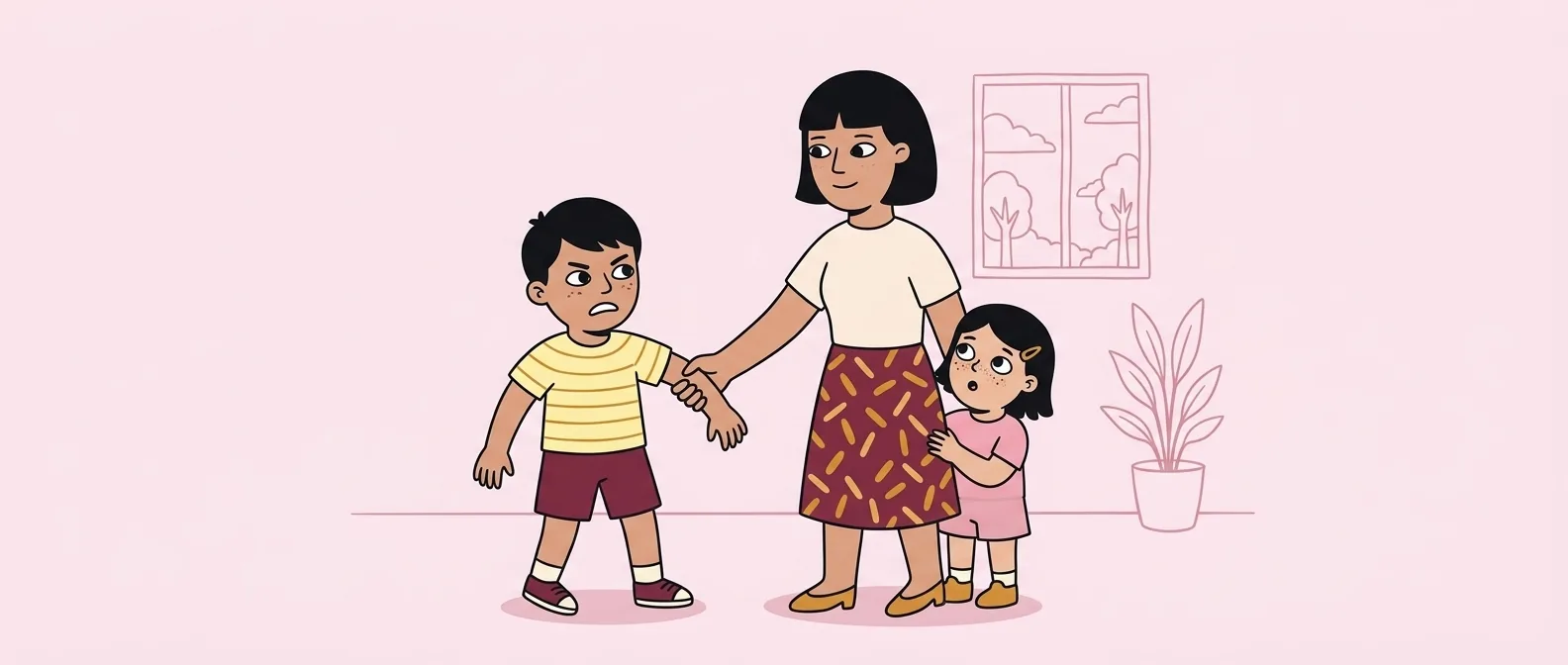
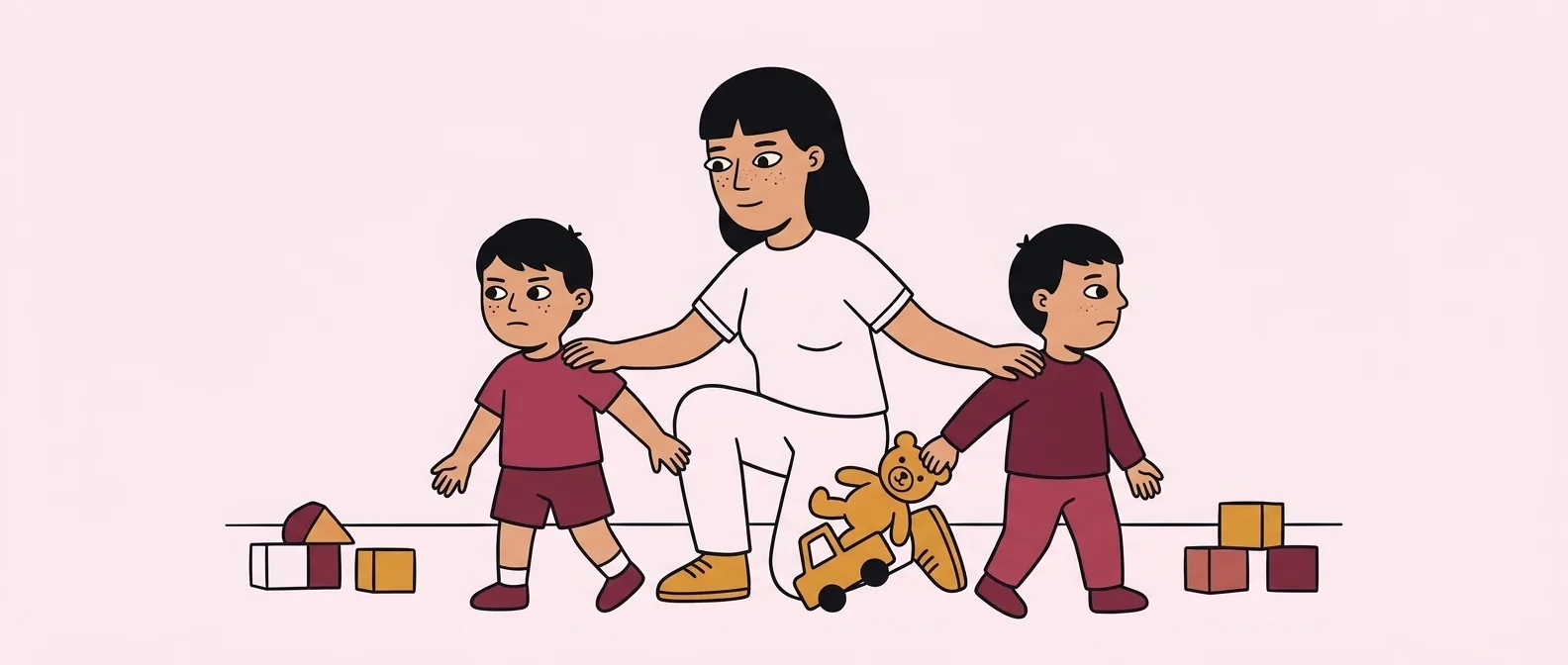
When children begin to fight, act briefly and clearly. Move close, stand between them or move them apart to a safe distance. If necessary, take away an object they could use to hurt each other.
Say in a calm, confident voice: I’m stopping you. Hitting is not okay. You do not need to explain everything straight away. In the first few seconds, stopping hands, feet and objects matters more than a long conversation about rules.
Try not to shout, even if the situation itself is loud. Raising your voice can further escalate children who are already experiencing intense emotions. A calm tone does not mean being permissive—it means setting a clear boundary without adding more chaos.
After separating the children, focus on three things:
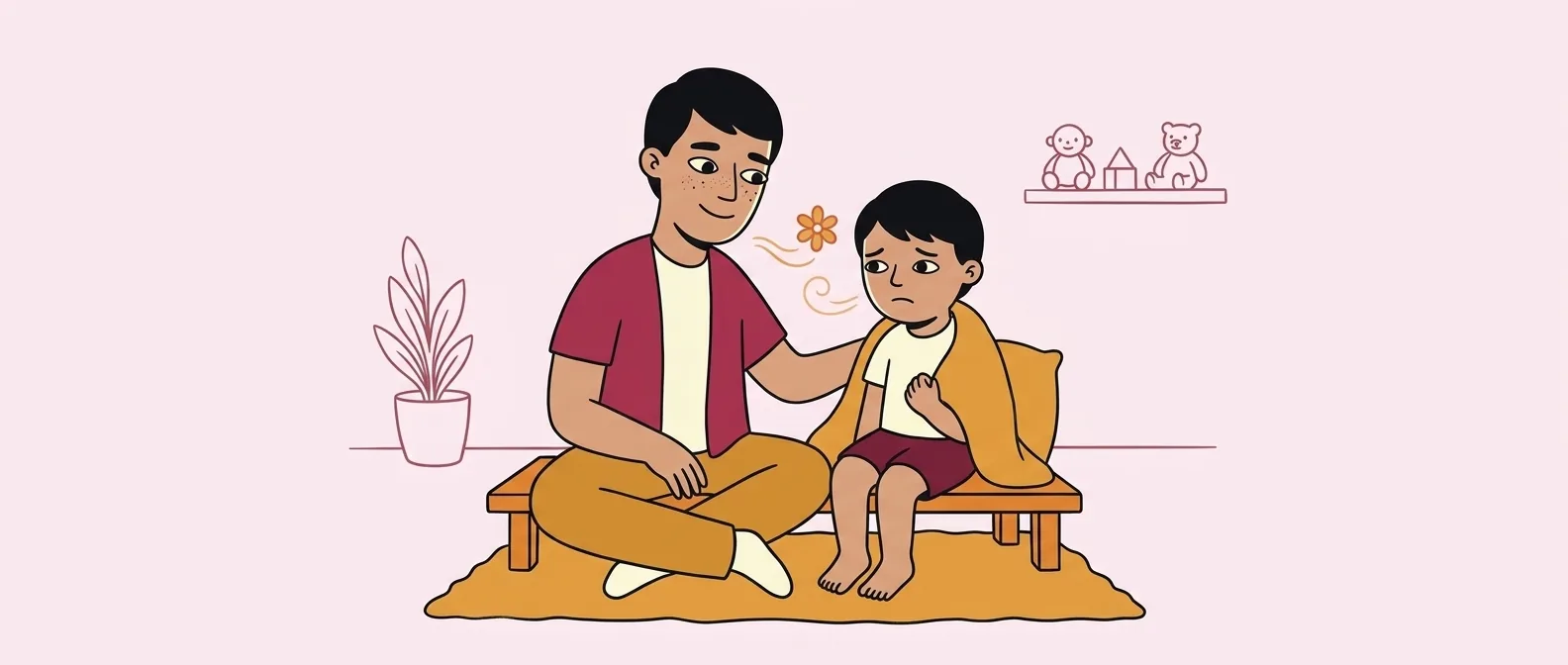
- Check whether anyone is hurt. Look at the area that was hurt and offer water, a cold compress or a moment of closeness.
- Give the children space. They do not need to look at each other or sit beside each other straight away.
- Remove the source of the ongoing conflict. If they were fighting over one item, put it away for a while, out of reach of both children.
Do not ask who started it right away. A child who is crying or still very upset is unlikely to calmly describe the whole situation. First help everyone regain their balance, then return to what happened.
What should you say to a child after a fight?
A brief conversation with both children after safety has been ensured
Once the children are apart, calmer, and it is clear that no one needs immediate help, you can say:
Parent: “I stopped you because I don’t allow hitting. I can see that you both wanted that toy.”
Child 1: “He took it from me.”
Parent: “You wanted to keep playing with it. Say that without hitting.”
Child 2: “I wanted it too.”
Parent: “You wanted it too. Now let’s think about what will help you stay safe: putting it away for a while, taking turns or finding another solution?”
This type of conversation makes room for each child’s perspective without immediately deciding who is to blame for the whole situation.
After stopping a conflict, children need simple words, not a long lecture. It is helpful to separate emotions from behaviour. You can acknowledge a child’s anger while not accepting what they did.
Helpful phrases may include:
- I can see that you are very angry. I won’t let you hit.
- You want that toy, but you may not take it by force.
- You can say stop or come and ask for help.
- Your hands are for safe touch.
- You are angry, and I will help you stop hitting.
Speak just as calmly to the child who was hit. You might say: That may have hurt. I’m here with you, and I’ll make sure you are safe. Check how they are first, and only then move on to finding a solution together.
Do not force children to apologise immediately after a conflict. Saying sorry when angry, afraid or under pressure usually does not help anyone. It is better to return to repairing the relationship later, when the children are calmer.
Repairing the situation can look different depending on the child’s age. Sometimes it may mean returning an item they took, helping rebuild a block structure, bringing a tissue or asking whether the other child would like some time alone. More important than a quick apology is showing children how they can make things right.
How can you teach children alternatives to hitting?
Simply repeating that hitting is not allowed is usually not enough. A child needs to know what they can do instead. It is easiest to practise new responses when things are calm at home, rather than during another argument.
For younger children, short words and simple gestures are useful:
- Stop - with an outstretched hand;
- Mine - when a child wants to protect an item they are using;
- Help - when they cannot manage on their own;
- I don’t want to - when a sibling comes too close;
- walking a few steps away.
Older children can use longer sentences. You can suggest: I’m playing with this now, I want a turn after you, Don’t touch me, Can we swap? or I need a moment on my own. The goal is not for a child to speak perfectly—it is for them to have a safe alternative.
Everyday play is a good time to practise. You can use figures, soft toys or blocks to act out a brief scene: one child wants an object, the other says stop, and then they both look for a solution. This kind of play is easier to remember than a conversation held after an argument.
It is worth noticing even small steps forward. If a child stopped their hand, said no or came for help, name it specifically: You stopped and said stop. That was a safe solution. This does not mean conflicts will disappear right away, but it gives the child clear information about what you expect.
How can you reduce everyday conflicts between siblings?
You cannot remove every disagreement from siblings’ lives. However, you can reduce the number of situations in which children are especially likely to have an outburst. Predictability, a simple daily routine and clear rules about shared belongings can help.
It is worth deciding which toys are for everyone and which belong to a particular child. Especially important belongings can be kept somewhere siblings cannot reach without asking. This is not favouritism—it is teaching respect for belongings and boundaries.
Simple rules can help with shared toys:
- the child playing with something can finish a short part of what they are doing;
- the other child can choose whether to wait, suggest a swap or play with something else;
- if one item constantly leads to fights, it can be put away until later;
- it is worth asking before taking an object.
Pay attention to the times of day when arguments happen most often. If the children start pushing and shoving after preschool, shopping or before dinner, ordinary overload may be the reason. In that case, it is better to plan a snack, a quiet moment or separate activities first than to expect harmonious play.
Having personal space also helps each child. It does not have to be a separate room. Sometimes a box of important belongings, a spot at a table or an agreement not to interrupt during a certain activity without asking is enough.
Giving advance notice of changes also works well. Rather than ending play suddenly, tell the children what is coming: in five minutes we are tidying up, we are going out after lunch, after bath time we will choose a book. A child who knows what is about to happen has a better chance of handling the change without strongly protesting.
What is best to avoid during sibling conflicts?
In a difficult moment, it is easy to say something meant to quickly end the noise. Some responses bring a moment of quiet but do not help children cope better next time. It is especially important to avoid comparisons and assigning fixed roles.
Avoid phrases such as:
- you always start it;
- you are older, so you need to give in;
- look how well your sister behaves;
- you are both equally to blame;
- stop crying, nothing happened.
The older child also has the right to their belongings, boundaries and anger. The younger child also needs clear information that they cannot hit, bite or get their way through crying. Age should not determine whose feelings matter more.
It is also best not to use labels such as bad brother, cruel sister, aggressor or victim. These words can stay with a child for a long time and make behaviour change more difficult. It is better to speak about the specific event: You hit, You took it without asking, That scared your brother, We need to find a safer way.
When is it worth talking to a paediatrician or psychologist?
Most children’s conflicts can be supported at home through calm boundaries, practising words and better organisation of everyday situations. However, there are times when it is good not to deal with it alone. A consultation can help you make sense of what is happening at home and how to keep all children safe.
Consider contacting a paediatrician or psychologist if:
- injuries occur;
- the children use dangerous objects;
- one child is regularly afraid of the other;
- there are threats, intimidation or humiliation;
- the conflict consistently involves an imbalance of physical strength;
- fights are very frequent and difficult to stop;
- you feel that strategies at home are not enough.
This is not about finding someone to blame or attaching a label to a child. It is worth looking at when conflicts arise, what happens before them and what the children need after a difficult moment. Sometimes simply making sense of the situation can bring more calm to your everyday responses.
Summary
Siblings may argue, protest and compete for their turn—this is part of life together. You do not need to stop every exchange of words. Your prompt intervention is needed when there is harm, fear or a clear imbalance of power between the children.
When a fight happens, separate the children first, ensure safety and reduce further tension. Leave the conversation about causes, rules and repairing the situation until later. Brief, calm boundaries and regular practice of simple phrases can gradually give children other ways to respond.
If conflicts between your children regularly become overwhelming in everyday life, you can fill in the consultation form. It is a calm first step towards bringing more order to difficult situations at home.
Sources
- American Academy of Pediatrics (AAP), “Sibling Relationships: How to Help Your Kids Build Healthy Bonds”.
- American Academy of Pediatrics (AAP), “Sibling Rivalry: Expert Tips to De-Escalate Fights and Build Stronger Bonds”.
- American Academy of Pediatrics (AAP), “Everybody Gets Mad: Helping Your Child Cope with Conflict”.